
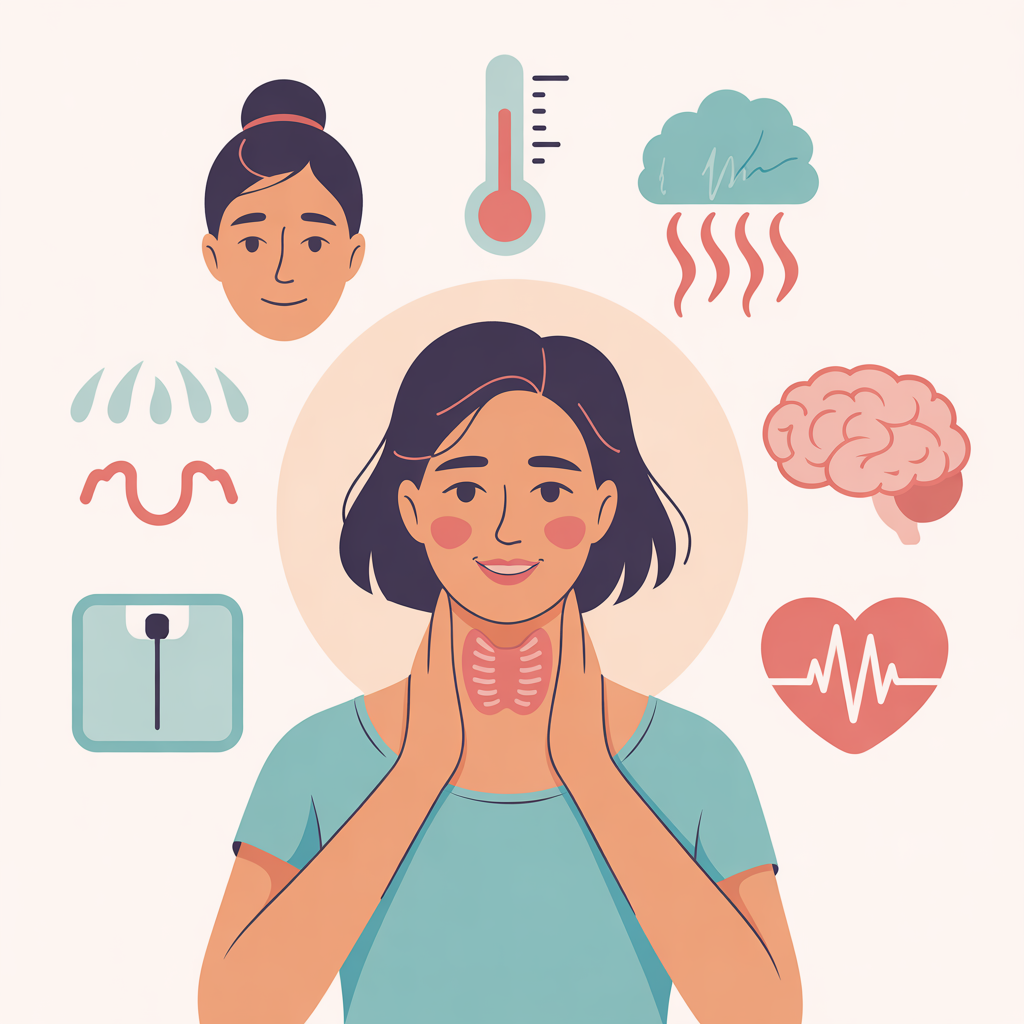
Hashimoto’s disease, also known as Hashimoto’s thyroiditis or autoimmune thyroiditis, is a chronic autoimmune condition in which the body’s immune system mistakenly attacks the thyroid gland. Over time, this damage impairs the thyroid’s ability to produce sufficient hormones, often leading to hypothyroidism (an underactive thyroid). It is one of the most common causes of thyroid disease worldwide and disproportionately affects women — making awareness of Hashimoto’s disease symptoms in females especially important.
Because symptoms develop gradually and can mimic many other conditions, Hashimoto’s disease is frequently misdiagnosed or overlooked for years. Recognizing the early warning signs can make a significant difference in quality of life. Below are 12 of the most common symptoms associated with Hashimoto’s disease that you should never ignore.
1. Persistent Fatigue and Low Energy
One of the earliest and most universal symptoms of Hashimoto’s disease is chronic, debilitating fatigue that does not improve with rest or sleep. When the thyroid gland is underperforming due to immune-mediated damage, the body’s metabolic processes slow down significantly. Every cell in the body relies on thyroid hormones to generate energy, so a deficiency leads to a profound sense of exhaustion.
- You may feel tired even after a full night’s sleep.
- Simple daily tasks — like cooking, walking, or concentrating at work — can feel overwhelming.
- The fatigue is often described as a “heavy,” full-body tiredness rather than ordinary sleepiness.
This type of fatigue is different from normal tiredness. It persists over weeks or months and tends to worsen progressively if the underlying thyroid dysfunction is left unaddressed.
2. Unexplained Weight Gain
A sluggish thyroid caused by Hashimoto’s thyroiditis directly slows down the body’s metabolism — the rate at which your body burns calories. As a result, many individuals notice gradual, unexplained weight gain even when their diet and exercise habits remain unchanged.
- Weight gain is typically slow and steady, not sudden.
- It may be accompanied by fluid retention and puffiness, particularly in the face and limbs.
- Efforts to lose weight through diet and exercise often yield little to no results until thyroid function is addressed.
It is important to note that not all weight gain is related to Hashimoto’s disease, but when combined with other symptoms on this list, it is a strong reason to have your thyroid levels checked.
3. Cold Intolerance
People with Hashimoto’s disease frequently report feeling unusually cold, especially in their hands and feet, even in warm environments. This happens because a low level of thyroid hormone reduces thermogenesis — the body’s internal heat production.
- You might feel cold when others around you feel comfortable or warm.
- Extremities such as fingers and toes may remain persistently cold or numb.
- Cold intolerance tends to be more prominent in colder climates or seasons but can occur year-round.
This symptom is often dismissed as a personal preference or poor circulation, but chronic cold sensitivity combined with fatigue and weight gain is a classic triad of hypothyroid symptoms associated with Hashimoto’s disease.
4. Brain Fog and Cognitive Difficulties
Brain fog is one of the most frustrating symptoms reported by Hashimoto’s patients. It refers to a collection of cognitive impairments that can significantly interfere with daily functioning and quality of life.
- Memory lapses: Forgetting names, words, or recent events more often than usual.
- Difficulty concentrating: Trouble focusing on tasks or reading for extended periods.
- Slowed thinking: Taking longer than usual to process information or make decisions.
- Mental fatigue: Feeling mentally exhausted after minimal cognitive effort.
The connection between thyroid hormones and brain function is well established. Since thyroid hormones play a critical role in neurological activity, a deficiency caused by Hashimoto’s disease can significantly dull mental sharpness.
5. Depression and Mood Changes
Hashimoto’s disease has a significant impact on mental and emotional health. Low thyroid hormone levels affect the production and regulation of neurotransmitters such as serotonin, dopamine, and norepinephrine — chemicals that are essential for mood stability.
- Persistent feelings of sadness, hopelessness, or emptiness.
- Loss of interest in activities that were once enjoyable.
- Increased irritability, anxiety, or emotional instability.
- In some cases, mood swings that alternate between depressive episodes and periods of heightened anxiety.
It is worth noting that in the early stages of Hashimoto’s disease — before the thyroid is fully damaged — the gland may release stored thyroid hormones erratically, sometimes causing temporary hyperthyroid-like symptoms such as anxiety, rapid heart rate, and mood swings. This phase is sometimes called “Hashitoxicosis.”
6. Hair Thinning and Hair Loss
Hair loss is a highly visible and emotionally distressing symptom of Hashimoto’s thyroiditis. Thyroid hormones regulate the hair growth cycle, and when levels are insufficient, hair follicles can enter a prolonged resting phase, leading to thinning and shedding.
- Diffuse thinning across the entire scalp rather than patchy bald spots.
- Increased hair shedding noticed on pillows, in the shower, or on hairbrushes.
- Thinning of the outer third of the eyebrows — a hallmark sign of hypothyroidism.
- Hair that becomes dry, brittle, and prone to breakage.
Hair loss due to Hashimoto’s can affect not just the scalp but also body hair, eyelashes, and eyebrows. While distressing, this symptom often improves once thyroid hormone levels are properly managed.
7. Dry Skin and Brittle Nails
The skin is highly sensitive to changes in thyroid hormone levels. In Hashimoto’s disease, reduced thyroid function leads to a decrease in sweating and skin cell turnover, resulting in a range of dermatological symptoms.
- Dry, rough, or flaky skin that does not improve with moisturizers.
- Pale or yellowish skin tone (due to impaired conversion of beta-carotene to vitamin A).
- Myxedema — a non-pitting puffiness of the skin, especially around the eyes and face, in severe cases.
- Brittle, slow-growing nails that chip or break easily.
These changes reflect the body-wide effects of low thyroid hormone on cell regeneration and circulation. Skin and nail changes are often gradual and may go unnoticed until they become quite pronounced.
8. Constipation and Digestive Issues
Since thyroid hormones regulate the speed of digestive processes, low levels caused by Hashimoto’s disease can significantly slow down gastrointestinal motility — the movement of food through the digestive tract.
- Chronic constipation that does not respond to dietary changes or increased water intake.
- Bloating and a feeling of fullness even after small meals.
- Slowed digestion leading to discomfort and abdominal cramping.
Some Hashimoto’s patients also experience increased gut permeability and are more susceptible to conditions like irritable bowel syndrome (IBS) or gluten sensitivity, as these conditions share autoimmune mechanisms.
9. Muscle Weakness and Joint Pain
Musculoskeletal symptoms are common in Hashimoto’s disease and can be among the most physically limiting. Low thyroid hormone levels affect muscle metabolism and nerve function, leading to:
- General muscle weakness: Difficulty climbing stairs, lifting objects, or performing routine physical activities.
- Muscle aches and cramps: Particularly in the legs, especially at night.
- Joint stiffness and pain: Aching joints that are worse in the morning or after periods of inactivity.
- Carpal tunnel syndrome: Tingling, numbness, or pain in the hands and wrists, which is more prevalent in people with hypothyroidism.
These symptoms can be confused with fibromyalgia, rheumatoid arthritis, or other musculoskeletal disorders, making proper thyroid testing an important diagnostic step.
10. Slowed Heart Rate (Bradycardia)
Thyroid hormones play a crucial role in regulating heart rate and cardiac output. In Hashimoto’s disease, when thyroid hormone levels drop, the heart can slow down — a condition called bradycardia.
- A resting heart rate below 60 beats per minute in individuals who are not highly trained athletes.
- Feelings of low blood pressure, dizziness, or lightheadedness.
- Reduced exercise tolerance — becoming breathless or exhausted more easily during physical activity.
In severe or long-standing cases of untreated hypothyroidism related to Hashimoto’s, cardiovascular complications including elevated cholesterol levels and increased risk of heart disease can develop. Early detection is essential.
11. Goiter (Enlarged Thyroid Gland)
A goiter refers to a visible or palpable swelling at the base of the neck caused by an enlarged thyroid gland. In Hashimoto’s disease, the immune system’s ongoing attack triggers inflammation in the thyroid tissue, which can cause it to swell.
- A visible lump or swelling at the front of the neck, just below the Adam’s apple.
- A feeling of tightness, fullness, or pressure in the throat.
- Difficulty swallowing (dysphagia) or a sensation that something is “stuck” in the throat.
- Hoarseness or changes in voice quality if the enlarged gland presses on the vocal cords.
Not all Hashimoto’s patients develop a goiter — some may have a normal-sized or even shrunken thyroid gland as the disease progresses and thyroid tissue is gradually destroyed.
12. Menstrual Irregularities and Fertility Issues
This symptom is particularly relevant to the discussion of Hashimoto’s disease symptoms in females, as it significantly impacts reproductive health. Thyroid hormones are deeply intertwined with the hormonal systems that regulate the menstrual cycle and fertility.
- Heavy or prolonged periods (menorrhagia): One of the most common menstrual complaints among women with hypothyroidism.
- Irregular cycles: Cycles that are too long, too short, or unpredictable.
- Painful periods (dysmenorrhea).
- Anovulation: Lack of ovulation, which directly impacts the ability to conceive.
- Increased risk of miscarriage in women with unmanaged Hashimoto’s thyroiditis during pregnancy.
Women of reproductive age who are experiencing unexplained fertility challenges or significant menstrual disruptions should consider thyroid function testing as part of their diagnostic workup.
Main Causes of Hashimoto’s Disease
While the exact trigger for Hashimoto’s disease is not fully understood, researchers have identified several key factors that contribute to its development:
- Genetic predisposition: A family history of autoimmune thyroid disease or other autoimmune conditions (such as type 1 diabetes or rheumatoid arthritis) significantly increases risk.
- Gender and hormones: Women are 7–10 times more likely to develop Hashimoto’s than men, suggesting that sex hormones — particularly estrogen — play a role in immune regulation and susceptibility.
- Immune system dysfunction: The immune system produces antibodies — most notably anti-thyroid peroxidase (anti-TPO) and anti-thyroglobulin antibodies — that attack the thyroid gland, causing chronic inflammation and progressive tissue damage.
- Environmental triggers: Excessive iodine intake, radiation exposure, certain medications, and environmental toxins (such as pesticides and heavy metals) have been associated with triggering or worsening autoimmune thyroid disease.
- Viral or bacterial infections: Some infections may act as environmental triggers that initiate or accelerate the autoimmune process in genetically susceptible individuals.
- Chronic stress: Prolonged psychological or physiological stress can dysregulate the immune system and may contribute to the onset or exacerbation of Hashimoto’s disease.
- Nutritional deficiencies: Deficiencies in selenium, vitamin D, and zinc have been linked to impaired thyroid function and increased autoimmune activity.
Can Hashimoto’s Disease Be Prevented?
Because Hashimoto’s disease has a strong genetic component, it cannot be entirely prevented. However, certain lifestyle strategies may help reduce the risk of onset, slow disease progression, and manage symptom severity:
- Maintain a nutrient-rich diet: Adequate intake of selenium (found in Brazil nuts, tuna, and eggs), vitamin D, and zinc supports immune regulation and thyroid health. Avoiding excessive iodine supplementation is also advisable.
- Manage stress effectively: Practicing mindfulness, yoga, regular physical activity, and adequate sleep can help reduce immune dysregulation associated with chronic stress.
- Avoid unnecessary radiation exposure: Particularly to the head and neck region.
- Monitor thyroid health regularly: Individuals with a family history of autoimmune thyroid disease should undergo periodic thyroid function tests and antibody screenings.
- Minimize exposure to environmental toxins: Choose organic foods when possible and reduce contact with known endocrine disruptors such as BPA (found in plastics) and certain pesticides.
- Address underlying infections promptly: Treating bacterial and viral infections early may reduce the risk of immune system complications.
Note: Always consult with a qualified healthcare provider before making any significant changes to your health management approach. If you suspect you have Hashimoto’s disease or any thyroid condition, please seek professional medical evaluation rather than self-diagnosing or self-medicating.
Frequently Asked Questions (FAQ)
Q: What is Hashimoto’s disease?
A: Hashimoto’s disease (also called Hashimoto’s thyroiditis or autoimmune thyroiditis) is a chronic autoimmune condition in which the immune system attacks the thyroid gland, impairing its ability to produce thyroid hormones. It is the most common cause of hypothyroidism in developed countries.
Q: What causes Hashimoto’s disease?
A: The exact cause is not fully known, but it results from a combination of genetic susceptibility, hormonal factors, immune system dysfunction, and environmental triggers such as infections, iodine excess, stress, and nutritional deficiencies.
Q: Who is most at risk for Hashimoto’s disease?
A: Women are significantly more affected than men — up to 10 times more likely. People with a family history of autoimmune diseases, those with other autoimmune conditions, and individuals exposed to high levels of radiation or iodine are at elevated risk.
Q: Can Hashimoto’s disease cause anxiety as well as depression?
A: Yes. In the early stages, erratic release of stored thyroid hormones can cause anxiety, palpitations, and mood swings. As the disease progresses and thyroid function decreases, depression and emotional blunting become more common.
Q: Is Hashimoto’s disease the same as hypothyroidism?
A: Not exactly. Hashimoto’s disease is an autoimmune condition that is the most common cause of hypothyroidism. A person can have Hashimoto’s with normal thyroid levels, especially in the early stages. Hypothyroidism describes the state of low thyroid hormone production, which often develops as a consequence of Hashimoto’s.
Q: How is Hashimoto’s disease diagnosed?
A: Diagnosis typically involves blood tests measuring thyroid-stimulating hormone (TSH), free T4, and thyroid antibodies (especially anti-TPO antibodies). An ultrasound of the thyroid may also be performed to assess gland size, texture, and any nodules.
Q: Can Hashimoto’s disease affect pregnancy?
A: Yes. Unmanaged Hashimoto’s disease during pregnancy is associated with increased risk of miscarriage, preterm birth, preeclampsia, and developmental issues in the baby. Women who are pregnant or planning to conceive should inform their doctor if they have a Hashimoto’s diagnosis. Always consult your doctor before taking any medications during pregnancy.
Q: Are the symptoms of Hashimoto’s disease different in women?
A: While many core symptoms are the same for both sexes, women may additionally experience specific symptoms such as menstrual irregularities, heavy periods, fertility challenges, and heightened susceptibility to mood disorders due to the interaction between thyroid hormones and female sex hormones.
References: