
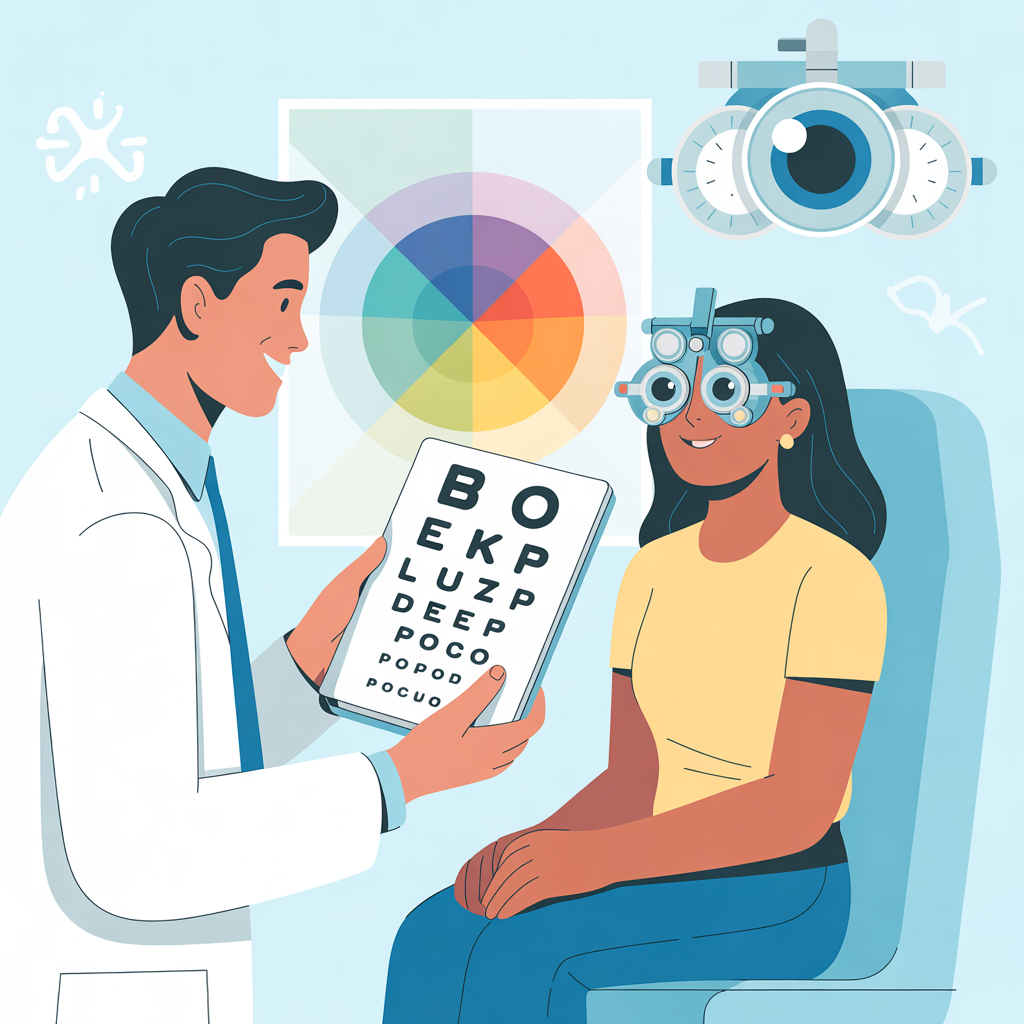
Astigmatism is one of the most common vision conditions affecting millions of people worldwide, yet it often goes undetected for years. So, what is astigmatism? In simple terms, astigmatism occurs when the cornea or lens of the eye has an irregular curvature — instead of being round like a basketball, it’s shaped more like a football. This irregular shape prevents light from focusing properly on the retina, leading to blurred or distorted vision at any distance.
Many people live with mild astigmatism without realizing it, attributing their discomfort to tiredness or stress. However, recognizing the symptoms of astigmatism early can help you seek timely care and protect your long-term eye health. Below are the most common signs that you may have astigmatism in your eye.
1. Blurred or Distorted Vision
One of the most telltale signs of astigmatism is blurred or distorted vision, which can occur at both near and far distances. Unlike nearsightedness or farsightedness — where objects are only blurry at certain distances — astigmatism tends to cause a general lack of sharpness across all viewing distances.
- Straight lines may appear wavy or slanted.
- Text may look smeared or doubled.
- Objects may seem stretched or out of proportion.
This type of distortion happens because the irregularly shaped cornea causes light rays to focus on multiple points on the retina instead of one single point, creating an unclear image. If you find yourself squinting frequently to see things more clearly, this could be an early indicator of astigmatism.
2. Eye Strain and Discomfort
Eye strain, also known as asthenopia, is a frequent complaint among people with uncorrected astigmatism. When your eyes are constantly working harder than normal to compensate for the blurred focus, the eye muscles become fatigued over time.
- A tired, heavy feeling in the eyes after short periods of reading or screen use.
- Difficulty maintaining focus on a page or screen.
- A general sense of eye discomfort that worsens throughout the day.
Eye strain from astigmatism is particularly noticeable after tasks that require sustained visual concentration, such as reading, writing, using a computer, or watching television. If your eyes feel exhausted at the end of a normal workday even without excessive screen time, it may be worth getting an eye examination.
3. Headaches
Persistent headaches — especially those that occur around the forehead or behind the eyes — are a commonly reported symptom of astigmatism. These headaches are closely tied to the eye strain described above.
- Headaches often appear after prolonged reading or close-up work.
- The pain is typically described as a dull, aching pressure around the temples or forehead.
- Headaches may become more frequent when using digital devices for extended periods.
Because the eyes are overworking to bring images into focus, surrounding muscles — including those in the forehead and around the eyes — can become tense, triggering tension-type headaches. If you experience recurring headaches that seem to be tied to visual activity, astigmatism could be a contributing factor.
4. Difficulty Seeing at Night (Night Vision Problems)
Many individuals with astigmatism notice a significant worsening of vision in low-light conditions. Night vision is particularly affected because the pupils dilate in the dark, allowing more light to enter — and when that light hits an irregularly curved cornea, distortion becomes even more pronounced.
- Halos or glare around streetlights, headlights, or other light sources at night.
- Starbursts radiating from light points in the dark.
- Difficulty judging distances while driving at night.
This symptom can be particularly dangerous for nighttime drivers, as the glare and distortion from oncoming headlights may impair reaction times and spatial awareness. If you find yourself avoiding night driving or feeling unsafe on the road after dark, it is strongly advisable to consult an eye care professional.
5. Squinting
Squinting is a natural reflex the body uses to temporarily improve focus. By narrowing the opening of the eye, squinting reduces the amount of distorted light entering and can momentarily sharpen vision. People with undiagnosed or uncorrected astigmatism often squint habitually without even realizing it.
- Squinting at road signs, television screens, or printed text.
- Narrowing the eyes when trying to read small print.
- Children may squint frequently while doing schoolwork or watching the board.
While squinting provides momentary relief, doing it constantly places additional strain on the eye muscles and the surrounding facial muscles, which can contribute to headaches and fatigue. Persistent squinting in children should be taken seriously, as it may indicate an uncorrected refractive error like astigmatism.
6. Eye Fatigue After Reading or Screen Time
Beyond general eye strain, many people with astigmatism experience rapid visual fatigue specifically during reading or prolonged screen use. The effort required to maintain a clear image on text or a digital display exhausts the eye much faster than it would in a person with normal vision.
- Losing your place frequently while reading.
- Needing to re-read sentences because words appear to blur or shift.
- Feeling the urge to close or rub your eyes after short reading sessions.
In the digital age, where screen time is unavoidable for most people, this symptom can significantly impact productivity, academic performance, and overall quality of life. If reading a book or working on a screen for more than 30 minutes consistently causes eye fatigue, an eye test is highly recommended.
7. Double Vision (Diplopia)
In some cases, astigmatism can cause double vision, where a single object appears as two overlapping or slightly separated images. This occurs because the irregular lens or cornea bends incoming light in multiple directions simultaneously, creating more than one focal point on the retina.
- Seeing a “ghost” image alongside a real image when looking at letters or objects.
- Overlapping or shadowed text when reading.
- Double vision that may affect one or both eyes.
It is important to note that while astigmatism can cause a form of monocular double vision (occurring in one eye), binocular double vision (affecting both eyes together) may be related to other eye muscle conditions. Regardless, double vision should always be evaluated by an eye specialist promptly.
8. Sensitivity to Light (Photophobia)
Light sensitivity, or photophobia, is another symptom that can be associated with astigmatism. Because light is scattered rather than focused cleanly on the retina, bright lights can feel overwhelming and uncomfortable for people with this condition.
- Discomfort or pain when exposed to bright sunlight or fluorescent lighting.
- Difficulty adjusting to sudden changes in light levels.
- Worsened glare and halos in brightly lit environments.
While light sensitivity alone does not confirm astigmatism and can be caused by various other conditions, it is frequently reported alongside other astigmatism symptoms. Wearing sunglasses outdoors and reducing screen brightness may offer temporary comfort, but proper diagnosis is the best course of action.
9. Difficulty Focusing on Fine Details
People with astigmatism often find it challenging to focus on fine details, particularly in tasks that require precision such as threading a needle, reading small print, or identifying fine text on labels or maps.
- Fine print appears blurry even when held at a comfortable reading distance.
- Difficulty distinguishing similar-looking letters (e.g., “E” and “F” or “O” and “Q”).
- Problems with depth perception during activities requiring visual accuracy.
This symptom is especially disruptive in professional settings where precision work is required and in academic environments where students must process detailed visual information regularly. Children experiencing this symptom may struggle academically, which can sometimes be misattributed to learning difficulties rather than a visual condition.
What Causes Astigmatism?
Understanding what causes astigmatism can help you assess your personal risk and explain why symptoms develop. The main causes include:
- Irregular corneal shape: The most common cause is when the cornea — the clear front surface of the eye — is not perfectly round, causing light to focus unevenly.
- Irregular lens shape: Less commonly, the natural lens inside the eye may have irregular curvature (lenticular astigmatism), also leading to distorted vision.
- Genetics: Astigmatism often runs in families. If one or both parents have the condition, there is a higher likelihood of inheriting it.
- Eye injuries or surgery: Trauma to the eye or complications from eye surgery can alter the shape of the cornea and cause astigmatism.
- Keratoconus: A progressive eye condition in which the cornea gradually thins and bulges outward in a cone shape, leading to significant astigmatism.
- Excessive eye rubbing: Habitually rubbing the eyes vigorously — particularly in children — may over time affect corneal shape.
- Congenital factors: Some individuals are born with astigmatism as part of normal eye development variations.
Can Astigmatism Be Prevented?
While astigmatism caused by genetics or congenital factors cannot be fully prevented, there are practical steps you can take to reduce risk factors and protect your eye health:
- Avoid rubbing your eyes: Rubbing the eyes repeatedly and forcefully can gradually alter the shape of the cornea. If your eyes itch, use a clean, damp cloth or consult a doctor for appropriate eye drops.
- Protect your eyes from injury: Wear appropriate protective eyewear during sports, construction work, or any activity that poses a risk to your eyes.
- Schedule regular eye exams: Routine eye check-ups — especially for children — allow early detection of refractive errors before they cause significant problems.
- Maintain a healthy diet: Nutrients such as Vitamin A, lutein, and omega-3 fatty acids support overall eye health and may help maintain corneal integrity.
- Monitor screen time and practice the 20-20-20 rule: Every 20 minutes, look at something 20 feet away for at least 20 seconds to reduce eye strain that may worsen symptoms.
- Manage underlying eye conditions: Conditions like keratoconus should be monitored and managed under the care of an ophthalmologist to prevent worsening astigmatism.
Frequently Asked Questions (FAQ)
What is astigmatism in your eye?
Astigmatism is a refractive error caused by an irregular curvature in the cornea or lens of the eye. Instead of bending light evenly onto the retina, the eye scatters light to multiple points, resulting in blurred or distorted vision at all distances.
Is astigmatism a serious eye condition?
In most cases, astigmatism is not a serious or dangerous condition. It is a common refractive error that can be easily identified through a standard eye exam. However, leaving it uncorrected can lead to ongoing discomfort, headaches, and reduced quality of life. Severe or rapidly worsening astigmatism should be evaluated by an eye specialist.
Can children have astigmatism?
Yes. Astigmatism can be present from birth and is one of the most common refractive errors in children. Because children may not recognize or articulate their visual difficulties, parents should watch for signs such as squinting, sitting very close to the television, frequent headaches, or declining school performance. Regular pediatric eye exams are essential for early detection.
How is astigmatism diagnosed?
Astigmatism is diagnosed through a comprehensive eye examination performed by an optometrist or ophthalmologist. Tests may include visual acuity tests, keratometry (to measure corneal curvature), and refraction assessments. The process is painless and typically quick.
Can astigmatism get worse over time?
Astigmatism can remain stable for many years, but it can also change — particularly during childhood and adolescence when the eye is still developing. In adults, it generally remains fairly stable, though certain conditions like keratoconus can cause progressive worsening. Regular eye check-ups help monitor any changes.
When should I see a doctor about astigmatism symptoms?
You should schedule an eye examination if you experience persistent blurred vision, frequent headaches related to visual tasks, difficulty seeing at night, or any sudden changes in your vision. Early diagnosis allows for timely management and helps prevent symptoms from worsening.
References: