
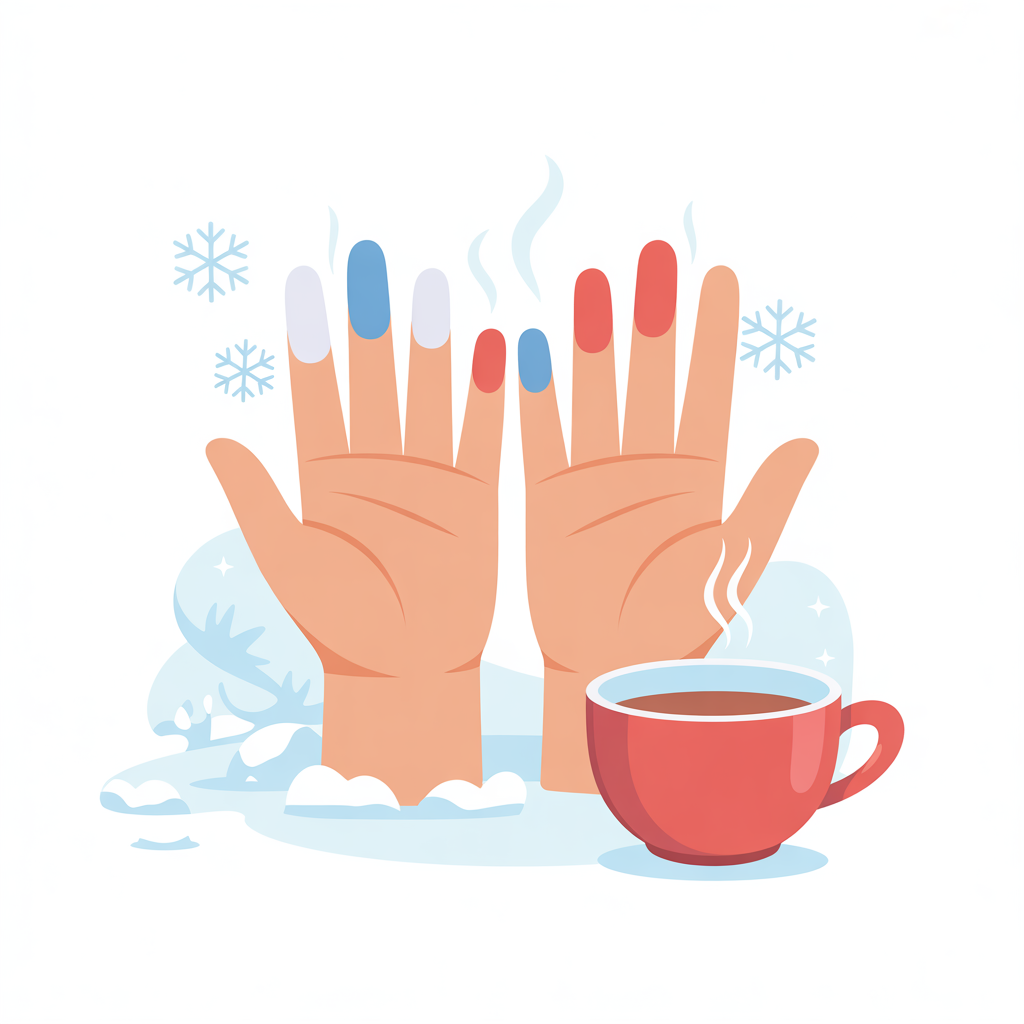
Raynaud’s disease — also known as Raynaud’s phenomenon or Raynaud’s syndrome — is a condition that causes reduced blood flow to certain parts of the body, most commonly the fingers and toes, in response to cold temperatures or emotional stress. During a Raynaud’s episode, the affected areas may turn white, then blue, and finally red as blood flow returns. While Raynaud’s is not typically life-threatening, it can significantly impact quality of life and, in some cases, may signal an underlying health condition. Understanding the symptoms of Raynaud’s disease is the first step toward managing it effectively and knowing when to seek medical attention.
1. Color Changes in the Fingers and Toes
One of the most distinctive and well-known symptoms of Raynaud’s disease is a dramatic, sequential color change in the fingers and toes. This three-phase color change is often described as a “tricolor response” and is considered a hallmark sign of the condition:
- White (Pallor): The first phase occurs when blood vessels in the fingers or toes suddenly constrict (vasospasm), cutting off blood supply. The affected areas turn white or pale due to the lack of blood flow.
- Blue (Cyanosis): As oxygen in the remaining blood is depleted, the skin takes on a bluish or purplish tint. This phase is often accompanied by a feeling of coldness and numbness.
- Red (Rubor): When the vasospasm subsides and blood flow returns, the skin turns red. This phase is frequently associated with throbbing, tingling, or a burning sensation as circulation is restored.
Not every person with Raynaud’s experiences all three color phases. Some may only notice two changes — typically white to red — while others see the full progression. These color changes are most visible in the fingers and toes but can also occur in the nose, ears, lips, and nipples.
2. Numbness and Tingling in the Affected Areas
Numbness and tingling are among the most commonly reported sensations during a Raynaud’s episode. When blood flow to the extremities is restricted, the nerves in those areas are deprived of oxygen, leading to a characteristic “pins and needles” feeling or complete loss of sensation.
This numbness can range from mild to quite pronounced, sometimes making it difficult to perform everyday tasks such as buttoning a shirt, typing, or holding objects. The tingling sensation typically intensifies as blood flow begins to return to normal, often described by patients as a prickling or electric-like feeling that travels through the fingers or toes.
It is important to note that while numbness during a Raynaud’s attack is temporary and resolves once circulation is restored, persistent numbness outside of an episode may warrant further evaluation by a healthcare professional.
3. Cold Fingers and Toes (Even in Mild Temperatures)
People with Raynaud’s disease often experience persistently cold fingers and toes, even in environments that others find comfortable or only mildly cool. This hypersensitivity to temperature is one of the earliest and most consistent symptoms of the condition.
The underlying cause is an exaggerated vascular response — the blood vessels overreact to even a slight drop in temperature by constricting more aggressively than they would in people without Raynaud’s. As a result, heat is poorly distributed to the extremities, leaving them feeling icy cold to the touch.
Many patients report that this symptom is triggered not only by outdoor cold but also by air conditioning, holding a cold drink, reaching into a freezer, or even touching cold water. This constant coldness in the hands and feet can be one of the most bothersome aspects of daily life for those living with Raynaud’s.
4. Pain or Throbbing Sensation During and After an Episode
Pain is a significant symptom for many people with Raynaud’s phenomenon, particularly during the recovery phase of an attack when blood begins flowing back into the affected area. This pain is often described as:
- Throbbing: A pulsating, rhythmic pain that corresponds with the return of blood flow.
- Burning: A sharp, burning sensation, most intense in the fingertips or toes.
- Aching: A dull, deep ache within the fingers, toes, or other affected areas.
During the initial vasospasm phase, some individuals experience a painful tightening or cramping sensation in the extremities. The severity of pain varies widely — some people report only mild discomfort, while others find the pain debilitating enough to interfere with daily activities. In cases of secondary Raynaud’s (associated with an underlying disease), pain tends to be more severe and prolonged than in primary Raynaud’s.
5. Skin Texture Changes and Swelling
Beyond color changes, the skin of people with Raynaud’s disease can undergo noticeable textural changes during and after episodes. Some of the most common skin-related symptoms include:
- Puffiness or swelling: The fingers and toes may appear slightly swollen, particularly during the redness phase when blood rushes back into the tissues.
- Tight or shiny skin: In individuals with secondary Raynaud’s syndrome — especially those with associated conditions like scleroderma — the skin may become tight, thickened, or unusually shiny over time.
- Dryness and cracking: Repeated episodes of reduced circulation can dry out the skin of the hands and feet, making them prone to cracking and peeling.
These changes in skin texture can be early warning signs that Raynaud’s may be secondary to another underlying condition, and should be discussed with a physician for proper evaluation.
6. Emotional Stress as a Trigger (Stress-Induced Episodes)
While cold temperature is the most well-known trigger for Raynaud’s attacks, emotional stress is another significant — and often overlooked — factor that can provoke symptoms. The connection between stress and Raynaud’s lies in the body’s “fight or flight” response:
When a person experiences stress, anxiety, or strong emotions, the sympathetic nervous system releases adrenaline, which causes blood vessels to constrict throughout the body as a protective mechanism. In people with Raynaud’s, this response is exaggerated in the small blood vessels of the fingers, toes, and other extremities, triggering the same color changes, numbness, and pain that occur during cold-induced episodes.
Patients often report that stressful situations at work, arguments, or anxiety-provoking events can bring on a Raynaud’s attack even in a warm environment. Recognizing emotional stress as a trigger is an important part of managing the condition day-to-day.
7. Ulcers or Sores on the Fingertips (In Severe Cases)
In more severe or long-standing cases — particularly in secondary Raynaud’s syndrome — repeated episodes of reduced blood flow can eventually damage the tissues of the fingertips, leading to the development of small ulcers or sores. These digital ulcers are a serious complication and a key distinguishing feature of secondary Raynaud’s compared to the primary form.
Key characteristics of these sores include:
- They typically appear on the tips of the fingers or around the nail beds.
- They are often painful, slow to heal, and prone to infection.
- In extreme cases, if blood supply is severely compromised, tissue death (gangrene) can occur, although this is rare.
The presence of finger ulcers should always prompt immediate medical evaluation, as this symptom suggests significant vascular compromise that may require professional medical care.
8. Raynaud’s Symptoms in the Feet (Raynaud’s Syndrome Feet)
Although Raynaud’s disease is most commonly associated with the hands, the feet are also frequently affected. Raynaud’s in the feet presents with the same hallmark symptoms as in the fingers, but can sometimes be more difficult to detect or attribute to the condition.
Common foot-related symptoms include:
- Color changes in the toes: Just as with the fingers, toes may turn white, blue, and then red during an episode.
- Extreme cold feet: The soles of the feet and toes may feel intensely cold, even when wearing socks and shoes.
- Numbness in the toes: Loss of sensation or tingling in the toes is common during attacks.
- Pain when walking: Some individuals experience discomfort or pain in the feet during or after a Raynaud’s episode, which may be mistaken for other conditions.
People who notice these symptoms in their feet, particularly in cold weather or stressful situations, should consider speaking with their doctor about a possible Raynaud’s diagnosis.
9. Prolonged Recovery After Exposure to Cold
A notable and often frustrating symptom experienced by people with Raynaud’s is the unusually long time it takes for their hands and feet to warm up after cold exposure. While a person without Raynaud’s might recover normal skin temperature within a few minutes of entering a warm environment, someone with Raynaud’s phenomenon may take 15 to 30 minutes — or even longer — to fully normalize.
During this extended recovery period, patients may continue to experience:
- Residual numbness or tingling as circulation gradually restores.
- The red, flushed phase that can last well after the triggering event has ended.
- Generalized fatigue or discomfort in the affected limbs.
This prolonged recovery is a direct result of the exaggerated vasospasm that characterizes Raynaud’s — the blood vessels take much longer than normal to relax and dilate again, delaying the return of healthy blood flow.
10. Nail Changes and Reduced Grip Strength
Over time, chronic Raynaud’s disease can lead to subtle but noticeable changes in the nails and hand function. These are typically more common in people with secondary Raynaud’s but can also appear in primary Raynaud’s with frequent, prolonged episodes.
- Nail abnormalities: The nails may become brittle, ridged, or unusually curved (a condition known as nail clubbing in severe cases). Reduced blood supply to the nail beds over time can impair healthy nail growth.
- Reduced grip strength: Repeated attacks and chronic poor circulation in the hands can weaken the muscles and connective tissues, leading to reduced grip strength and difficulty with fine motor tasks.
- Sensitivity around the nail beds: Increased tenderness or soreness around the cuticles and nail beds is reported by some patients, especially following frequent attacks.
These long-term changes serve as a reminder that while individual Raynaud’s episodes may seem transient, the cumulative effect of repeated vascular spasms can have lasting impacts on tissue health and hand function.
Main Causes of Raynaud’s Disease
Understanding what causes Raynaud’s is essential for recognizing your risk and taking proactive steps. Raynaud’s is broadly categorized into two types, each with different underlying causes:
- Primary Raynaud’s (Raynaud’s Disease): This is the most common form and occurs without any underlying medical condition. The exact cause is not fully understood, but it is believed to involve an overactive sympathetic nervous system response that causes excessive vasoconstriction. Primary Raynaud’s tends to be milder and often runs in families, suggesting a genetic component. It is more common in women and typically begins in the teenage years or early adulthood.
- Secondary Raynaud’s (Raynaud’s Phenomenon): This form is caused by or associated with an underlying disease or condition. Common causes include:
- Connective tissue diseases: Conditions such as scleroderma, lupus (SLE), rheumatoid arthritis, and Sjögren’s syndrome are among the most frequent underlying causes.
- Arterial diseases: Conditions that affect the arteries, such as atherosclerosis or Buerger’s disease, can impair blood flow and trigger Raynaud’s symptoms.
- Repetitive vibration or trauma: People who regularly use vibrating tools (such as jackhammers or chainsaws) or perform repetitive hand movements are at increased risk.
- Certain medications: Some drugs, including certain beta-blockers, migraine medications, and stimulants, can narrow blood vessels and trigger Raynaud’s episodes. Always consult your doctor before starting or stopping any medication.
- Smoking: Nicotine causes blood vessels to constrict, increasing the frequency and severity of Raynaud’s attacks.
- Cold agglutinin disease and thyroid disorders: These conditions can also be associated with secondary Raynaud’s.
How to Prevent Raynaud’s Episodes
While Raynaud’s disease cannot always be completely prevented, especially in its primary form, there are several lifestyle strategies that can significantly reduce the frequency and severity of attacks:
- Dress warmly and in layers: Protect your hands, feet, ears, and nose with appropriate clothing in cold weather. Wear thermal gloves, wool socks, and insulated footwear. Even indoors, keep a pair of gloves handy for tasks like reaching into the freezer.
- Avoid sudden temperature changes: When moving from a warm to a cold environment, allow your body time to adjust. Avoid holding cold drinks directly with bare hands.
- Manage stress effectively: Practice stress-reduction techniques such as deep breathing, meditation, yoga, or mindfulness to minimize emotional triggers of Raynaud’s episodes.
- Exercise regularly: Regular physical activity improves overall circulation and cardiovascular health, which can help reduce the frequency of attacks.
- Quit smoking: Smoking is a significant vasoconstrictor and worsens Raynaud’s symptoms. Quitting smoking is one of the most impactful steps a person with Raynaud’s can take.
- Limit caffeine and alcohol: Both substances can affect blood vessel tone and may exacerbate Raynaud’s symptoms in some individuals.
- Warm up gradually: When coming in from the cold, warm your hands and feet gradually rather than exposing them to intense heat immediately, which can increase discomfort.
- Stay hydrated: Dehydration can impair blood circulation, so maintaining adequate fluid intake is beneficial.
- Identify and avoid your personal triggers: Keep a diary of your episodes to identify patterns and triggers specific to you, then take steps to minimize exposure to those triggers.
Frequently Asked Questions (FAQs) About Raynaud’s Disease
Q: What is Raynaud’s disease?
A: Raynaud’s disease is a condition characterized by exaggerated vasospasm — an excessive narrowing of small blood vessels — in response to cold temperatures or emotional stress. It primarily affects the fingers and toes, causing episodes of color changes (white, blue, red), numbness, and pain.
Q: What is the main cause of Raynaud’s disease?
A: The main cause depends on the type. Primary Raynaud’s occurs due to an overactive vascular response with no underlying condition, while secondary Raynaud’s is caused by an associated disease such as scleroderma, lupus, or rheumatoid arthritis, or by other factors like smoking, repetitive vibration, or certain medications.
Q: Is Raynaud’s disease the same as Raynaud’s phenomenon or Raynaud’s syndrome?
A: These terms are often used interchangeably, but there is a subtle distinction. “Raynaud’s disease” typically refers to the primary form with no underlying cause, while “Raynaud’s phenomenon” or “Raynaud’s syndrome” more broadly refers to the condition in general, including both primary and secondary forms.
Q: Can Raynaud’s affect areas other than the fingers and toes?
A: Yes. While fingers and toes are most commonly affected, Raynaud’s can also affect the nose, ears, lips, and nipples. In rare cases, it can affect the tongue or other areas of the body.
Q: Is Raynaud’s disease more common in women?
A: Yes. Primary Raynaud’s disease is significantly more common in women than in men, and typically first appears between the ages of 15 and 30. Secondary Raynaud’s can affect both sexes, though it is still slightly more prevalent in women due to the higher incidence of associated autoimmune conditions in females.
Q: When should I see a doctor about Raynaud’s symptoms?
A: You should consult a doctor if your Raynaud’s episodes are frequent, severe, or getting worse; if only one side of the body is affected; if you develop sores or ulcers on your fingertips; if symptoms began after age 40; or if you suspect an underlying condition may be involved. Always seek professional medical advice before taking any medication to manage symptoms.
Q: Can Raynaud’s disease be cured?
A: There is currently no cure for Raynaud’s disease, but the condition can be effectively managed through lifestyle changes, trigger avoidance, and — under medical supervision — appropriate therapies. Many people with primary Raynaud’s experience only mild symptoms that are well-controlled with lifestyle modifications alone.
Q: Does Raynaud’s disease worsen over time?
A: Primary Raynaud’s does not typically worsen over time and often remains stable. Secondary Raynaud’s, however, may progress depending on the severity and progression of the underlying condition it is associated with.
References:
- Mayo Clinic – Raynaud’s Disease: Symptoms & Causes
- NHS – Raynaud’s Phenomenon
- Healthline – Raynaud’s Phenomenon: Symptoms, Causes, and Treatment
- Arthritis Foundation – Raynaud’s Phenomenon
- Johns Hopkins Medicine – Raynaud’s Phenomenon
- National Institute of Arthritis and Musculoskeletal and Skin Diseases (NIAMS) – Raynaud’s Phenomenon