
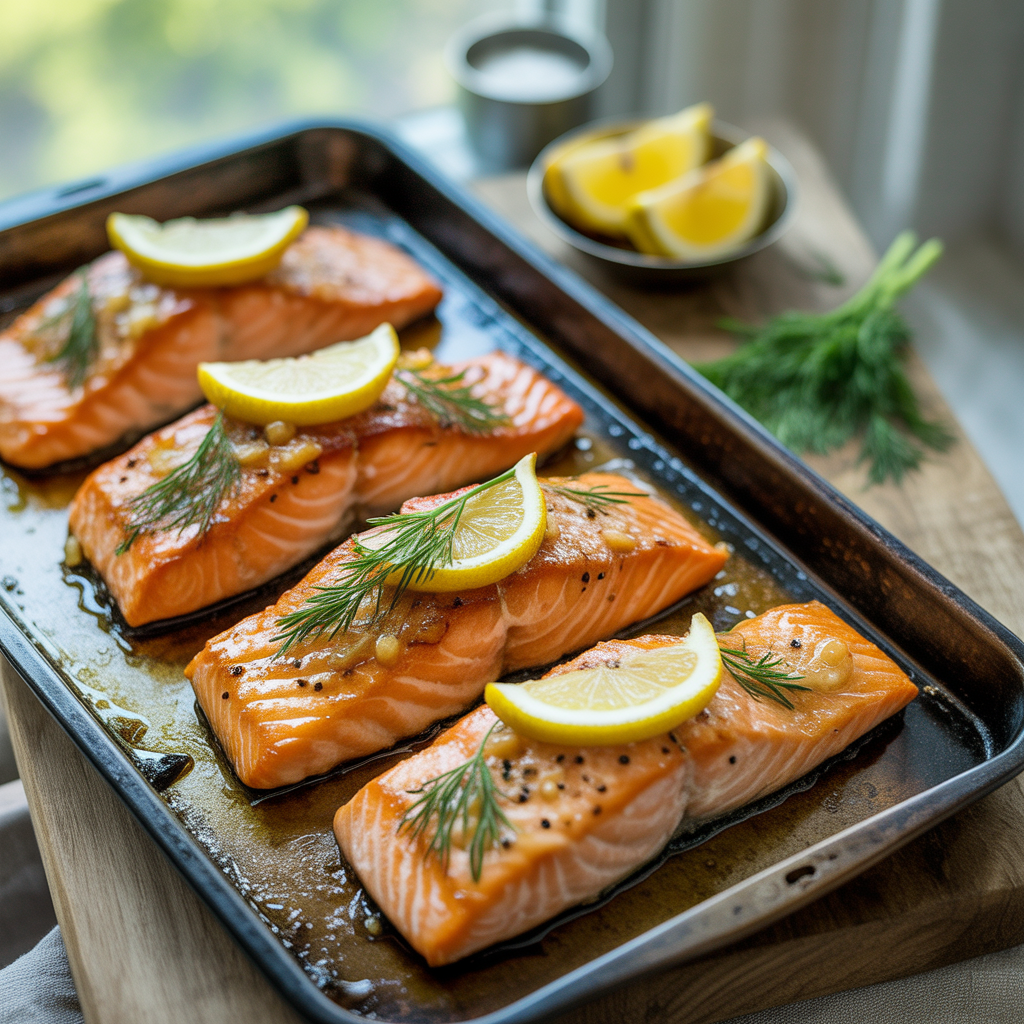
If you’re looking for a healthy, delicious, and foolproof dinner, this baked salmon recipe is exactly what you need. Ready in under 30 minutes, it delivers perfectly juicy, flaky fish with a golden, slightly caramelized exterior every single time. Whether you’re a seasoned home cook or just getting started in the kitchen, this guide covers everything — from choosing the right salmon to the best seasonings, side dishes, and storage tips.
Why You’ll Love This Baked Salmon Recipe
- Quick and easy: From prep to plate in about 25–30 minutes.
- Incredibly healthy: Packed with omega-3 fatty acids, high-quality protein, and essential vitamins.
- Minimal cleanup: One pan, simple ingredients, done.
- Versatile: Customize the seasoning to suit any taste preference.
- Family-friendly: Kids and adults both love it.
Health Benefits of Salmon
Salmon is widely regarded as one of the most nutritious foods on the planet. Here’s why it deserves a regular spot on your dinner table:
- Rich in Omega-3 Fatty Acids: Supports heart health, brain function, and reduces inflammation.
- High-Quality Protein: A 3.5-ounce (100g) serving provides about 25 grams of protein.
- Loaded with B Vitamins: Including B12, B6, and niacin, which support energy production and nerve function.
- Excellent Source of Selenium: An antioxidant mineral that supports thyroid health.
- Contains Potassium: Helps control blood pressure.
- Rich in Astaxanthin: A powerful antioxidant that gives salmon its pink color and may benefit skin health.
Choosing the Best Salmon
The quality of your salmon makes a huge difference in the final result. Here’s what to look for:
Types of Salmon
- Atlantic Salmon (farm-raised): The most widely available. Higher in fat, which means it’s very forgiving and stays moist during baking. Great for beginners.
- Sockeye Salmon (wild-caught): Deep red flesh, robust flavor, lower in fat. Needs careful attention to avoid overcooking.
- Coho Salmon: A middle ground — milder than sockeye but with great texture. Excellent for baking.
- King (Chinook) Salmon: The most prized and flavorful. Highest in omega-3s. Rich and buttery.
- Pink Salmon: The mildest and leanest option. Best used in budget-friendly meals.
Fresh vs. Frozen
Fresh salmon is ideal when available, but high-quality frozen salmon (especially wild-caught frozen at sea) can be just as good or even better. If using frozen, thaw it overnight in the refrigerator before baking.
What to Look For
- Bright, vibrant color (deep pink to orange-red)
- Firm texture — it should spring back when pressed
- Fresh, ocean-like smell — not fishy or sour
- Moist surface, not dry or discolored
Ingredients
This recipe serves 4 people. You can easily scale it up or down.
Main Ingredients
- 4 salmon fillets (about 6 oz / 170g each), skin-on or skinless
- 2 tablespoons olive oil (or melted butter for a richer flavor)
- 4 cloves garlic, minced
- 2 tablespoons fresh lemon juice
- 1 teaspoon lemon zest
- 1 teaspoon Dijon mustard (optional, adds depth)
- 1 tablespoon honey or maple syrup (optional, for a glaze)
- 1 teaspoon salt (or to taste)
- ½ teaspoon black pepper
- 1 teaspoon smoked paprika
- ½ teaspoon garlic powder
- Fresh dill, parsley, or thyme for garnish
- Lemon slices for serving
Optional Add-Ons
- 1 tablespoon soy sauce (for an Asian-inspired glaze)
- 1 teaspoon dried Italian herbs (oregano, basil, rosemary)
- Pinch of cayenne pepper for heat
- Capers for a briny, savory touch
Equipment You’ll Need
- Baking sheet or oven-safe baking dish
- Aluminum foil or parchment paper
- Small mixing bowl
- Pastry brush or spoon
- Instant-read meat thermometer (highly recommended)
- Fish spatula
Step-by-Step Instructions
Step 1: Preheat the Oven
Preheat your oven to 400°F (200°C). This temperature is the sweet spot for baked salmon — hot enough to cook it through quickly and create a slightly caramelized exterior without drying it out.
Tip: For thinner fillets (under 1 inch), you can use 375°F (190°C). For very thick fillets, stick with 400°F.
Step 2: Prepare the Baking Pan
Line a rimmed baking sheet or baking dish with aluminum foil or parchment paper. Lightly grease it with a little olive oil or cooking spray to prevent sticking. This also makes cleanup much easier.
Step 3: Pat the Salmon Dry
Remove the salmon fillets from the refrigerator and pat them dry with paper towels. Removing excess moisture is a crucial step — it helps the seasoning adhere better and promotes a nicer texture on the surface.
Step 4: Make the Seasoning Mixture
In a small bowl, combine:
- Olive oil
- Minced garlic
- Lemon juice and zest
- Dijon mustard (if using)
- Honey or maple syrup (if using)
- Salt, pepper, smoked paprika, and garlic powder
Whisk everything together until well combined. Taste and adjust seasoning as needed.
Step 5: Season the Salmon
Place the salmon fillets on the prepared baking pan, skin-side down (if skin-on). Spoon or brush the seasoning mixture generously over the top and sides of each fillet. Make sure every piece is well coated.
For best results, let the salmon marinate for at least 15–30 minutes in the refrigerator before baking. If you’re short on time, even 5 minutes helps.
Step 6: Bake the Salmon
Place the baking pan in the preheated oven. Bake for 12–15 minutes, depending on the thickness of your fillets.
General Baking Time Guide:
- Thin fillets (½ inch): 8–10 minutes
- Medium fillets (1 inch): 12–14 minutes
- Thick fillets (1.5 inches): 15–18 minutes
How to know when it’s done:
- The flesh should be opaque and flake easily with a fork.
- The internal temperature should reach 125–130°F (52–54°C) for medium (slightly translucent in the center — the preferred level for most salmon lovers) or 145°F (63°C) for fully cooked per USDA guidelines.
- The fish should easily separate into large, moist flakes when pressed gently with a fork.
Step 7: Optional — Broil for a Caramelized Top
For an extra-gorgeous, slightly caramelized crust (especially if you used honey or maple syrup), switch the oven to broil for the last 2–3 minutes of cooking. Watch it closely — it can go from perfectly golden to burnt very quickly.
Step 8: Rest and Serve
Remove the salmon from the oven and let it rest for 2–3 minutes before serving. This allows the juices to redistribute throughout the fish, keeping it incredibly moist.
Garnish with fresh herbs (dill, parsley, or chives), lemon slices, and a drizzle of extra olive oil or melted butter if desired.
How to Tell If Salmon Is Perfectly Cooked
Overcooked salmon is dry and chalky. Undercooked salmon can be unsafe to eat. Here’s how to nail it every time:
- Use a thermometer: The most reliable method. Aim for 125–130°F for medium doneness.
- The fork test: Press a fork gently into the thickest part. If it flakes apart easily into large, translucent segments, it’s done.
- Visual check: The color should change from translucent dark pink to an opaque, lighter pink, starting from the outside and moving toward the center.
- The poke test: Press the fillet gently with your finger. It should feel firm yet still slightly springy — not rock hard.
Popular Flavor Variations
Once you master the basic recipe, try these delicious variations:
Honey Garlic Glazed Salmon
Mix 3 tablespoons honey, 4 cloves minced garlic, 2 tablespoons soy sauce, and 1 tablespoon butter. Brush generously over the salmon before baking. Broil for the last 2 minutes for a sticky, caramelized glaze.
Lemon Herb Salmon
Combine olive oil, lemon zest, fresh dill, fresh parsley, capers, and salt. Simple, bright, and incredibly fresh-tasting.
Teriyaki Salmon
Use a store-bought or homemade teriyaki sauce (soy sauce, mirin, sake, and sugar). Marinate for 30 minutes before baking for maximum flavor.
Cajun Spiced Salmon
Rub with a mix of paprika, cayenne, onion powder, garlic powder, thyme, oregano, salt, and black pepper. Bold and smoky — perfect for spice lovers.
Mediterranean Salmon
Top with cherry tomatoes, olives, capers, red onion, and a drizzle of olive oil. Sprinkle with oregano and feta cheese after baking.
Asian Sesame Salmon
Glaze with soy sauce, sesame oil, rice vinegar, fresh ginger, and honey. Top with sesame seeds and green onions before baking.
What to Serve with Baked Salmon
Salmon pairs beautifully with a wide variety of sides. Here are some of the best options:
Vegetables
- Roasted asparagus with lemon
- Steamed or sautéed broccoli
- Roasted Brussels sprouts
- Garlic sautéed spinach or kale
- Grilled zucchini or summer squash
- Roasted cherry tomatoes
Grains & Starches
- Steamed white or brown rice
- Quinoa with herbs
- Garlic mashed potatoes
- Roasted baby potatoes
- Pasta with olive oil and garlic
- Cauliflower rice (low-carb option)
Salads
- Simple arugula salad with lemon vinaigrette
- Classic Caesar salad
- Mediterranean cucumber and tomato salad
- Avocado and corn salad
Sauces & Condiments
- Tzatziki sauce
- Creamy dill sauce
- Mango avocado salsa
- Lemon butter sauce
- Tartar sauce
Tips for Perfectly Juicy Baked Salmon Every Time
- Don’t skip patting dry: Moisture on the surface steams the fish instead of roasting it.
- Bring to room temperature: Let salmon sit at room temp for 10–15 minutes before baking. Cold fish straight from the fridge cooks unevenly.
- Don’t overbake: This is the #1 mistake. Salmon continues to cook slightly after you remove it from the oven (carryover cooking), so pull it out just before it reaches your desired doneness.
- Use skin-on fillets: The skin acts as a natural barrier, protecting the delicate flesh from the heat and keeping it moist.
- Cover with foil for even thicker fillets: If you’re baking a very thick piece, cover it with foil for the first half of cooking, then uncover to finish.
- Season generously: Salmon can handle bold flavors. Don’t be shy with salt, pepper, and aromatics.
- Use a hot oven: A higher temperature (400°F) cooks the fish quickly, which is key to retaining moisture.
- Let it rest: Even 2–3 minutes of resting time makes a noticeable difference in juiciness.
Frequently Asked Questions
Should I bake salmon covered or uncovered?
For most fillets, baking uncovered at 400°F gives the best results — a slightly golden exterior with a moist, flaky interior. If your fillet is very thick (over 1.5 inches) or you’re worried about it drying out, you can cover it loosely with foil for the first 10 minutes, then uncover for the last 3–5 minutes.
Do I need to flip salmon when baking?
No. Unlike pan-searing, you don’t need to flip salmon when baking. Simply place it skin-side down on the pan and leave it. The skin will protect the bottom while the top cooks perfectly.
Can I bake salmon from frozen?
Yes! You can bake salmon directly from frozen — just increase the cooking time by about 5–7 minutes and start at a slightly lower temperature (375°F) for the first 10 minutes, then raise to 400°F. The result may be slightly less ideal than thawed salmon, but it still works well in a pinch.
How do I remove the skin after baking?
After baking, the skin typically peels away very easily. Simply slide a spatula between the flesh and the skin — the flesh will lift right off. Many people actually enjoy eating the crispy baked skin, which is also nutritious.
Can I use salmon steaks instead of fillets?
Yes. Salmon steaks are thicker cross-sections of the fish and typically take slightly longer to bake. Follow the same method but add a few extra minutes and use a thermometer to confirm doneness.
Is baked salmon good for meal prep?
Absolutely. Baked salmon stores well and can be repurposed in many ways throughout the week (see storage tips below).
How to Store and Reheat Baked Salmon
Refrigerating
Store leftover baked salmon in an airtight container in the refrigerator for up to 3–4 days. Place a paper towel inside the container to absorb excess moisture and keep the texture better.
Freezing
You can freeze cooked salmon for up to 2–3 months. Wrap each fillet tightly in plastic wrap, then place in a freezer-safe bag or container. Thaw in the refrigerator overnight before reheating.
Reheating
Reheating salmon without drying it out requires a gentle touch:
- Oven method (best): Preheat to 275°F (135°C). Place salmon in a baking dish, add a splash of water or lemon juice, cover with foil, and heat for 10–15 minutes.
- Microwave (quickest): Place on a microwave-safe plate, cover with a damp paper towel, and heat on 50% power in 30-second intervals.
- Skillet: Heat over medium-low with a little butter or oil, cover with a lid, and warm gently for 2–3 minutes.
Pro tip: Leftover cold salmon is actually delicious! Use it in salads, grain bowls, pasta, or salmon patties without reheating at all.
Creative Ways to Use Leftover Baked Salmon
- Salmon salad: Flake and mix with Greek yogurt, lemon juice, celery, and herbs for a protein-packed salad.
- Salmon pasta: Toss flaked salmon with pasta, olive oil, capers, and cherry tomatoes.
- Salmon grain bowl: Serve over quinoa or farro with roasted veggies and tahini dressing.
- Salmon tacos: Fill corn tortillas with flaked salmon, slaw, avocado, and lime crema.
- Salmon patties/cakes: Mix with breadcrumbs, egg, and seasonings, then pan-fry until golden.
- Salmon fried rice: Add to fried rice with vegetables, soy sauce, and sesame oil.
- Salmon avocado toast: Top toasted sourdough with smashed avocado, flaked salmon, and everything bagel seasoning.
Nutritional Information (Per Serving)
Based on one 6 oz fillet with the basic olive oil and lemon seasoning. Values are approximate and may vary depending on the specific type of salmon and ingredients used.
- Calories: ~350–400 kcal
- Protein: ~40g
- Fat: ~18–22g (mostly healthy unsaturated fats)
- Saturated Fat: ~3–4g
- Carbohydrates: ~1–2g (without glaze)
- Omega-3 Fatty Acids: ~2,000–3,000mg
- Sodium: ~400–500mg
- Vitamin D: ~100% of Daily Value
- Vitamin B12: ~130% of Daily Value
Recipe Card
Baked Salmon — Quick Summary
Prep Time: 10 minutes
Cook Time: 12–15 minutes
Total Time: 25–30 minutes
Servings: 4
Difficulty: Easy
Ingredients:
- 4 salmon fillets (6 oz each)
- 2 tbsp olive oil
- 4 cloves garlic, minced
- 2 tbsp fresh lemon juice + 1 tsp zest
- 1 tsp Dijon mustard
- 1 tbsp honey
- 1 tsp salt
- ½ tsp black pepper
- 1 tsp smoked paprika
- Fresh herbs and lemon slices for serving
Instructions:
- Preheat oven to 400°F (200°C). Line a baking sheet with foil.
- Pat salmon dry. Mix all sauce ingredients together.
- Place salmon skin-side down on the prepared pan. Brush with sauce.
- Bake for 12–15 minutes until salmon flakes easily and reaches 125–145°F internal temperature.
- Optional: Broil for 2–3 minutes for a caramelized top.
- Rest for 2 minutes, garnish, and serve immediately.
Final Thoughts
This baked salmon recipe truly checks all the boxes: it’s fast, healthy, endlessly customizable, and consistently delivers juicy, flavorful results. Once you get comfortable with the basic technique, you’ll find yourself making it on weeknights, for dinner parties, and for meal prep alike. The key is choosing quality salmon, not overcooking it, and letting simple, bold flavors shine through.
Whether you serve it alongside roasted vegetables and rice for a balanced weeknight meal or dress it up with a fancy glaze for company, baked salmon is one of those timeless recipes that never disappoints. Give it a try tonight — your taste buds (and your body) will thank you.