
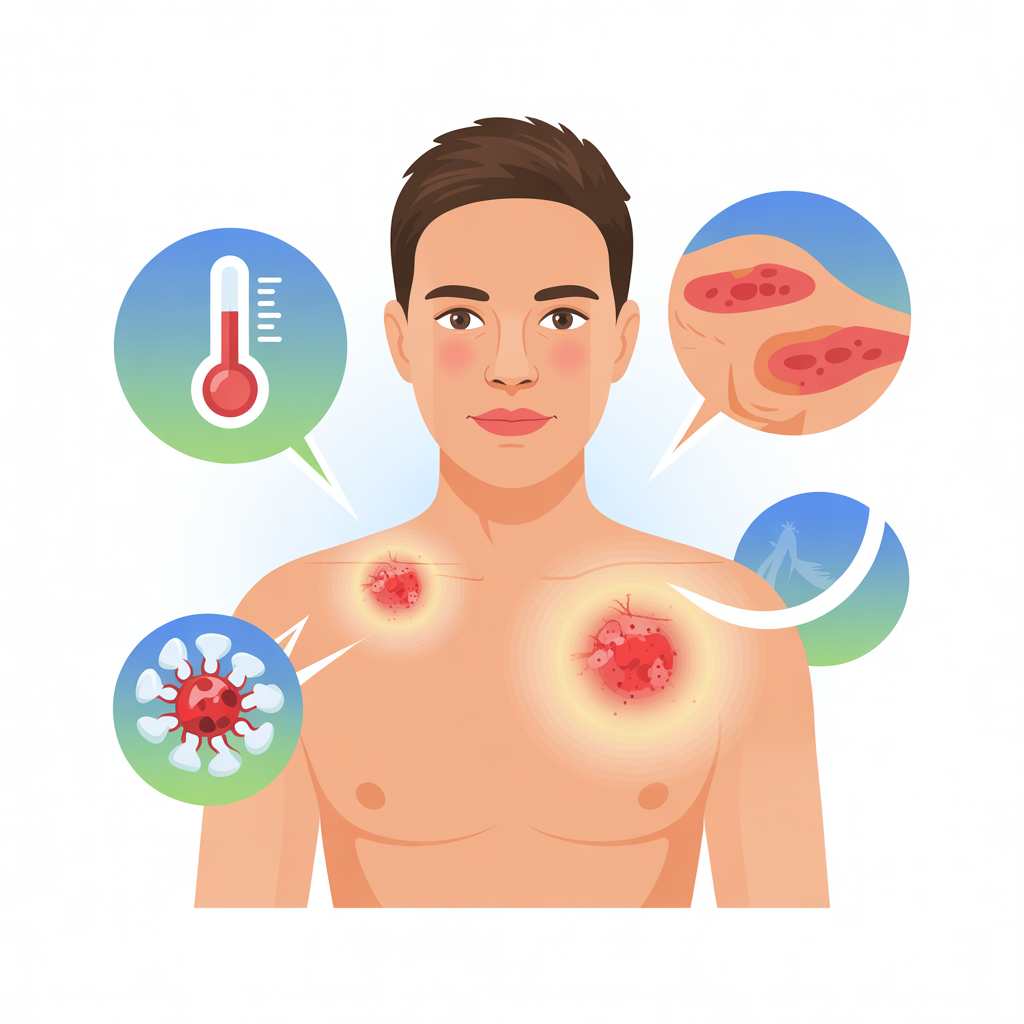
A staph infection is caused by Staphylococcus bacteria — a group of germs that can live harmlessly on the skin, nose, or throat of many healthy people. However, when these bacteria enter the body through a cut, wound, or other break in the skin, they can cause infections ranging from mild skin irritations to life-threatening conditions. Staph infections are more common than most people realize, and recognizing the symptoms early is crucial for getting proper care. This article outlines the most important staph infection symptoms, what causes them, and how you can protect yourself.
1. Skin Redness and Warmth
One of the earliest and most recognizable signs of a staph infection is redness and warmth around the affected area. The skin may appear flushed, irritated, or inflamed, which is the body’s natural immune response to bacterial invasion.
- The redness typically spreads outward from a central point, such as a wound, hair follicle, or insect bite.
- The affected skin may feel noticeably warmer than the surrounding tissue.
- In some cases, red streaks may radiate from the infection site — a sign that the infection may be spreading to lymph vessels, requiring urgent medical attention.
This symptom is especially common in skin staph infections such as cellulitis, impetigo, and folliculitis. It can appear anywhere on the body but is frequently seen on the legs, arms, and face.
2. Swelling and Tenderness
Along with redness, localized swelling and tenderness are hallmark symptoms of a staph infection. The infected area may feel puffy, firm, or painful to the touch.
- Swelling occurs as blood flow increases to the infection site as part of the inflammatory response.
- The area around the infection may be very sensitive, making it uncomfortable to press or apply pressure.
- In deeper infections, swelling may not be visible on the surface but can cause internal pressure and significant pain.
Swelling that rapidly increases in size or spreads to nearby areas should be evaluated by a healthcare professional promptly, as it may indicate a worsening infection.
3. Painful Boils or Abscesses
Boils (furuncles) and abscesses are among the most common manifestations of a staph infection on the skin. A boil is a painful, pus-filled lump that forms under the skin when bacteria infect a hair follicle or oil gland.
- Boils usually start as tender, red bumps and gradually fill with pus, becoming larger and more painful over time.
- They can appear anywhere on the body but are most common on the face, neck, armpits, buttocks, and thighs.
- A carbuncle forms when a cluster of boils merge together, creating a larger, deeper infection with multiple drainage points.
- An abscess is a pocket of pus that can develop in deeper tissue layers, sometimes requiring medical drainage.
Never attempt to squeeze or pop a boil at home, as this can spread the bacteria to surrounding tissue and worsen the infection.
4. Staph Infection Rash
A staph infection rash can take various forms depending on the type of infection and the area of the body involved. It is often one of the most visible and distressing symptoms for patients.
- Impetigo: A highly contagious staph skin infection that causes red sores, which quickly rupture, ooze for a few days, and then form a yellowish-brown crust. It commonly appears around the nose, mouth, and on the face.
- Scalded skin syndrome: Caused by toxins produced by staph bacteria, this condition results in widespread redness, blistering, and skin peeling — resembling a burn. It is most common in infants and young children.
- Folliculitis: An infection of hair follicles that presents as small red bumps or white-headed pimples around hair follicles.
Rashes caused by staph infections may spread rapidly and can be confused with other skin conditions. If you notice an unusual rash that worsens quickly, seek medical advice.
5. Pus or Fluid Discharge
The presence of pus or fluid draining from a wound or skin lesion is a strong indicator of a bacterial infection, including staph. Pus is made up of dead white blood cells, bacteria, and tissue debris.
- Pus from a staph infection may be yellow, green, or white in color and can have an unpleasant odor.
- Wounds that were healing normally may suddenly begin to produce discharge if a staph infection develops.
- In surgical wounds or catheter sites, pus drainage is a red flag for a hospital-acquired staph infection (including MRSA).
Any wound showing signs of purulent discharge should be assessed by a medical professional to determine whether antibiotic treatment is necessary. Always consult a doctor before taking any medication.
6. Fever and Chills
When a staph infection moves beyond the skin and enters the bloodstream or deeper tissues, it can trigger systemic symptoms such as fever and chills. A high fever is the body’s mechanism for fighting off infection.
- Fever associated with staph infection typically ranges from mild (99°F/37.2°C) to high-grade (above 103°F/39.4°C) depending on the severity of the infection.
- Chills, sweating, and shaking may accompany the fever, indicating that the immune system is actively battling the bacteria.
- A persistent or recurring fever alongside other symptoms may suggest that the infection is spreading internally — a medical emergency.
Fever in combination with other staph infection symptoms should always prompt a visit to a healthcare provider.
7. Staph Infection on the Face
The face is one of the most common sites for staph infections, particularly around the nose, mouth, and eyes. Facial staph infections can be especially concerning due to the proximity of the infection to the brain and sinuses.
- Common facial staph infections include impetigo (crusty sores around the mouth and nose), styes (infections of the eyelid), and cellulitis (deep skin infection causing swelling and redness).
- Facial boils or infected pimples caused by staph bacteria may appear similar to regular acne but tend to be more painful, swollen, and slow to heal.
- Cavernous sinus thrombosis — a rare but life-threatening complication — can occur when a facial staph infection spreads to the blood vessels behind the eyes.
Because of the dangerous potential complications, staph infections on the face should receive prompt medical evaluation, especially if they are near the nose or eye area.
8. Blisters or Sores That Won’t Heal
Non-healing sores or blisters are another significant staph infection symptom. While the body typically heals minor cuts and wounds within days, a staph infection can interfere with the healing process.
- Infected wounds may remain open, weeping, or crusted even after several days without improvement.
- Blisters may appear as fluid-filled sacs on the skin surface, which can rupture and leave painful raw areas behind.
- In Staphylococcal scalded skin syndrome, large areas of skin may blister and peel away, resembling a severe burn.
- Diabetics and immunocompromised individuals are especially vulnerable to non-healing wounds that become infected with staph bacteria.
9. Muscle Pain and Fatigue
Beyond visible skin symptoms, a staph infection — especially one that has spread beyond the skin — can cause generalized body symptoms such as muscle aches, joint pain, and extreme fatigue.
- These symptoms occur when the bacteria or their toxins circulate in the bloodstream, affecting multiple organ systems.
- Muscle pain may be diffuse (spread throughout the body) or concentrated near the infection site.
- Fatigue and malaise (a general feeling of being unwell) are common as the immune system diverts energy to fighting the infection.
- Severe muscle pain, particularly when combined with a rash, high fever, and low blood pressure, may be a sign of toxic shock syndrome (TSS) — a life-threatening emergency.
If you experience sudden and severe muscle pain combined with other staph symptoms, seek emergency medical care immediately.
10. Low Blood Pressure and Rapid Heartbeat (Signs of Sepsis)
In the most severe cases, staph bacteria can enter the bloodstream and cause septicemia (blood poisoning), which can rapidly progress to sepsis — a potentially fatal systemic response to infection.
- Low blood pressure (hypotension): The blood pressure drops as the body struggles to maintain circulation in the face of widespread infection.
- Rapid heartbeat (tachycardia): The heart beats faster to compensate for falling blood pressure and tissue hypoxia.
- Rapid breathing: The respiratory rate increases as the body tries to deliver more oxygen to vital organs.
- Confusion or disorientation: Reduced blood flow to the brain can cause sudden mental changes, confusion, or difficulty concentrating.
- Organ failure: Without immediate treatment, sepsis can cause kidney failure, respiratory failure, and other life-threatening complications.
⚠ Warning: Staph-related sepsis is a medical emergency. If you or someone around you shows signs of sepsis — especially following a known or suspected staph infection — call emergency services immediately.
Main Causes of Staph Infections
Understanding what causes a staph infection can help you take preventive steps. The primary causes include:
- Direct skin contact: Staph bacteria spread easily through skin-to-skin contact with an infected person or by touching contaminated surfaces and objects.
- Breaks in the skin: Cuts, wounds, surgical incisions, insect bites, or even minor scrapes provide an entry point for bacteria.
- Contaminated food: Staph bacteria can produce toxins in improperly stored or handled food, leading to food poisoning when consumed.
- Medical devices: Catheters, IV lines, and prosthetic devices used in medical settings can introduce staph bacteria directly into the body.
- Weakened immune system: People with diabetes, HIV/AIDS, cancer, or those undergoing immunosuppressive therapy are at higher risk of developing serious staph infections.
- Healthcare settings: Hospitals and nursing homes are common environments for acquiring drug-resistant staph strains like MRSA (Methicillin-resistant Staphylococcus aureus).
- Sharing personal items: Sharing towels, razors, clothing, or sports equipment can facilitate the spread of staph bacteria.
How to Prevent Staph Infections
While staph bacteria are common and widespread, several practical measures can significantly reduce your risk of infection:
- Wash your hands regularly: Frequent and thorough handwashing with soap and water for at least 20 seconds is one of the most effective ways to prevent staph infections.
- Keep wounds clean and covered: Clean all cuts, scrapes, and wounds promptly with soap and water, apply an antiseptic, and cover them with a clean bandage until healed.
- Avoid sharing personal items: Never share towels, razors, clothing, or bedding with others, especially in gym or communal living environments.
- Practice good food hygiene: Wash hands before handling food, keep food at safe temperatures, and refrigerate leftovers promptly to prevent staph-related food poisoning.
- Use proper hygiene in healthcare settings: If you are hospitalized or undergoing medical procedures, ensure healthcare workers follow proper hand hygiene and sterilization protocols.
- Shower after physical activity: Showering after sports or gym sessions helps remove bacteria from the skin before they can cause infection.
- Strengthen your immune system: A balanced diet, regular exercise, adequate sleep, and stress management can all help support a healthy immune system that is better equipped to resist staph infections.
- Avoid touching your face: Especially the nose and mouth, which are common reservoirs for staph bacteria.
Frequently Asked Questions (FAQ)
What is a staph infection?
A staph infection is an infection caused by Staphylococcus bacteria. These bacteria commonly live on the skin or in the nose without causing harm, but they can cause infections ranging from minor skin problems to serious conditions like pneumonia or bloodstream infections when they enter the body.
What does a staph infection look like?
A staph infection can appear as a red, swollen, and painful bump or sore on the skin. It may resemble a pimple, boil, or spider bite and may ooze pus or other fluids. In some cases, it presents as a spreading rash with blistering or crusting.
How do you get a staph infection?
Staph infections are most commonly contracted through direct skin contact with an infected person, touching contaminated surfaces, or through breaks in the skin such as cuts, wounds, or surgical incisions. They can also spread through contaminated food or medical devices.
What are the early-stage (Day 1) staph infection signs?
In the earliest stage — sometimes as early as day 1 — a staph infection may present as a small red, tender bump or pimple-like sore. There may be slight warmth and swelling around the area. Without treatment, it can quickly progress to a boil or abscess within a few days.
Is a staph infection contagious?
Yes, staph infections can be contagious. They can spread through direct contact with an infected wound or by sharing personal items such as towels and razors. Practicing good hygiene is essential to prevent spreading the bacteria to others.
When should I see a doctor for a staph infection?
You should see a doctor if the infection is rapidly growing, spreading, or not improving; if you develop fever, chills, or feel generally unwell; if pus is draining from the wound; or if the infection is on your face. Seek emergency care immediately if you experience signs of sepsis such as confusion, very low blood pressure, or rapid heartbeat. Always consult a doctor before taking any medication for a staph infection.
Can staph infections go away on their own?
Minor staph skin infections may occasionally resolve on their own with proper wound care and hygiene. However, many staph infections require medical treatment. If symptoms worsen or do not improve within a few days, it is important to see a healthcare professional.
References: