
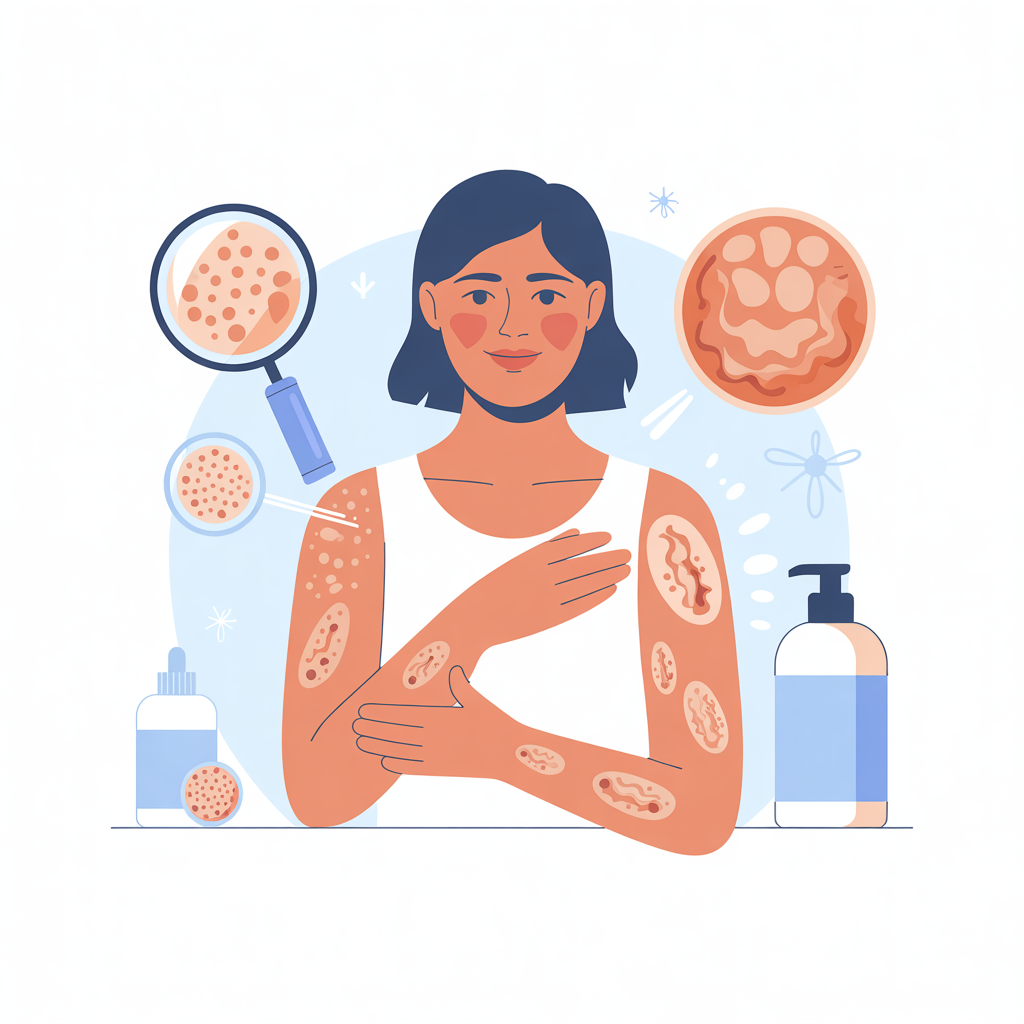
Psoriasis is a chronic autoimmune skin condition that affects millions of people worldwide. It occurs when the immune system mistakenly speeds up the skin cell life cycle, causing cells to build up rapidly on the surface of the skin. This buildup leads to scales and red, inflamed patches that can be itchy, painful, and sometimes debilitating. Psoriasis is not contagious, but it is a lifelong condition that tends to go through cycles — flaring for a few weeks or months, then subsiding or even going into remission. Understanding the symptoms of psoriasis early is crucial for proper management and improving quality of life. Below are the most common signs and symptoms you should be aware of.
1. Red, Inflamed Patches of Skin
One of the most recognizable symptoms of psoriasis is the appearance of red, raised, inflamed patches on the skin. These patches, also known as plaques in the case of plaque psoriasis — the most common form of the disease — are often covered with a silvery-white buildup of dead skin cells called scales.
- The patches can appear anywhere on the body but are most commonly found on the scalp, elbows, knees, and lower back.
- In people with darker skin tones, the patches may appear more purple or dark brown rather than red.
- The size of these patches can vary from small spots to large areas covering significant portions of the body.
- In mild psoriasis, only a few small patches may be present, while severe cases can involve widespread skin coverage.
These red patches are often the first visible sign that prompts individuals to seek medical evaluation. If you notice persistent red, scaly areas on your skin that do not resolve with basic moisturizing, it is important to consult a healthcare professional.
2. Dry, Cracked Skin That May Bleed
Psoriasis skin is significantly different from normal skin. The rapid turnover of skin cells causes the outer layer to become extremely dry and cracked. This dryness is not simply a cosmetic issue — it can lead to painful fissures and bleeding, especially in areas that experience friction or movement.
- The skin may crack open, particularly on the palms, feet, and joints.
- Cracked skin is more susceptible to infections, which can further complicate the condition.
- Bleeding may occur spontaneously or when the scales are scratched or picked at — a phenomenon sometimes referred to as the Auspitz sign, which is a classic clinical indicator of psoriasis.
- Keeping the skin properly moisturized can help reduce cracking, but it does not treat the underlying condition.
This symptom can significantly impact daily activities such as gripping objects, walking, or exercising, making early identification and management essential.
3. Intense Itching and Burning Sensation
A very common and distressing symptom of psoriasis is itching (pruritus). Many patients report that the itching ranges from mild to severe and can be relentless, interfering with sleep, concentration, and overall well-being.
- The affected areas may feel like they are burning, stinging, or sore to the touch.
- Scratching can worsen the plaques and potentially cause new lesions to form — a process known as the Koebner phenomenon, where new psoriasis lesions develop at sites of skin injury.
- The itching tends to be more severe during flare-ups and may reduce significantly during periods of remission.
- Scalp psoriasis, in particular, can cause intense itching that leads to scratching, flaking, and even temporary hair loss in affected areas.
Does psoriasis itch? Absolutely — and for many sufferers, this is one of the most difficult symptoms to manage. Avoiding triggers such as stress, dry weather, and certain skin products can help minimize itching episodes.
4. Thickened, Pitted, or Ridged Nails
Psoriasis does not only affect the skin — it frequently affects the fingernails and toenails as well. Nail psoriasis occurs in a significant percentage of people with the condition and can sometimes be one of the earliest signs of the disease.
- Pitting: Small depressions or pits appear on the surface of the nail, giving it a dotted or dimpled appearance.
- Onycholysis: The nail may separate from the nail bed, creating a white or yellowish discoloration underneath.
- Thickening: Nails can become abnormally thick and difficult to trim.
- Ridging: Horizontal or vertical ridges may develop across the nail surface.
- Discoloration: Nails may turn yellow-brown, resembling a condition sometimes confused with fungal infections.
Nail changes can be cosmetically distressing and, in severe cases, can cause pain and difficulty with fine motor tasks. It is worth noting that nail psoriasis is also strongly associated with psoriatic arthritis, so these nail changes should not be overlooked.
5. Silvery-White Scales on the Skin
Perhaps one of the most visually distinctive features of psoriasis is the presence of silvery-white scales that form on top of the red inflamed patches. These scales are the result of the accelerated buildup of dead skin cells on the surface.
- The scales are typically dry and flaky, and they may shed onto clothing, furniture, or bedding, which can cause social embarrassment.
- In plaque psoriasis, the scales are thick and adhere firmly to the underlying skin.
- On the scalp, these scales can resemble severe dandruff, but unlike dandruff, psoriasis scales are thicker, drier, and more defined in their borders.
- Gently removing scales without proper care can lead to bleeding and skin damage.
The shedding of these scales is a chronic process in untreated or poorly managed psoriasis. Moisturizers and medicated topical treatments prescribed by a doctor can help soften and reduce the buildup of scales.
6. Plaques in Skin Folds (Inverse Psoriasis)
Inverse psoriasis is a specific subtype of psoriasis that appears in skin folds rather than on the outer surfaces of joints. It affects areas such as the armpits, groin, under the breasts, and around the genitals.
- Unlike classic plaque psoriasis, inverse psoriasis typically appears as smooth, shiny, red patches without the typical thick scaling, because the moisture in skin folds prevents scale formation.
- The skin in these areas is often very sensitive and raw, making friction from clothing or movement extremely uncomfortable.
- Sweating can aggravate inverse psoriasis, leading to increased irritation and soreness.
- This form of psoriasis is also more prone to secondary fungal or bacterial infections due to the warm and moist environment of skin folds.
Because inverse psoriasis occurs in sensitive areas, it is often more uncomfortable than other types. If you notice persistent smooth red patches in skin fold areas, a dermatologist should be consulted for proper diagnosis and guidance.
7. Psoriasis Rash on the Scalp
Scalp psoriasis is extremely common, affecting more than half of all people who have psoriasis at some point. The psoriasis rash on the scalp can range from mild, with slight scaling, to severe, with thick crusted plaques that cover the entire scalp.
- It may extend beyond the scalp onto the forehead, back of the neck, and around the ears.
- Symptoms include redness, silvery-white scales, dandruff-like flaking, itching, and a dry scalp.
- Intense scratching can lead to temporary hair thinning or loss, though scalp psoriasis itself does not cause permanent hair loss — the hair usually grows back once the condition is treated.
- The flaking from scalp psoriasis can fall onto the shoulders, resembling dandruff but is typically thicker and more defined.
Scalp psoriasis can be particularly challenging to manage due to the presence of hair, which can make application of topical treatments more difficult. Specialized shampoos and scalp treatments recommended by a doctor can help manage this symptom effectively.
8. Joint Pain, Swelling, and Stiffness (Psoriatic Arthritis)
Psoriasis is not limited to the skin. Approximately 30% of people with psoriasis develop a related condition called psoriatic arthritis, which causes inflammation in the joints. This can occur before, after, or alongside skin symptoms.
- Affected joints may be swollen, stiff, and painful, particularly in the morning or after periods of inactivity.
- Psoriatic arthritis can affect any joint in the body, but it most commonly targets the fingers, toes, wrists, knees, and lower back.
- Dactylitis — a sausage-like swelling of an entire finger or toe — is a hallmark feature of psoriatic arthritis.
- Enthesitis — inflammation where tendons or ligaments attach to bones — commonly affects the heel (Achilles tendon) or the sole of the foot.
- Without proper management, psoriatic arthritis can lead to progressive joint damage and disability.
If you have psoriasis and begin experiencing joint pain or swelling, it is critical to inform your doctor immediately. Early diagnosis and management of psoriatic arthritis can prevent long-term joint damage.
9. Soreness and Pain Around Patches
Beyond itching, many individuals with psoriasis experience significant soreness and pain in and around the affected skin patches. This pain can range from mild discomfort to sharp, burning pain that impacts everyday functioning.
- The skin around psoriasis plaques can be tender to the touch, making it uncomfortable to wear clothing, exercise, or even sleep comfortably.
- Areas subject to repeated friction — such as the elbows, knees, and feet — are especially painful during flare-ups.
- In severe cases, pain from widespread psoriasis can be comparable to the pain experienced in other chronic pain conditions, significantly affecting mental health and quality of life.
- Genital psoriasis, in particular, can cause significant pain and discomfort that affects intimate relationships and self-esteem.
Pain associated with psoriasis should be discussed openly with a healthcare provider, as it is often undertreated and has a major impact on a patient’s overall well-being and daily life.
10. Emotional and Psychological Impact
While psoriasis is primarily a physical condition, its impact on mental and emotional health is profound and well-documented. The visible nature of the condition, combined with chronic discomfort, can take a significant psychological toll.
- Many people with psoriasis experience low self-esteem, embarrassment, and social anxiety due to the visible appearance of their skin.
- Studies show that individuals with psoriasis have a significantly higher risk of developing depression and anxiety compared to the general population.
- The condition can lead to social withdrawal, avoidance of activities such as swimming or sports, and difficulties in relationships and the workplace.
- The unpredictability of flare-ups — not knowing when or how severely the condition will worsen — contributes to chronic stress, which in turn can trigger further flare-ups, creating a difficult cycle.
- Mental health is an integral part of psoriasis management. Psychological support, counseling, and peer support groups can be highly beneficial for those affected.
It is important that both patients and healthcare providers recognize and address the emotional burden of psoriasis alongside the physical symptoms. Seeking psychological support is a valid and important part of comprehensive psoriasis care.
Main Causes of Psoriasis
Understanding what causes psoriasis can help in identifying personal triggers and managing the condition more effectively. While the exact cause is not fully understood, the following factors are known to play significant roles:
- Immune System Dysfunction: Psoriasis is an autoimmune disease. The immune system — specifically T cells and other white blood cells — mistakenly attacks healthy skin cells, triggering rapid skin cell production.
- Genetics: A family history of psoriasis is one of the strongest risk factors. If one parent has psoriasis, a child has a significantly increased risk of developing it; the risk is even higher if both parents are affected.
- Environmental Triggers: Even in people with a genetic predisposition, psoriasis often requires an environmental trigger to activate or worsen. Common triggers include:
- Infections, particularly streptococcal throat infections (strep throat)
- Stress and emotional trauma
- Skin injury such as cuts, scrapes, sunburn, or insect bites (Koebner phenomenon)
- Smoking and heavy alcohol consumption
- Certain medications, including beta-blockers, lithium, and antimalarials
- Cold, dry weather and reduced sunlight exposure
- Obesity: Excess body weight is associated with a higher risk of psoriasis and more severe symptoms, partly because fat tissue promotes inflammation throughout the body.
- Hormonal Changes: Hormonal fluctuations, particularly in women during puberty, pregnancy, and menopause, can influence psoriasis activity.
How to Prevent Psoriasis Flare-Ups
While there is currently no cure for psoriasis, several lifestyle measures and preventive strategies can significantly reduce the frequency and severity of flare-ups:
- Manage Stress: Since stress is one of the most common psoriasis triggers, practicing stress-reduction techniques such as meditation, yoga, deep breathing exercises, and mindfulness can be very effective.
- Keep Skin Moisturized: Applying thick, fragrance-free moisturizers regularly helps reduce dryness, scaling, and itching. Moisturize immediately after bathing while the skin is still slightly damp to lock in moisture.
- Avoid Known Triggers: Identify and minimize exposure to your personal triggers, whether they are certain foods, stress, cold weather, alcohol, or smoking.
- Protect Your Skin: Avoid skin injuries, harsh soaps, and abrasive scrubbing. Use gentle, pH-balanced cleansers and wear protective clothing in situations where skin injury is possible.
- Maintain a Healthy Weight: Following an anti-inflammatory diet rich in fruits, vegetables, whole grains, and lean proteins while reducing processed foods and sugar can support overall skin health and reduce inflammation.
- Limit Alcohol and Quit Smoking: Both alcohol and tobacco are known to worsen psoriasis symptoms and reduce the effectiveness of treatments.
- Get Moderate Sun Exposure: Controlled, moderate exposure to natural sunlight can help slow the rapid growth of skin cells associated with psoriasis. However, be cautious to avoid sunburn, which can trigger a flare-up.
- Consult a Dermatologist Regularly: Regular check-ups with a dermatologist allow for early detection of flare-ups and timely adjustments to your management plan. Always consult your doctor before starting or stopping any treatment or medication.
Frequently Asked Questions (FAQ)
What is psoriasis?
Psoriasis is a chronic autoimmune skin disease that causes the rapid buildup of skin cells, leading to scaling, inflammation, redness, and discomfort on the skin’s surface. It is a non-contagious, long-term condition that often follows a pattern of flares and remissions.
Does psoriasis itch?
Yes, itching is one of the most common and bothersome symptoms of psoriasis. The intensity can range from mild to severe and is often described as burning or stinging. Scratching can worsen the plaques and trigger new lesions.
What does a psoriasis rash look like?
A psoriasis rash typically appears as raised, red or dark pink patches of skin covered with silvery-white scales. The patches are usually well-defined and can appear on any part of the body, most commonly on the elbows, knees, scalp, and lower back.
What causes psoriasis to flare up?
Common triggers for psoriasis flare-ups include stress, skin injuries, infections (especially strep throat), certain medications, smoking, alcohol consumption, cold weather, and hormonal changes.
Is psoriasis contagious?
No, psoriasis is not contagious. You cannot catch psoriasis from another person through physical contact, sharing items, or any other form of transmission. It is an autoimmune condition influenced by genetics and environmental triggers.
What is inverse psoriasis?
Inverse psoriasis is a form of psoriasis that develops in skin folds, such as the armpits, groin, under the breasts, and around the genitals. Unlike typical plaque psoriasis, it appears as smooth, shiny, red patches without thick scaling, and is often more sensitive and prone to irritation.
Can psoriasis affect the joints?
Yes. Around 30% of people with psoriasis develop psoriatic arthritis, which causes joint pain, swelling, and stiffness. If you have psoriasis and experience joint symptoms, you should consult a doctor promptly to prevent long-term joint damage.
When should I see a doctor about psoriasis symptoms?
You should see a doctor if you notice persistent red, scaly patches on your skin, significant itching or pain, nail changes, or joint discomfort. Early diagnosis is key to managing the condition effectively and preventing complications.
References: