
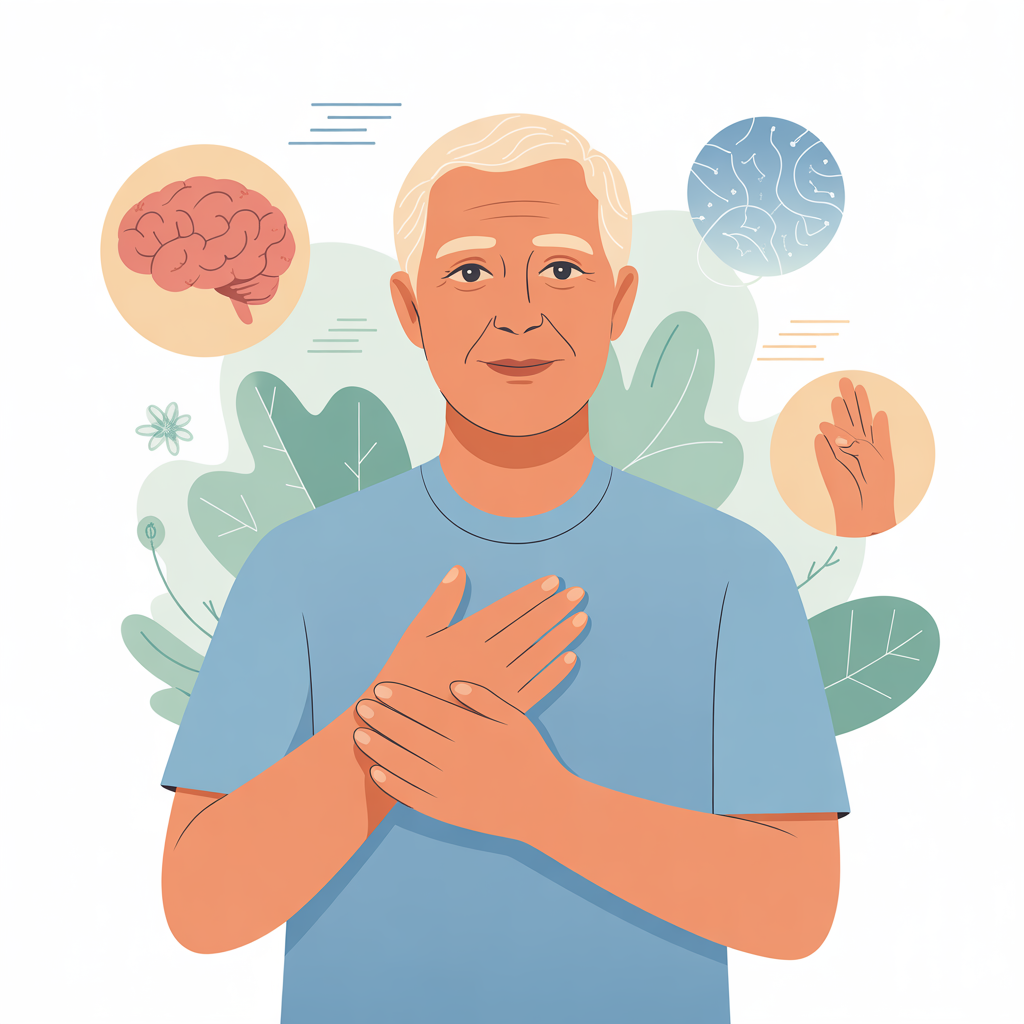
Parkinson’s disease is a progressive neurological disorder that affects millions of people worldwide. It occurs when nerve cells in the brain that produce dopamine — a chemical messenger responsible for smooth, coordinated movement — begin to break down or die. As dopamine levels decrease, the brain loses its ability to control movement effectively, leading to a wide range of physical and cognitive symptoms.
Understanding the symptoms of Parkinson’s disease is crucial for early detection and timely medical intervention. While there is currently no cure, recognizing the signs early can significantly improve quality of life. In this article, we explore the most common symptoms of Parkinson’s disease, its known causes, preventive strategies, and answers to frequently asked questions.
1. Tremors (Shaking)
One of the most recognizable symptoms of Parkinson’s disease is a tremor, or involuntary shaking. It typically begins in a limb — often the hands or fingers — and may present as a “pill-rolling” motion, where the thumb and forefinger rub together rhythmically.
- When it occurs: Tremors most commonly happen at rest and tend to diminish when the person is actively using the affected limb.
- Which body parts are affected: Hands, fingers, arms, legs, jaw, and face can all be involved.
- Progression: The tremor may start on one side of the body and gradually spread to both sides as the disease progresses.
It is important to note that not everyone with Parkinson’s disease will experience tremors. Some individuals may present with other primary symptoms instead.
2. Muscle Rigidity (Stiffness)
Muscle stiffness, also called rigidity, is another hallmark symptom of Parkinson’s disease. It occurs when muscles remain tense and contracted even when the person is at rest, causing discomfort and a limited range of motion.
- How it feels: The stiffness may feel like resistance in the muscles when trying to move, often described as moving with a “lead pipe” sensation.
- Where it appears: It commonly affects the neck, shoulders, arms, and legs.
- Daily impact: Rigidity can make everyday tasks such as dressing, writing, or turning in bed extremely difficult and painful.
Muscle rigidity can also contribute to a reduced arm swing when walking — one of the subtle early signs often observed by family members and healthcare professionals.
3. Bradykinesia (Slowness of Movement)
Bradykinesia refers to the slowing down of voluntary movement, and it is considered one of the most disabling symptoms of Parkinson’s disease. Over time, simple movements that were once automatic become difficult and time-consuming.
- Examples: Difficulty initiating movement, slower walking speed, reduced facial expressions (known as “masked face” or hypomimia), and decreased blinking.
- Impact on speech: Speech may become softer (hypophonia) and more monotone, making communication challenging.
- Fine motor skills: Tasks like buttoning a shirt, writing (which may become small and cramped — a phenomenon called micrographia), or eating with utensils can become significantly harder.
Bradykinesia is a key diagnostic criterion for Parkinson’s disease and is usually assessed by a neurologist through standardized movement tests.
4. Postural Instability and Balance Problems
As Parkinson’s disease advances, many individuals develop postural instability — difficulty maintaining balance and an upright posture. This symptom typically appears in the later stages of the disease.
- Characteristic posture: People with Parkinson’s often develop a stooped or forward-leaning posture with bent knees and elbows.
- Risk of falls: Impaired balance greatly increases the risk of falls, which is a major source of injury and reduced independence among Parkinson’s patients.
- “Festination”: Some individuals experience a shuffling gait where steps become short and rapid, making it hard to stop walking — a phenomenon known as festination.
Balance problems in Parkinson’s disease are related to the brain’s decreased ability to integrate sensory information and coordinate muscle responses properly.
5. Freezing of Gait
Freezing of gait is a sudden, temporary inability to move the feet forward, despite the intention to walk. It is one of the more disabling and unpredictable symptoms of Parkinson’s disease.
- When it happens: Freezing most often occurs when starting to walk, passing through doorways, turning, or approaching a destination.
- Duration: Episodes typically last only a few seconds but can feel much longer and can be frightening for the individual.
- Fall risk: Freezing is a major cause of falls in people with Parkinson’s and can severely limit mobility and independence.
Visual cues, such as lines on the floor, can sometimes help people “unfreeze” and resume walking, a technique often used in physical therapy.
6. Sleep Disturbances
Sleep problems are extremely common in Parkinson’s disease and can significantly affect overall health and daily functioning. These disturbances can manifest in several ways:
- REM Sleep Behavior Disorder (RBD): One of the earliest and most specific signs, RBD causes individuals to physically act out their dreams — kicking, punching, or shouting during sleep. In some cases, this symptom appears years before a formal Parkinson’s diagnosis.
- Insomnia: Difficulty falling or staying asleep is common, often worsened by discomfort from muscle stiffness or an urge to urinate frequently at night.
- Excessive daytime sleepiness: Many patients feel unusually sleepy during the day, which may interfere with work and social activities.
- Restless leg syndrome: An uncomfortable urge to move the legs, especially at night, is also frequently reported.
Addressing sleep problems is an important aspect of managing Parkinson’s disease, and a sleep specialist or neurologist should be consulted for proper evaluation and care.
7. Non-Motor Symptoms: Depression and Anxiety
Parkinson’s disease affects much more than movement. Depression and anxiety are among the most common non-motor symptoms, affecting up to 50% of people with Parkinson’s at some point in their illness.
- Why it happens: Changes in brain chemistry, particularly in dopamine, serotonin, and norepinephrine levels, contribute directly to mood disorders in Parkinson’s patients.
- Symptoms of depression: Persistent sadness, loss of interest in activities, fatigue, feelings of hopelessness, and difficulty concentrating.
- Symptoms of anxiety: Excessive worry, panic attacks, social withdrawal, and irritability.
These emotional symptoms are not simply a reaction to the diagnosis — they are part of the neurological changes caused by the disease itself. Mental health support, counseling, and lifestyle interventions such as exercise and social engagement can all play important roles in managing these symptoms.
8. Cognitive Changes and Dementia
While Parkinson’s is primarily known as a movement disorder, cognitive changes are a significant concern for many patients, particularly in the later stages of the disease.
- Mild cognitive impairment (MCI): Early-stage difficulties may include slowed thinking, trouble with attention, memory lapses, and difficulty with planning or problem-solving.
- Parkinson’s disease dementia (PDD): As the disease progresses, some individuals develop more pronounced dementia, including severe memory loss, confusion, and difficulty recognizing familiar people or places.
- Hallucinations and delusions: Some people with Parkinson’s experience visual hallucinations — seeing things that are not there — which can be distressing for both patients and caregivers.
Not all people with Parkinson’s develop dementia, and the severity varies widely. Regular cognitive assessments by a neurologist are important for monitoring and managing these changes.
9. Loss of Smell (Anosmia)
A reduced or complete loss of the sense of smell — known as anosmia — is one of the earliest and most overlooked symptoms of Parkinson’s disease. It can precede the onset of motor symptoms by several years.
- How common is it: Studies suggest that up to 90% of people with Parkinson’s experience some degree of smell loss.
- Why it happens: The olfactory system (responsible for smell) is one of the first areas of the brain affected by the abnormal protein deposits (Lewy bodies) associated with Parkinson’s disease.
- Impact on quality of life: Loss of smell can affect appetite, food enjoyment, and the ability to detect hazardous odors such as gas leaks or spoiled food.
Because anosmia is associated with many conditions (including colds and sinus infections), it is rarely considered a warning sign of Parkinson’s disease on its own. However, in combination with other symptoms, it can be an important early indicator.
10. Autonomic Dysfunction
The autonomic nervous system — which controls involuntary bodily functions — is also affected by Parkinson’s disease. This leads to a variety of autonomic symptoms, including:
- Constipation: One of the most common and earliest non-motor symptoms. Slowed digestive movement can cause infrequent and difficult bowel movements.
- Orthostatic hypotension: A sudden drop in blood pressure when standing up, causing dizziness, lightheadedness, or even fainting.
- Excessive sweating: Abnormal sweating, particularly during off-periods when symptoms are more pronounced, is frequently reported.
- Urinary problems: Urgency, frequency, and incontinence are common complaints among Parkinson’s patients.
- Sexual dysfunction: Both men and women may experience difficulties with sexual function, including reduced libido and physical challenges.
These autonomic symptoms can be just as disabling as the motor symptoms and require careful monitoring and management by healthcare professionals.
11. Speech and Swallowing Difficulties
Parkinson’s disease can significantly impact speech and swallowing, both of which rely on precise muscle coordination that is disrupted by the disease.
- Dysarthria: Speech may become soft, slurred, rapid, or monotone. The person may trail off at the end of sentences or have difficulty projecting their voice, making it hard for others to understand them.
- Hypophonia: A noticeable reduction in voice volume is a common complaint and can be one of the first speech symptoms to appear.
- Dysphagia (swallowing difficulties): As the disease progresses, swallowing can become impaired, increasing the risk of choking or aspiration pneumonia — a condition where food or liquid enters the lungs.
- Drooling: Because swallowing becomes less automatic, saliva may pool in the mouth and lead to drooling (sialorrhea), particularly at night.
Speech-language therapy can play an important role in helping patients maintain communication and safe swallowing for as long as possible.
12. Skin Changes and Seborrheic Dermatitis
An often-overlooked symptom of Parkinson’s disease is its effect on the skin. The autonomic nervous system involvement in Parkinson’s can alter skin function in several ways:
- Oily or greasy skin: Many people with Parkinson’s develop seborrheic dermatitis — a condition characterized by scaly, oily patches on the scalp, face, and chest. This is related to changes in the sebaceous glands driven by neurological dysfunction.
- Excessive or reduced sweating: Sweating irregularities can make the skin appear either overly moist or unusually dry.
- Pallor: Some patients notice a paler complexion due to reduced facial expression and diminished blood flow regulation.
While skin changes alone are not diagnostic of Parkinson’s, they are a recognized non-motor feature of the condition and can affect patients’ comfort and self-esteem.
Main Causes of Parkinson’s Disease
The exact cause of Parkinson’s disease remains unknown in most cases, but research has identified several factors that may contribute to its development:
- Genetic mutations: Specific gene mutations — including in the SNCA, LRRK2, PINK1, and Parkin genes — have been linked to familial forms of Parkinson’s disease. However, inherited Parkinson’s accounts for only a small percentage of all cases.
- Environmental factors: Prolonged exposure to certain pesticides, herbicides (such as rotenone and paraquat), industrial chemicals, and heavy metals has been associated with an increased risk of developing Parkinson’s.
- Lewy bodies: Abnormal clumps of a protein called alpha-synuclein — known as Lewy bodies — accumulate in brain cells and are believed to play a central role in the neuronal damage seen in Parkinson’s disease.
- Mitochondrial dysfunction: Impaired energy production in brain cells may contribute to the death of dopamine-producing neurons in the substantia nigra.
- Aging: Age is the strongest known risk factor. The risk of developing Parkinson’s increases significantly after the age of 60.
- Gender: Men are approximately 1.5 times more likely to develop Parkinson’s disease than women, though the reasons for this difference are not yet fully understood.
- Head trauma: Repeated head injuries have been suggested as a potential risk factor, though the link is not conclusively established.
Prevention of Parkinson’s Disease
Because the exact cause of Parkinson’s disease is not fully understood, there is no guaranteed way to prevent it. However, research suggests that certain lifestyle habits may reduce the risk or delay the onset of the disease:
- Regular physical exercise: Aerobic exercise, strength training, and activities like yoga or tai chi may help protect the brain and improve neurological health. Studies suggest that physically active individuals have a lower risk of developing Parkinson’s disease.
- A healthy, balanced diet: A diet rich in antioxidants — including fruits, vegetables, whole grains, and healthy fats (such as those found in the Mediterranean diet) — may help protect brain cells from oxidative damage.
- Limit exposure to toxins: Reducing exposure to pesticides, herbicides, and industrial chemicals — particularly for those who work in agriculture or manufacturing — may lower the risk of developing Parkinson’s disease.
- Adequate sleep: Prioritizing quality sleep supports overall brain health and may reduce neurological disease risk.
- Caffeine consumption: Some epidemiological studies have found an association between regular coffee and tea consumption and a reduced risk of Parkinson’s disease, although this is not considered a medical recommendation.
- Avoiding head injuries: Using helmets during cycling, skiing, and contact sports can reduce the risk of traumatic brain injury, which has been associated with Parkinson’s risk.
- Regular medical check-ups: Early detection of risk factors and timely consultation with a healthcare provider remain important strategies for maintaining long-term neurological health.
Frequently Asked Questions (FAQ)
What is Parkinson’s disease?
Parkinson’s disease is a progressive neurological disorder caused by the gradual loss of dopamine-producing neurons in a region of the brain called the substantia nigra. This leads to a range of motor and non-motor symptoms that worsen over time. It is the second most common neurodegenerative disease after Alzheimer’s disease.
What are the first signs of Parkinson’s disease?
Early signs of Parkinson’s disease can include a slight tremor in one hand, reduced arm swing while walking, a softer or more monotone voice, loss of smell (anosmia), constipation, sleep disturbances (particularly REM sleep behavior disorder), and small or cramped handwriting (micrographia). These early signs are often subtle and easy to overlook.
At what age does Parkinson’s disease typically develop?
Parkinson’s disease most commonly affects people over the age of 60. However, early-onset Parkinson’s disease can occur in people under 50, accounting for about 5–10% of all cases. Young-onset Parkinson’s (under age 40) is rare but does occur.
Is Parkinson’s disease hereditary?
In most cases, Parkinson’s disease is not directly inherited. Only about 10–15% of cases are linked to specific genetic mutations. However, having a close family member with Parkinson’s does slightly increase an individual’s risk compared to the general population.
Can Parkinson’s disease be cured?
Currently, there is no cure for Parkinson’s disease. However, a combination of medical management, physical therapy, speech therapy, occupational therapy, and lifestyle adjustments can significantly improve quality of life and help manage symptoms. Always consult a qualified neurologist or healthcare provider for personalized guidance.
How is Parkinson’s disease diagnosed?
There is no single definitive test for Parkinson’s disease. Diagnosis is primarily clinical, based on medical history, a neurological examination, and the presence of characteristic symptoms such as tremor, rigidity, and bradykinesia. Brain imaging (such as DaTscan) and other tests may be used to rule out other conditions.
What is the difference between Parkinson’s disease and Parkinsonism?
Parkinsonism is an umbrella term referring to conditions that cause Parkinson-like symptoms (such as tremor, rigidity, and slow movement) but have different underlying causes. Parkinson’s disease is the most common form of Parkinsonism, but other causes include multiple system atrophy, progressive supranuclear palsy, certain medications, and toxin exposure.
Is Parkinson’s disease fatal?
Parkinson’s disease itself is not typically considered a direct cause of death. However, complications arising from the disease — such as falls and fractures, aspiration pneumonia (from swallowing difficulties), or infections — can be life-threatening, particularly in the advanced stages. The life expectancy of someone with Parkinson’s can be close to normal with proper care and management.
References:
- Mayo Clinic – Parkinson’s Disease: Symptoms & Causes
- National Institutes of Health (NIH) – Parkinson’s Disease
- National Institute of Neurological Disorders and Stroke (NINDS) – Parkinson’s Disease
- Parkinson’s Foundation – What Is Parkinson’s?
- Healthline – Parkinson’s Disease: Symptoms, Causes, and Treatment
- WebMD – Parkinson’s Disease Symptoms