
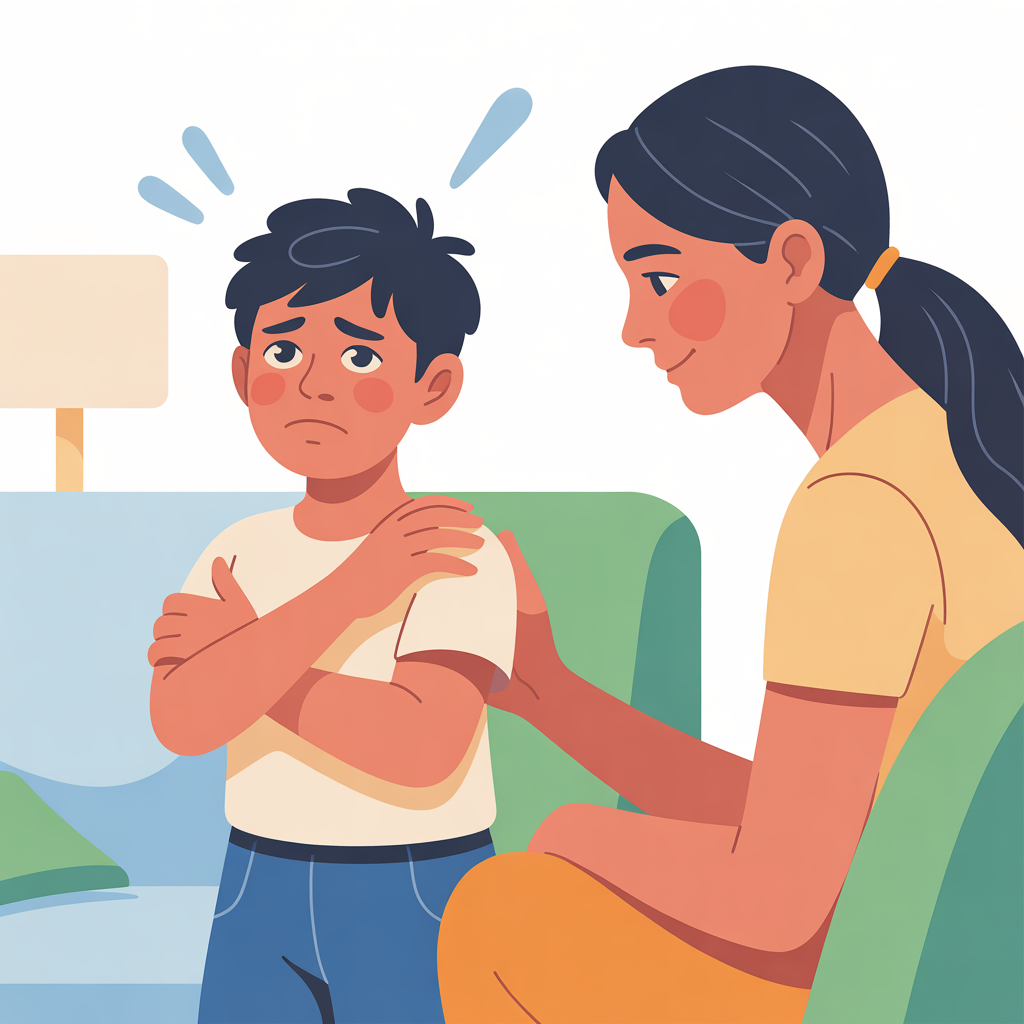
Oppositional Defiant Disorder, commonly known as ODD, is a behavioral condition most often diagnosed in children and adolescents. It is characterized by a persistent pattern of angry, defiant, argumentative, and vindictive behavior directed toward authority figures such as parents, teachers, or caregivers. Unlike typical childhood disobedience, ODD symptoms are more intense, longer-lasting, and significantly disruptive to the child’s daily life, relationships, and academic performance.
According to the American Psychiatric Association, ODD affects approximately 1% to 16% of school-age children, with symptoms typically appearing before the age of 8. Understanding what ODD is and recognizing its early signs is the first and most critical step toward getting the right help. Below, we outline the most common and clinically recognized symptoms of Oppositional Defiant Disorder.
1. Frequent and Intense Anger Outbursts
One of the most visible and defining symptoms of ODD is the tendency to experience sudden, severe episodes of anger that seem disproportionate to the triggering situation. Children with ODD do not simply get upset — their emotional reactions are explosive, overwhelming, and difficult to de-escalate.
- These outbursts can include screaming, crying uncontrollably, throwing objects, or physical aggression.
- The anger often appears with very little provocation, even in response to minor corrections or requests from adults.
- Unlike typical childhood tantrums, these episodes occur frequently (at least several times per week) and persist well beyond the preschool years.
- The child may struggle to self-regulate emotions even after the trigger has passed, remaining irritable or hostile for an extended period.
This pattern of explosive anger can strain family relationships, disrupt classroom environments, and negatively impact the child’s social development.
2. Persistent Arguing with Adults
Children with ODD engage in ongoing, exhausting arguments with parents, teachers, and other authority figures. This is not a normal level of questioning or pushback — it is a relentless need to challenge, debate, and resist almost every instruction or rule presented to them.
- They may argue back immediately and loudly when given any directive, no matter how simple.
- Arguments often escalate rapidly and without logical reasoning, fueled more by defiance than by genuine disagreement.
- The child may refuse to acknowledge any authority, claiming rules are “unfair” or “stupid” as a default response.
- This behavior is consistent across multiple settings, including home, school, and social environments.
This symptom alone can be one of the most exhausting aspects of ODD for caregivers and educators, as it makes routine communication nearly impossible without conflict.
3. Deliberate Defiance of Rules and Requests
A core feature of Oppositional Defiant Disorder is the active and intentional refusal to comply with rules, instructions, and requests from authority figures. Unlike a child who forgets or misunderstands a rule, a child with ODD knowingly and purposefully refuses to follow it.
- They will openly disobey even clearly stated rules, often making direct eye contact to signal their non-compliance.
- This defiance is consistent — not just a one-time event or phase — and occurs in multiple settings.
- Simple tasks like doing homework, getting ready for school, or following a bedtime routine can become daily battles.
- When consequences are applied, the child may defy them as well, showing little concern for punishment or reward systems.
4. Deliberately Annoying Others
Children with ODD frequently engage in behaviors that are specifically designed to irritate, frustrate, or provoke other people, particularly authority figures. This is not accidental attention-seeking — it is an intentional pattern of behavior aimed at causing distress in others.
- They may repeatedly perform behaviors they know upset others, even after being warned multiple times.
- This can include making loud noises, invading personal space, mocking others, or intentionally breaking rules in front of adults.
- The behavior intensifies when the child perceives they are getting the desired reaction — frustration, anger, or helplessness from the adult.
- Peers and siblings are also frequent targets of this deliberate annoyance, which leads to social isolation over time.
5. Blaming Others for Their Own Mistakes
A hallmark symptom of ODD is a persistent refusal to accept personal responsibility for misbehaviors, errors, or poor choices. Children with this disorder almost always externalize blame, pointing fingers at others instead of reflecting on their own actions.
- When caught breaking a rule or causing a problem, their first response is typically to claim it was someone else’s fault.
- They may accuse siblings, classmates, or even teachers of setting them up or provoking them.
- This blame-shifting is not just occasional — it is a deeply ingrained behavioral pattern that is resistant to correction.
- Over time, this lack of accountability makes it very difficult for the child to learn from consequences or develop healthy interpersonal relationships.
6. Easily Annoyed or Touchy Temperament
Children with ODD are often described as having an extremely low frustration threshold. They are easily irritated by everyday situations, comments, or interactions that most children would handle without difficulty.
- Minor inconveniences — such as a change in plans, a misplaced toy, or not getting their way — can trigger a significant emotional reaction.
- They may seem perpetually “on edge,” as though they are constantly waiting for something to go wrong.
- Their touchiness often extends to social situations, where they misinterpret neutral comments as criticism or attacks.
- This hypersensitivity makes it difficult for them to engage in group activities, family outings, or collaborative schoolwork without conflict arising.
7. Expressing Anger and Resentment Frequently
Beyond situational anger, children with ODD often carry a deeply rooted sense of resentment and hostility toward the world around them. This chronic emotional negativity is a significant symptom that colors nearly every interaction they have.
- They may verbally express that they hate school, their family, or life in general on a regular basis.
- Resentment is often directed at authority figures who enforce rules, even when those rules are reasonable and fair.
- This pervasive negativity is not simply a bad mood — it is a lasting emotional state that persists across different days and settings.
- It can co-exist with or escalate into symptoms of depression or anxiety, especially in older children and adolescents.
8. Vindictive or Spiteful Behavior
According to the DSM-5 (Diagnostic and Statistical Manual of Mental Disorders), one of the diagnostic criteria for ODD includes being spiteful or vindictive at least twice within six months. Children with ODD may seek revenge or retaliation when they feel wronged — even over very minor perceived slights.
- They may intentionally damage another person’s belongings, spread rumors, or socially exclude peers as acts of revenge.
- Vindictive behavior can be planned and calculated rather than impulsive, showing a level of deliberate intention.
- They often hold grudges for extended periods and bring up past grievances to justify current acts of spite.
- This behavior is particularly alarming because it can escalate and lead to more serious conduct problems if not addressed early.
9. Difficulty Maintaining Friendships and Social Relationships
While not always listed as a standalone diagnostic criterion, difficulty sustaining healthy social relationships is a significant and consequential symptom of ODD that emerges from the combination of all the behaviors described above.
- Peers often find children with ODD exhausting, unpredictable, or threatening to be around, leading to social rejection.
- Their tendency to argue, blame, and retaliate makes cooperative play and teamwork nearly impossible.
- Over time, repeated social failures can deepen feelings of frustration and resentment, creating a vicious cycle that worsens ODD behaviors.
- Social isolation in childhood is also a known risk factor for the development of depression, anxiety, and other mental health disorders in adolescence.
10. Behavioral Symptoms That Occur Across Multiple Settings
An important clinical marker of ODD — and what distinguishes it from situational misbehavior — is that the symptoms are not limited to one specific environment. A child who only acts out at home but behaves perfectly at school may not meet the clinical threshold for ODD. True ODD involves behavioral disruption in at least two settings.
- At home: Constant conflicts with parents and siblings, refusal to follow household rules, explosive reactions to boundaries.
- At school: Defiance toward teachers, arguments with peers, inability to follow classroom procedures.
- In social settings: Difficulty playing with other children, conflicts during extracurricular activities, or problems interacting with other adults such as coaches or relatives.
The persistence and pervasiveness of these symptoms across multiple contexts is a key factor that mental health professionals use when diagnosing ODD.
Main Causes of Oppositional Defiant Disorder
There is no single known cause of ODD. Researchers believe it results from a complex interaction of biological, psychological, and environmental factors:
- Genetic factors: ODD tends to run in families. Children with parents or close relatives who have ODD, ADHD, mood disorders, or substance use disorders are at higher risk.
- Brain development differences: Studies suggest that children with ODD may have differences in the areas of the brain responsible for impulse control, decision-making, and emotional regulation.
- Temperament: Children who are naturally more emotionally reactive, impulsive, or intense may be more prone to developing ODD.
- Parenting style: Inconsistent discipline, overly harsh punishment, neglect, or a lack of supervision can contribute to the development of oppositional behaviors.
- Family instability: Exposure to domestic conflict, parental mental illness, substance abuse in the home, or frequent changes in caregivers significantly increases risk.
- Co-occurring conditions: ODD is frequently associated with Attention-Deficit/Hyperactivity Disorder (ADHD), learning disabilities, anxiety disorders, and depression, all of which can worsen defiant behavior.
- Social and environmental stressors: Poverty, neighborhood violence, school difficulties, and peer rejection are external factors that can trigger or aggravate ODD symptoms.
How to Help Prevent ODD from Worsening
While ODD cannot always be fully prevented — especially when genetic or neurological factors are involved — there are meaningful steps that parents, caregivers, and educators can take to reduce the risk and prevent the condition from escalating:
- Establish consistent routines and clear boundaries: Children thrive with predictable structure. Clear, consistent rules with fair and calm consequences help reduce power struggles.
- Use positive reinforcement: Catch your child doing something good. Praise and reward positive behavior regularly rather than focusing exclusively on negative behavior.
- Model emotional regulation: Children learn how to manage emotions by watching adults. Demonstrating calm conflict resolution and emotional control is one of the most powerful tools a parent has.
- Seek early professional evaluation: If you notice persistent defiant or oppositional behavior early, consult a pediatrician, child psychologist, or mental health professional as soon as possible. Early intervention leads to significantly better outcomes.
- Strengthen the parent-child relationship: Spending quality, conflict-free time with your child helps build trust and reduces power struggles over time.
- Address co-occurring conditions: If your child also shows signs of ADHD, anxiety, or learning difficulties, getting treatment for those conditions can dramatically reduce ODD behaviors. Always consult a qualified healthcare provider before considering any form of medication.
- Support at school: Work with teachers and school counselors to create a consistent behavioral plan that bridges home and school environments.
Frequently Asked Questions (FAQ)
What is Oppositional Defiant Disorder (ODD)?
ODD is a childhood behavioral disorder characterized by a consistent and ongoing pattern of angry, argumentative, defiant, and vindictive behavior toward authority figures. It goes beyond typical childhood disobedience in its frequency, intensity, and duration.
At what age does ODD typically appear?
ODD symptoms usually appear before the age of 8, though they can also emerge in adolescence. The disorder is more commonly identified during the preschool and early school years.
Is ODD the same as ADHD?
No, they are different disorders, though they frequently co-occur. ADHD involves difficulties with attention, hyperactivity, and impulse control. ODD specifically involves defiant and oppositional behavior. A child can have both conditions simultaneously.
How is ODD diagnosed?
ODD is diagnosed by a qualified mental health professional or pediatrician based on clinical criteria from the DSM-5. The child must display at least four symptoms from specific behavioral categories for at least six months, in a way that causes significant disruption in daily life across multiple settings.
Can ODD go away on its own?
In some cases, milder forms of ODD may improve as a child matures — especially with consistent parenting strategies and a stable home environment. However, without professional support, ODD can worsen and evolve into more serious conduct disorders in adolescence. Early intervention is strongly recommended.
Is ODD more common in boys or girls?
ODD is generally more commonly diagnosed in boys before adolescence. However, rates tend to equalize between genders during the teenage years. Girls may also express ODD symptoms differently — often less physically aggressive but equally defiant and argumentative.
Can adults have ODD?
Yes. While ODD is typically considered a childhood disorder, some adults continue to exhibit oppositional and defiant patterns if the condition was not properly addressed during childhood. In adults, it may overlap with other personality or mood disorders.
References:
- Mayo Clinic – Oppositional Defiant Disorder: Symptoms and Causes
- National Institute of Mental Health (NIMH) – Disruptive Behavior Disorders
- American Academy of Child and Adolescent Psychiatry (AACAP) – Oppositional Defiant Disorder
- Centers for Disease Control and Prevention (CDC) – Children’s Mental Health: Behavior Disorders
- American Psychiatric Association – Disruptive, Impulse-Control, and Conduct Disorders