
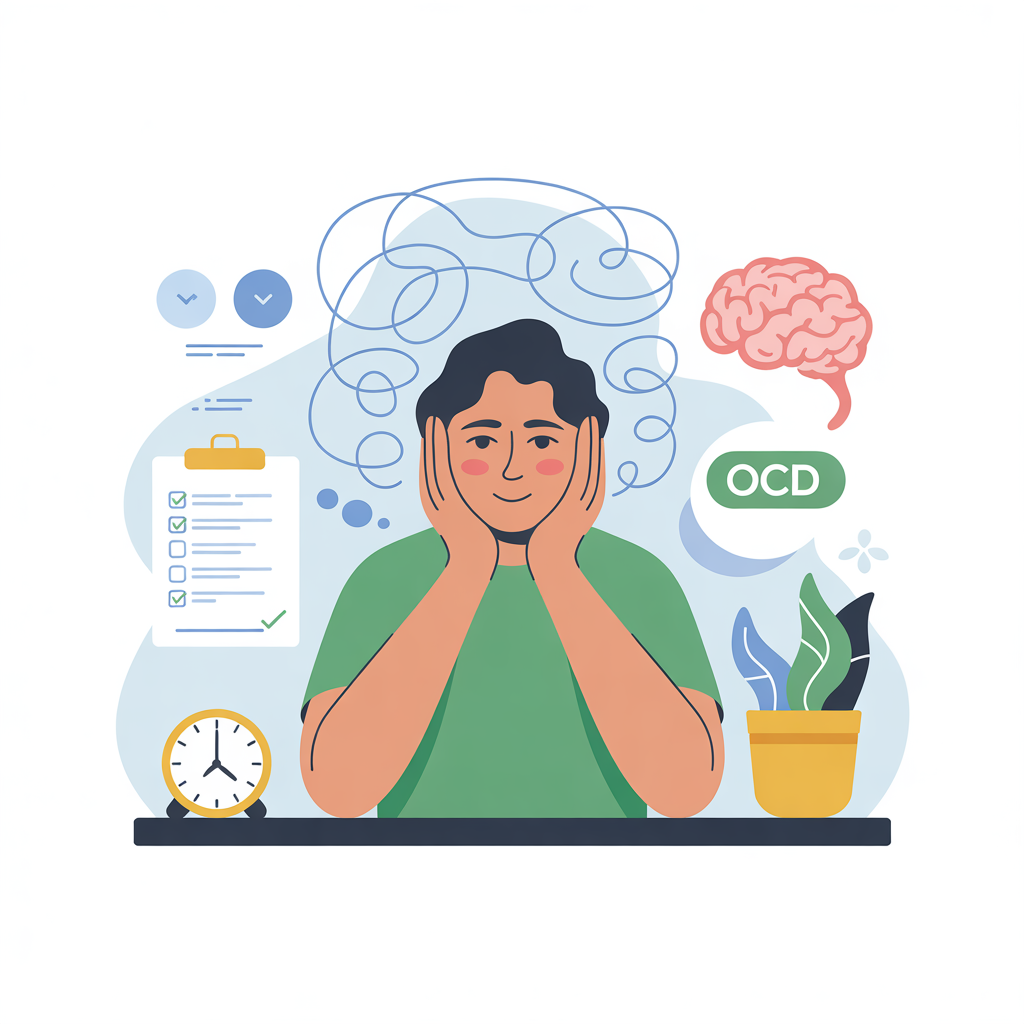
Obsessive-compulsive disorder (OCD) is a chronic and often debilitating mental health condition that affects millions of people worldwide. It is characterized by a cycle of unwanted, intrusive thoughts (obsessions) and repetitive behaviors or mental acts (compulsions) that a person feels driven to perform in response to those thoughts. Unlike occasional worries or habits that most people experience, OCD symptoms are persistent, time-consuming, and can significantly interfere with daily life, relationships, and work.
Many people wonder, “Do I have OCD?” — and while only a qualified mental health professional can make a formal diagnosis, understanding the most common signs and symptoms is the first step toward getting the right support. In this article, we break down 12 key symptoms of OCD, explore its main causes, and answer the most frequently asked questions about this condition.
12 Common Symptoms of Obsessive-Compulsive Disorder (OCD)
1. Intrusive and Unwanted Thoughts (Obsessions)
One of the hallmark symptoms of OCD is the presence of persistent, unwanted, and distressing thoughts, images, or urges — known as obsessions — that repeatedly enter a person’s mind despite their efforts to ignore or suppress them.
These intrusive thoughts are not simply excessive worries about real-life problems. Common themes include:
- Fear of contamination (e.g., germs, dirt, chemicals)
- Fear of harming oneself or others (even though the person has no intention of doing so)
- Unwanted sexual or religious thoughts that feel morally reprehensible to the individual
- Need for symmetry or exactness — a nagging feeling that things are “not right”
- Fear of losing control or acting impulsively
People with OCD typically recognize that these thoughts are irrational or exaggerated, yet they are unable to dismiss them, which causes significant anxiety and distress.
2. Compulsive Repetitive Behaviors
In response to obsessions, individuals with OCD feel compelled to perform certain repetitive behaviors or rituals — known as compulsions — in an attempt to reduce anxiety or prevent a feared event. These compulsions may provide temporary relief but do not offer long-term satisfaction and often reinforce the OCD cycle.
Common compulsive behaviors include:
- Washing hands excessively or in a specific pattern
- Checking locks, appliances, or switches multiple times
- Counting objects or repeating actions a certain number of times
- Arranging items in a precise or symmetrical order
- Repeating words, phrases, or prayers silently
It is important to note that compulsions are not pleasurable — they are performed out of a desperate need to reduce distress, not out of enjoyment.
3. Excessive Fear of Contamination
Contamination OCD is one of the most recognized subtypes. Individuals experience an intense, irrational fear of being contaminated by germs, dirt, bodily fluids, chemicals, or even “moral contamination” (feeling tainted after contact with someone they consider bad or immoral).
This fear can manifest as:
- Avoiding touching doorknobs, public surfaces, or other people’s belongings
- Excessive handwashing that leads to raw, cracked, or bleeding skin
- Spending hours cleaning the home even when it is already clean
- Throwing away items believed to be contaminated
- Avoiding certain locations or situations perceived as “dirty”
This symptom can severely limit a person’s ability to function in public spaces or maintain normal social interactions.
4. Pathological Doubting and Need for Reassurance
People with OCD often struggle with pathological doubt — an inability to feel certain that they have completed a task correctly, even after checking multiple times. This symptom is sometimes described as a persistent feeling that “something is wrong” or “not done properly.”
Examples include:
- Repeatedly checking whether the stove is turned off, even after confirming multiple times
- Returning home several times to make sure the door is locked
- Constantly seeking reassurance from friends, family, or online sources that nothing bad will happen
- Re-reading emails or messages multiple times before sending them
This symptom not only wastes significant amounts of time but also places strain on relationships as loved ones are frequently asked for reassurance.
5. Need for Symmetry, Order, and Exactness
Some individuals with OCD feel an overwhelming need for things to be arranged symmetrically, in a specific order, or “just right.” This goes beyond mere preferences for tidiness — it is driven by intense discomfort or distress when things feel uneven, misaligned, or incomplete.
Signs of this symptom include:
- Spending excessive time arranging books, furniture, or household items in a precise manner
- Feeling intense unease or anxiety when objects are out of place
- Redoing tasks repeatedly until they feel perfectly complete
- Needing to perform actions an equal number of times on both sides of the body (e.g., touching the left wall after touching the right)
This symptom is often misunderstood as simply being “neat” or “perfectionistic,” but in OCD, the distress involved is far more intense and disruptive.
6. Hoarding Behaviors Linked to OCD
While hoarding disorder is a separate diagnosis, OCD-related hoarding involves the compulsive inability to discard items due to obsessive fears — such as fear that throwing something away will lead to a catastrophic event, or that a discarded item may be needed in the future.
This differs from general clutter or collecting and may include:
- Keeping broken, useless, or expired items out of fear of consequences
- Extreme difficulty making decisions about what to keep or discard
- Distress at the thought of getting rid of any possessions
- Accumulating items to the point where living spaces become unusable
This symptom can severely impact daily functioning, hygiene, and relationships with others living in the same space.
7. Intrusive Violent or Aggressive Thoughts
A particularly distressing and often misunderstood symptom of OCD is the presence of unwanted violent or aggressive thoughts. These thoughts may involve images of harming loved ones, oneself, or strangers — not because the person wants to act on them, but because the thoughts feel horrifying and uncontrollable.
Important distinctions:
- People with OCD who experience these thoughts are not dangerous — in fact, the thoughts cause them extreme guilt and shame
- The distress caused by the thoughts is precisely what makes them an OCD symptom rather than genuine intent
- Compulsions may include mentally reviewing situations, seeking reassurance, or avoiding objects (e.g., knives) that trigger the thoughts
This symptom is sometimes called “Pure O” OCD, though compulsions are still present — they are just more mental than behavioral.
8. Unwanted Sexual Obsessions
OCD can also manifest through intrusive, unwanted sexual thoughts or images that are deeply distressing and ego-dystonic (meaning they are contrary to the person’s values and desires). These may include thoughts about inappropriate relationships, sexual identity doubts, or taboo scenarios.
People experiencing this symptom often:
- Feel extreme shame and guilt about the thoughts
- Go to great lengths to avoid triggers (e.g., avoiding certain people, places, or media)
- Seek constant mental reassurance that they are not “bad” or “deviant”
- Confuse OCD-driven sexual uncertainty (HOCD) with genuine questions about sexual identity
This symptom is often kept secret due to shame, which can delay diagnosis and treatment significantly.
9. Religious and Moral Obsessions (Scrupulosity)
Scrupulosity is a form of OCD centered on religious, ethical, or moral concerns. Individuals experience intrusive thoughts about sinning, offending God, being morally corrupt, or violating ethical principles — even when their behavior is entirely appropriate.
Common manifestations include:
- Excessive praying, confessing, or performing religious rituals repeatedly
- Constant fear of having done something immoral or sinful without being aware of it
- Seeking reassurance from religious leaders or loved ones about one’s morality
- Avoiding certain situations or people for fear of being “contaminated” morally
Scrupulosity can be particularly difficult to recognize because the behaviors may appear as religious devotion when they are actually driven by OCD-related anxiety.
10. Emotional Avoidance and Behavioral Withdrawal
As OCD symptoms intensify, many individuals begin to avoid situations, people, or environments that trigger their obsessions. This avoidance may initially seem helpful but ultimately reinforces the OCD cycle and leads to increased isolation and reduced quality of life.
Examples of OCD-related avoidance include:
- Avoiding hospitals, public restrooms, or crowded areas due to contamination fears
- Refusing to use knives or other objects that trigger violent obsessions
- Withdrawing from relationships out of fear of harming or offending others
- Declining social invitations to avoid triggering rituals in public
Over time, this behavioral withdrawal can contribute to depression, loneliness, and a significant shrinking of one’s daily life and activities.
11. Time-Consuming Rituals That Disrupt Daily Life
A defining feature of OCD — as opposed to normal habits or preferences — is that obsessions and compulsions consume a significant amount of time, generally more than one hour per day, and cause marked distress or impairment in social, occupational, or other important areas of functioning.
This can look like:
- Spending 2–3 hours each morning on hygiene rituals before leaving the house
- Being unable to complete work tasks due to repeated checking or counting
- Arriving late to appointments because rituals could not be completed “correctly”
- Having difficulty sleeping due to intrusive thoughts or bedtime rituals
The time lost to OCD rituals can have cascading effects on a person’s career, academic performance, and personal relationships.
12. High Levels of Anxiety, Guilt, and Shame
Underlying all OCD symptoms is a profound emotional burden — including intense anxiety, guilt, shame, and distress. People with OCD are often acutely aware that their thoughts and behaviors are irrational, which adds an additional layer of suffering.
Emotional symptoms associated with OCD include:
- Persistent feelings of dread, unease, or impending doom
- Deep guilt about intrusive thoughts, even without any harmful action
- Shame about the content of obsessions (particularly violent or sexual thoughts)
- Fear of being judged, misunderstood, or labeled as “crazy” or “dangerous”
- Emotional exhaustion from constant mental battles with intrusive thoughts
These emotional symptoms are often what prompt individuals to finally seek professional help — and they are a valid and important part of the OCD experience.
Main Causes of OCD
The exact cause of OCD is not fully understood, but research suggests it is the result of a combination of biological, psychological, and environmental factors. Here are the most well-supported contributors:
- Genetics: OCD tends to run in families. Individuals who have a first-degree relative (parent or sibling) with OCD are at a significantly higher risk of developing the condition themselves. However, no single “OCD gene” has been identified — the genetic contribution is complex and involves multiple genes.
- Brain Structure and Neurological Factors: Neuroimaging studies have shown differences in the brain activity and structure of people with OCD, particularly in circuits involving the orbitofrontal cortex, anterior cingulate cortex, and basal ganglia. Dysregulation of the neurotransmitter serotonin is also widely implicated, as are dopamine and glutamate systems.
- Environmental Triggers: Stressful or traumatic life events — such as abuse, loss, illness, or major life transitions — can trigger or worsen OCD symptoms in predisposed individuals. High-stress environments may activate latent vulnerabilities.
- Learned Behaviors: Some researchers suggest that compulsive behaviors can develop through classical and operant conditioning — when a person learns that performing a ritual temporarily reduces anxiety, the behavior is reinforced and repeated.
- Cognitive Factors: Certain thinking patterns — such as inflated responsibility, overestimation of threat, intolerance of uncertainty, and the belief that thinking something is equivalent to doing it (thought-action fusion) — are strongly associated with OCD onset and maintenance.
- PANDAS/PANS (in children): In some children, OCD symptoms appear or worsen suddenly following a streptococcal infection. This condition is known as Pediatric Autoimmune Neuropsychiatric Disorders Associated with Streptococcal Infections (PANDAS) and represents a specific biological pathway to OCD.
Can OCD Be Prevented?
Because OCD has strong biological and genetic components, it cannot always be prevented. However, certain strategies may help reduce the risk of developing OCD or lessen the severity of symptoms in those who are predisposed:
- Early intervention: Recognizing the signs of OCD early — especially in children and adolescents — and seeking professional evaluation promptly can prevent the condition from becoming entrenched.
- Stress management: Developing healthy coping strategies for stress (such as mindfulness, regular exercise, adequate sleep, and social support) may help reduce the likelihood that environmental triggers will activate OCD symptoms.
- Avoiding reinforcement of compulsions: Understanding that giving in to compulsions provides only temporary relief and ultimately worsens OCD is an important insight. Learning to tolerate uncertainty is a key protective factor.
- Mental health education: Increasing awareness of OCD in schools, families, and communities can help reduce stigma and encourage earlier help-seeking behavior.
- Building psychological resilience: Developing strong emotional regulation skills, a growth mindset, and healthy thought patterns from an early age may reduce vulnerability to OCD in genetically predisposed individuals.
Note: If you or someone you know is showing signs of OCD, it is always best to consult a licensed mental health professional for a comprehensive assessment and guidance.
Frequently Asked Questions (FAQ) About OCD
Q: What is OCD?
OCD (Obsessive-Compulsive Disorder) is a chronic mental health condition characterized by recurring, unwanted thoughts (obsessions) and repetitive behaviors or mental acts (compulsions) that a person feels driven to perform. It can affect people of all ages, genders, and backgrounds.
Q: What are the most common signs of OCD?
The most common signs include excessive hand washing, repeated checking behaviors, intrusive unwanted thoughts, the need for symmetry and order, and spending more than one hour a day on rituals that cause distress and interfere with normal functioning.
Q: Are OCD symptoms different in women?
OCD affects both men and women, but some research suggests that women may be more likely to experience contamination obsessions and cleaning compulsions, as well as OCD symptoms that worsen during hormonal changes such as pregnancy or the postpartum period. Scrupulosity and hoarding may also present differently across genders.
Q: Can a person have OCD without obvious compulsions?
Yes. Some people experience what is sometimes called “Pure O” OCD, where obsessions are prominent but compulsions are primarily mental (such as mental reviewing, mental reassurance-seeking, or thought suppression) rather than visible behavioral rituals.
Q: Is OCD the same as being a perfectionist?
No. While people with OCD may appear perfectionistic, the key difference is that OCD involves significant distress, time loss, and impaired functioning driven by anxiety — not simply high personal standards or a preference for neatness.
Q: How do I know if I have OCD?
If you experience persistent intrusive thoughts that cause anxiety, feel compelled to perform repetitive behaviors to reduce that anxiety, and these experiences consume significant time and interfere with your daily life, you may be experiencing OCD symptoms. Only a qualified mental health professional can provide a formal diagnosis — if you are concerned, please seek professional evaluation.
Q: Can children develop OCD?
Yes. OCD can begin in childhood, typically between ages 8 and 12, or during the teenage years. Early-onset OCD often has a stronger genetic component. Children may express symptoms differently than adults, often involving fears of harm coming to loved ones or excessive concern about doing things “the right way.”
Q: Is OCD a lifelong condition?
OCD is often a chronic condition, but its severity can fluctuate over time. With appropriate professional support and evidence-based approaches, many people with OCD are able to manage their symptoms effectively and lead fulfilling lives. Early recognition and intervention are key factors in a better long-term outlook.
References:
- National Institute of Mental Health (NIMH) – Obsessive-Compulsive Disorder
- Mayo Clinic – Obsessive-Compulsive Disorder: Symptoms and Causes
- American Psychiatric Association – What is Obsessive-Compulsive Disorder?
- International OCD Foundation – About OCD
- WebMD – Obsessive-Compulsive Disorder (OCD)
- NHS UK – Obsessive-Compulsive Disorder (OCD)