
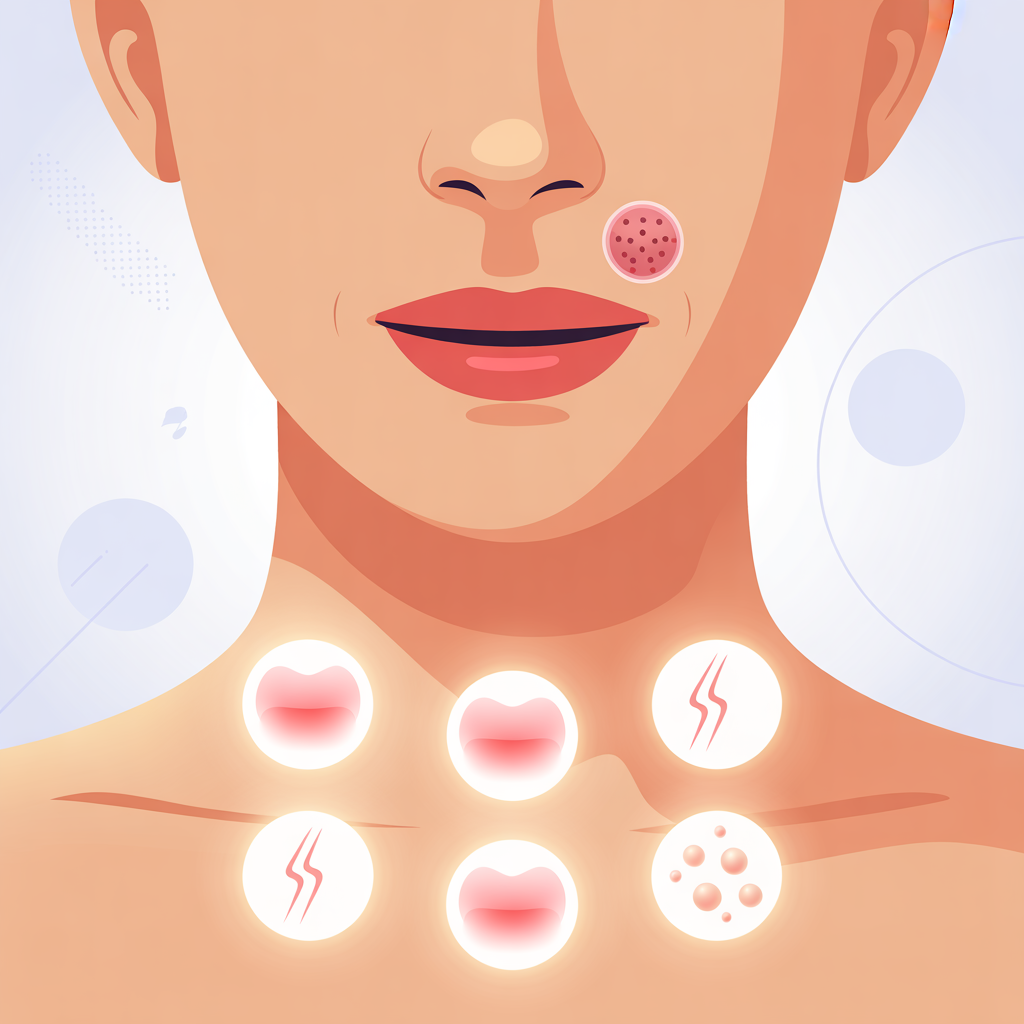
A cold sore — also known as a fever blister — is a small, fluid-filled blister that most commonly appears on or around the lips. Caused by the herpes simplex virus type 1 (HSV-1), cold sores are incredibly common, affecting an estimated 67% of the global population under age 50, according to the World Health Organization. While the virus stays in your body for life, symptoms tend to appear in distinct stages and can range from mild discomfort to significant pain. Knowing how to recognize the early signs of a cold sore — including a blister on the lip, tingling sensations, or swollen glands — can help you respond quickly and prevent spreading the virus to others. In this article, we break down the 10 key symptoms of cold sores you should never ignore.
1. Tingling or Itching Sensation (Prodromal Stage)
The very first sign of an incoming cold sore is often a tingling, itching, or burning feeling around the lips or the skin bordering the mouth. This is known as the prodromal stage and typically occurs 1 to 2 days before any visible blister appears.
- The sensation may feel like a faint prickling under the skin.
- Some people describe it as a subtle numbness or sensitivity to touch.
- This stage is actually when the virus is most contagious, even without any visible sore.
- Recognizing this early warning sign is crucial — it gives you the best window to act before the outbreak fully develops.
If you’ve had cold sores before, you’ll likely become very familiar with this feeling and be able to identify it quickly. First-time sufferers, however, may not immediately recognize it as a cold sore warning.
2. Redness and Skin Irritation Around the Lips
Shortly after the tingling begins, the affected area around the lip or mouth may start to look red, slightly swollen, and irritated. This is the inflammatory response of the skin reacting to the HSV-1 virus multiplying beneath the surface.
- The redness is usually localized — appearing in a small patch rather than spreading broadly.
- The skin may feel tender to touch even before a blister forms.
- In some cases, the area may appear slightly raised or puffy.
This early redness can sometimes be mistaken for a pimple or dry skin. However, the characteristic location — typically on or just outside the lip border — and the accompanying tingling are important distinguishing features of a cold sore on the lip.
3. Appearance of Small, Fluid-Filled Blisters
One of the most recognizable symptoms of a cold sore is the development of small, clustered, fluid-filled blisters. These typically appear within 2 to 3 days after the initial tingling sensation.
- The blisters are usually tiny and grouped together in a cluster formation.
- They are filled with a clear or slightly yellowish fluid.
- Most commonly found on the outer edge of the lips (the vermilion border), though they can also appear on the nose, chin, or inside the mouth.
- The blisters are highly contagious at this stage — direct contact can easily spread the virus.
These blisters are what most people recognize as a classic fever blister on the lip. They may feel sore and sensitive, especially when touched, eating, or drinking.
4. Pain and Soreness at the Blister Site
As the blisters develop and grow, they often bring noticeable pain, soreness, or discomfort. This can range from a mild ache to a more intense throbbing sensation depending on the individual and the severity of the outbreak.
- Pain can make everyday activities such as eating, drinking, or talking uncomfortable.
- The area around the sore may feel raw and hypersensitive.
- In more severe cases, especially with cold sores in the mouth, pain can interfere with normal oral function.
- Pain levels tend to peak during the blister and ulcer stages before gradually subsiding.
This symptom is particularly distressing for children experiencing their first outbreak, as the pain can be quite intense for those who have not built up any immune response to HSV-1 yet.
5. Blisters Bursting and Forming Open Sores (Ulcer Stage)
After a few days, the fluid-filled blisters will typically burst or break open, releasing the fluid inside and leaving behind shallow, open sores. This is known as the ulcer stage and is considered the most painful phase of the cold sore cycle.
- The open sores appear as small, red, wet ulcers on or around the lip.
- They can ooze a clear or yellowish fluid that is highly contagious.
- This stage typically lasts 2 to 3 days.
- The risk of spreading the virus to others through direct contact (kissing, sharing utensils, etc.) is at its highest during this phase.
It is important not to pick at or pop the blisters intentionally, as doing so can increase the risk of bacterial infection and may cause scarring.
6. Crusting and Scabbing Over the Sore
Following the ulcer stage, the open sore begins to dry out and form a yellowish-brown crust or scab. This is a sign that the body’s immune system is healing the wound and is a normal part of the cold sore lifecycle.
- The scab may feel tight, itchy, or uncomfortable as the skin repairs itself.
- It is common for the scab to crack or bleed slightly when the mouth moves — particularly during eating or smiling.
- Cracking of the scab can slow healing and temporarily increase soreness.
- Keeping the area moisturized with a gentle lip balm can help reduce cracking (always consult your doctor for suitable products).
The crust stage usually lasts 2 to 3 days before the skin underneath begins to heal. During this time, while less contagious than earlier stages, some risk of virus transmission still exists.
7. Healing and Skin Fading
The final stage of a cold sore involves the scab falling off naturally and the skin gradually returning to normal. Total healing from the initial tingling to full skin recovery typically takes 8 to 10 days, though this can vary.
- Redness and residual pinkness may linger for a few days after the scab falls off.
- For most people, cold sores heal without scarring — though repeated outbreaks in the same area over many years could potentially cause minor skin changes.
- The skin may remain slightly sensitive for a short period after full healing.
Once healed, the virus retreats back to the nerve cells and remains dormant — only to potentially reactivate when triggered again in the future.
8. Swollen Lymph Nodes
During an active cold sore outbreak — especially a first-time or primary infection — some individuals experience swollen and tender lymph nodes, particularly in the neck or jaw area. This is the body’s immune system actively responding to the herpes simplex virus.
- Swollen glands may feel like small, firm lumps under the jaw or on the sides of the neck.
- The area may be tender or slightly painful when pressed.
- Swollen lymph nodes are more commonly seen during primary (first-ever) outbreaks than recurrent ones.
- They typically resolve on their own as the outbreak heals.
While swollen lymph nodes associated with cold sores are generally harmless and temporary, persistent or significantly enlarged glands should always be evaluated by a healthcare provider.
9. Fever, Headache, and Flu-Like Symptoms
Particularly during a primary HSV-1 infection (the very first time someone contracts the virus), cold sore symptoms can extend well beyond the lips. Many people experience systemic flu-like symptoms including:
- Low-grade to moderate fever — which is why the condition is often called a “fever blister.”
- Headaches and general feelings of fatigue or malaise.
- Sore throat and difficulty swallowing, particularly if sores develop inside the mouth or throat.
- Muscle aches and general body discomfort.
- Irritability — especially noticeable in young children experiencing their first outbreak.
These systemic symptoms are less common in recurrent outbreaks, where the immune system is already somewhat equipped to handle the virus. However, if fever is high or persistent, it is important to consult a doctor.
10. Cold Sores Inside the Mouth (Oral Herpes)
While most cold sores appear on or near the outer lip, it is also possible to develop cold sores inside the mouth — on the gums, inner cheeks, tongue, or roof of the mouth. This is more commonly associated with a primary HSV-1 infection and can be quite severe.
- Mouth sores appear as small, painful ulcers on the soft tissues inside the mouth.
- They can make eating, drinking, and speaking extremely uncomfortable.
- Excessive drooling may occur, particularly in young children.
- This condition is sometimes referred to as herpetic gingivostomatitis in clinical settings.
It is worth noting that cold sores inside the mouth are different from canker sores (aphthous ulcers), which are not caused by a virus and are not contagious. If you are unsure about the nature of your mouth sores, seek professional medical advice.
What Causes Cold Sores?
Cold sores are caused by the herpes simplex virus type 1 (HSV-1). Once you are infected, the virus remains in your body permanently, lying dormant in the nerve cells near your ear. Various triggers can reactivate the virus, leading to recurring outbreaks. The most common causes and triggers include:
- Initial infection with HSV-1: Often contracted during childhood through contact with an infected person’s saliva — such as a kiss from a family member.
- Stress: Physical or emotional stress is one of the most well-known triggers of cold sore reactivation.
- Fever or illness: Being sick with a cold, flu, or other infection can weaken the immune system and trigger an outbreak.
- Sun exposure: Prolonged exposure to UV rays — particularly on the lips — is a very common trigger.
- Hormonal changes: Fluctuations in hormones, such as those during menstruation, can trigger outbreaks in some people.
- Weakened immune system: Conditions or medications that suppress immunity can make cold sore outbreaks more frequent and severe.
- Fatigue and lack of sleep: Not getting enough rest compromises the immune system and may invite reactivation.
- Lip or skin injuries: Trauma to the lips — such as dental work, chapped lips, or minor cuts — can trigger a local outbreak.
How to Prevent Cold Sores
While there is currently no cure for HSV-1, certain lifestyle habits and precautions can significantly reduce the frequency and severity of cold sore outbreaks and help prevent spreading the virus to others.
- Avoid direct contact during outbreaks: Refrain from kissing or sharing items like lip balm, towels, or eating utensils during an active outbreak.
- Protect your lips from the sun: Use a lip balm with SPF protection, especially during prolonged sun exposure.
- Manage stress effectively: Practices such as meditation, yoga, regular exercise, and adequate sleep can help reduce stress-related triggers.
- Maintain a strong immune system: A balanced diet rich in vitamins and minerals, regular physical activity, and sufficient rest all contribute to a healthy immune defense.
- Wash hands frequently: This is especially important after touching an active cold sore, to avoid spreading the virus to other parts of your body (such as your eyes) or to other people.
- Avoid touching your face: Minimize touching your mouth, nose, and eyes — particularly when sores are active.
- Be mindful during first-time contact: Be cautious about close oral contact with individuals who have an active cold sore, especially around infants and young children.
If you experience frequent or severe outbreaks, speak with your healthcare provider. They can assess your situation and recommend appropriate options tailored to your health needs.
Frequently Asked Questions (FAQ)
What is a cold sore?
A cold sore is a small, fluid-filled blister that forms on or around the lips. It is caused by the herpes simplex virus type 1 (HSV-1) and typically heals on its own within 8 to 10 days.
Are cold sores the same as herpes on the lips?
Yes. Cold sores (also called fever blisters or herpes labial) are caused by HSV-1, a form of the herpes virus. The term “herpes on the lip” refers to the same condition.
How do you get cold sores?
Cold sores are spread through direct contact with an infected person’s saliva or skin — such as kissing, sharing drinks, or using the same utensils. Many people contract HSV-1 during childhood without even realizing it.
What triggers cold sores to come back?
Common triggers include stress, illness, fever, sun exposure, hormonal changes, fatigue, and a weakened immune system. Identifying your personal triggers can help reduce the frequency of outbreaks.
Are cold sores contagious even without a visible blister?
Yes. The virus can be transmitted even before a blister appears — during the tingling or prodromal stage — and sometimes even when no symptoms are present at all (known as asymptomatic shedding).
Can cold sores appear inside the mouth?
Yes. While less common in recurrent outbreaks, cold sores can develop inside the mouth, on the gums, cheeks, or tongue — especially during a primary (first-ever) infection.
Is a cold sore the same as a canker sore?
No. Cold sores are caused by HSV-1, appear on the outer lip, and are contagious. Canker sores are non-viral, non-contagious ulcers that develop inside the mouth. They are two distinct conditions.
When should I see a doctor about a cold sore?
You should consult a healthcare professional if cold sores are very frequent, unusually severe, or accompanied by high fever, eye symptoms, or signs of bacterial infection. Always seek medical advice before taking any medication to treat cold sores.
References:
- Mayo Clinic – Cold Sore: Symptoms & Causes
- NHS UK – Cold Sores
- Centers for Disease Control and Prevention (CDC) – Herpes Simplex Virus
- World Health Organization (WHO) – Herpes Simplex Virus Fact Sheet
- WebMD – Cold Sores: Causes, Symptoms, and Treatment
- Healthline – Cold Sores: Symptoms, Causes, Treatment, and More