
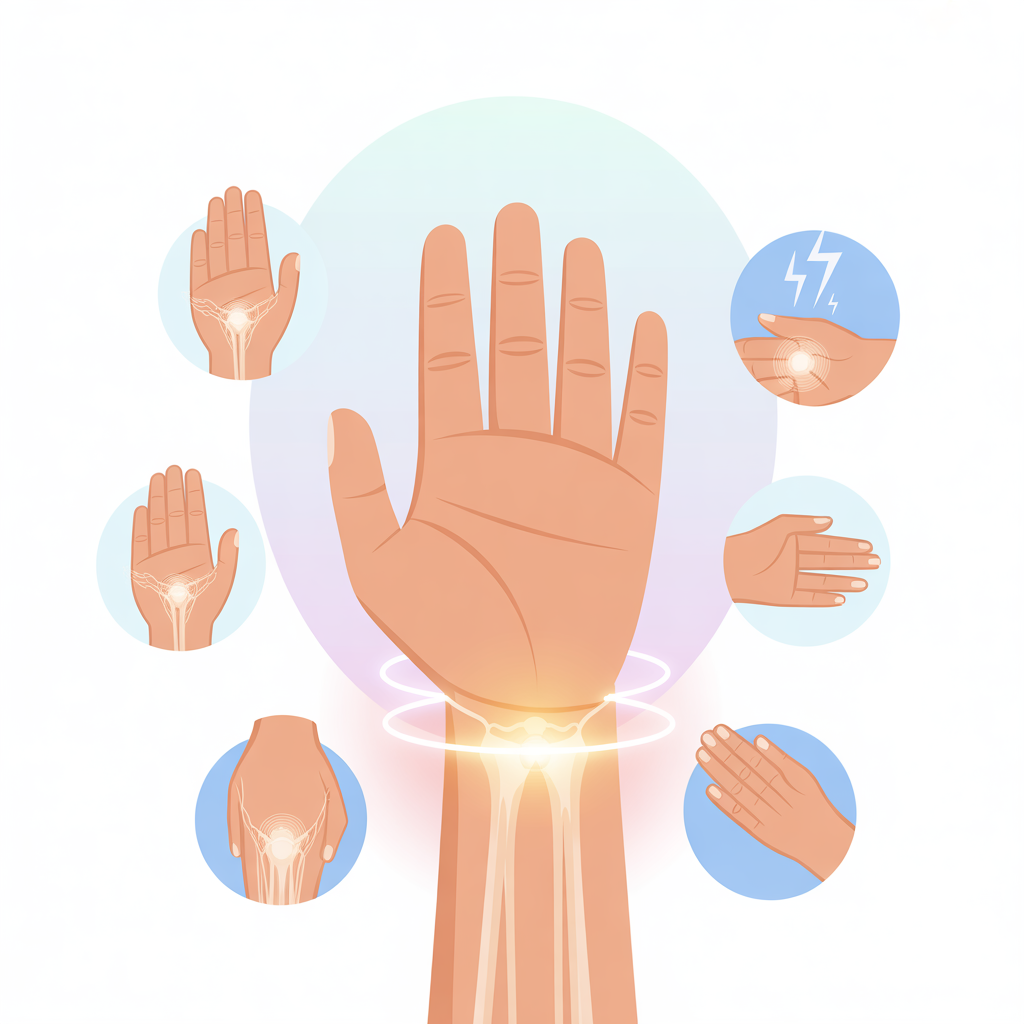
Carpal tunnel syndrome is one of the most prevalent nerve-related conditions affecting millions of people worldwide, particularly those who perform repetitive hand and wrist movements on a daily basis. The carpal tunnel is a narrow passageway located on the palm side of the wrist, surrounded by bones and ligaments. When the median nerve — which runs through this tunnel — becomes compressed or irritated, it gives rise to a wide range of uncomfortable and sometimes debilitating symptoms.
Understanding the early signs of carpal tunnel is crucial for seeking timely medical attention and preventing the condition from worsening. In this article, we outline the 9 most common symptoms of carpal tunnel syndrome, explore its main causes, and share practical prevention strategies to help keep your wrists healthy.
9 Common Symptoms of Carpal Tunnel Syndrome
1. Numbness and Tingling in the Hand and Fingers
One of the hallmark carpal tunnel symptoms is a persistent feeling of numbness or tingling — often described as a “pins and needles” sensation — in the thumb, index finger, middle finger, and part of the ring finger. This occurs because the median nerve, which is responsible for sensation in these fingers, is being compressed within the carpal tunnel.
- The tingling typically comes and goes at first but may become constant over time.
- Many people notice this sensation when holding a phone, gripping a steering wheel, or reading a book.
- The little finger is usually not affected, as it is served by a different nerve (the ulnar nerve).
- In more advanced cases, the numbness can spread up the forearm toward the shoulder.
If you frequently wake up at night to “shake out” your hand because it feels numb, this is a strong early indicator of carpal tunnel syndrome and warrants prompt evaluation by a healthcare professional.
2. Hand and Wrist Pain
Pain is another frequently reported symptom of carpal tunnel syndrome. Unlike typical muscle soreness, this pain originates from nerve compression and can feel sharp, burning, or aching in nature. It is commonly felt in the wrist and palm area, but may radiate upward toward the elbow or even the shoulder in more severe cases.
- Pain may be worse at night or in the early morning hours.
- Activities that involve bending the wrist — such as typing, knitting, or driving — can significantly aggravate the pain.
- Some individuals experience a burning or electric shock-like sensation shooting into their fingers.
- The discomfort may occasionally extend into the forearm, making it easy to mistake for general arm pain.
It is important not to dismiss persistent wrist or hand pain as simple overuse. If the pain is recurring or interfering with daily tasks, consult a doctor for proper assessment.
3. Weakness in the Hand and Grip Strength Loss
As carpal tunnel syndrome progresses, many patients notice a noticeable decline in hand strength and grip. This weakness results from the median nerve’s diminished ability to send proper signals to the muscles in the hand, particularly the muscles at the base of the thumb (the thenar muscles).
- Difficulty opening jars, buttoning shirts, or holding objects firmly.
- A tendency to drop items unexpectedly due to reduced grip control.
- Trouble pinching small objects between the thumb and fingers.
- In chronic cases, visible muscle wasting (atrophy) may occur at the base of the thumb.
Grip strength loss is particularly concerning because it can affect your ability to perform everyday activities and professional tasks. This symptom typically indicates a more advanced stage of the condition and should be addressed without delay.
4. Nighttime Symptoms and Sleep Disruption
Carpal tunnel syndrome has a well-known tendency to worsen at night. Many people experience heightened numbness, tingling, and pain during sleep, which can repeatedly wake them from rest. This nocturnal pattern occurs because people tend to sleep with their wrists flexed or bent, further narrowing the carpal tunnel and increasing pressure on the median nerve.
- Waking up multiple times per night with numb or tingling hands is a classic sign.
- Shaking or flicking the hand (known as the “flick sign”) often provides temporary relief.
- Sleep quality deteriorates significantly, leading to daytime fatigue and reduced productivity.
- Some people find relief by hanging their hand off the side of the bed or wearing a wrist splint at night.
Chronic sleep disruption caused by nighttime carpal tunnel symptoms can take a significant toll on overall health and well-being. Discussing this pattern with a physician can help guide appropriate management strategies.
5. Burning Sensation in the Fingers
A burning feeling in the thumb, index finger, middle finger, and part of the ring finger is another distinctive symptom of carpal tunnel syndrome. This sensation is a direct result of the median nerve being irritated and sending abnormal signals to the brain. It is often described as a warmth or heat spreading through the affected fingers.
- The burning may be accompanied by tingling or a prickling feeling.
- It can occur during activity or at rest, and may intensify with repetitive wrist movements.
- Some patients find that running cold water over the hand temporarily eases the burning sensation.
- This symptom can sometimes be confused with peripheral neuropathy, making professional diagnosis essential.
6. Swelling and Stiffness in the Wrist Area
Although actual visible swelling is not always present, many people with carpal tunnel syndrome report a subjective feeling of puffiness or fullness in the wrist and hand. Stiffness is also common, especially in the morning or after prolonged periods of inactivity.
- The wrist may feel “tight” or difficult to flex and extend fully.
- Morning stiffness is a common complaint and typically improves with gentle movement.
- Some individuals notice mild physical swelling around the wrist, especially after activities that strain the joint.
- Stiffness can reduce range of motion, making fine motor tasks more challenging.
This sense of swelling and stiffness often stems from inflammation of the tendons running through the carpal tunnel, which in turn puts additional pressure on the median nerve.
7. Difficulty Performing Fine Motor Tasks
The median nerve plays a vital role in coordinating precise hand movements. When it is compressed, individuals often find it increasingly difficult to perform tasks that require fine motor control and dexterity. This can have a major impact on both professional performance and quality of life.
- Struggling to type on a keyboard or use a computer mouse comfortably.
- Difficulty with tasks such as sewing, writing, drawing, or playing a musical instrument.
- Challenges picking up small items like coins, needles, or buttons.
- Reduced coordination between the thumb and fingers, making daily self-care tasks harder.
When fine motor skills begin to deteriorate, it is often a signal that the nerve compression has become significant enough to affect function, not just sensation.
8. Shock-Like Sensations Radiating into the Fingers
Some individuals with carpal tunnel syndrome experience sudden, unexpected electric shock-like sensations that shoot from the wrist into the thumb, index, middle, and ring fingers. This symptom can be startling and is caused by abnormal electrical impulses generated by the irritated or compressed median nerve.
- These sensations can occur spontaneously or be triggered by specific wrist positions.
- They are often momentary but can be intense and uncomfortable.
- The shock-like feeling is sometimes triggered by tapping over the carpal tunnel at the wrist — a clinical finding known as a positive Tinel’s sign.
- Bending the wrist fully and holding it for about a minute (known as Phalen’s test) may also reproduce this sensation in people with carpal tunnel syndrome.
9. Decreased Sensation and Loss of Temperature Sensitivity
In advanced or longstanding cases of carpal tunnel syndrome, the affected fingers may experience a noticeable reduction in sensation. This means that the skin becomes less responsive to touch, pressure, and temperature changes — a sign that the median nerve has suffered significant ongoing compression.
- Difficulty distinguishing between hot and cold temperatures with the fingertips.
- Reduced sensitivity to light touch, which can make everyday tasks feel clumsy.
- Some individuals describe a feeling of wearing an invisible glove over their hand.
- In severe cases, this sensory loss may become permanent without appropriate intervention, underscoring the importance of early diagnosis.
Sensory loss at this level indicates substantial nerve damage and should be evaluated by a specialist as soon as possible.
Main Causes of Carpal Tunnel Syndrome
Understanding what causes carpal tunnel can help you identify your personal risk factors and take proactive steps. The condition does not usually have a single cause; rather, it develops from a combination of contributing factors:
- Repetitive hand and wrist movements: Jobs or hobbies that involve sustained, repetitive motions — such as typing, assembly line work, sewing, or using vibrating tools — place chronic stress on the carpal tunnel.
- Wrist anatomy: Some individuals are born with a naturally smaller carpal tunnel, making them inherently more susceptible to nerve compression.
- Health conditions: Diabetes, rheumatoid arthritis, hypothyroidism, and obesity are all associated with an increased risk of developing carpal tunnel syndrome.
- Hormonal changes: Pregnancy and menopause can cause fluid retention and swelling, which narrows the carpal tunnel and increases pressure on the median nerve.
- Wrist injuries: Fractures, sprains, or dislocations of the wrist can alter the structure of the carpal tunnel.
- Prolonged awkward wrist positioning: Consistently working or sleeping with the wrist in a flexed or extended position can gradually compress the median nerve.
- Sex: Women are two to three times more likely to develop carpal tunnel syndrome than men, partly because they tend to have smaller carpal tunnels.
How to Prevent Carpal Tunnel Syndrome
While not all cases can be fully prevented, there are several evidence-based strategies for reducing your risk and slowing the progression of carpal tunnel syndrome:
- Take regular breaks: If your work involves repetitive hand or wrist movements, pause every 30–60 minutes to rest and stretch your hands and wrists.
- Maintain a neutral wrist position: Whether typing, using tools, or sleeping, try to keep your wrists straight rather than bent. Ergonomic keyboards and wrist rests can help.
- Stretch and strengthen: Regularly performing gentle wrist stretches and strengthening exercises can improve flexibility and reduce nerve irritation.
- Optimize your workstation: Adjust your desk, chair, and keyboard height so that your wrists remain in a natural, neutral position during work.
- Manage underlying health conditions: Keeping conditions such as diabetes, arthritis, and thyroid disorders well-controlled can significantly reduce your risk.
- Reduce force and grip: Avoid gripping tools or objects more tightly than necessary. Use tools with cushioned grips where possible.
- Wear wrist splints at night: If you notice early signs of carpal tunnel, wearing a wrist splint while sleeping can help keep the wrist in a neutral position and reduce nighttime symptoms.
- Stay at a healthy weight: Excess body weight increases pressure throughout the body, including in the carpal tunnel.
Frequently Asked Questions (FAQ)
What is carpal tunnel syndrome?
Carpal tunnel syndrome is a condition that occurs when the median nerve — which travels from the forearm into the hand through a narrow passageway in the wrist called the carpal tunnel — becomes compressed or squeezed. This causes pain, numbness, tingling, and weakness in the hand and fingers.
What are the first signs of carpal tunnel?
The earliest signs of carpal tunnel typically include numbness and tingling in the thumb, index, middle, and part of the ring finger, as well as hand pain that is often worse at night. Many people first notice these symptoms when gripping objects or upon waking from sleep.
Can carpal tunnel syndrome affect both hands?
Yes. While carpal tunnel syndrome often starts in the dominant hand, it can affect both hands simultaneously or develop in the non-dominant hand over time. Bilateral (both-sided) symptoms are not uncommon.
Is carpal tunnel syndrome serious?
If left untreated, carpal tunnel syndrome can lead to permanent nerve damage, resulting in lasting numbness, weakness, and loss of hand function. Early detection and appropriate management are important to prevent long-term complications.
Who is most at risk for carpal tunnel syndrome?
People who perform repetitive wrist and hand movements at work (such as office workers, musicians, and assembly workers), women, individuals with diabetes or arthritis, pregnant women, and those with a small carpal tunnel by anatomy are at higher risk.
Should I see a doctor for carpal tunnel symptoms?
Yes. If you experience persistent numbness, tingling, pain, or weakness in your hand or wrist, it is important to consult a healthcare professional. A doctor can conduct clinical tests and, if necessary, nerve conduction studies to confirm the diagnosis and recommend appropriate treatment. Always consult your doctor before taking any medication for this condition.
Can carpal tunnel syndrome go away on its own?
Mild cases, particularly those related to temporary conditions such as pregnancy, may improve on their own. However, in most cases the condition tends to worsen without proper intervention. Early lifestyle modifications and medical evaluation are strongly recommended.
References: