
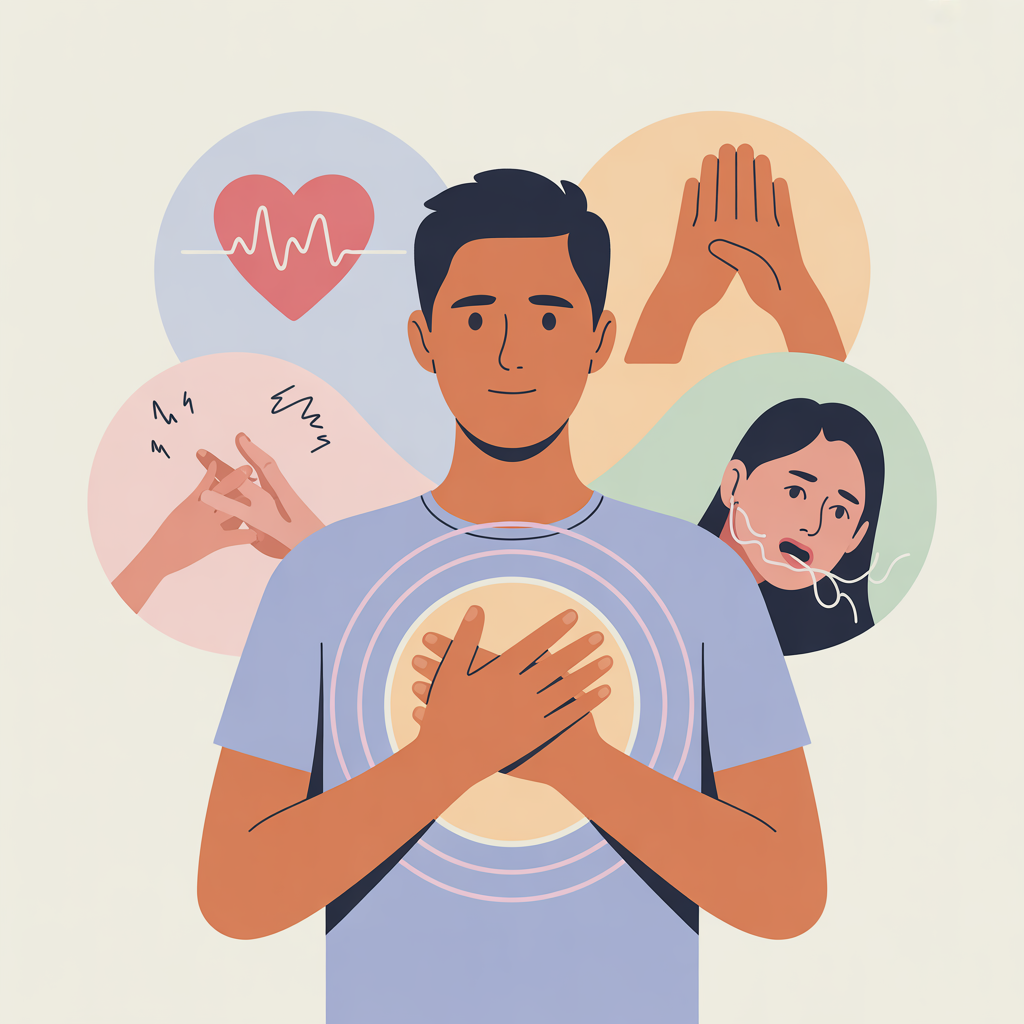
Anxiety is one of the most common mental health conditions in the world, affecting hundreds of millions of people across all ages and backgrounds. While it is completely normal to feel anxious before a big event or during a stressful situation, anxiety disorders are different — they involve persistent, excessive fear or worry that does not go away and can significantly interfere with daily life.
So, what does anxiety feel like? And how do you know if you have anxiety rather than just everyday stress? Understanding the full spectrum of anxiety symptoms — both mental and physical — is the first and most important step toward getting the right help. In this article, we break down 15 of the most recognizable symptoms of anxiety disorders to help you identify what you or someone you love may be experiencing.
1. Excessive and Uncontrollable Worry
The hallmark symptom of anxiety disorders is persistent, excessive worrying that is difficult or impossible to control. Unlike normal worry, which is usually tied to a specific, identifiable problem, anxiety-related worry tends to be:
- Disproportionate to the actual situation or event
- Present most days of the week, often for months at a time
- Difficult to stop even when you are aware it is irrational
- Focused on multiple areas of life simultaneously — health, finances, relationships, work, or safety
People with generalized anxiety disorder (GAD) often describe their mind as constantly “switched on,” jumping from one worry to the next even when there is no real threat present. This relentless mental activity is exhausting and can make it extremely hard to focus, relax, or enjoy everyday activities.
2. Restlessness and Feeling on Edge
A very common and often overlooked symptom of anxiety is a persistent sense of restlessness — a feeling of being keyed up, wound up, or unable to sit still. This is especially prevalent in children and adolescents but also widely reported among adults.
People experiencing this symptom may:
- Feel an inner tension or agitation that has no clear cause
- Find it hard to relax, even during leisure time
- Feel irritable or easily startled
- Experience an urge to constantly move, pace, or fidget
This feeling of being perpetually “on edge” is closely tied to the body’s heightened state of alertness — a survival mechanism that, in people with anxiety disorders, becomes chronically activated even without a real threat.
3. Fatigue and Exhaustion
Many people are surprised to learn that fatigue is one of the most prevalent physical symptoms of anxiety. Because the body is kept in a constant state of stress-readiness, it burns through energy at a much higher rate than normal, leaving individuals feeling chronically tired — even after a full night of sleep.
Anxiety-related fatigue may manifest as:
- Waking up tired despite sleeping for adequate hours
- Mental exhaustion and brain fog throughout the day
- A feeling of physical heaviness or weakness in the limbs
- Difficulty sustaining concentration on tasks
This type of fatigue is not resolved simply by resting. It is closely linked to the psychological burden of chronic worry and the physiological cost of a constantly activated stress response (the “fight-or-flight” system).
4. Difficulty Concentrating
Anxiety has a significant impact on cognitive function. People with anxiety disorders frequently report difficulty concentrating, staying focused, or completing tasks that require sustained mental effort.
This can show up as:
- Mind going blank during conversations, meetings, or exams
- Forgetting simple things like appointments, names, or where objects were placed
- Inability to focus on one thing because the mind keeps drifting to worries
- Difficulty making decisions, even small ones
Research shows that anxiety can impair working memory — the brain’s ability to temporarily hold and process information — making it harder to learn, plan, and execute tasks effectively.
5. Irritability
Irritability is a frequently underrecognized symptom of anxiety, particularly in men and teenagers. When the nervous system is persistently overstimulated, a person’s emotional threshold becomes lower, meaning small frustrations or inconveniences can trigger disproportionately strong emotional reactions.
Signs of anxiety-related irritability include:
- Snapping at loved ones or coworkers over minor issues
- A short temper that feels difficult to control
- Feeling easily annoyed, frustrated, or overwhelmed
- Emotional outbursts followed by guilt or regret
It is important to recognize that irritability driven by anxiety is not a personality flaw — it is a physiological response to an overloaded nervous system.
6. Muscle Tension
One of the most telling physical symptoms of anxiety is chronic muscle tension. The body’s stress response prepares muscles for rapid action — but when anxiety is persistent, those muscles stay contracted and tense long after any perceived threat has passed.
Common areas affected include:
- Neck and shoulders — stiffness, aching, or tightness
- Jaw — clenching or grinding teeth (bruxism), especially during sleep
- Back — lower or upper back pain without a clear physical cause
- Forehead and temples — tension headaches
Many people with anxiety are not aware of how tense their bodies are until they consciously try to relax. Over time, chronic muscle tension can lead to pain, headaches, and decreased mobility if left unaddressed.
7. Sleep Disturbances
Sleep problems are among the most disruptive symptoms of anxiety disorders. The relationship between anxiety and sleep is bidirectional — anxiety makes it harder to sleep, and poor sleep worsens anxiety, creating a vicious cycle that can be very hard to break.
Anxiety-related sleep disturbances may include:
- Insomnia — difficulty falling asleep or staying asleep
- Racing thoughts at bedtime that prevent the mind from quieting down
- Frequent waking during the night, sometimes due to anxiety dreams or nightmares
- Non-restorative sleep — waking up feeling unrefreshed even after sleeping through the night
- Early morning awakening accompanied by immediate worry
Sleep deprivation significantly amplifies anxiety symptoms the following day, making emotional regulation much harder and increasing the risk of anxiety attacks.
8. Panic Attacks (Anxiety Attack Symptoms)
A panic attack (also referred to as an anxiety attack) is a sudden, intense surge of fear or discomfort that reaches its peak within minutes. Panic attacks can occur unexpectedly or be triggered by a specific situation, and they are among the most frightening experiences associated with anxiety disorders.
Common anxiety attack symptoms include:
- Racing or pounding heartbeat (palpitations)
- Shortness of breath or a feeling of being smothered
- Chest pain or tightness
- Dizziness, lightheadedness, or feeling faint
- Sweating, trembling, or shaking
- Nausea or stomach upset
- Numbness or tingling sensations (paresthesia)
- Chills or hot flushes
- A feeling of unreality (derealization) or detachment from oneself (depersonalization)
- Fear of losing control or “going crazy”
- Fear of dying
It is worth noting that anxiety attack symptoms in females can sometimes differ slightly from those in males — women are more likely to report nausea, dizziness, and feelings of derealization, while men more commonly report chest pain. However, many symptoms overlap across genders.
Although panic attacks are not physically dangerous, they are intensely distressing and can lead a person to avoid situations where they fear an attack might occur, significantly limiting their quality of life.
9. Avoidance Behavior
People with anxiety disorders often engage in avoidance behavior — deliberately steering clear of people, places, situations, or activities that they associate with fear or discomfort. While avoidance provides short-term relief, it reinforces the anxiety in the long run by preventing the person from learning that the feared situation is not actually dangerous.
Examples of avoidance behavior include:
- Avoiding social gatherings due to fear of embarrassment or judgment (social anxiety)
- Refusing to leave the house alone after experiencing a panic attack
- Procrastinating on important tasks due to fear of failure or criticism
- Avoiding medical appointments out of health-related fears
- Declining opportunities at work or school due to performance anxiety
Over time, avoidance behavior can shrink a person’s world dramatically, leading to isolation, reduced productivity, and a diminished sense of self-worth.
10. Rapid Heartbeat and Palpitations
A racing or irregular heartbeat is one of the most common and alarming physical symptoms of anxiety. When anxiety activates the body’s fight-or-flight response, adrenaline is released, causing the heart to beat faster and harder in preparation for perceived danger.
This can feel like:
- Your heart is “pounding” in your chest
- Skipped beats or fluttering sensations
- A rapid pulse even when sitting still or resting
- A sudden awareness of your heartbeat (which itself can trigger more anxiety)
While anxiety-induced palpitations are generally harmless, they can be very frightening — and many people experiencing them for the first time fear they are having a heart attack. If you experience chest pain, palpitations, or shortness of breath, it is important to seek medical evaluation to rule out cardiac causes.
11. Shortness of Breath
Difficulty breathing or a feeling of not being able to get enough air is another hallmark physical symptom of anxiety, particularly during anxiety attacks. The stress response causes changes in breathing patterns — breathing typically becomes faster and shallower (hyperventilation), which can reduce carbon dioxide levels in the blood and produce a range of uncomfortable sensations.
Anxiety-related breathing symptoms may include:
- A sensation of tightness or pressure in the chest
- Feeling unable to take a deep breath
- Rapid, shallow breathing (hyperventilation)
- A choking or smothering sensation
- Sighing frequently without realizing it
These symptoms can further escalate anxiety in a self-reinforcing loop — the physical sensation of breathlessness increases fear, which in turn worsens the breathing difficulty.
12. Gastrointestinal Problems
The gut and the brain are closely connected through the gut-brain axis, which is why anxiety so frequently manifests as digestive symptoms. In fact, the gut contains an enormous number of nerve cells and is sometimes referred to as the “second brain.”
Anxiety-related gastrointestinal symptoms include:
- Nausea or an unsettled stomach
- Diarrhea or loose stools, especially before stressful events
- Constipation
- Bloating, cramping, or stomach pain
- Irritable bowel syndrome (IBS), which is strongly linked to anxiety
- Loss of appetite or, conversely, stress-eating
Many people with anxiety disorders suffer from chronic digestive discomfort without realizing it is connected to their mental health. Addressing the underlying anxiety often leads to significant improvement in gut symptoms.
13. Excessive Sweating and Trembling
Sweating and trembling or shaking are direct physical responses to the adrenaline surge that accompanies anxiety. These symptoms can occur during anxiety attacks or as a more general background symptom in people with high anxiety levels.
These symptoms may present as:
- Sweating disproportionately to temperature or physical activity
- Cold sweats, particularly at night
- Sweaty palms before or during stressful situations
- Visible trembling of the hands, voice, or legs
- A general feeling of internal shakiness even when no trembling is visible
These symptoms can be particularly distressing in social situations — for example, a person with social anxiety may sweat or shake visibly when speaking in public, which then heightens their embarrassment and fear of judgment, creating a feedback loop.
14. Dizziness and Lightheadedness
Feeling dizzy, lightheaded, or unsteady is a common physical complaint among those with anxiety disorders, particularly in individuals who experience frequent panic attacks or hyperventilation.
This symptom is caused by a combination of factors including:
- Changes in blood flow and oxygen levels caused by altered breathing patterns
- Muscle tension in the neck and shoulders affecting circulation
- Chronic stress hormones affecting blood pressure regulation
Anxiety-related dizziness can range from a mild sense of imbalance to a strong sensation of spinning (vertigo). It is often described as feeling “detached from reality” or as if the ground is moving beneath you.
15. Irrational Fears and Phobias
While all anxiety disorders involve some degree of irrational fear, specific phobias and excessive irrational fears are a prominent feature of certain types of anxiety disorders. These fears are recognized by the person as being out of proportion to the actual danger, yet they remain unable to control them.
Common forms include:
- Specific phobias — intense fear of particular objects or situations such as heights, flying, spiders, blood, needles, or enclosed spaces
- Social anxiety disorder — extreme fear of social situations due to worry about embarrassment, judgment, or humiliation
- Agoraphobia — fear of situations where escape might be difficult, such as crowded places, public transport, or being outside the home
- Health anxiety (hypochondria) — persistent fear of having a serious illness despite medical reassurance
These irrational fears can be severely limiting, preventing people from participating in everyday activities and causing significant distress.
Main Causes of Anxiety Disorders
Understanding what causes anxiety is key to recognizing and addressing the condition. Anxiety disorders are rarely caused by a single factor — rather, they result from a complex interplay of biological, psychological, and environmental influences.
- Genetics: Anxiety disorders tend to run in families, suggesting a hereditary component. Having a first-degree relative with an anxiety disorder increases the risk.
- Brain chemistry: Imbalances in neurotransmitters such as serotonin, dopamine, and GABA — brain chemicals that regulate mood and stress responses — are closely associated with anxiety.
- Trauma and adverse childhood experiences: Experiencing or witnessing a traumatic event, particularly in childhood (e.g., abuse, neglect, or loss), is a significant risk factor for developing anxiety disorders.
- Chronic stress: Prolonged exposure to stressors such as financial difficulties, relationship problems, work pressure, or major life changes can overwhelm the body’s coping mechanisms and trigger anxiety.
- Medical conditions: Certain physical health conditions — including thyroid disorders, heart arrhythmias, chronic pain, and hormonal imbalances — can cause or worsen anxiety symptoms.
- Substance use: Caffeine, alcohol, recreational drugs, and even some medications can trigger or exacerbate anxiety symptoms. Withdrawal from certain substances is also a known cause of anxiety attacks.
- Personality traits: People who are naturally more sensitive, perfectionistic, or have a tendency toward negative thinking may be more prone to developing anxiety disorders.
- Hormonal changes: Anxiety symptoms in women are frequently linked to hormonal fluctuations during menstruation, pregnancy, postpartum, perimenopause, and menopause.
How to Reduce the Risk of Anxiety Disorders
While it may not be possible to entirely prevent anxiety disorders — particularly when genetic or biological factors are involved — there are meaningful steps that can reduce your risk and help manage early symptoms before they escalate.
- Practice stress management: Regularly engaging in stress-reducing activities such as mindfulness meditation, deep breathing exercises, yoga, or journaling can help train the nervous system to remain calm under pressure.
- Exercise regularly: Physical activity is one of the most well-supported natural ways to reduce anxiety. Exercise releases endorphins, reduces cortisol levels, and improves sleep quality — all of which directly combat anxiety.
- Prioritize sleep: Maintaining a consistent sleep schedule and practicing good sleep hygiene is essential. Chronic sleep deprivation is both a cause and a consequence of anxiety.
- Limit caffeine and alcohol: Both caffeine and alcohol can significantly worsen anxiety symptoms. Reducing or eliminating these substances can make a noticeable difference.
- Build strong social connections: Isolation amplifies anxiety. Maintaining close relationships and seeking social support — whether from friends, family, or support groups — provides a buffer against stress.
- Seek professional help early: If you notice signs of anxiety that are beginning to interfere with your daily life, reaching out to a mental health professional early can prevent symptoms from worsening. Therapy, particularly cognitive-behavioral therapy (CBT), has strong evidence behind it for treating anxiety disorders.
- Reduce avoidance: Gradually facing feared situations — with professional guidance when needed — rather than avoiding them helps break the anxiety cycle over time.
Note: If medication is considered as part of managing anxiety, always consult with a qualified healthcare provider before taking any medication. Self-medicating can be dangerous and may worsen symptoms.
Frequently Asked Questions (FAQs)
What is anxiety disorder?
An anxiety disorder is a mental health condition characterized by excessive, persistent fear, worry, or nervousness that is disproportionate to the actual situation and significantly interferes with daily functioning. It is more than just everyday stress — it is a chronic condition that often requires professional support.
What does anxiety feel like?
Anxiety can feel like a constant sense of dread or unease, a racing heart, tight chest, shallow breathing, and an inability to stop worrying. Physically, it may feel like being perpetually “on edge” or as if something bad is about to happen — even when there is no apparent reason for it.
How do I know if I have anxiety?
If you experience persistent, uncontrollable worry, physical symptoms like a racing heart or shortness of breath, sleep problems, and avoidance of certain situations — and these symptoms last for weeks and interfere with your work, relationships, or daily life — you may have an anxiety disorder. A qualified mental health professional can provide a formal diagnosis.
What are anxiety symptoms in women specifically?
Women are nearly twice as likely as men to be diagnosed with anxiety disorders. Anxiety symptoms in women often include nausea, dizziness, fatigue, and feelings of unreality. Women are also more likely to experience anxiety linked to hormonal changes during menstrual cycles, pregnancy, and menopause.
Are anxiety attacks dangerous?
While anxiety attacks (panic attacks) are extremely distressing and feel very frightening, they are not physically dangerous on their own. They do not cause heart attacks or lasting physical harm. However, they are a signal that your body and mind are under significant stress, and recurring panic attacks should be evaluated by a healthcare professional.
Can anxiety cause physical symptoms?
Yes, absolutely. Anxiety has a very real physical dimension. Physical symptoms of anxiety include muscle tension, headaches, gastrointestinal problems, rapid heartbeat, shortness of breath, sweating, dizziness, and fatigue. These are all caused by the body’s prolonged activation of the stress response.
What causes anxiety attacks?
Anxiety attacks can be triggered by specific stressors (a public speech, a crowded space) or can occur seemingly without any trigger. Common causes include chronic stress, certain medical conditions, caffeine or stimulant use, sleep deprivation, and underlying anxiety disorders. Sometimes, a previous traumatic experience can make a person more vulnerable to attacks.
How is anxiety disorder different from normal anxiety?
Normal anxiety is a temporary, proportionate response to a real stressor that resolves once the stressor passes. Anxiety disorder involves worry that is excessive, often disproportionate, difficult to control, and persistent — typically lasting six months or more — and it significantly impairs daily life and functioning.
References: