
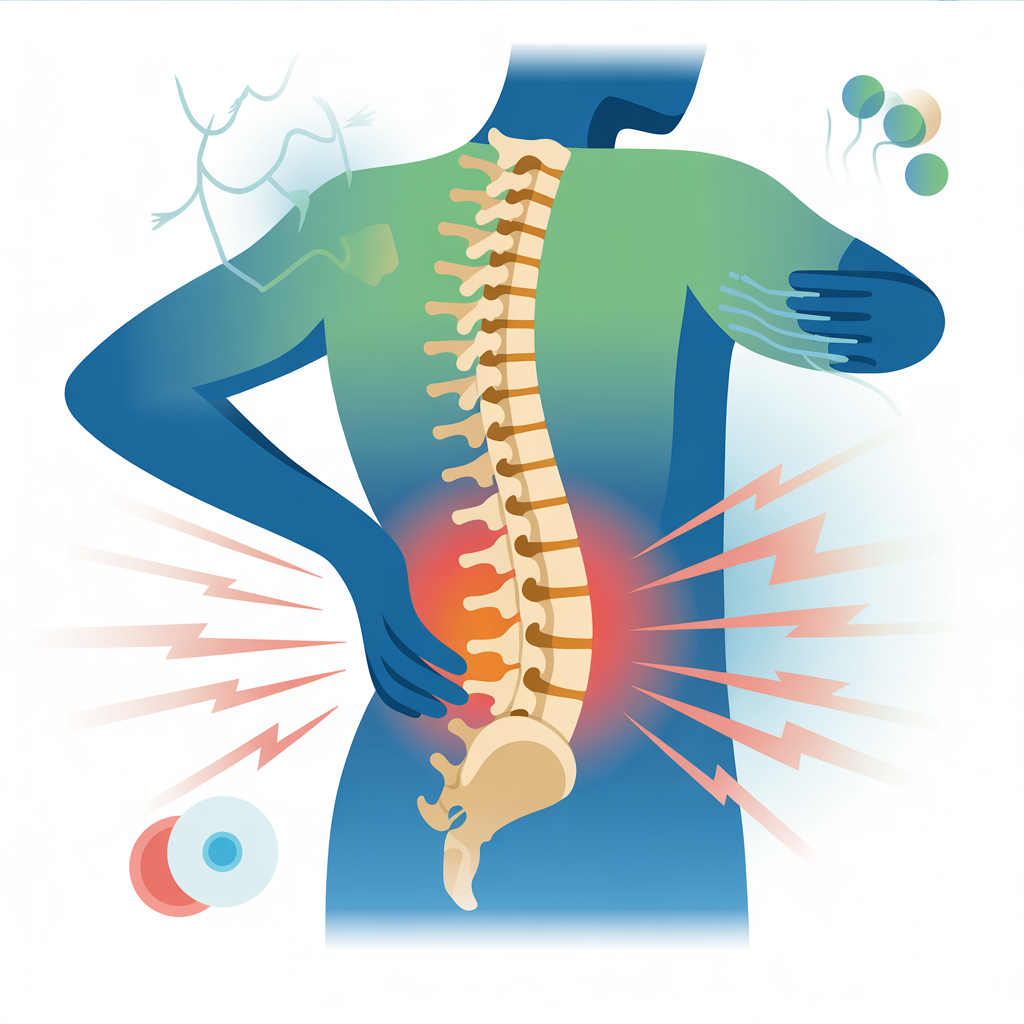
A herniated disc — also commonly referred to as a slipped disc or ruptured disc — is a spinal condition that occurs when the soft, gel-like center (nucleus pulposus) of an intervertebral disc pushes through a crack in its tougher outer layer (annulus fibrosus). This displacement can press on nearby nerves, triggering a wide range of painful and sometimes debilitating symptoms.
Herniated discs can occur anywhere along the spine, but they are most common in the lower back (lumbar region) and the neck (cervical region). The condition affects millions of people worldwide, often between the ages of 30 and 50, and can significantly impact daily life and mobility.
Understanding what a herniated disc feels like is the first step toward getting the right diagnosis and care. Below, we outline the 10 key symptoms of a herniated disc that you should never ignore.
1. Localized Back or Neck Pain
One of the earliest and most recognizable signs of a herniated disc is pain localized to the affected area of the spine. Depending on where the disc herniation occurs, you may feel:
- Lower back pain — in cases of lumbar disc herniation
- Neck pain — in cases of cervical disc herniation
- Mid-back pain — less common, associated with thoracic disc herniation
The pain may be described as a dull ache, a sharp stabbing sensation, or a burning feeling that worsens with movement, prolonged sitting, or lifting. In some people, even minor actions like coughing or sneezing can intensify the pain significantly. The pain can be intermittent at first but may become persistent as the condition progresses.
2. Radiating Pain (Sciatica)
Radiating pain is one of the most distinctive symptoms of a herniated disc in the lower back. When a herniated lumbar disc compresses the sciatic nerve, it can trigger a condition known as sciatica — a sharp, shooting pain that travels from the lower back through the buttock and down one leg, sometimes reaching as far as the foot.
Key characteristics of radiating pain include:
- Pain that follows a predictable nerve pathway
- A burning, electric-shock-like, or stabbing sensation
- Pain typically affecting only one side of the body
- Symptoms that worsen when sitting, standing for long periods, or bending forward
In cervical (neck) disc herniation, radiating pain may travel down the shoulder, arm, and into the fingers — a symptom pattern sometimes called cervical radiculopathy.
3. Numbness or Tingling Sensations
When a herniated disc presses against a nerve, it can interfere with normal nerve signal transmission, resulting in numbness or tingling in the areas served by that nerve. Patients often describe this sensation as:
- A “pins and needles” feeling
- A sensation of the limb “falling asleep”
- Partial or complete loss of sensation in a specific region
For a lumbar herniated disc, numbness commonly affects the buttocks, thighs, calves, feet, and toes. For a cervical herniated disc, the numbness tends to spread through the shoulder, arm, hand, or fingers. This symptom can be constant or come and go in episodes, and it may accompany pain or occur independently.
4. Muscle Weakness
Nerve compression caused by a herniated disc can impair the motor signals that your brain sends to your muscles, leading to noticeable muscle weakness. This can manifest in several ways:
- Difficulty lifting objects or gripping items firmly
- Trouble walking, climbing stairs, or maintaining balance
- Stumbling or dropping things unexpectedly
- Weakness in one leg or arm compared to the other
Muscle weakness is a particularly important warning sign. Unlike pain, which may fluctuate, progressive muscle weakness may indicate significant nerve damage and should prompt a visit to a healthcare professional as soon as possible. In severe cases, the affected muscles may begin to show signs of atrophy (shrinking) if the nerve compression is prolonged and untreated.
5. Pain That Worsens With Certain Movements or Positions
People with a herniated disc often notice that their pain is positional and movement-dependent. Certain activities or postures can significantly aggravate the condition, including:
- Sitting for extended periods — increases pressure on lumbar discs
- Bending forward — a common aggravating movement for lumbar herniation
- Turning or tilting the neck — worsens cervical disc symptoms
- Coughing, sneezing, or straining — sudden increases in spinal pressure can trigger sharp pain
- Lying flat — while some find relief, others experience worsened symptoms
Conversely, certain positions like lying on one side with knees slightly bent (fetal position) may relieve pressure on the disc and temporarily ease discomfort. Paying attention to which movements worsen or relieve your pain can provide valuable diagnostic information for your doctor.
6. Pain That Is Worse at Night
A notable characteristic reported by many herniated disc sufferers is that symptoms intensify at night or during periods of rest. This may seem counterintuitive, as one would expect rest to bring relief, but several factors contribute to nocturnal pain:
- Certain sleeping positions may place awkward stress on the affected disc
- Reduced distraction during sleep makes pain perception more pronounced
- Inflammatory processes can be more active at rest
- Lying flat can increase pressure on specific nerve roots depending on the location of the herniation
Disrupted sleep due to herniated disc pain can lead to fatigue, irritability, and a reduced ability to manage pain — creating a challenging cycle that affects overall well-being.
7. Loss of Reflexes
A healthcare professional examining a patient with a suspected herniated disc will often test deep tendon reflexes using a rubber hammer. Diminished or absent reflexes in a particular area are a clinical sign that a nerve root is being compressed by a herniated disc.
Common reflex changes associated with disc herniation include:
- Reduced knee-jerk reflex — associated with L3-L4 lumbar disc herniation
- Reduced ankle-jerk reflex — associated with L5-S1 lumbar disc herniation
- Reduced biceps or triceps reflex — associated with cervical disc herniation
While loss of reflexes is typically assessed by a physician, patients may notice related functional changes such as reduced coordination or a general feeling of instability in their limbs.
8. Muscle Spasms
The body’s natural response to a herniated disc often includes involuntary muscle spasms around the affected area of the spine. These spasms occur as the surrounding muscles attempt to stabilize and protect the injured disc from further movement or damage.
Muscle spasms associated with a herniated disc may:
- Cause intense, sudden tightening or cramping in the back or neck
- Lead to a visibly stiff or rigid posture
- Restrict range of motion significantly
- Worsen other symptoms such as radiating pain or numbness
- Persist for minutes to hours at a time
While muscle spasms are a protective mechanism, they can themselves become a significant source of pain and functional limitation, particularly when they prevent normal movement or sleep.
9. Bladder or Bowel Dysfunction (Cauda Equina Syndrome — Emergency Warning)
In rare but serious cases, a severely herniated lumbar disc can compress the cauda equina — the bundle of nerve roots at the base of the spinal cord that controls bladder, bowel, and sexual function. This condition is known as Cauda Equina Syndrome (CES) and is considered a medical emergency.
Symptoms that may indicate Cauda Equina Syndrome include:
- Loss of bladder control (incontinence or inability to urinate)
- Loss of bowel control
- Numbness or tingling in the groin, inner thighs, or genital area (“saddle anesthesia”)
- Sudden severe weakness in both legs
⚠️ If you experience any of these symptoms, seek emergency medical care immediately. Cauda Equina Syndrome requires prompt surgical intervention to prevent permanent paralysis or loss of bladder and bowel function.
10. Reduced Range of Motion and Postural Changes
Over time, a herniated disc can lead to noticeable changes in posture and spinal mobility. The body instinctively adjusts its position to minimize nerve compression and reduce pain, which can result in:
- Leaning to one side (a condition called antalgic lean)
- Inability to fully straighten the back or neck
- Stiffness upon waking or after prolonged inactivity
- Difficulty with everyday tasks such as tying shoes, turning to look behind, or reaching overhead
- An altered walking pattern (gait changes) to compensate for pain or weakness
These compensatory postures, while temporarily relieving discomfort, can place abnormal stress on other structures of the spine and body — potentially leading to additional pain or injury over time if not addressed.
Main Causes of a Herniated Disc
Understanding what leads to a herniated disc can help you better recognize your risk and take preventive action. The most common causes include:
- Age-related disc degeneration: As we age, intervertebral discs lose water content and become less flexible, making them more prone to tearing or rupturing with even minor strain.
- Improper lifting techniques: Using back muscles rather than leg muscles to lift heavy objects significantly increases disc stress and risk of herniation.
- Repetitive strain and overuse: Jobs or activities that involve repetitive bending, twisting, or heavy lifting can gradually weaken the discs.
- Sudden physical trauma: Falls, car accidents, or other impacts can cause acute disc herniation even in younger individuals with otherwise healthy spines.
- Prolonged sitting and sedentary lifestyle: Long periods of sitting, especially with poor posture, increase lumbar disc pressure and contribute to disc deterioration.
- Excess body weight: Being overweight places additional mechanical stress on the lower spine, accelerating disc wear and increasing herniation risk.
- Genetics: A family history of disc disease may predispose certain individuals to earlier or more severe disc degeneration.
- Smoking: Tobacco use reduces blood flow and nutrient delivery to disc tissue, accelerating degeneration.
How to Prevent a Herniated Disc
While not all herniated discs can be prevented — particularly those related to aging or genetics — several lifestyle measures can substantially reduce your risk:
- Exercise regularly: Strengthening your core muscles (abdominals and back muscles) provides better support for the spine and reduces disc stress. Low-impact activities like swimming, walking, and yoga are particularly beneficial.
- Practice proper lifting technique: Always bend at the knees and hips — not the waist — when lifting heavy objects. Keep the load close to your body and avoid twisting while lifting.
- Maintain a healthy weight: Reducing excess weight decreases the mechanical load on lumbar discs and lowers herniation risk.
- Improve your posture: Whether sitting at a desk, standing, or sleeping, maintaining proper spinal alignment reduces unnecessary disc pressure. Use ergonomic chairs and ensure your workstation supports a neutral spine position.
- Avoid prolonged sitting: Take regular breaks to stand up and move around every 30–60 minutes when working at a desk.
- Quit smoking: Stopping smoking helps preserve disc hydration and nutrient supply, slowing degeneration.
- Stay hydrated: Adequate water intake helps maintain disc height and elasticity, as intervertebral discs are largely composed of water.
- Warm up before physical activity: Gentle stretching and warming up before exercise or heavy physical work prepares the spine and reduces injury risk.
Frequently Asked Questions (FAQs)
Q: What does a herniated disc feel like?
A: A herniated disc typically feels like sharp, burning, or aching pain in the back or neck, often accompanied by radiating pain, numbness, or tingling that travels down the arm or leg. The sensation can range from mild discomfort to severe, debilitating pain depending on which nerve is affected and the degree of compression.
Q: What is the difference between a herniated disc and a bulging disc?
A: A bulging disc occurs when the disc extends beyond its normal boundary but the outer layer remains intact. A herniated disc involves a tear in the outer layer, allowing the inner gel material to leak out. Herniated discs are generally more likely to cause nerve compression and significant symptoms.
Q: Can a herniated disc heal on its own?
A: In many cases, herniated disc symptoms improve significantly over time — often within 6 to 12 weeks — as the body reabsorbs part of the herniated disc material. However, it is important to consult a healthcare professional for proper evaluation and guidance, especially if symptoms are severe or worsening.
Q: Is a herniated disc the same as a slipped disc?
A: Yes. The terms “herniated disc,” “slipped disc,” and “ruptured disc” are often used interchangeably to describe the same condition — when the inner core of an intervertebral disc pushes through its outer shell. Technically, discs do not “slip” out of place; the term is a popular but inaccurate description of the herniation process.
Q: When should I see a doctor for herniated disc symptoms?
A: You should consult a doctor if your back or neck pain is severe, persists for more than a few days, is accompanied by numbness, tingling, or weakness in the limbs, or if you experience any bladder or bowel dysfunction. Seek emergency care immediately if you notice sudden loss of bladder or bowel control, as this may indicate Cauda Equina Syndrome.
Q: Can I take medication for herniated disc pain?
A: Some over-the-counter options may help manage mild pain, but you should always consult a doctor before taking any medication, as appropriate treatment depends on the severity and location of your herniation, your overall health, and other individual factors. A healthcare professional can recommend the safest and most effective approach for your specific situation.
Q: How is a herniated disc diagnosed?
A: A herniated disc is typically diagnosed through a combination of a physical examination, review of symptoms and medical history, and imaging tests such as an MRI (Magnetic Resonance Imaging), which is the gold standard for visualizing disc herniation, or a CT scan. X-rays may be used to rule out other causes of pain but cannot directly show disc herniation.
References:
- Mayo Clinic – Herniated Disk: Symptoms & Causes
- WebMD – Herniated Disk: Symptoms, Causes, and Treatments
- Spine-Health – Herniated Disc Symptoms
- National Center for Biotechnology Information (NCBI) – Lumbar Disc Herniation
- American Academy of Orthopaedic Surgeons (AAOS) – Herniated Disk in the Lower Back
- Healthline – Herniated Disc: Symptoms, Causes, and Treatment