
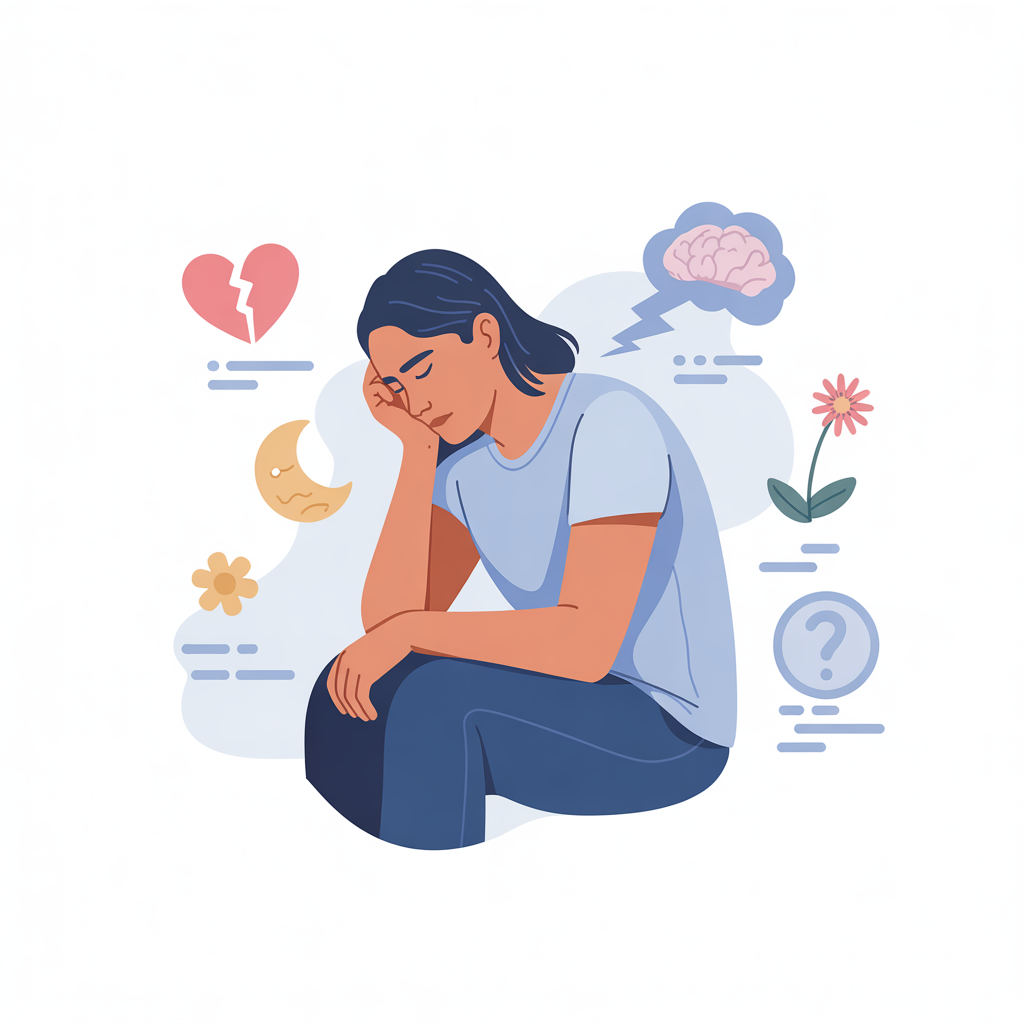
Depression, clinically known as major depressive disorder (MDD), is one of the most prevalent mental health conditions in the world, affecting hundreds of millions of people across all ages, genders, and backgrounds. But what is depression, exactly? It is far more than simply feeling sad or going through a rough patch — it is a serious medical condition that profoundly affects how a person thinks, feels, and functions in daily life.
A depressive episode can last for weeks, months, or even longer if left unaddressed. Recognizing the warning signs early is critical. If you’ve ever wondered “how do I know if I have depression?” or “what does depression feel like?”, this guide breaks down the key symptoms so you can better understand yourself or someone you care about.
Below are the most recognized symptoms of major depressive disorder, as outlined by leading mental health organizations worldwide.
1. Persistent Feelings of Sadness or Emptiness
One of the hallmark signs of depression is an overwhelming, prolonged sense of sadness, hopelessness, or emotional emptiness that doesn’t seem to go away — even when there is no obvious cause. Unlike normal grief or temporary low moods, this feeling:
- Lasts most of the day, nearly every day, for at least two weeks
- Cannot be easily explained by external circumstances
- May manifest as feeling “numb,” “hollow,” or emotionally disconnected
- Is often accompanied by frequent episodes of crying for no apparent reason
People experiencing this symptom may describe it as feeling like a heavy weight pressing on their chest, or as though a dark cloud is constantly following them. This is often the first and most recognizable sign that prompts individuals to question whether they are depressed.
2. Loss of Interest or Pleasure in Activities (Anhedonia)
Anhedonia — the inability to feel pleasure or interest in activities once enjoyed — is considered one of the two core symptoms of major depressive disorder. This goes beyond simply being bored; it represents a fundamental change in the brain’s reward system.
- Hobbies, sports, creative pursuits, and social activities that once brought joy feel meaningless
- Sexual desire and intimacy may noticeably decrease
- Even basic daily pleasures — such as enjoying food or music — can become dull or unenjoyable
- Social withdrawal often follows, as activities no longer feel rewarding
This symptom can be particularly distressing because it creates a cycle: the person stops doing things they used to love, which leads to more isolation, which deepens the depression further.
3. Significant Changes in Appetite and Weight
Depression can dramatically disrupt a person’s relationship with food. These changes are not simply about preference — they reflect deeper neurological and hormonal disruptions associated with MDD.
- Decreased appetite: Many people with depression lose interest in eating, forget to eat, or find that food no longer tastes appealing, leading to noticeable weight loss
- Increased appetite: Others may experience cravings — particularly for comfort foods high in sugar or carbohydrates — resulting in weight gain
- Significant unintentional changes in body weight (more than 5% in a month) without being on a diet
- Emotional eating as a coping mechanism for distressing feelings
These appetite and weight changes are important clinical markers that healthcare providers use when evaluating whether someone meets the criteria for major depressive disorder.
4. Sleep Disturbances (Insomnia or Hypersomnia)
Sleep problems are extremely common in people with depression, and they can take two opposite forms — yet both are equally disruptive to health and functioning.
| Type | Description |
|---|---|
| Insomnia | Difficulty falling asleep, staying asleep, or waking up far too early in the morning and being unable to go back to sleep |
| Hypersomnia | Sleeping excessively — often 10 hours or more per night — yet still feeling exhausted and unrefreshed upon waking |
Sleep disturbances further aggravate other depression symptoms, impairing concentration, increasing irritability, and reducing the body’s ability to regulate emotions. Sleep and mood are deeply interconnected through shared brain circuits and neurotransmitters such as serotonin and melatonin.
5. Persistent Fatigue and Loss of Energy
People with depression frequently report feeling exhausted — not just physically tired, but profoundly depleted in every way. This is not the kind of tiredness that goes away after a good night’s sleep.
- Even simple tasks such as getting out of bed, showering, or making a meal can feel monumental
- Physical movements may feel slow and labored
- Mental tasks like reading, writing, or making decisions take far more effort than usual
- The fatigue persists regardless of how much rest is obtained
This symptom is believed to be connected to disrupted sleep patterns, reduced motivation, neuroinflammation, and the mental burden of constantly managing depressive thoughts and emotions.
6. Feelings of Worthlessness or Excessive Guilt
A deeply painful aspect of depression is the way it distorts a person’s self-perception. People who are depressed often develop an unrealistically negative view of themselves and their actions.
- Intense feelings of worthlessness, self-loathing, or inadequacy that have little basis in reality
- Excessive or irrational guilt over past events, mistakes, or perceived failures — even minor ones
- A persistent inner critic that magnifies flaws and dismisses strengths
- Believing that they are a burden to others or that the world would be better without them
These cognitive distortions are a direct result of the neurological and psychological impact of major depressive disorder, not a reflection of the person’s true character or worth. Left unaddressed, they can escalate into more dangerous thoughts.
7. Difficulty Thinking, Concentrating, or Making Decisions
Depression significantly impairs cognitive function. Often referred to informally as “brain fog,” this symptom affects intellectual performance and daily decision-making in ways that can seriously impact work, school, and personal relationships.
- Trouble focusing on tasks, reading, conversations, or following through on plans
- Memory problems — forgetting appointments, losing track of details, struggling to retain new information
- Difficulty making even small decisions, such as what to eat or wear
- A slowing of thought processes that makes problem-solving feel overwhelming
These cognitive symptoms are often overlooked or misattributed to other causes such as stress or aging. However, they are a well-documented and clinically significant feature of MDD that can persist even after emotional symptoms improve.
8. Psychomotor Changes (Agitation or Slowing)
Depression can cause noticeable physical changes in the way a person moves and speaks — changes that are observable by others, not just self-reported. These are known as psychomotor disturbances and come in two forms:
- Psychomotor agitation: Restlessness, inability to sit still, pacing, hand-wringing, or rapid and anxious speech
- Psychomotor retardation: Slowed body movements, sluggish gestures, longer pauses before speaking, and a flat or monotone voice
Both types reflect the impact of depression on the central nervous system. Psychomotor retardation, in particular, can be mistaken for laziness or rudeness, when in reality it is a physiological symptom beyond the person’s control.
9. Irritability, Frustration, or Angry Outbursts
While sadness is the most widely recognized emotional expression of depression, irritability is equally common — especially in men, adolescents, and children, for whom it may be the primary emotional presentation.
- Short temper and low tolerance for frustration over small inconveniences
- Sudden outbursts of anger that seem disproportionate to the situation
- Feeling agitated, tense, or “on edge” for no clear reason
- Persistent feelings of resentment or bitterness
This symptom is often misunderstood and can damage relationships if not recognized as part of the depressive disorder. Partners, family members, or colleagues may bear the brunt of this irritability without understanding the underlying cause.
10. Physical Symptoms with No Clear Medical Cause
Depression is not only a mental condition — it has real, measurable physical effects on the body. Many people with MDD experience a range of unexplained physical complaints that don’t respond well to standard medical treatments.
- Chronic headaches or migraines
- Persistent back pain, muscle aches, or joint pain
- Gastrointestinal issues such as nausea, bloating, constipation, or diarrhea
- Chest tightness or a general sense of physical discomfort
These somatic symptoms occur because the brain and body are deeply interconnected. Depression affects the body’s inflammatory response, pain perception pathways, and autonomic nervous system. In some cultures, physical complaints may be the primary way that depression is expressed and communicated to others.
11. Social Withdrawal and Isolation
People with depression often pull away from the people and social situations that once brought them connection and belonging. This withdrawal is both a symptom of depression and a behavior that can make the condition significantly worse over time.
- Avoiding friends, family, and social events — even ones previously enjoyed
- Canceling plans frequently or making excuses to stay home
- Feeling disconnected or detached from loved ones, even when physically present
- Communicating less — fewer calls, texts, or meaningful conversations
Social isolation reinforces the depressive cycle by removing access to emotional support, human connection, and positive experiences. It can also contribute to the development of other mental health conditions such as anxiety disorders.
12. Thoughts of Death, Self-Harm, or Suicide
In its most severe form, depression can lead to thoughts about death, self-harm, or suicide. This is a medical emergency and must be taken with the utmost seriousness.
- Recurrent thoughts about death or dying, not just fear of death
- Passive thoughts such as wishing one could fall asleep and not wake up
- Active suicidal ideation — thinking about, planning, or attempting suicide
- Engaging in behaviors that put oneself at risk, as a form of indirect self-harm
⚠️ Important: If you or someone you know is experiencing suicidal thoughts, please contact a mental health crisis line or emergency services immediately. In the United States, you can call or text 988 (Suicide and Crisis Lifeline) at any time. These thoughts are a symptom of a treatable illness — help is available.
What Causes Depression?
Major depressive disorder is a complex condition with no single cause. It typically arises from a combination of biological, psychological, and environmental factors, including:
- Genetics: A family history of depression significantly increases the risk, suggesting a hereditary component involving multiple genes
- Brain chemistry imbalances: Disruptions in neurotransmitters such as serotonin, dopamine, and norepinephrine play a key role in regulating mood and emotional responses
- Hormonal changes: Shifts in hormone levels — such as those during pregnancy, postpartum, menopause, or thyroid dysfunction — can trigger or worsen depressive episodes
- Traumatic life events: Loss of a loved one, divorce, abuse, financial hardship, or major life transitions can act as powerful triggers, especially in vulnerable individuals
- Chronic stress: Prolonged exposure to stress elevates cortisol levels, which can damage brain structures involved in mood regulation, such as the hippocampus
- Chronic illness: Living with long-term medical conditions such as diabetes, cardiovascular disease, chronic pain, or cancer increases the risk of developing depression
- Substance use: Alcohol and drug use can both cause and exacerbate depressive symptoms, creating a damaging cycle that is difficult to break
- Personality traits: Traits such as perfectionism, low self-esteem, excessive self-criticism, or a tendency to ruminate may increase susceptibility to depression
How to Prevent Depression
While not all cases of depression can be prevented — particularly those with strong genetic or biological roots — there are evidence-based lifestyle strategies that can significantly reduce the risk and minimize the severity of depressive episodes:
- Build and maintain strong social connections: Regular, meaningful contact with friends, family, and community can serve as a powerful emotional buffer against depression
- Exercise regularly: Physical activity has been shown to release endorphins and promote neuroplasticity in the brain, with effects comparable to antidepressants for mild to moderate depression
- Prioritize sleep hygiene: Maintaining a consistent sleep schedule, limiting screen time before bed, and creating a restful sleep environment supports mental health significantly
- Manage stress proactively: Mindfulness meditation, yoga, deep breathing, journaling, and time in nature are all effective tools for managing chronic stress before it becomes overwhelming
- Eat a balanced, nutrient-rich diet: Diets high in omega-3 fatty acids, fruits, vegetables, and whole grains are associated with lower rates of depression. The gut-brain connection means digestive health directly impacts mood
- Limit alcohol and avoid recreational drugs: These substances impair mood regulation and can trigger or worsen depressive symptoms over time
- Seek help early: If you notice early warning signs — such as prolonged sadness, loss of motivation, or sleep problems — speaking with a mental health professional promptly can prevent a full depressive episode from developing
- Engage in therapy proactively: Cognitive-behavioral therapy (CBT) and other forms of psychotherapy can provide valuable tools for emotional regulation and resilience, even outside of a formal diagnosis
Frequently Asked Questions (FAQ)
What is major depressive disorder (MDD)?
Major depressive disorder is a serious mental health condition characterized by persistent sadness, loss of interest, and a range of emotional, cognitive, and physical symptoms that significantly impair daily functioning. It is different from normal sadness in that it is longer-lasting, more intense, and not always tied to an identifiable cause.
How do you know if you have depression?
Key indicators include feeling persistently sad or empty for two weeks or more, losing interest in activities you once enjoyed, experiencing changes in sleep and appetite, and having difficulty concentrating. If several of the symptoms listed above resonate with your experience, it is strongly advisable to consult a licensed mental health professional for a proper evaluation and diagnosis.
What does depression feel like?
People describe depression in different ways, but common descriptions include feeling like you’re moving through “thick fog,” carrying an invisible weight, being emotionally numb, or feeling completely disconnected from yourself and the world around you. It can also feel like exhaustion that sleep doesn’t fix, or a sadness with no clear source.
Can depression cause physical symptoms?
Yes. Depression is strongly linked to physical symptoms including chronic pain, headaches, digestive issues, fatigue, and changes in appetite or weight. These are not imaginary — they reflect real physiological changes taking place in the body as a result of the disorder.
Is depression the same as just feeling sad?
No. Normal sadness is a healthy emotional response to difficult events and typically resolves on its own within a short period. Depression, by contrast, is a medical disorder that persists for weeks or months, affects multiple areas of functioning, and often occurs without an obvious external trigger. It requires professional attention and appropriate support.
Can depression go away on its own?
In some mild cases, depressive symptoms may improve with lifestyle changes, strong social support, and time. However, moderate to severe depression generally requires professional intervention, such as psychotherapy or medical evaluation. Leaving depression untreated can cause it to worsen and increase the risk of relapse. Always consult a healthcare provider if symptoms persist.
Should I take medication for depression?
The decision to use medication as part of depression management is a personal medical decision that should only be made in consultation with a qualified physician or psychiatrist. Do not start, stop, or change any medication without professional medical guidance.
Who is most at risk for depression?
Depression can affect anyone, but certain factors increase risk: a family history of depression, personal history of trauma or abuse, chronic illness, high-stress environments, social isolation, substance use disorders, and certain personality traits such as perfectionism or low self-esteem.
References: