
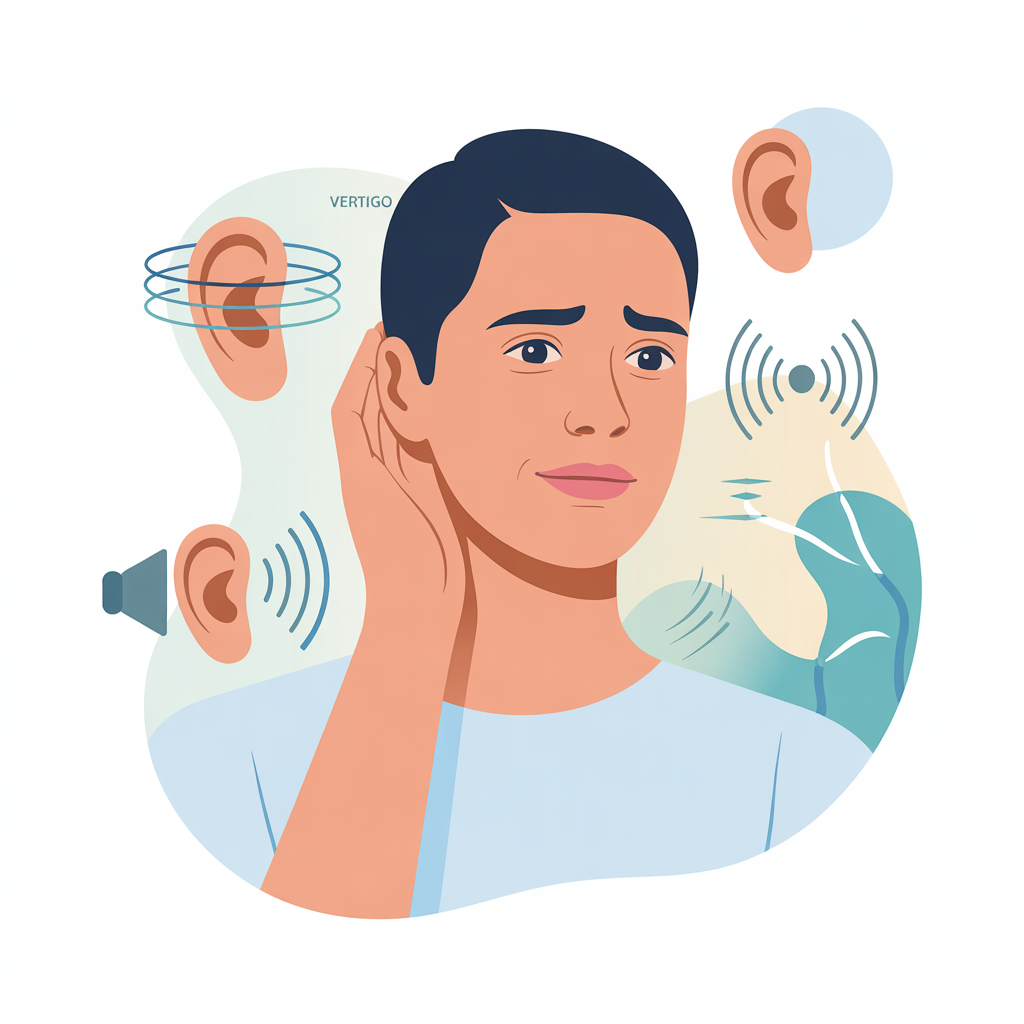
Meniere’s disease is a chronic disorder of the inner ear that affects balance and hearing. Though it can occur at any age, it most commonly develops in adults between 40 and 60 years old. The condition tends to be unpredictable — symptoms can appear suddenly in episodes, last anywhere from 20 minutes to several hours, and then completely disappear until the next attack. While Ménière’s disease is not life-threatening, it can significantly impact a person’s quality of life, making it essential to recognize its warning signs early.
So, what is Meniere’s disease, exactly? It is believed to involve an abnormal buildup of fluid (endolymph) in the inner ear, disrupting the normal signals sent to the brain regarding sound and balance. If left unmanaged, repeated episodes can lead to permanent hearing loss and chronic balance problems.
In this article, we outline the 9 key symptoms of Meniere’s disease to help you better understand what your body might be signaling — and when it’s time to see a doctor.
Symptoms of Meniere’s Disease
1. Vertigo (Severe Dizziness)
Vertigo is widely considered the most debilitating and defining symptom of Meniere’s disease. Unlike ordinary dizziness, vertigo causes an intense sensation that you — or everything around you — is spinning uncontrollably, even when you are perfectly still.
- Episodes of vertigo in Meniere’s disease typically begin without warning.
- They can last anywhere from 20 minutes to 12 hours, though most episodes resolve within 2–4 hours.
- During an attack, the spinning sensation may be so severe that it becomes impossible to stand, walk, or perform daily activities.
- The vertigo associated with Ménière’s disease is often accompanied by nausea, vomiting, and cold sweats due to the overwhelming disturbance in the body’s balance system.
This symptom originates from the abnormal fluid pressure in the inner ear, which interferes with the vestibular system — the part of the ear responsible for sending balance signals to the brain. Many patients describe vertigo episodes as among the most frightening experiences of their lives.
2. Fluctuating Hearing Loss
One of the hallmark signs of Meniere’s disease is hearing loss that comes and goes, especially in the early stages of the condition. This is known as fluctuating sensorineural hearing loss.
- Hearing loss is typically more pronounced in low-frequency sounds at first, making it difficult to hear deep voices or low-pitched tones.
- Hearing may seem nearly normal between episodes but noticeably diminishes during or after an attack.
- Over time, as Menieres disease progresses, the hearing loss may become permanent and more severe.
- The affected ear may also feel “muffled,” as though sounds are coming through a barrier or underwater.
Because hearing fluctuates rather than disappearing all at once, many people do not initially associate this symptom with a medical condition. However, repeated episodes of fluctuating hearing loss should always be evaluated by an ear, nose, and throat (ENT) specialist.
3. Tinnitus (Ringing in the Ear)
Tinnitus — the perception of sound in the ear when no external sound is present — is another signature symptom of Ménière’s disease. Patients describe it in a variety of ways:
- A constant or intermittent ringing, buzzing, roaring, hissing, or whistling sound in one or both ears.
- In Meniere’s disease, tinnitus often affects one ear more than the other, especially in the early stages.
- The sound may become louder or more intense just before or during a vertigo episode, acting as a warning sign that an attack is imminent.
- Between episodes, tinnitus may fade or remain as a low-level background noise.
While tinnitus on its own is a common complaint, tinnitus accompanied by vertigo and hearing loss is a strong indicator of Meniere’s syndrome. Living with persistent tinnitus can lead to sleep disturbances, anxiety, and difficulty concentrating, adding significantly to the overall burden of the disease.
4. Aural Fullness (Feeling of Pressure in the Ear)
Many people with Meniere’s disease describe a sensation of fullness, pressure, or congestion in the affected ear — similar to the feeling experienced when ascending or descending in an airplane, or when swimming underwater. This symptom is medically referred to as aural fullness.
- The feeling can range from mild discomfort to a heavy, plugged sensation.
- It is caused by the excess endolymph fluid building up and creating pressure within the inner ear.
- Aural fullness frequently occurs before or during a Meniere’s disease episode, often accompanying tinnitus and hearing changes.
- Unlike ear infections, the pressure is not relieved by yawning, swallowing, or pinching the nose.
This symptom serves as an important early warning sign for many patients. Recognizing the pressure sensation as a potential precursor to a vertigo attack allows some individuals to take precautionary measures — such as sitting or lying down — before the full episode begins.
5. Nausea and Vomiting
As a direct consequence of severe vertigo, nausea and vomiting are common companions to Meniere’s disease attacks. The inner ear’s disrupted signals cause the brain to receive contradictory information about the body’s position, triggering a response similar to motion sickness.
- Nausea can range from mild queasiness to intense, uncontrollable vomiting during severe episodes.
- These symptoms typically last as long as the vertigo episode itself.
- Cold sweats, pallor (paleness of the skin), and general malaise (a feeling of unwellness) often accompany nausea and vomiting during an attack.
- After a severe episode, patients may feel exhausted and drained for hours or even days.
While nausea and vomiting are secondary symptoms rather than primary signs of inner ear damage, they contribute significantly to the distress and physical exhaustion experienced by people with Ménière’s disease.
6. Loss of Balance and Unsteadiness
Beyond the acute vertigo episodes, many people with Meniere’s disease experience ongoing difficulties with balance and coordination — even between attacks. The vestibular system, which normally helps the body maintain equilibrium, becomes chronically impaired as the disease progresses.
- Patients may feel unsteady or wobbly when walking, particularly on uneven surfaces or in low-light environments.
- Activities requiring precise balance — such as climbing stairs, driving, or exercising — may become increasingly challenging.
- Some individuals describe feeling as though they are constantly walking on a moving surface, even when sitting still.
- Balance problems increase the risk of falls and injuries, particularly in older adults with Meniere’s disease.
This persistent unsteadiness can be particularly frustrating because it affects day-to-day independence and confidence in movement. Physical therapy focused on vestibular rehabilitation may help improve balance over time, but professional evaluation is essential.
7. Drop Attacks (Tumarkin’s Otolithic Crisis)
One of the most alarming — and less commonly known — symptoms of Meniere’s disease is the drop attack, also called Tumarkin’s otolithic crisis. This refers to a sudden, unexpected fall caused by a brief but intense disruption in the balance signals from the inner ear.
- During a drop attack, the person suddenly loses balance and falls without any warning — and without losing consciousness.
- There is typically no dizziness before the fall, which makes it especially unpredictable and dangerous.
- Drop attacks are relatively uncommon and tend to occur in people who have had Meniere’s disease for several years.
- They are caused by a sudden change in pressure or fluid dynamics within the otolith organs — structures in the inner ear that help detect gravity and linear movement.
Because drop attacks happen without warning, they pose a serious risk of injury from falls. If you or someone you know experiences sudden unexplained falls alongside other Meniere’s disease symptoms, it is important to seek urgent medical evaluation.
8. Cognitive Difficulties and “Brain Fog”
While not always highlighted in clinical descriptions of Menieres disease, many patients report experiencing cognitive challenges alongside their physical symptoms. This is often referred to as “brain fog.”
- Symptoms include difficulty concentrating, memory lapses, mental fatigue, and trouble finding words during conversation.
- Brain fog tends to be most pronounced during and immediately after a vertigo episode, when the brain is overwhelmed by contradictory sensory input.
- Chronic sleep disruption caused by tinnitus and anxiety related to the disease can worsen cognitive difficulties over time.
- Some patients describe feeling “mentally cloudy” even on days when no acute episode occurs.
Though brain fog is not a primary diagnostic criterion for Ménière’s disease, it is a very real and distressing part of the condition for many sufferers. Acknowledging and addressing cognitive symptoms is an important part of comprehensive care.
9. Anxiety, Depression, and Emotional Distress
Living with an unpredictable, chronic condition like Meniere’s disease takes a significant toll on mental health. The fear of when the next attack will strike — combined with the physical limitations imposed by symptoms — frequently leads to psychological distress.
- Anxiety is extremely common among people with Meniere’s disease, often stemming from the unpredictability of vertigo attacks and concern about having an episode in public.
- Depression may develop as a result of chronic illness, social withdrawal, reduced quality of life, and frustration over lost independence.
- Many patients reduce or avoid activities they once enjoyed — such as driving, traveling, or socializing — due to fear of triggering an episode.
- The constant presence of tinnitus, especially at night, can contribute to insomnia and chronic fatigue, further worsening emotional wellbeing.
It is important to recognize that psychological symptoms are a legitimate part of living with Meniere’s disease and not simply an overreaction to physical symptoms. Seeking support from mental health professionals, support groups, or counseling can make a meaningful difference in overall quality of life.
Main Causes of Meniere’s Disease
The exact cause of Meniere’s disease is not fully understood, but research points to several contributing factors:
- Abnormal fluid buildup in the inner ear (endolymphatic hydrops): An excess of endolymph fluid increases pressure within the inner ear, disrupting normal hearing and balance signals.
- Autoimmune reactions: In some cases, the body’s immune system may mistakenly attack the inner ear, causing inflammation and fluid imbalance.
- Genetic predisposition: Meniere’s disease can run in families, suggesting a hereditary component may increase the risk.
- Viral infections: Certain viral infections (such as those involving the herpes simplex virus) have been associated with inner ear damage that may trigger the condition.
- Circulatory or vascular problems: Poor blood flow to the inner ear may contribute to fluid regulation problems.
- Allergies: Some patients report that allergic reactions appear to trigger or worsen episodes of Meniere’s disease.
- Head trauma or migraines: A history of head injuries or a link with vestibular migraines has been identified in some patients with Ménière’s disease.
It is likely that Meniere’s disease results from a combination of these factors rather than a single cause, and triggers can vary significantly from person to person.
How to Reduce the Risk of Meniere’s Disease Episodes
While there is currently no known way to completely prevent Meniere’s disease, certain lifestyle adjustments may help reduce the frequency and severity of episodes:
- Reduce salt (sodium) intake: A low-sodium diet is one of the most widely recommended lifestyle changes for people with Meniere’s disease, as high salt levels can increase fluid retention in the body, including the inner ear.
- Limit caffeine and alcohol: Both caffeine and alcohol can affect inner ear fluid balance and blood flow, potentially triggering episodes.
- Stay well hydrated: Drinking adequate water throughout the day helps maintain a stable fluid balance in the body.
- Manage stress: Stress is a well-known trigger for Meniere’s disease attacks. Practices such as mindfulness, yoga, meditation, and adequate sleep can help manage stress levels.
- Avoid known triggers: Keeping a symptom diary to identify personal triggers — such as specific foods, environments, or activities — can help you avoid future episodes.
- Protect your hearing: Avoiding loud noise exposure and using hearing protection when necessary may help preserve hearing health.
- See a specialist regularly: Regular follow-up with an ENT (ear, nose, and throat) doctor or audiologist is important for monitoring the progression of the disease and adjusting your management plan as needed.
Important: Always consult your doctor before starting any treatment or taking any medication for Meniere’s disease. Treatment plans should be individualized and professionally supervised.
Frequently Asked Questions (FAQ)
What is Meniere’s disease?
Meniere’s disease is a chronic inner ear disorder characterized by episodes of vertigo, fluctuating hearing loss, tinnitus (ringing in the ear), and a feeling of fullness or pressure in the ear. It is believed to be caused by abnormal fluid buildup in the inner ear.
Is Meniere’s disease the same as Meniere’s syndrome?
The terms are often used interchangeably, but technically, Meniere’s disease refers to cases with no identifiable cause (idiopathic), while Meniere’s syndrome refers to the same set of symptoms caused by a known underlying condition, such as autoimmune disease or viral infection.
Which ear does Meniere’s disease affect?
Meniere’s disease typically affects one ear (unilateral) in most cases. However, in approximately 15–40% of patients, both ears can become involved over time.
How long do Meniere’s disease episodes last?
Episodes of vertigo typically last between 20 minutes and 12 hours, with most lasting 2–4 hours. Mild symptoms such as tinnitus, hearing loss, and aural fullness may persist beyond the acute episode.
Can Meniere’s disease lead to permanent hearing loss?
Yes. Without proper management, repeated episodes of Meniere’s disease can lead to progressive and permanent hearing loss in the affected ear, particularly for low-frequency sounds initially, and eventually across all frequencies.
Is Meniere’s disease hereditary?
There is evidence that Meniere’s disease can run in families, suggesting a genetic component. However, having a family history does not guarantee a person will develop the condition.
When should I see a doctor about Meniere’s disease symptoms?
You should see a doctor if you experience recurring episodes of vertigo, unexplained hearing loss, persistent tinnitus, or a feeling of fullness in the ear — especially if these symptoms occur together. Early diagnosis can help prevent the progression of hearing loss and improve quality of life.
References: