
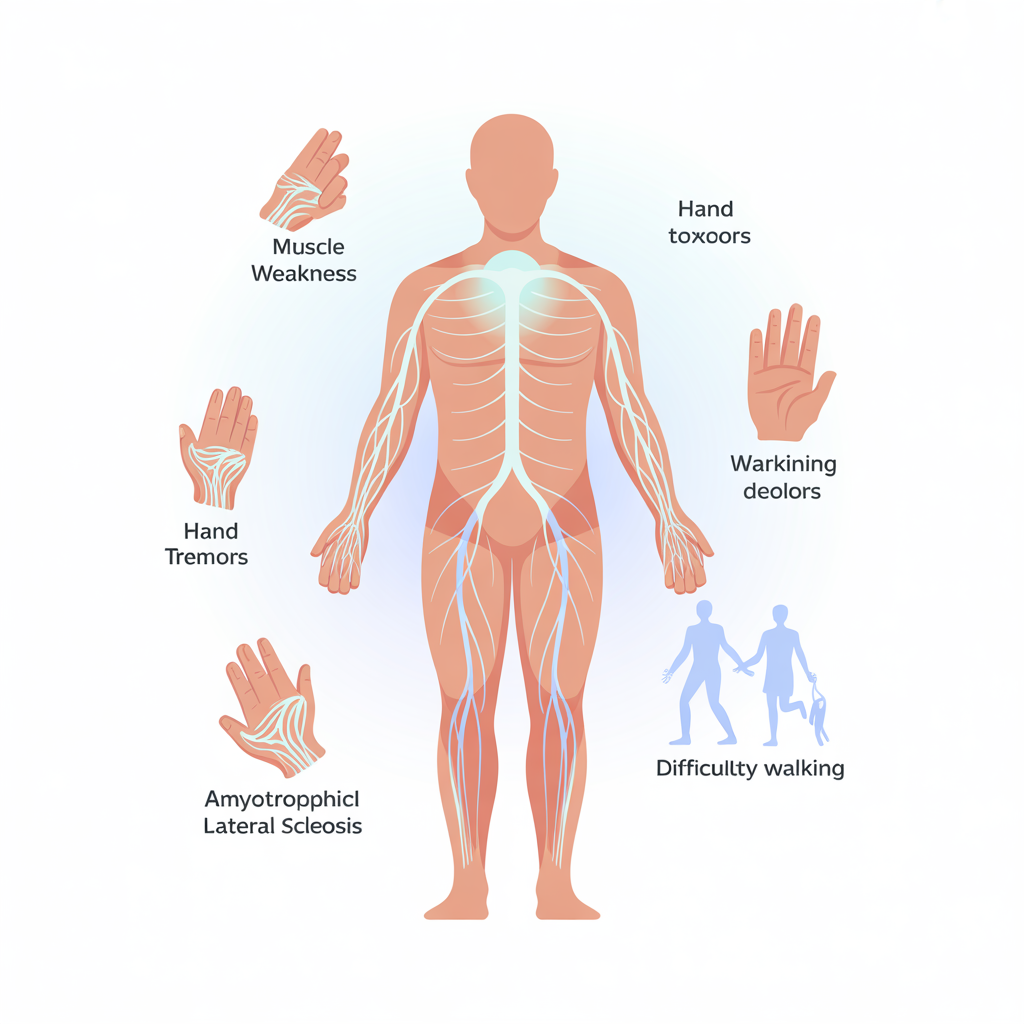
Amyotrophic lateral sclerosis (ALS), also widely known as Lou Gehrig’s disease, is a progressive neurodegenerative disease that affects the nerve cells in the brain and spinal cord responsible for controlling voluntary muscle movement. Over time, ALS causes the motor neurons to deteriorate and die, leading to muscle weakness, paralysis, and eventually the loss of the ability to speak, eat, and breathe independently.
ALS can affect anyone, regardless of age, gender, or ethnicity — though it is most commonly diagnosed in people between the ages of 40 and 70. While ALS symptoms in women and men are largely similar, some research suggests there may be slight differences in how the disease first presents. Understanding the early signs of ALS is critical for timely diagnosis and management of this life-altering condition.
In this article, we outline 13 key symptoms of ALS that you should be aware of, along with its main causes, prevention considerations, and answers to frequently asked questions.
1. Muscle Weakness in the Limbs
One of the earliest and most recognizable symptoms of ALS is progressive muscle weakness, typically beginning in one limb — such as a hand, arm, or leg — before spreading to other parts of the body.
- Upper limb weakness: Patients may notice difficulty gripping objects, buttoning shirts, or writing. Dropping items frequently is a common early complaint.
- Lower limb weakness: Walking may become difficult, with patients tripping or stumbling more than usual. Some may develop a “foot drop,” where they cannot lift the front part of the foot properly.
- Asymmetric onset: Unlike many other conditions, ALS often starts on one side of the body before gradually affecting both sides.
This weakness is not caused by pain or fatigue alone — it reflects actual deterioration of the motor neurons controlling those muscles.
2. Muscle Twitching (Fasciculations)
Fasciculations — involuntary twitches or rippling movements visible beneath the skin — are a hallmark symptom of ALS. These occur because the motor neurons are misfiring as they begin to deteriorate.
- They can appear in almost any muscle group, including the arms, legs, tongue, and back.
- While occasional twitching is common in healthy people, persistent, widespread fasciculations that accompany weakness should be evaluated by a neurologist.
- Fasciculations alone are not diagnostic of ALS, but in combination with other symptoms, they are a significant clinical finding.
3. Muscle Cramps and Stiffness (Spasticity)
Many people with ALS experience painful muscle cramps and stiffness (spasticity), particularly in the early stages of the disease. This occurs when the upper motor neurons — those in the brain — are affected.
- Spasticity can make movement slow, stiff, and difficult to control.
- Cramps often occur at night and may affect the calves, thighs, and hands.
- Stiffness in the legs can cause a characteristic stiff or scissor-like gait when walking.
These symptoms may be present even before noticeable weakness develops, making them important early warning signs.
4. Difficulty Speaking (Dysarthria)
As ALS progresses and affects the muscles involved in speech, many patients develop dysarthria — a condition characterized by slurred, slow, or difficult-to-understand speech.
- Speech may become nasal-sounding as the palate weakens.
- Words may be slurred or mumbled, and the voice may become quieter and strained.
- This symptom is especially prominent in bulbar-onset ALS, a form of the disease that begins with speech and swallowing difficulties rather than limb weakness.
- Bulbar-onset ALS is more commonly seen as early signs of ALS in females compared to males, though it can affect anyone.
5. Difficulty Swallowing (Dysphagia)
Dysphagia, or difficulty swallowing, is another common symptom in ALS, especially in bulbar-onset cases. It develops when the muscles of the mouth, throat, and esophagus are weakened by motor neuron loss.
- Patients may choke on food, liquids, or even saliva.
- Swallowing solid foods first becomes difficult, then liquids.
- This can lead to unintended weight loss and nutritional deficiencies.
- The risk of aspiration pneumonia — where food or liquid enters the lungs — is a serious complication associated with this symptom.
6. Excessive Saliva or Drooling
People with ALS do not necessarily produce more saliva than normal; rather, the weakening of the swallowing muscles makes it harder to manage saliva effectively, resulting in drooling or a sensation of excessive saliva pooling in the mouth.
- This can be embarrassing and socially distressing for patients.
- In some cases, the saliva may become thick and difficult to clear, leading to discomfort and breathing difficulties.
- This symptom typically worsens as the bulbar muscles become increasingly affected.
7. Difficulty Breathing (Dyspnea)
Respiratory muscle weakness is one of the most serious complications of ALS. When the diaphragm and chest muscles are affected, breathing becomes increasingly difficult.
- Early signs may include shortness of breath during physical activity or when lying flat.
- Patients may wake up frequently at night feeling breathless or may need extra pillows to breathe comfortably.
- Morning headaches caused by a buildup of carbon dioxide during sleep are another indicator of declining respiratory function.
- Eventually, most people with ALS require ventilatory support to maintain adequate breathing.
Respiratory failure is the most common cause of death in ALS patients, making this symptom critically important to monitor.
8. Fatigue and General Weakness
Beyond localized muscle weakness, many ALS patients experience profound fatigue and overall physical exhaustion. This is not simply tiredness from exertion — it reflects the body’s increasing difficulty in performing even basic movements.
- Patients may feel overwhelmingly tired after minimal activity, such as walking short distances or holding a conversation.
- As more motor neurons are lost, the body must recruit remaining neurons to compensate, which rapidly depletes energy.
- Fatigue can significantly impact quality of life and daily functioning.
9. Emotional Lability (Pseudobulbar Affect)
A less commonly known symptom of ALS is pseudobulbar affect (PBA), also called emotional lability. This involves involuntary and uncontrollable episodes of laughing or crying that are inconsistent with the patient’s actual emotional state.
- A person may burst into tears or laughter unexpectedly and without a clear emotional trigger.
- PBA is caused by damage to the neural pathways that regulate emotional expression in the brain.
- It is distinct from depression or anxiety, though those conditions can also co-occur in ALS patients.
- PBA can be distressing for both the patient and their loved ones, as it is often misunderstood.
10. Cognitive and Behavioral Changes
While ALS is primarily a motor neuron disease, research has shown that a significant portion of ALS patients — estimated at up to 50% — experience some degree of cognitive or behavioral change.
- Some patients develop frontotemporal dementia (FTD), a form of dementia affecting personality, behavior, and language.
- Changes may include impulsivity, poor judgment, difficulty with planning, and social inappropriateness.
- Memory and reasoning may be mildly affected in some individuals.
- These changes can complicate care and communication, particularly in the later stages of the disease.
11. Unintended Weight Loss
Unexplained weight loss is a common feature of ALS and may result from multiple factors working simultaneously:
- Dysphagia makes eating difficult, reducing caloric intake.
- Muscle atrophy leads to a loss of overall body mass as muscles waste away.
- Increased metabolic rate: Some studies suggest that ALS patients have a higher-than-normal caloric demand due to the physiological stress of the disease.
Weight loss in ALS patients is associated with faster disease progression, making nutritional monitoring an important part of overall care.
12. Loss of Fine Motor Skills
ALS frequently causes deterioration of fine motor skills — the ability to perform small, precise movements with the hands and fingers.
- Tasks such as typing, writing, sewing, or playing musical instruments become increasingly difficult.
- Handwriting may become illegible as hand muscles weaken.
- Patients may struggle with everyday tasks like tying shoelaces, using utensils, or handling small objects.
- This loss of dexterity is often one of the earliest and most noticeable signs of limb-onset ALS.
13. Head Drop and Posture Problems
In some ALS patients, the muscles responsible for holding the head upright become weakened, resulting in head drop syndrome — the inability to hold the head up without support.
- The chin may drop toward the chest involuntarily.
- This can cause neck pain, difficulty making eye contact, and problems with eating and breathing.
- More broadly, postural instability can develop as trunk muscles weaken, increasing the risk of falls and injuries.
- Patients may begin to slouch or lean to one side, even when seated.
Main Causes of ALS
The exact cause of ALS remains unknown in most cases. However, researchers have identified several key factors that are believed to contribute to the development of the disease:
- Genetic mutations: Approximately 5–10% of ALS cases are familial, meaning they are inherited. Mutations in genes such as SOD1, C9orf72, FUS, and TARDBP have been linked to ALS. The C9orf72 mutation is the most common genetic cause identified so far.
- Sporadic occurrence: Around 90–95% of ALS cases are sporadic, with no clear family history. These cases likely result from a complex combination of genetic susceptibility and environmental factors.
- Oxidative stress: Damage to motor neurons from harmful free radicals — a process known as oxidative stress — is thought to play a significant role in the progression of ALS.
- Glutamate excitotoxicity: Excessive levels of glutamate — a chemical messenger in the brain — can overstimulate and ultimately kill nerve cells.
- Protein aggregation: Abnormal clumping of misfolded proteins inside motor neurons is another mechanism that is believed to contribute to cell death in ALS.
- Mitochondrial dysfunction: Impaired energy production within nerve cells can weaken and eventually destroy motor neurons.
- Environmental and lifestyle factors: Some studies have associated ALS with heavy physical exertion, military service, exposure to certain toxins (such as pesticides and heavy metals), and head trauma — though none of these factors has been definitively proven as a direct cause.
- Age and sex: ALS is more common in people over 40, and men are slightly more likely to develop the disease than women, though this difference narrows with age.
Frequently Asked Questions (FAQ)
What is ALS?
ALS (Amyotrophic Lateral Sclerosis), also known as Lou Gehrig’s disease, is a progressive neurodegenerative disease that destroys the motor neurons responsible for controlling voluntary muscle movement. Over time, patients lose the ability to move, speak, swallow, and breathe independently.
What are the early signs of ALS?
Early signs of ALS typically include muscle weakness (especially in one limb), muscle twitching (fasciculations), tripping or stumbling frequently, difficulty gripping objects, slurred speech, and unexplained fatigue. Symptoms usually start in one area of the body before spreading.
Are ALS symptoms different in women?
ALS symptoms in women are largely similar to those in men. However, some studies suggest that women are more likely to develop bulbar-onset ALS, which first presents with speech and swallowing difficulties rather than limb weakness. Early signs of ALS in females may therefore include changes in voice quality, difficulty swallowing, and slurred speech before motor limb weakness becomes apparent.
How does ALS differ from other neurological diseases?
ALS specifically affects both upper and lower motor neurons, leading to a combination of spasticity and muscle atrophy. Unlike Parkinson’s disease, ALS does not typically cause tremors. Unlike multiple sclerosis (MS), ALS does not affect sensory nerves or cause episodes of remission and relapse. ALS progresses continuously and relentlessly without periods of improvement.
Is ALS hereditary?
In about 5–10% of cases, ALS is hereditary (familial ALS), caused by inherited genetic mutations. The remaining 90–95% of cases are sporadic, meaning they occur in people with no family history of the disease. Having a family member with ALS slightly increases your risk, particularly if a known genetic mutation is present.
How is ALS diagnosed?
There is no single test that can confirm ALS. Diagnosis is based on a combination of clinical examination, electromyography (EMG), nerve conduction studies, MRI scans, and blood/urine tests to rule out other conditions. The process can take months, as ALS must be distinguished from other diseases with similar symptoms.
Does ALS affect the mind?
Traditionally considered a disease affecting only motor function, ALS is now known to affect cognition in some patients. Up to 50% of ALS patients experience mild cognitive or behavioral changes, and approximately 5–15% develop full frontotemporal dementia (FTD).
What should I do if I notice ALS symptoms?
If you or someone you know experiences persistent muscle weakness, unexplained muscle twitching, difficulty speaking or swallowing, or any combination of the symptoms described above, it is essential to consult a neurologist as soon as possible. Early diagnosis allows for better symptom management and care planning. Always seek professional medical advice before taking any medications or starting any treatment.
References:
- Mayo Clinic – Amyotrophic Lateral Sclerosis (ALS): Symptoms & Causes
- National Institute of Neurological Disorders and Stroke (NINDS) – ALS
- ALS Association – What is ALS?
- Healthline – Amyotrophic Lateral Sclerosis (ALS)
- WebMD – ALS (Amyotrophic Lateral Sclerosis)
- Johns Hopkins Medicine – Amyotrophic Lateral Sclerosis (ALS)