
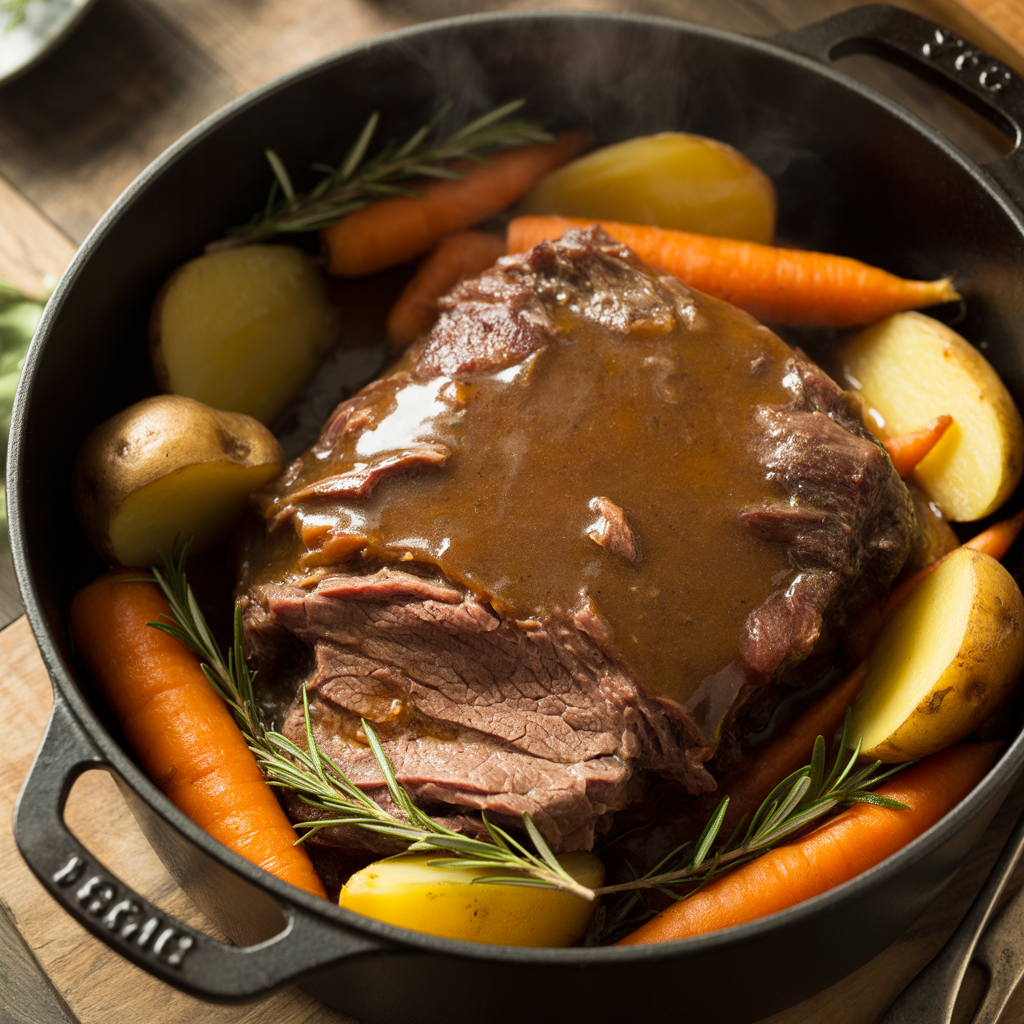
Introduction: The Secret to a Perfect Pot Roast
There is nothing quite like a tender, juicy pot roast sitting at the center of your dinner table. Whether you are cooking for a Sunday family dinner or a special occasion, a well-made pot roast is the ultimate comfort food. But achieving that fall-apart tenderness with deep, rich flavor takes more than just throwing a piece of meat in a pot. In this guide, you will learn everything you need to know about how to make pot roast tender and flavorful — from choosing the right cut of meat to the best cooking techniques, seasoning tips, and common mistakes to avoid.
Choosing the Right Cut of Meat
The foundation of a great pot roast starts with selecting the right cut of beef. Not all cuts are created equal when it comes to slow cooking.
Best Cuts for Pot Roast
- Chuck Roast: This is the most popular and highly recommended cut for pot roast. It comes from the shoulder area and is well-marbled with fat and connective tissue, which breaks down during slow cooking to create incredible tenderness and flavor.
- Brisket: Another excellent choice, brisket has a rich beefy flavor and becomes wonderfully tender when braised low and slow.
- Round Roast (Bottom or Eye of Round): Leaner than chuck, this cut works well but requires careful cooking to avoid dryness.
- Rump Roast: A budget-friendly option that becomes tender with long, slow cooking and plenty of liquid.
Pro Tip: Always choose a cut with visible marbling (fat running through the meat). Fat equals flavor and moisture during the cooking process.
Essential Ingredients for a Flavorful Pot Roast
Beyond the meat itself, the ingredients you use to cook and season your pot roast make all the difference.
The Basic Pot Roast Ingredient List
- 3–4 lb chuck roast
- Salt and black pepper
- 2 tablespoons olive oil or vegetable oil
- 1 large onion, roughly chopped
- 4 garlic cloves, minced
- 3–4 medium carrots, cut into chunks
- 3–4 medium potatoes, cubed
- 2 stalks celery, chopped
- 2 cups beef broth
- 1 cup red wine (optional but highly recommended)
- 2 tablespoons tomato paste
- Fresh herbs: rosemary, thyme, and bay leaves
- 1 tablespoon Worcestershire sauce
Step-by-Step: How to Make Pot Roast Tender and Flavorful
Step 1: Season the Meat Generously
Pat the roast completely dry with paper towels. This is crucial because moisture on the surface of the meat will cause steaming rather than browning. Season all sides liberally with salt and black pepper. For even deeper flavor, season the meat the night before and let it rest uncovered in the refrigerator. This dry brine process allows the salt to penetrate deeper into the meat.
Step 2: Sear the Roast for Maximum Flavor
Never skip the searing step. This is one of the most important techniques for building deep, complex flavor in your pot roast. Heat 2 tablespoons of oil in a large Dutch oven or heavy-bottomed pot over medium-high heat until the oil shimmers. Place the roast in the pot and do not move it for 3–4 minutes until a deep brown crust forms. Sear all sides, including the edges. This Maillard reaction creates hundreds of new flavor compounds that make your pot roast taste incredible.
Step 3: Sauté the Aromatics
Once the roast is seared, remove it from the pot and set it aside. In the same pot with all those beautiful browned bits (called fond), add your onions and celery. Cook for 3–4 minutes until softened. Add the garlic and cook for another minute. Then stir in the tomato paste and cook for 2 minutes — this caramelizes the tomato paste and adds a rich depth of flavor.
Step 4: Deglaze the Pan
Pour in the red wine (or additional beef broth if not using wine) and use a wooden spoon to scrape up all the browned bits from the bottom of the pot. These bits are packed with flavor and should never be wasted. Let the wine simmer for 2–3 minutes to cook off the alcohol.
Step 5: Build the Braising Liquid
Add the beef broth, Worcestershire sauce, and fresh herbs (rosemary, thyme, bay leaves) to the pot. Stir everything together. Taste the liquid and adjust salt if needed. Return the seared roast to the pot. The liquid should come up about one-third to halfway up the side of the roast — you are braising, not boiling.
Step 6: Low and Slow Cooking
This is the key to tender pot roast — low temperature and long cooking time. You have several cooking method options:
Oven Method (Recommended)
Cover the Dutch oven tightly with a lid and place it in a preheated oven at 275°F to 325°F (135°C to 163°C). Cook for 3.5 to 4.5 hours depending on the size of your roast. The lower the temperature, the more tender and evenly cooked the meat will be. The roast is done when it is fork-tender and easily pulls apart.
Slow Cooker Method
After searing and sautéing on the stovetop, transfer everything to a slow cooker. Cook on LOW for 8–10 hours or on HIGH for 4–6 hours. The low setting is preferred for maximum tenderness.
Instant Pot / Pressure Cooker Method
Use the sauté function to sear and build the base. Add all ingredients, seal the lid, and cook on HIGH pressure for 60–80 minutes, followed by a natural pressure release of at least 15 minutes. This method gives you tender pot roast in a fraction of the time.
Step 7: Add Vegetables at the Right Time
If cooking in the oven or slow cooker, add your carrots and potatoes during the last 1.5–2 hours of cooking. Adding them too early will cause them to become mushy and fall apart completely. For the Instant Pot method, you can add them after the initial pressure cooking cycle and cook on HIGH pressure for an additional 5–8 minutes.
Step 8: Rest the Meat Before Serving
Once the roast is done cooking, remove it from the pot and let it rest for at least 10–15 minutes before serving or slicing. This allows the juices to redistribute throughout the meat, resulting in a more moist and flavorful final result.
Step 9: Make the Gravy
Do not discard the braising liquid — it is liquid gold. Remove the bay leaves and herb stems, then skim any excess fat from the surface. You can serve the liquid as-is as a thin jus, or thicken it into a rich gravy:
- Transfer the braising liquid to a saucepan and bring it to a simmer.
- In a small bowl, whisk together 2 tablespoons of cornstarch with 2 tablespoons of cold water to make a slurry.
- Slowly whisk the slurry into the simmering liquid until the desired thickness is reached.
- Taste and season with salt and pepper as needed.
Tips to Make Your Pot Roast Extra Tender
1. Do Not Rush the Cooking Process
Collagen in the connective tissue of tough cuts like chuck roast needs time to break down into gelatin. This process happens gradually at temperatures between 160°F–180°F (71°C–82°C). Cooking too fast at high temperatures will cause the meat fibers to tighten and squeeze out moisture, resulting in tough, dry meat.
2. Keep the Lid On
Resist the urge to peek. Every time you lift the lid, you lose heat and steam, which extends the cooking time and can affect the texture of your roast.
3. Use Enough Liquid
Make sure there is enough braising liquid in the pot throughout the cooking process. If the liquid evaporates too much, the roast can dry out or burn. Check occasionally and add more broth if needed.
4. Cook to the Right Internal Temperature
For a fork-tender pot roast, aim for an internal temperature of 195°F–205°F (90°C–96°C). At this temperature, the collagen has fully converted to gelatin and the muscle fibers have relaxed, giving you that signature melt-in-your-mouth texture.
5. Use Acid to Tenderize
Ingredients like red wine, tomatoes (tomato paste), and Worcestershire sauce are mildly acidic. Acid helps break down protein fibers in the meat, contributing to a more tender final result.
6. Marinate the Meat (Optional)
For an extra boost in flavor and tenderness, marinate the roast overnight in a mixture of red wine, garlic, herbs, and a splash of Worcestershire sauce before cooking.
How to Add More Flavor to Your Pot Roast
Use Homemade or High-Quality Beef Broth
The braising liquid is a major source of flavor in your pot roast. Using a high-quality, rich beef broth or stock makes a noticeable difference compared to using water or low-sodium store-bought broth.
Add Umami Boosters
Ingredients that are rich in umami (savory, meaty flavor) can elevate your pot roast significantly:
- Worcestershire sauce
- Soy sauce (a small splash)
- Tomato paste
- Dried mushrooms or mushroom powder
- Anchovy paste (you will not taste it, but it adds incredible depth)
Layer Your Herbs and Spices
Fresh herbs like rosemary and thyme are added during cooking, but finishing with a sprinkle of fresh parsley right before serving adds a bright, fresh element. You can also add a pinch of smoked paprika or dried oregano to the seasoning blend on the meat before searing.
Finish with a Splash of Balsamic Vinegar
Stirring in one tablespoon of balsamic vinegar into the gravy at the end of cooking adds a subtle sweetness and complexity that takes the flavor to the next level.
Common Mistakes to Avoid When Making Pot Roast
Mistake 1: Not Searing the Meat
Skipping the sear means missing out on the deep, complex flavors created by the Maillard reaction. Always sear before braising, no matter what method you use.
Mistake 2: Cooking at Too High a Temperature
High heat will cause the proteins in the meat to contract rapidly, squeezing out moisture and resulting in tough, chewy meat. Low and slow is the golden rule for pot roast.
Mistake 3: Using Too Little Liquid
Insufficient braising liquid can cause the roast to dry out and the bottom of the pot to scorch. Keep the liquid level at one-third to halfway up the roast throughout the cooking process.
Mistake 4: Adding Vegetables Too Early
Root vegetables like potatoes and carrots will turn to mush if cooked for the full duration alongside the roast. Add them in the last 1.5–2 hours of cooking.
Mistake 5: Not Resting the Meat
Cutting into the roast immediately after cooking causes all the juices to run out onto the cutting board instead of staying in the meat. Always rest the roast for at least 10–15 minutes.
Mistake 6: Using the Wrong Cut
Lean cuts without enough fat and connective tissue will not become tender no matter how long you cook them. Stick with chuck roast or brisket for the best results.
How to Serve Pot Roast
A classic pot roast is often served as a one-pot meal with carrots and potatoes already in the dish. But here are some other wonderful serving ideas:
- Over creamy mashed potatoes with a generous ladle of gravy
- With crusty bread to soak up the flavorful braising liquid
- Over egg noodles or buttered pasta
- Shredded and served in sandwiches or tacos
- Over polenta or grits for a Southern-inspired twist
How to Store and Reheat Leftover Pot Roast
Storing
Allow the pot roast to cool completely before storing. Place the meat and vegetables together with the braising liquid in an airtight container. Store in the refrigerator for up to 4 days or freeze for up to 3 months.
Reheating
Reheat leftover pot roast gently in a covered pot over low heat on the stovetop with a little extra broth added to keep it moist. You can also reheat it in the oven at 300°F (150°C) covered with foil for 20–30 minutes. Avoid microwaving on high power as it can dry out the meat quickly.
Bonus Tip: Pot roast actually tastes even better the next day as the flavors continue to meld and develop overnight in the refrigerator.
Frequently Asked Questions
How long does it take to make a tender pot roast?
In the oven at 275°F–325°F, a 3–4 lb pot roast takes approximately 3.5 to 4.5 hours. In a slow cooker on LOW, it takes 8–10 hours. In an Instant Pot, it takes about 60–80 minutes under high pressure.
Can I make pot roast without wine?
Absolutely. Simply replace the red wine with additional beef broth. You can also add a tablespoon of balsamic vinegar or apple cider vinegar to mimic the acidity that wine provides.
Why is my pot roast still tough?
If your pot roast is tough, it simply needs more time. Return it to the pot with some additional liquid and continue cooking. Toughness means the collagen has not fully broken down yet. Keep cooking and it will eventually become tender.
Should pot roast be covered in liquid?
No. The roast should not be fully submerged. Aim to have the liquid cover about one-third to halfway up the sides of the roast. This ensures proper braising rather than boiling.
What vegetables go best with pot roast?
Classic choices include carrots, potatoes, celery, and onions. Parsnips, turnips, mushrooms, and green beans are also excellent additions.
Conclusion
Making a tender, flavorful pot roast is truly a rewarding cooking experience. By choosing the right cut of meat, taking the time to properly sear it, building a deeply flavored braising liquid, and cooking low and slow, you can achieve results that rival even the finest restaurant dishes. Remember that patience is the most important ingredient of all. Follow the steps and tips outlined in this guide, and you will be serving a pot roast that your family and friends will request again and again. Happy cooking!