
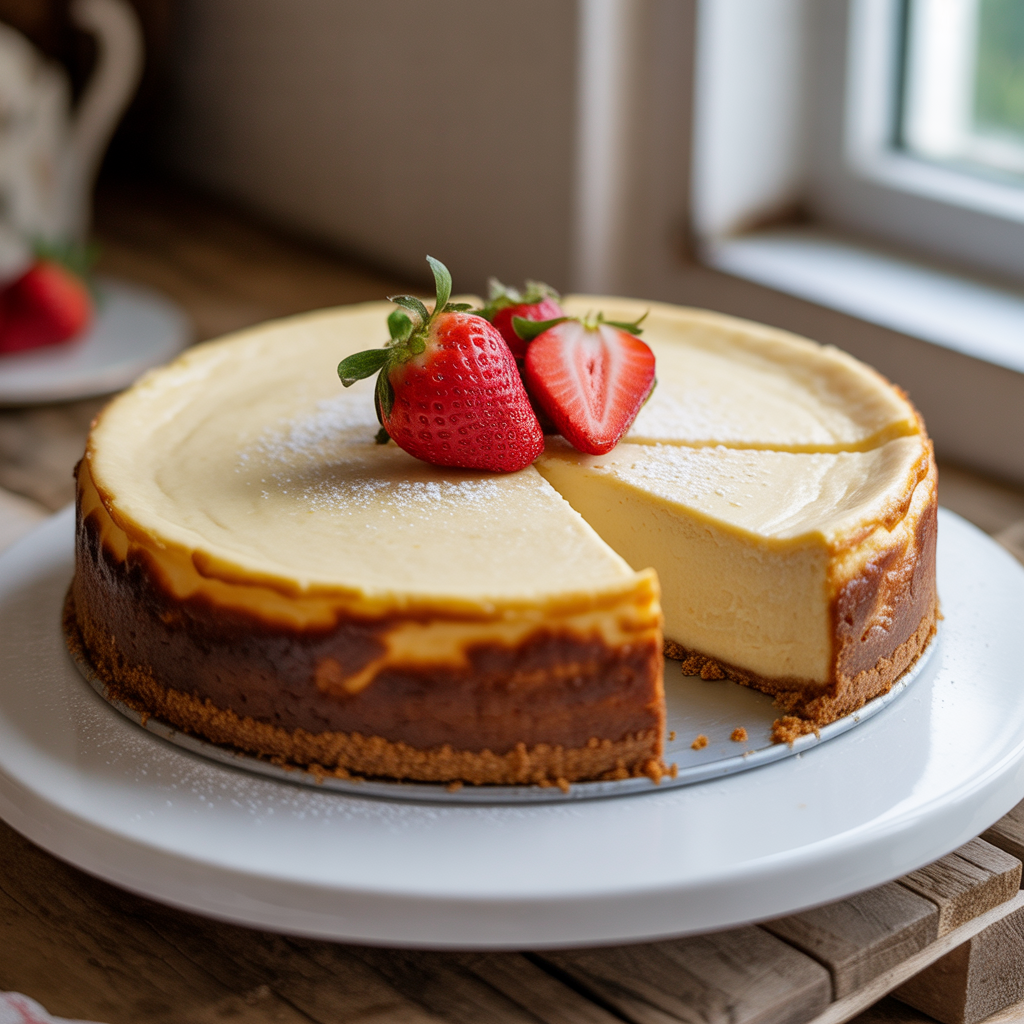
If you’ve ever dreamed of making a perfectly creamy, rich, and crack-free cheesecake right in your own kitchen, you’ve come to the right place. This classic cheesecake recipe walks you through every step — from building a buttery graham cracker crust to achieving that silky-smooth filling — so you can bake with confidence every single time.
Why You’ll Love This Classic Cheesecake
- Ultra-creamy texture — No grainy or lumpy filling here.
- No cracks — We’ll share the secrets professional bakers use.
- Simple ingredients — Nothing fancy, just pantry staples done right.
- Make-ahead friendly — Perfect for entertaining and special occasions.
- Versatile — Delicious on its own or topped with fruit, caramel, or chocolate.
Understanding the Classic Cheesecake
A traditional New York-style cheesecake is made with a cream cheese filling baked on a graham cracker crust. Unlike Japanese soufflé cheesecakes or no-bake versions, this style is dense, rich, and satisfying. The key to its legendary texture lies in the balance of cream cheese, eggs, and sour cream, combined with the proper baking technique.
Ingredients You’ll Need
For the Graham Cracker Crust
- 2 cups (200g) graham cracker crumbs (about 14–16 full crackers)
- 1/4 cup (50g) granulated sugar
- 1/2 cup (115g) unsalted butter, melted
- Pinch of salt
For the Cheesecake Filling
- 4 blocks (900g / 32 oz) full-fat cream cheese, softened to room temperature
- 1 cup (200g) granulated sugar
- 1 cup (240g) full-fat sour cream, room temperature
- 1 teaspoon pure vanilla extract
- 2 teaspoons fresh lemon juice
- 1 tablespoon all-purpose flour (optional, helps prevent cracking)
- 3 large eggs, room temperature
- 2 egg yolks, room temperature
Optional Toppings
- Fresh strawberries or blueberries
- Strawberry or raspberry compote
- Salted caramel sauce
- Whipped cream
- Chocolate ganache
Equipment You’ll Need
- 9-inch (23cm) springform pan
- Stand mixer or hand mixer
- Large roasting pan (for water bath)
- Aluminum foil (heavy duty)
- Mixing bowls
- Rubber spatula
- Instant-read thermometer (optional but helpful)
Step-by-Step Instructions
Step 1: Prepare Your Ingredients
This step is non-negotiable for a creamy cheesecake: bring all your ingredients to room temperature before you begin. This means taking your cream cheese, eggs, and sour cream out of the refrigerator at least 1–2 hours before mixing. Cold cream cheese will not blend smoothly and will result in lumps and cracks.
Preheat your oven to 325°F (163°C).
Step 2: Make the Graham Cracker Crust
In a medium bowl, combine the graham cracker crumbs, sugar, melted butter, and a pinch of salt. Stir until the mixture resembles wet sand and holds together when you squeeze a handful.
Press the mixture firmly into the bottom and about 1 inch up the sides of a 9-inch springform pan. Use the flat bottom of a measuring cup or glass to press it down evenly and compactly.
Bake the crust in the preheated oven for 10 minutes, then remove and allow to cool while you prepare the filling. This pre-baking step helps the crust hold its structure.
Step 3: Make the Cheesecake Filling
In the bowl of a stand mixer fitted with a paddle attachment (or using a hand mixer), beat the softened cream cheese on medium-low speed until completely smooth, about 2–3 minutes. Scrape down the sides of the bowl frequently.
Add the sugar and beat on medium speed until combined and smooth, about 1–2 minutes. Do not over-mix at this stage.
Mix in the sour cream, vanilla extract, lemon juice, and flour (if using) on low speed until just combined.
Add the eggs and egg yolks one at a time, mixing on the lowest speed after each addition, just until incorporated. This is the most critical step: do not over-mix once the eggs are added. Over-beating eggs incorporates too much air into the batter, which causes the cheesecake to puff up in the oven and then collapse and crack as it cools.
Use a rubber spatula to gently fold the batter a few times to ensure everything is evenly mixed.
Step 4: Prepare the Water Bath (Bain-Marie)
A water bath is the single most effective technique for baking a crack-free cheesecake. It surrounds the cheesecake with gentle, moist heat, which prevents the edges from cooking faster than the center — the main cause of cracking.
Wrap the outside of your springform pan with two to three layers of heavy-duty aluminum foil, bringing the foil all the way up the sides. This prevents water from seeping into the crust.
Place the wrapped springform pan inside a large roasting pan.
Pour the cheesecake batter over the cooled crust and smooth the top with a spatula.
Place the roasting pan in the oven, then carefully pour hot or boiling water into the roasting pan until it reaches about halfway up the sides of the springform pan. Pour slowly and carefully to avoid splashing water into the batter.
Step 5: Bake the Cheesecake
Bake at 325°F (163°C) for 60–75 minutes. The exact time will depend on your oven and how full the pan is.
The cheesecake is done when the edges are set and slightly puffed, but the center (about a 2–3 inch circle) still has a gentle jiggle when you carefully shake the pan. It should wobble like Jello — not slosh like liquid.
If you have an instant-read thermometer, the center should read 150°F (65°C).
Do not overbake! An overbaked cheesecake will be dry, dense, and more prone to cracking.
Step 6: Cool Slowly — Don’t Rush This
Rapid temperature changes are another major cause of cracking. Follow this cooling method carefully:
- Turn the oven off and crack the oven door open slightly (prop it with a wooden spoon). Let the cheesecake sit in the turned-off oven for 1 hour. This gradual cooling prevents the filling from shrinking too quickly.
- Remove the cheesecake from the water bath and from the roasting pan. Remove the foil from the springform pan.
- Run a thin knife or offset spatula around the edge of the cheesecake (between the filling and the pan rim). This releases the cheesecake and allows it to contract freely as it cools, reducing the risk of cracking.
- Let the cheesecake cool on a wire rack to room temperature, about another 1–2 hours.
- Once at room temperature, cover loosely with plastic wrap and refrigerate for a minimum of 4 hours, but ideally overnight (8–12 hours). Chilling overnight is essential for the best flavor and texture.
Step 7: Serve the Cheesecake
When ready to serve, carefully remove the rim of the springform pan. Run a knife under hot water, wipe dry, and use it to cut clean slices. Wipe the blade between each cut for the cleanest presentation.
Add your desired toppings just before serving, or serve it plain — this cheesecake is stunning on its own.
The Secrets to a Crack-Free Cheesecake
Cracking is the number one fear among cheesecake bakers. Here’s a complete breakdown of how to avoid it:
- Use room temperature ingredients. Cold cream cheese doesn’t blend smoothly and causes over-mixing.
- Don’t over-mix after adding eggs. Excess air in the batter causes puffing and cracking.
- Use a water bath. It provides even, gentle heat.
- Don’t overbake. Pull the cheesecake out while the center still jiggles.
- Cool slowly. Turn the oven off and let it rest inside before moving it.
- Run a knife around the edge. This prevents the filling from pulling away from the pan as it contracts.
- Avoid opening the oven door during baking, as temperature fluctuations can cause cracking.
What If My Cheesecake Still Cracks?
Even the most experienced bakers occasionally get a crack. Don’t panic — it still tastes incredible. Here’s how to handle it:
- Smooth it with a warm spatula while still slightly warm to close small cracks.
- Cover it with toppings — a layer of sour cream glaze, fruit compote, or whipped cream will hide any imperfections beautifully.
- Sour cream topping trick: Mix 1 cup sour cream with 2 tablespoons sugar and 1 teaspoon vanilla. Spread over the cheesecake during the last 5 minutes of baking for a smooth, glossy surface that covers cracks.
Make-Ahead and Storage Tips
Make-Ahead
Cheesecake is an excellent make-ahead dessert. It actually tastes better the next day as the flavors meld and the texture firms up. You can make it 1–2 days ahead and keep it refrigerated.
Refrigerator Storage
Store leftover cheesecake covered in the refrigerator for up to 5 days. Keep it in the springform pan or transfer to an airtight container.
Freezing Instructions
Cheesecake freezes beautifully. To freeze:
- Allow the cheesecake to chill completely in the refrigerator first.
- Remove from the springform pan and place on a cardboard round or plate.
- Freeze uncovered for 1–2 hours until firm.
- Wrap tightly in plastic wrap, then in aluminum foil.
- Freeze for up to 3 months.
- Thaw overnight in the refrigerator before serving.
You can also freeze individual slices for easy grab-and-go portions.
Variations and Flavor Ideas
Once you’ve mastered the classic version, you can customize it in countless ways:
- Lemon Cheesecake: Add 2 tablespoons of lemon zest and increase lemon juice to 2 tablespoons.
- Chocolate Cheesecake: Melt and fold in 6 oz of semi-sweet chocolate into the filling.
- Strawberry Swirl Cheesecake: Drop spoonfuls of strawberry jam over the batter and swirl with a toothpick.
- Pumpkin Cheesecake: Blend in 1 cup of pumpkin purée and warm spices.
- Oreo Crust: Swap the graham crackers for crushed Oreo cookies (filling included).
- Caramel Pecan: Top with homemade caramel sauce and toasted pecans.
- Blueberry Topping: Cook fresh or frozen blueberries with sugar and lemon juice for a quick compote.
Frequently Asked Questions
Can I make cheesecake without a water bath?
Yes, but the risk of cracking increases significantly. If you don’t want to use a full water bath, try placing a separate pan of hot water on the lower rack of the oven while the cheesecake bakes on the center rack. This adds humidity to the oven and helps reduce cracking.
Why is my cheesecake lumpy?
Lumpy cheesecake is almost always caused by cold cream cheese. Make absolutely sure your cream cheese is fully at room temperature before beating. You can also pass the finished batter through a fine-mesh sieve for an ultra-smooth result.
Can I use low-fat cream cheese?
It’s not recommended. Full-fat cream cheese provides the rich, stable structure that makes this cheesecake so creamy. Low-fat versions have a higher water content and produce a watery, less firm cheesecake.
How do I know when my cheesecake is done?
The edges should be set and slightly puffed, while the center should still have a gentle wobble (about a 2–3 inch circle). It will firm up completely as it cools and chills.
My cheesecake sank in the middle — what happened?
Sinking is usually caused by too much air in the batter (from over-mixing) causing it to puff up dramatically and then deflate. Mix on low speed and as little as possible once the eggs are added.
Can I bake this in a regular cake pan?
A springform pan is strongly recommended because the removable sides make it easy to release the delicate cheesecake without damaging it. If you must use a regular pan, line it with parchment paper and be very careful when removing.
Nutritional Information (Approximate per slice, serves 12)
- Calories: 480 kcal
- Fat: 34g
- Saturated Fat: 19g
- Carbohydrates: 38g
- Sugar: 28g
- Protein: 8g
- Cholesterol: 165mg
Nutritional values are estimates and will vary depending on specific ingredients used.
Pro Tips for the Best Classic Cheesecake
- Always start with room temperature ingredients — we can’t say this enough.
- Beat the cream cheese first before adding any other ingredient to ensure a lump-free base.
- Use the paddle attachment on your stand mixer, not the whisk — the whisk incorporates too much air.
- Don’t skip chilling overnight — patience is the final ingredient in any great cheesecake.
- Use a kitchen scale for accuracy, especially when measuring cream cheese and sour cream.
- Don’t open the oven door during the first 45 minutes of baking.
- Trust the jiggle test — a slightly jiggly center is your friend, not your enemy.
Final Thoughts
Making a classic cheesecake from scratch is one of the most rewarding baking projects you can undertake. With the right ingredients, techniques, and a little patience, you’ll produce a cheesecake that is silky smooth, perfectly rich, and stunningly crack-free — worthy of any bakery display case.
Whether you’re serving it at a holiday dinner, a birthday celebration, or simply because you deserve something extraordinary on a Tuesday, this recipe will never let you down. Save it, share it, and make it your own. Happy baking!