
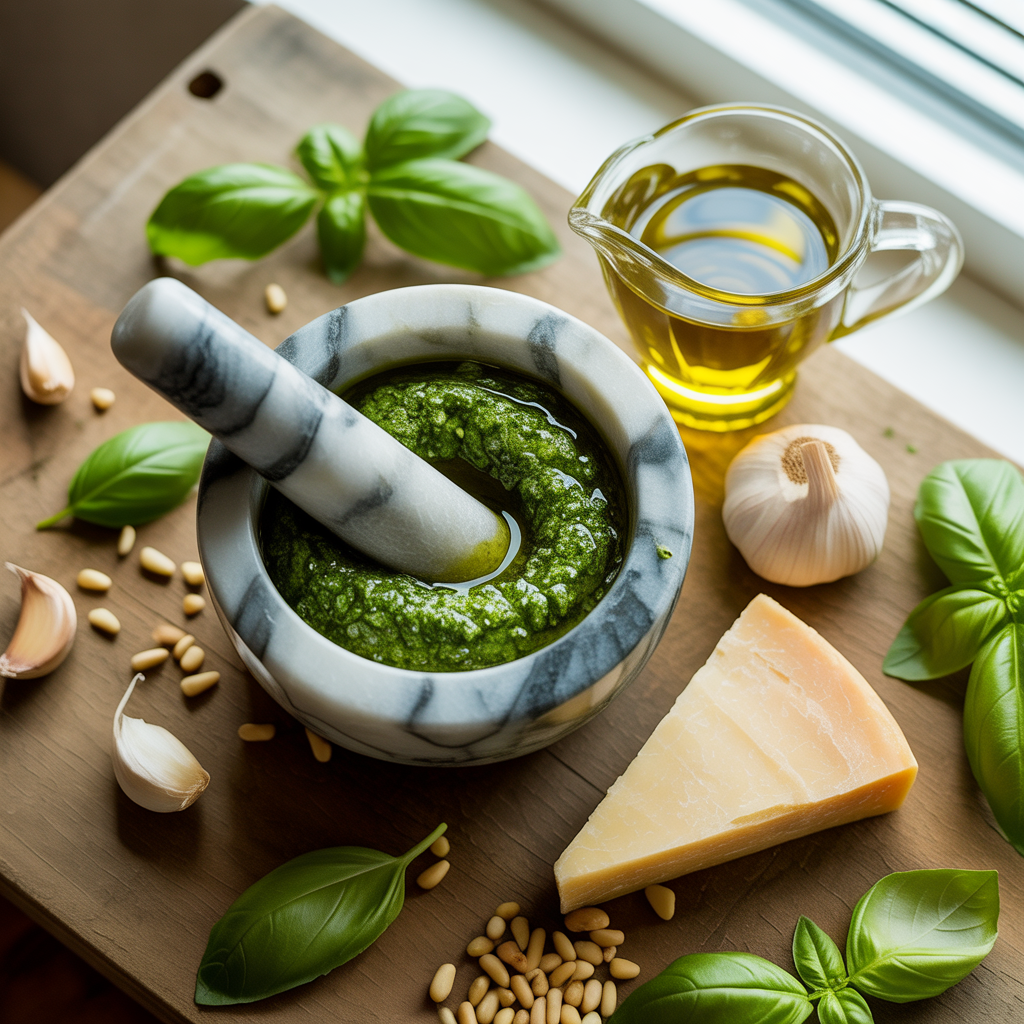
What Is Pesto and Why Make It at Home?
Pesto is a classic Italian sauce originating from Genoa, in the Liguria region of northern Italy. The word “pesto” comes from the Italian verb pestare, meaning “to pound” or “to crush” — a nod to its traditional preparation using a mortar and pestle. At its heart, a great pesto is a vibrant, aromatic, and incredibly versatile sauce made from just a handful of fresh, high-quality ingredients.
While store-bought pesto is convenient, nothing compares to a homemade version. When you make pesto from scratch, you get:
- Brighter, fresher flavor — no preservatives or artificial ingredients
- Full control over ingredients — adjust garlic, salt, or cheese to your taste
- Better texture — silky yet slightly chunky, just the way it should be
- Cost savings — especially if you grow your own basil
- No additives — pure, clean eating at its best
Whether you’re tossing it with pasta, spreading it on crusty bread, or drizzling it over grilled chicken, homemade pesto elevates every dish it touches. This guide will walk you through everything you need to know — from choosing the best ingredients to storing your pesto properly.
Ingredients You’ll Need
The beauty of traditional pesto lies in its simplicity. You only need a few ingredients, but quality matters enormously. Here’s what you’ll need to make approximately 1 cup (about 8 servings) of homemade pesto:
The Core Ingredients
- 2 cups fresh basil leaves (loosely packed, about 2 large bunches)
- 3–4 cloves of fresh garlic (adjust to your preference)
- ½ cup freshly grated Parmesan cheese (Parmigiano-Reggiano is highly recommended)
- ⅓ cup pine nuts (toasted for deeper flavor)
- ½ cup extra-virgin olive oil (use the best quality you can afford)
- ½ teaspoon kosher salt (or to taste)
- ¼ teaspoon freshly ground black pepper
- 1–2 teaspoons fresh lemon juice (optional, but helps preserve color and adds brightness)
Ingredient Notes and Substitutions
Understanding each ingredient will help you make the best possible pesto:
Fresh Basil
Always use fresh basil leaves — dried basil will not work for pesto. Look for bright green, unblemished leaves with no dark spots or wilting. Sweet basil (the common variety found in most grocery stores) is the traditional choice. Genovese basil, if you can find it, has a slightly sweeter and more complex flavor.
Pro tip: Wash your basil leaves gently and dry them thoroughly before use. Excess water dilutes the flavor and can make your pesto watery.
Garlic
Use fresh garlic cloves, not pre-minced garlic from a jar. Fresh garlic has a sharper, more pungent flavor that is essential to authentic pesto. Start with 3 cloves if you prefer a milder taste, and go up to 4 or 5 if you love bold garlic flavor.
Parmesan Cheese
Parmigiano-Reggiano is the gold standard here. It has a rich, nutty, umami-packed flavor that powdery pre-grated Parmesan simply cannot replicate. Buy a wedge and grate it yourself for the best results. If you can’t find Parmigiano-Reggiano, Grana Padano is an excellent and slightly more affordable alternative.
Substitution: For a dairy-free or vegan pesto, omit the cheese and add 2–3 tablespoons of nutritional yeast along with a pinch of extra salt.
Pine Nuts
Pine nuts (also called pignoli) are traditional in Genovese pesto. They add a buttery, slightly sweet richness. Toast them lightly in a dry skillet over medium heat for 2–3 minutes until golden — this step makes a noticeable difference in flavor depth.
Substitutions: Pine nuts can be expensive. Great alternatives include:
- Walnuts (most common substitute — earthier flavor)
- Almonds (blanched or raw — slightly firmer texture)
- Cashews (creamier, milder flavor)
- Pistachios (vibrant green color and delicate flavor)
- Sunflower seeds (nut-free option)
Extra-Virgin Olive Oil
This is not the place to use cheap olive oil. A good quality extra-virgin olive oil is a key flavor component of pesto. Look for one that is fruity and slightly peppery. The oil also acts as the emulsifying agent that brings all ingredients together into a smooth sauce.
Equipment You’ll Need
You have two main options for making pesto:
Option 1: Food Processor or Blender (Quick & Easy)
This is the most practical method for everyday cooking. A food processor gives you a slightly chunky, rustic texture, while a high-speed blender will produce a smoother sauce.
What you’ll need: A food processor (recommended) or a blender, a rubber spatula, and a grater for the Parmesan.
Option 2: Mortar and Pestle (Traditional Method)
The traditional Italian method uses a large marble mortar and pestle. This method takes more effort but produces a pesto with superior texture and flavor. The crushing action (rather than chopping) releases the basil’s essential oils differently, resulting in a creamier, more aromatic sauce.
What you’ll need: A large mortar and pestle (at least 2-cup capacity), patience, and some elbow grease.
Step-by-Step Instructions
Method 1: Food Processor Pesto (Recommended for Most Home Cooks)
- Toast the pine nuts. Place pine nuts in a dry skillet over medium heat. Stir frequently for 2–3 minutes until lightly golden and fragrant. Remove from heat immediately and let cool. Watch them carefully — they burn quickly.
- Prepare the basil. Wash basil leaves under cold water and pat dry thoroughly with paper towels or use a salad spinner. Remove any thick stems (thin stems are fine).
- Process garlic and nuts first. Add the garlic cloves and cooled toasted pine nuts to the food processor. Pulse 5–6 times until roughly chopped. This ensures the harder ingredients are broken down before adding the delicate basil.
- Add basil and cheese. Add the basil leaves and grated Parmesan cheese to the food processor. Pulse another 5–7 times, scraping down the sides as needed, until the mixture is roughly combined.
- Stream in the olive oil. With the food processor running on low speed, slowly pour in the olive oil in a thin, steady stream through the feed tube. This gradual addition helps emulsify the pesto into a cohesive, smooth sauce. Process until you reach your desired consistency — some people like it chunky, others prefer it smooth.
- Season to taste. Transfer the pesto to a bowl. Add salt, black pepper, and lemon juice (if using). Taste and adjust — you may want more salt, more garlic bite, or an extra squeeze of lemon.
- Rest before serving. Let the pesto sit for 5–10 minutes at room temperature before serving. This allows the flavors to meld beautifully.
Method 2: Traditional Mortar and Pestle Pesto
- Start with garlic and salt. Add the garlic cloves and a pinch of coarse salt to the mortar. Pound and grind into a smooth paste. The salt acts as an abrasive and helps break down the garlic.
- Add pine nuts. Add the toasted pine nuts and pound them into the garlic paste until you have a rough, crumbly mixture.
- Work in the basil in batches. Add a small handful of basil leaves at a time. Use a circular grinding motion rather than just pounding to help release the oils. Continue adding basil until all leaves are incorporated and you have a rough green paste.
- Add the cheese. Stir in the grated Parmesan cheese using the pestle or a spoon.
- Incorporate the olive oil. Slowly stir in the olive oil a little at a time until the pesto reaches your desired consistency.
- Season and serve. Taste and adjust seasoning with salt, pepper, and lemon juice as needed.
Tips for the Best Homemade Pesto
Follow these expert tips to take your pesto from good to exceptional:
Prevent Browning (Keep It Bright Green)
One of the most common issues with homemade pesto is discoloration — it can turn dark or brownish quickly due to oxidation. Here’s how to prevent it:
- Blanch the basil briefly — dip leaves in boiling water for 10 seconds, then plunge into ice water. Pat dry. This deactivates the enzymes that cause browning and produces a brilliantly green pesto.
- Add lemon juice — the ascorbic acid acts as a natural antioxidant.
- Cover the surface — when storing, press plastic wrap directly onto the surface of the pesto or drizzle a thin layer of olive oil on top to seal out air.
- Keep it cold — refrigerate promptly after making.
Don’t Over-Process
Over-processing pesto in a food processor generates heat from friction, which can darken the basil and dull the flavor. Work in short pulses and stop as soon as the ingredients are well combined. The texture should be slightly coarse, not a completely smooth purée.
Use Room Temperature Ingredients
Take the Parmesan cheese out of the refrigerator 30 minutes before making pesto. Cold cheese doesn’t blend as smoothly into the sauce.
Taste as You Go
Pesto is a very personal sauce. Taste after each addition and adjust to your preferences. You might find you want more garlic punch, extra nuttiness, or a sharper cheese flavor. Trust your palate.
Salt After Adding Cheese
Parmesan is already quite salty. Always taste your pesto before adding salt so you don’t over-season.
How to Store Homemade Pesto
Refrigerator Storage
Transfer pesto to a clean glass jar or airtight container. Smooth the surface flat and pour a thin layer (about ¼ inch) of extra-virgin olive oil over the top to create an air barrier. Seal tightly and refrigerate.
Shelf life: Up to 5–7 days in the refrigerator. Stir the olive oil layer back in before using.
Freezer Storage
Pesto freezes exceptionally well. The best method is to freeze it in small, pre-portioned amounts:
- Spoon pesto into an ice cube tray (about 1–2 tablespoons per cube).
- Freeze until solid (about 2–3 hours).
- Pop the frozen cubes out and transfer to a zip-lock freezer bag or airtight container.
- Label with the date.
Shelf life in freezer: Up to 3 months with excellent quality, up to 6 months if stored well.
Note: For pesto you plan to freeze, consider making it without the cheese and adding it fresh after thawing. Cheese can become slightly grainy when frozen and thawed.
Thawing Frozen Pesto
Simply place the desired number of pesto cubes in the refrigerator overnight, or let them thaw at room temperature for 30–60 minutes. You can also drop frozen pesto cubes directly into hot pasta — they’ll melt right in.
How to Use Homemade Pesto
Pesto is one of the most versatile sauces in the kitchen. Here are some delicious ways to use your freshly made batch:
Classic Pasta Pesto
Toss with your favorite pasta — linguine, spaghetti, fusilli, or penne all work beautifully. Reserve about ¼ cup of starchy pasta cooking water before draining. Combine pasta with pesto and a splash of pasta water to create a silky, well-coated sauce. Top with extra Parmesan and a crack of black pepper.
Pesto Bruschetta
Spread generously on toasted crusty bread or baguette slices. Top with sliced cherry tomatoes, fresh mozzarella, and a drizzle of olive oil for a stunning appetizer.
Pizza Sauce
Replace tomato sauce with pesto on homemade or store-bought pizza dough. Top with mozzarella, roasted vegetables, or grilled chicken for a vibrant white pizza.
Grilled Protein Marinade
Rub pesto generously over chicken breasts, salmon fillets, shrimp, or pork chops before grilling or roasting. The garlic and olive oil in the pesto help create a beautifully caramelized crust.
Salad Dressing
Thin pesto with a little extra lemon juice and olive oil for a vibrant salad dressing. It pairs especially well with arugula, spinach, and tomato-based salads.
Sandwich and Wrap Spread
Use pesto as a spread in place of mayo or mustard on sandwiches, paninis, and wraps. It adds an incredible flavor boost to any filling.
Soup Garnish
Swirl a spoonful of pesto into tomato soup, minestrone, or gazpacho just before serving for an aromatic finishing touch.
Roasted Vegetables
Toss vegetables like zucchini, asparagus, green beans, or cherry tomatoes with pesto before roasting for a deeply flavorful side dish.
Pesto Eggs
Stir a teaspoon of pesto into scrambled eggs or use it as a topping for fried eggs — an incredibly flavorful and quick breakfast.
Pesto Variations to Try
Once you’ve mastered the classic recipe, experiment with these delicious variations:
Sun-Dried Tomato Pesto (Pesto Rosso)
Replace half the basil with oil-packed sun-dried tomatoes for a rich, deeply flavored red pesto. Add a pinch of red pepper flakes for heat.
Arugula Pesto
Substitute arugula (rocket) for all or part of the basil. Arugula pesto has a pleasantly peppery, bold flavor that pairs well with pasta, steak, and pizza.
Spinach and Walnut Pesto
Use fresh baby spinach in place of basil and walnuts instead of pine nuts. This variation is more affordable, milder, and beautiful for kids who are new to pesto.
Kale Pesto
Blanch kale leaves briefly, then use them as the base. Kale pesto is earthy, slightly bitter, and packed with nutrients.
Cilantro Pesto (Chimichurri-Style)
Swap basil for fresh cilantro and add a jalapeño for heat. This variation is perfect for grilled meats and tacos.
Vegan Pesto
Omit the Parmesan and substitute with 3 tablespoons of nutritional yeast plus an extra pinch of salt. Use cashews or sunflower seeds instead of pine nuts for a completely plant-based sauce.
Nutritional Information (Per Serving, Approximately 2 Tablespoons)
The following is an approximate nutritional breakdown based on the classic recipe yielding 8 servings:
- Calories: 185 kcal
- Total Fat: 18g
- Saturated Fat: 3g
- Carbohydrates: 2g
- Protein: 4g
- Fiber: 0.5g
- Sodium: 210mg
Note: Values are estimates and will vary based on specific ingredients and quantities used.
Pesto is rich in healthy monounsaturated fats from olive oil, antioxidants from fresh basil, and calcium and protein from Parmesan cheese. It’s a nutrient-dense condiment when used in appropriate portions.
Frequently Asked Questions (FAQ)
Can I make pesto without a food processor?
Absolutely. You can use a mortar and pestle for the traditional method, a high-powered blender, or even an immersion (stick) blender in a tall cup. In a pinch, you can also very finely chop all ingredients by hand with a sharp chef’s knife and stir in the olive oil — the texture will be more rustic but still delicious.
Why does my pesto turn dark/brown?
Browning is caused by oxidation when the basil’s enzymes are exposed to air. To prevent this: add lemon juice, blanch the basil briefly before blending, cover the surface with a thin layer of olive oil when storing, and avoid over-processing. Some darkening during refrigerator storage is normal and doesn’t affect safety — just stir before using.
How long does homemade pesto last?
In the refrigerator (sealed with an olive oil layer), homemade pesto lasts 5–7 days. In the freezer, it keeps well for up to 3 months.
Can I use dried basil instead of fresh?
No — dried basil cannot be used as a substitute for fresh in pesto. The flavor, texture, and color will be completely different and unsatisfactory. Fresh basil is essential for authentic pesto.
Can I make pesto without nuts?
Yes! For a nut-free pesto, simply omit the pine nuts entirely or substitute with sunflower seeds or pumpkin seeds. The pesto will be slightly thinner and less rich, but still absolutely delicious.
Is pesto gluten-free?
Traditional pesto made with the ingredients in this recipe is naturally gluten-free. However, always check labels on store-bought ingredients like Parmesan cheese to ensure no gluten-containing additives are present.
Should I add pasta water to pesto?
When using pesto as a pasta sauce, yes! Adding a few tablespoons of starchy pasta cooking water helps the pesto cling to the pasta beautifully, creates a creamier consistency, and prevents the sauce from being too thick or dry.
Can I use pre-grated Parmesan?
While it’s technically possible, pre-grated Parmesan from a shaker container often contains anti-caking agents that affect texture and flavor. For the best results, always grate fresh Parmesan from a block right before using it.
Final Thoughts
Homemade pesto is one of the most rewarding things you can make in your kitchen. With just a few fresh, quality ingredients and about 10 minutes of your time, you can create a sauce that is infinitely better than anything that comes in a jar. The vibrant green color, the intoxicating aroma of fresh basil, the sharpness of garlic, the richness of Parmesan, and the silkiness of good olive oil — it all comes together in one of the world’s most beloved and versatile sauces.
Once you make pesto at home, you’ll never want to go back to store-bought. Keep a batch in your fridge for quick weeknight dinners and freeze extra cubes for future meals. Experiment with variations, try it on everything, and share it with the people you love.
Buon appetito!