
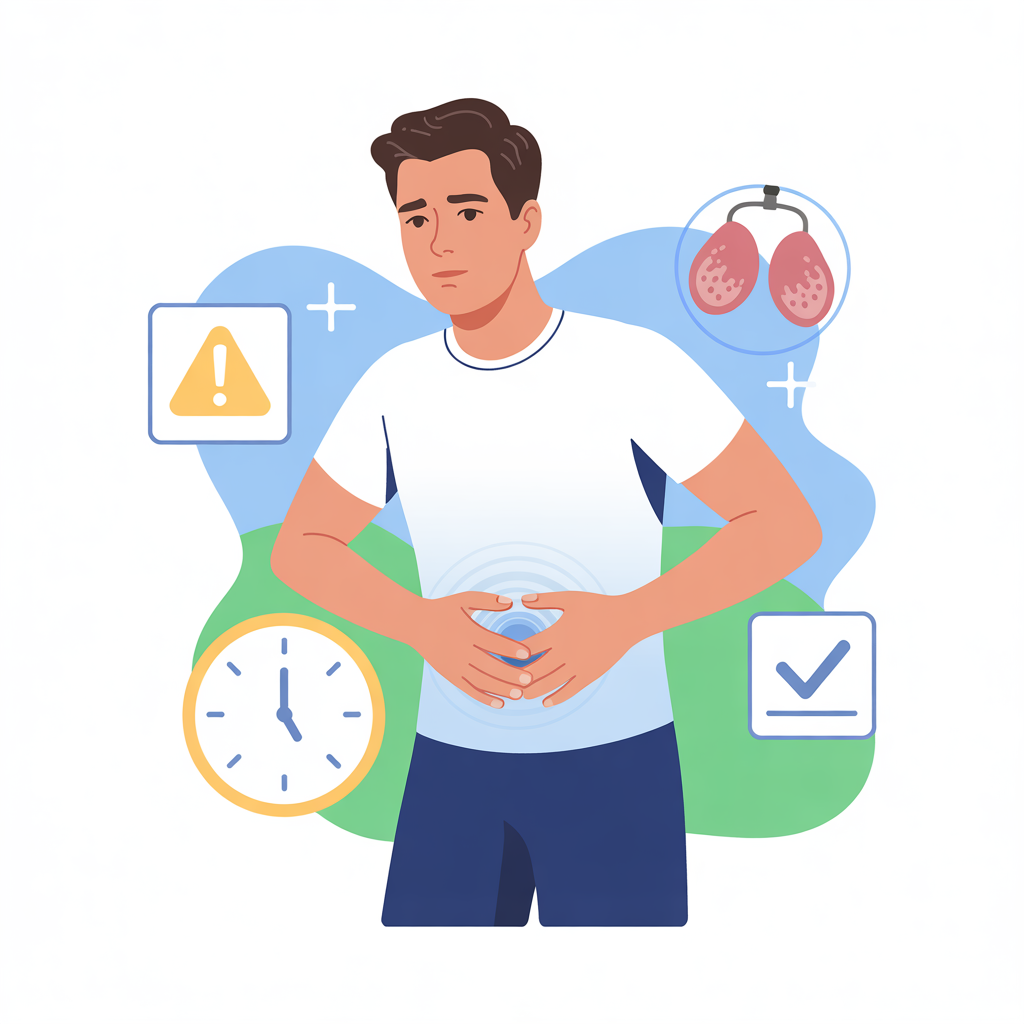
Testicular torsion is a serious urological emergency that occurs when the spermatic cord — the structure that supplies blood to the testicle — becomes twisted, cutting off blood flow to the testis. Without prompt medical attention, this condition can lead to permanent damage or even loss of the affected testicle. It most commonly affects males between the ages of 12 and 18, but it can occur at any age.
Understanding the warning signs is absolutely critical. The faster the condition is recognized and treated, the higher the chance of saving the testicle. Studies show that 90% of testicles can be saved if treated within 6 hours of symptom onset, but that number drops sharply after 12–24 hours.
Below are 7 key symptoms of testicular torsion that should never be ignored.
1. Sudden, Severe Pain in One Testicle
The most hallmark symptom of testicular torsion is an abrupt onset of intense, sharp pain localized to one testicle — usually the left one, though the right side can also be affected. This pain often:
- Comes on without any warning or apparent cause
- Is described as one of the worst pains a person has ever felt
- May wake a person from sleep
- Does not improve or may worsen over time without treatment
Unlike pain from a minor injury that fades gradually, testicular torsion pain tends to be persistent and escalating. If you or someone you know experiences this level of sudden scrotal pain, seek emergency medical care immediately — do not wait to see if it gets better on its own.
2. Scrotal Swelling
Swelling of the scrotum is another early and prominent symptom of testicular torsion. As blood flow to the testicle becomes restricted, inflammation and fluid accumulation can cause the scrotum to become visibly enlarged and puffy. Important characteristics of this swelling include:
- Rapid onset: Swelling can develop within minutes to hours after torsion begins
- Unilateral: Typically affects only one side of the scrotum
- Tenderness: The swollen area is usually very sensitive to touch
- Progressive: Swelling may worsen the longer the condition remains untreated
It is important not to confuse testicular torsion swelling with general scrotal injuries or infections like epididymitis, as the treatment approaches are vastly different. Any unexplained rapid scrotal swelling should be evaluated urgently by a medical professional.
3. Nausea and Vomiting
Many individuals experiencing testicular torsion also report significant nausea, often accompanied by vomiting. These gastrointestinal symptoms occur as a reflexive response of the body to extreme pain and physical stress. Key points about this symptom include:
- Nausea and vomiting may appear simultaneously with or shortly after the onset of scrotal pain
- They are not caused by food poisoning or a stomach issue — they are a direct nervous system response to severe pain
- The severity of nausea often correlates with the intensity of the pain
The presence of nausea and vomiting alongside sudden testicular pain is a strong clinical indicator of testicular torsion and should significantly raise the level of concern for both patients and medical providers.
4. Abdominal Pain
Testicular torsion can sometimes manifest as pain in the lower abdomen rather than — or in addition to — pain directly in the scrotum. This happens because the testicles share nerve pathways with structures in the abdominal region. Abdominal pain associated with testicular torsion typically:
- Is located in the lower abdomen or groin area
- Can be mistaken for appendicitis, kidney stones, or a hernia
- Often accompanies scrotal discomfort and nausea
- May be more prominent in younger boys who have difficulty localizing pain
This referred pain pattern can make testicular torsion particularly tricky to diagnose, especially in children. Any combination of lower abdominal pain and scrotal complaints should prompt an immediate evaluation to rule out this condition.
5. A High-Riding or Abnormally Positioned Testicle
One of the more specific physical signs of testicular torsion is an unusually high-riding testicle — where the affected testicle appears to sit higher in the scrotum than normal, or at an abnormal horizontal angle. This occurs because the twisting of the spermatic cord shortens the distance between the testicle and the body. Notable features include:
- The affected testicle may appear visibly higher than the unaffected one
- The testicle may lie in a horizontal (“transverse”) position instead of the normal vertical orientation — this is sometimes called the “bell-clapper” deformity
- The position change is not due to external trauma or manipulation
This positional abnormality is a highly suggestive sign of torsion and is one of the physical findings that physicians look for during examination. If you notice that one testicle suddenly appears to be sitting higher or differently than usual, this should be treated as a medical emergency.
6. Redness or Discoloration of the Scrotum
As testicular torsion progresses and blood supply is further compromised, the skin of the scrotum may begin to show visible changes in color. These changes are a sign that the underlying tissue is under significant stress from reduced circulation. You may notice:
- Redness: The scrotal skin may become red or pink, especially over the affected testicle
- Darkening or bruising: In more advanced cases, the skin may take on a bluish or purplish hue, indicating more severe ischemia (lack of blood flow)
- Warmth and tenderness: The area may feel warm to the touch alongside the discoloration
Scrotal discoloration, particularly when combined with pain and swelling, is a red flag symptom that should not be dismissed. Dark discoloration may indicate that the testicle is already experiencing serious damage and that time is running out for salvage.
7. Frequent Urge to Urinate or Difficulty Urinating
Although less commonly discussed, some individuals with testicular torsion may experience changes in their urinary habits. Because the structures of the male urogenital system are anatomically close and share nerve connections, torsion can occasionally cause:
- An increased or urgent need to urinate
- General discomfort during urination
- A sensation of pressure in the pelvic or groin area
These urinary symptoms alone are not specific to testicular torsion and can be associated with many other conditions. However, when they occur alongside scrotal pain, swelling, and other symptoms on this list, they contribute to a broader clinical picture that warrants urgent investigation.
Main Causes of Testicular Torsion
Testicular torsion does not always have a single identifiable cause, but several factors are known to contribute to its occurrence:
- Bell-Clapper Deformity: This is the most common underlying anatomical cause. In this condition, the testicle is not properly anchored to the scrotum, allowing it to rotate freely around the spermatic cord. It is often bilateral (affects both sides) and may be a hereditary trait.
- Rapid Growth During Puberty: Hormonal and physical changes during puberty are thought to increase the risk of torsion, which is why it peaks in adolescence.
- Physical Activity or Trauma: Vigorous physical activity, sports injuries, or direct trauma to the groin can sometimes trigger testicular torsion, though it can also occur while completely at rest or during sleep.
- Cold Temperature: Sudden exposure to cold temperatures can cause the cremaster muscle (which controls testicle position) to contract strongly, potentially triggering torsion in susceptible individuals.
- Previous Episodes: A history of intermittent testicular torsion (torsion that resolves on its own) significantly increases the risk of a full, sustained episode in the future.
- Genetic Predisposition: Family history of testicular torsion or anatomical abnormalities of the scrotum may increase overall risk.
Can Testicular Torsion Be Prevented?
In most cases, testicular torsion cannot be reliably prevented because it often stems from an underlying anatomical predisposition such as the bell-clapper deformity. However, the following measures may help reduce risk or prevent future occurrences:
- Elective surgical fixation (orchiopexy): For individuals known to have the bell-clapper deformity or those who have experienced intermittent torsion, surgeons may recommend a preventive procedure to permanently anchor both testicles in place. This significantly reduces the risk of future torsion in susceptible individuals.
- Wearing proper protective gear: Using appropriate athletic supporters or protective cups during contact sports can help minimize trauma to the scrotal area.
- Awareness and early action: While this doesn’t prevent torsion itself, educating young males and parents about the symptoms of testicular torsion is crucial. Immediate action upon symptom onset is the most effective way to prevent permanent damage.
- Regular self-examination: Routine awareness of testicular anatomy can help individuals notice any unusual changes in position or the presence of intermittent pain, prompting earlier medical consultation.
Note: If you suspect testicular torsion or have concerns about your risk, always consult a qualified healthcare professional. Do not attempt self-treatment. Any symptoms should be evaluated urgently in an emergency medical setting.
Frequently Asked Questions (FAQs)
Q: How does testicular torsion happen?
Testicular torsion happens when the spermatic cord twists around itself, cutting off the blood supply to the testicle. It most commonly occurs due to an anatomical abnormality called the bell-clapper deformity, which prevents the testicle from being properly secured within the scrotum, allowing it to rotate freely.
Q: Is testicular torsion a medical emergency?
Yes, testicular torsion is a urological emergency. Without treatment within 6 hours of onset, the risk of losing the testicle increases dramatically. Anyone experiencing sudden, severe scrotal pain should go to the emergency room immediately.
Q: Can testicular torsion go away on its own?
In rare cases, a partial or intermittent torsion may temporarily resolve on its own (called “torsion-detorsion”). However, this is not safe to rely on and is a strong warning sign that a full torsion may occur. Medical evaluation is always required.
Q: Who is most at risk for testicular torsion?
While testicular torsion can occur at any age — including in newborns — it is most common in males aged 12 to 18. Individuals with a family history of the condition or the bell-clapper deformity are at higher risk.
Q: Can both testicles be affected by torsion?
While simultaneous bilateral torsion is extremely rare, individuals with the bell-clapper deformity usually have it on both sides. This means that after treatment of one side, preventive surgical fixation of the other testicle is typically recommended.
Q: Is testicular torsion the same as epididymitis?
No. Epididymitis is an inflammation of the epididymis (usually due to infection) and has a more gradual onset of pain. Testicular torsion involves the physical twisting of the spermatic cord and causes sudden, severe pain. They can be confused, which is why urgent medical evaluation and imaging (such as a scrotal ultrasound) are important for an accurate diagnosis.
Q: What should I do if I suspect testicular torsion?
Go to the nearest emergency room immediately. Do not wait for symptoms to improve on their own. Time is critical — the sooner treatment is provided, the better the chance of preserving the testicle. Do not take any medications without first consulting a doctor.
References: