
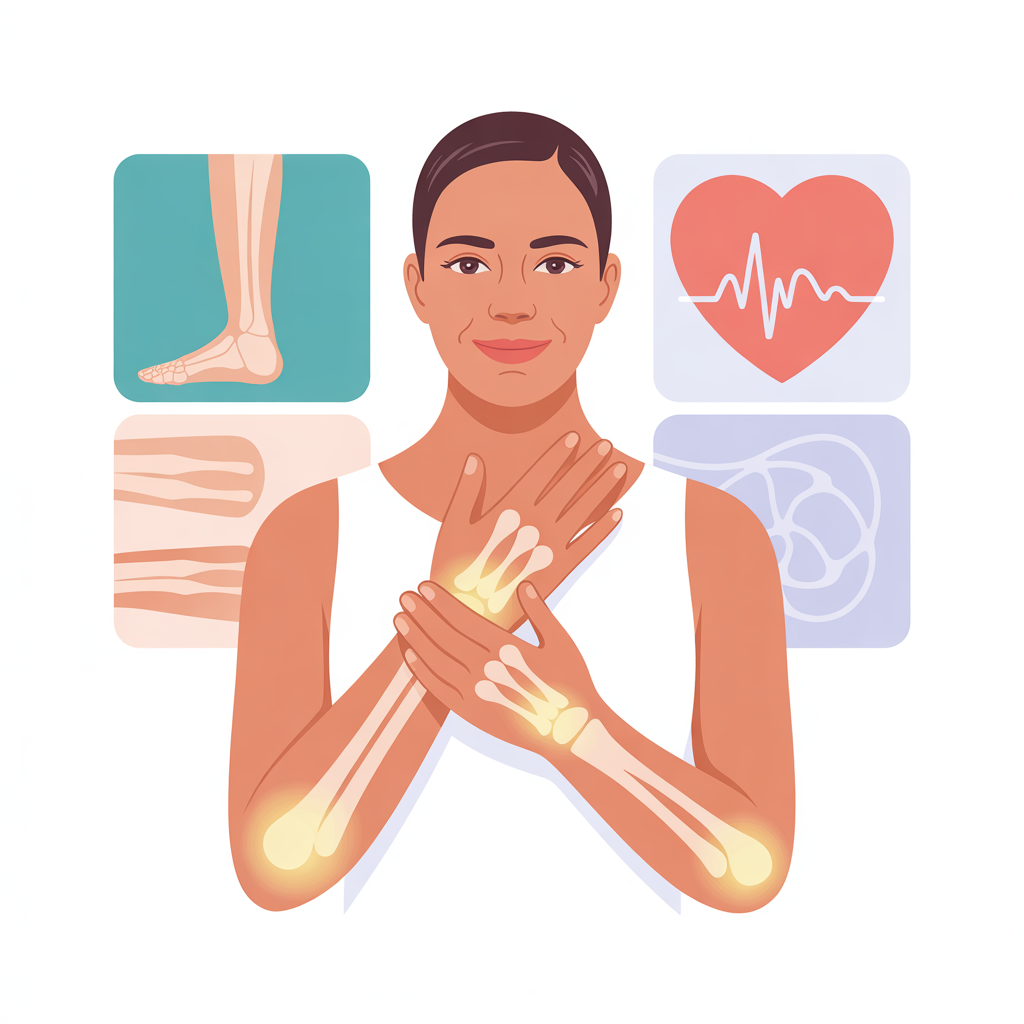
Ehlers-Danlos syndrome (EDS) is a group of rare, inherited connective tissue disorders that affect the body’s ability to produce or process collagen — the protein responsible for giving strength and elasticity to skin, joints, blood vessels, and organs. Because collagen is found throughout the entire body, EDS can impact multiple systems simultaneously, making it a complex and often misdiagnosed condition. There are 13 recognized subtypes of EDS, with hypermobile EDS (hEDS) being the most common. The severity of symptoms varies widely from person to person, ranging from mild joint laxity to life-threatening cardiovascular complications. Understanding the symptoms of Ehlers-Danlos syndrome is a critical first step toward getting an accurate diagnosis and appropriate care.
1. Joint Hypermobility
One of the hallmark symptoms of Ehlers-Danlos syndrome — especially in the hypermobile subtype (hEDS) — is joint hypermobility, meaning joints that move beyond their normal range of motion. This occurs because the connective tissue that supports and stabilizes joints is weaker than normal due to defective collagen.
- Joints may bend in unusual directions or “double-joint” with ease.
- Common areas affected include the fingers, wrists, elbows, knees, hips, and ankles.
- Joint hypermobility is often assessed using the Beighton Score, a 9-point scale used by clinicians to evaluate flexibility.
- While some people celebrate being “double-jointed,” in EDS this flexibility comes with a cost — it significantly increases the risk of joint dislocations and subluxations (partial dislocations).
Children with EDS may be noticed for their unusual flexibility during play or sports, but this hypermobility can lead to painful complications as they age.
2. Frequent Joint Dislocations and Subluxations
As a direct consequence of hypermobile joints and lax ligaments, people with EDS frequently experience joint dislocations (complete displacement) and subluxations (partial displacement). These can occur during everyday activities such as reaching for an object, turning over in bed, or even simply walking.
- The shoulders, kneecaps, hips, and fingers are among the most commonly affected joints.
- Dislocations in EDS may “pop” back into place on their own (self-reducing), but they are still painful and damaging over time.
- Repeated dislocations lead to cumulative joint damage, chronic inflammation, and long-term instability.
- Many patients report being able to dislocate joints at will — though this is not something that should be done intentionally, as it causes tissue damage.
3. Chronic Pain
Chronic musculoskeletal pain is one of the most debilitating and life-altering symptoms experienced by individuals with Ehlers-Danlos syndrome. The pain is widespread and often multi-factorial in origin, stemming from joint instability, muscle overcompensation, nerve involvement, and inflammation.
- Pain may be present daily and vary in intensity from mild aching to severe, disabling pain.
- It is often described as deep, burning, stabbing, or throbbing in nature.
- Patients frequently report that pain worsens with activity, changes in weather, or stress.
- Fibromyalgia-like widespread pain is common in hEDS patients.
- Because EDS pain is not always visible or easily explained on imaging, patients are sometimes dismissed or misdiagnosed with psychosomatic conditions.
Chronic pain in EDS significantly impacts sleep quality, mental health, and overall quality of life.
4. Skin Hyperextensibility and Fragility
Abnormal skin is a defining feature of several EDS subtypes, particularly Classical EDS. The skin in EDS lacks the normal tensile strength provided by healthy collagen, making it unusually stretchy, thin, and vulnerable to damage.
- Hyperextensible skin: The skin can be stretched further than normal — for example, the skin on the neck or forearm can be pulled significantly away from the body without pain, and it snaps back into place.
- Fragile skin: The skin tears, bruises, and wounds easily, even from minor trauma.
- Poor wound healing: Cuts and abrasions take longer to heal and may result in wide, atrophic (sunken) scars that look paper-thin or cigarette-paper-like.
- Soft, velvety texture: Many patients describe their skin as unusually soft to the touch.
- In more severe subtypes such as Kyphoscoliotic EDS or Dermatosparaxis EDS, the skin fragility can be extreme and result in significant scarring from minimal injury.
5. Easy Bruising
People with Ehlers-Danlos syndrome bruise very easily and more extensively than would be expected from the degree of trauma. This happens because the small blood vessels beneath the skin (capillaries) are also made of connective tissue and are therefore more fragile in EDS.
- Bruises may appear from the slightest bump or even without any identifiable cause.
- They tend to be larger, take longer to fade, and may occur in unusual locations.
- Easy bruising is particularly prominent in Vascular EDS (vEDS), where blood vessel fragility extends to larger arteries and veins, posing serious risks.
- Because of unexplained bruising, EDS patients — especially children — are sometimes incorrectly suspected of physical abuse before the diagnosis is established.
6. Fatigue and Low Energy
Profound, debilitating fatigue is one of the most commonly reported but least visibly apparent symptoms of EDS. Unlike ordinary tiredness, the fatigue associated with Ehlers-Danlos syndrome does not resolve with rest and can be severely limiting.
- The body expends enormous energy compensating for unstable joints through excessive muscle tension and guarding — a process that is exhausting over time.
- Fatigue is worsened by poor sleep quality, which itself is disrupted by chronic pain and other EDS-related conditions.
- Many patients also have comorbid conditions such as Postural Orthostatic Tachycardia Syndrome (POTS), which contributes to fatigue and exercise intolerance.
- Fatigue in EDS can be so severe that it interferes with work, school, and basic daily activities.
7. Autonomic Dysfunction (Dysautonomia)
A significant proportion of EDS patients — particularly those with hEDS — experience dysautonomia, a dysfunction of the autonomic nervous system, which controls involuntary bodily functions such as heart rate, blood pressure, digestion, and temperature regulation.
- POTS (Postural Orthostatic Tachycardia Syndrome): A rapid increase in heart rate upon standing, causing dizziness, lightheadedness, fainting (syncope), and palpitations. POTS is extremely common in hEDS.
- Orthostatic hypotension: A drop in blood pressure upon standing, causing similar symptoms.
- Excessive sweating or inability to regulate body temperature.
- Nausea, bloating, and gastrointestinal motility issues linked to autonomic nerve dysfunction.
- Bladder dysfunction, including urgency and frequency.
8. Gastrointestinal Problems
The gastrointestinal (GI) tract is lined and supported by connective tissue, so it is not surprising that EDS frequently affects digestive function. GI symptoms are among the most common comorbidities reported by EDS patients and can vary widely.
- Gastroparesis: Delayed stomach emptying, causing nausea, vomiting, bloating, and early satiety.
- Irritable Bowel Syndrome (IBS): Alternating constipation and diarrhea, abdominal cramping, and bloating.
- Gastroesophageal Reflux Disease (GERD): Acid reflux and heartburn due to lax connective tissue around the lower esophageal sphincter.
- Abdominal pain that is difficult to localize or explain through standard diagnostic testing.
- Pelvic floor dysfunction, contributing to constipation and bowel urgency.
GI symptoms in EDS can be severe enough to lead to significant nutritional deficiencies and weight loss.
9. Neurological Symptoms
EDS can affect the nervous system in various ways, producing a range of neurological symptoms that may not be immediately connected to a connective tissue disorder.
- Headaches and migraines: Frequently reported, often related to cervical (neck) instability or intracranial pressure abnormalities.
- Neuropathic pain: Burning, tingling, numbness, or electric shock-like sensations, particularly in the hands and feet.
- Chiari malformation: Some EDS patients develop this condition, where brain tissue extends into the spinal canal, causing headaches, neck pain, and balance problems.
- Cranio-cervical instability (CCI): Excessive movement of the upper spine near the skull, which can compress the brainstem and cause a wide range of neurological symptoms.
- Memory and concentration difficulties, often referred to as “brain fog” — a commonly reported cognitive symptom in EDS.
10. Cardiovascular Symptoms
The cardiovascular system relies heavily on connective tissue for the structural integrity of blood vessels and heart valves. In EDS, these structures can be affected to varying degrees depending on the subtype.
- Mitral valve prolapse (MVP): A condition where the mitral valve in the heart doesn’t close properly, sometimes causing palpitations, chest pain, and shortness of breath. MVP is associated particularly with Classical EDS.
- Aortic root dilation: Widening of the aorta, especially in Vascular EDS, which can lead to life-threatening aneurysm and rupture.
- Easy fainting (syncope): Often related to POTS or orthostatic intolerance.
- In Vascular EDS (vEDS) — the most severe subtype — spontaneous arterial rupture, organ rupture, and uterine rupture during pregnancy pose life-threatening risks.
- Palpitations and irregular heartbeats are commonly reported even in milder EDS subtypes.
11. Facial and Oral Features
The Ehlers-Danlos syndrome face is a term used to describe a cluster of distinctive facial and oral features observed in many EDS patients, particularly in more specific subtypes. These features result from connective tissue abnormalities affecting the facial structure, skin, and mouth.
- Thin, translucent skin over the face, making underlying blood vessels visible.
- High-arched or narrow palate — a commonly noted oral feature in EDS.
- Dental overcrowding and other orthodontic issues due to jaw and palate abnormalities.
- Temporomandibular joint (TMJ) dysfunction: Pain, clicking, and instability of the jaw joint, making chewing and speaking uncomfortable.
- Easy bruising around the eyes and sunken or hollow facial features in some subtypes.
- In Vascular EDS, characteristic facial features include a thin nose, sunken cheeks, lobeless ears, and large eyes — sometimes described as a “distinctive facial appearance.”
- Periodontal (gum) disease and fragile gum tissue that bleeds easily are also frequently reported.
12. Musculoskeletal Deformities
Over time — and especially when left unmanaged — EDS can contribute to significant musculoskeletal deformities due to joint instability, muscle imbalances, and abnormal loading on the skeleton.
- Scoliosis: Abnormal lateral curvature of the spine, which is particularly associated with Kyphoscoliotic EDS but seen across subtypes.
- Kyphosis: Excessive rounding of the upper back.
- Flat feet (pes planus): Very commonly reported in EDS due to ligamentous laxity in the feet and ankles.
- Knock knees (genu valgum) or bow legs: Due to lax knee ligaments and poor limb alignment.
- Muscle weakness and wasting due to pain-avoidance behaviors and reduced physical activity.
- Recurrent tendinopathies and muscle strains resulting from compensatory overuse.
13. Psychological and Mental Health Symptoms
Living with a chronic, often misunderstood condition like Ehlers-Danlos syndrome takes a profound toll on mental health. Psychological symptoms in EDS are not simply a reaction to chronic illness — there is also evidence suggesting that connective tissue and autonomic dysfunction may directly influence mood regulation and anxiety responses.
- Anxiety: Highly prevalent in EDS, and research suggests that joint hypermobility itself may be neurologically linked to heightened anxiety responses. Many patients experience health anxiety due to unpredictable symptoms.
- Depression: Chronic pain, fatigue, physical limitations, and social isolation contribute significantly to depressive symptoms.
- Post-Traumatic Stress Disorder (PTSD): Some EDS patients develop PTSD-like symptoms from medical trauma — being dismissed, misdiagnosed, or subjected to painful procedures without adequate understanding of their condition.
- Brain fog: Cognitive difficulties including poor short-term memory, difficulty concentrating, and mental fatigue are extremely common.
- Social withdrawal and reduced participation in work, school, and social life due to physical and emotional burden.
Main Causes of Ehlers-Danlos Syndrome
Ehlers-Danlos syndrome is primarily caused by genetic mutations that affect the body’s production, structure, or processing of collagen and related connective tissue proteins. The specific cause varies by subtype:
- Gene mutations: Most EDS subtypes are caused by identified mutations in specific genes involved in collagen synthesis and processing. For example:
- Classical EDS is most often caused by mutations in the COL5A1 or COL5A2 genes (type V collagen).
- Vascular EDS is caused by mutations in the COL3A1 gene (type III collagen).
- Kyphoscoliotic EDS is caused by mutations in the PLOD1 or FKBP14 genes.
- Inheritance patterns: EDS subtypes are inherited either in an autosomal dominant pattern (one mutated copy of the gene is sufficient to cause disease) or autosomal recessive pattern (two mutated copies needed). Some cases arise from spontaneous (de novo) mutations with no family history.
- Hypermobile EDS (hEDS): The most common subtype remains the least genetically understood. No causative gene has yet been identified for hEDS, though it clearly runs in families and is thought to involve multiple interacting genes.
- Defective collagen processing: Even when collagen is produced, defective enzymes responsible for processing collagen into its mature form can result in structurally weak connective tissue.
Can Ehlers-Danlos Syndrome Be Prevented?
Because EDS is a genetic disorder, it cannot be prevented in the traditional sense. However, there are steps that may help reduce the risk of complications and manage symptoms more effectively:
- Genetic counseling: Individuals with a known EDS diagnosis or a family history of EDS should consider genetic counseling before having children. This helps assess the risk of passing the condition to offspring and explore options.
- Prenatal testing: For subtypes with identified gene mutations, prenatal genetic testing may be available to identify the condition in a fetus.
- Early diagnosis: While not prevention, early identification of EDS allows for proactive management strategies to prevent injury, joint damage, and complications before they become severe.
- Joint protection strategies: Avoiding high-impact sports, using supportive bracing, and practicing proper body mechanics can reduce the risk of dislocations and injury — especially important for individuals with known joint hypermobility.
- Regular monitoring: For individuals with Vascular EDS, regular cardiovascular monitoring is essential to detect potentially life-threatening complications early.
Frequently Asked Questions (FAQ)
What is Ehlers-Danlos syndrome (EDS)?
Ehlers-Danlos syndrome is a group of inherited connective tissue disorders caused by defects in collagen structure or processing. It affects joints, skin, blood vessels, and internal organs, with symptoms ranging from joint hypermobility and skin fragility to life-threatening vascular complications depending on the subtype.
How many types of EDS are there?
There are currently 13 recognized subtypes of Ehlers-Danlos syndrome, each caused by different genetic mutations and characterized by different primary features. The most common subtype is Hypermobile EDS (hEDS), while Vascular EDS (vEDS) is considered the most severe.
Is EDS a rare disease?
EDS as a whole is estimated to affect approximately 1 in 5,000 people worldwide, though some estimates suggest hypermobile EDS may be more prevalent. Many cases remain undiagnosed or misdiagnosed for years due to overlapping symptoms with other conditions.
What does the “EDS face” or Ehlers-Danlos syndrome face look like?
The term “EDS face” refers to facial features associated with certain EDS subtypes. This may include thin or translucent facial skin, a narrow or high-arched palate, TMJ dysfunction, dental crowding, and — particularly in Vascular EDS — a distinctive appearance with a thin nose, lobeless ears, sunken cheeks, and prominent eyes.
Can EDS symptoms get worse over time?
Yes, EDS symptoms can progress over time, particularly with repeated joint injuries, accumulated musculoskeletal damage, and the natural aging process. However, the rate and pattern of progression vary significantly between individuals and subtypes. With appropriate management and joint protection strategies, some patients are able to maintain function and quality of life for many years.
How is EDS diagnosed?
Diagnosis is primarily clinical, based on detailed medical history, physical examination (including Beighton score assessment), and family history. For most subtypes with known genetic causes, confirmatory genetic testing is available. hEDS is diagnosed using specific diagnostic criteria and currently has no confirmatory genetic test.
Is EDS the same as being “double-jointed”?
Not exactly. Being “double-jointed” typically refers to benign joint hypermobility without associated symptoms. In EDS, hypermobility is accompanied by pain, instability, frequent dislocations, skin changes, fatigue, and other systemic symptoms that significantly impact daily life.
Should I see a doctor if I suspect I have EDS?
Yes, absolutely. If you recognize multiple EDS symptoms in yourself or a family member, it is important to seek evaluation from a qualified healthcare professional — ideally a geneticist, rheumatologist, or specialist experienced with connective tissue disorders. Early diagnosis allows for better planning, monitoring, and supportive care. Always consult a doctor before taking any medications or making significant changes to your health management.
References:
- Mayo Clinic – Ehlers-Danlos Syndrome: Symptoms and Causes
- NHS – Ehlers-Danlos Syndromes
- National Center for Biotechnology Information (NCBI) – Ehlers-Danlos Syndrome
- The Ehlers-Danlos Society – What is EDS?
- National Organization for Rare Disorders (NORD) – Ehlers-Danlos Syndrome
- MedlinePlus (U.S. National Library of Medicine) – Ehlers-Danlos Syndrome