
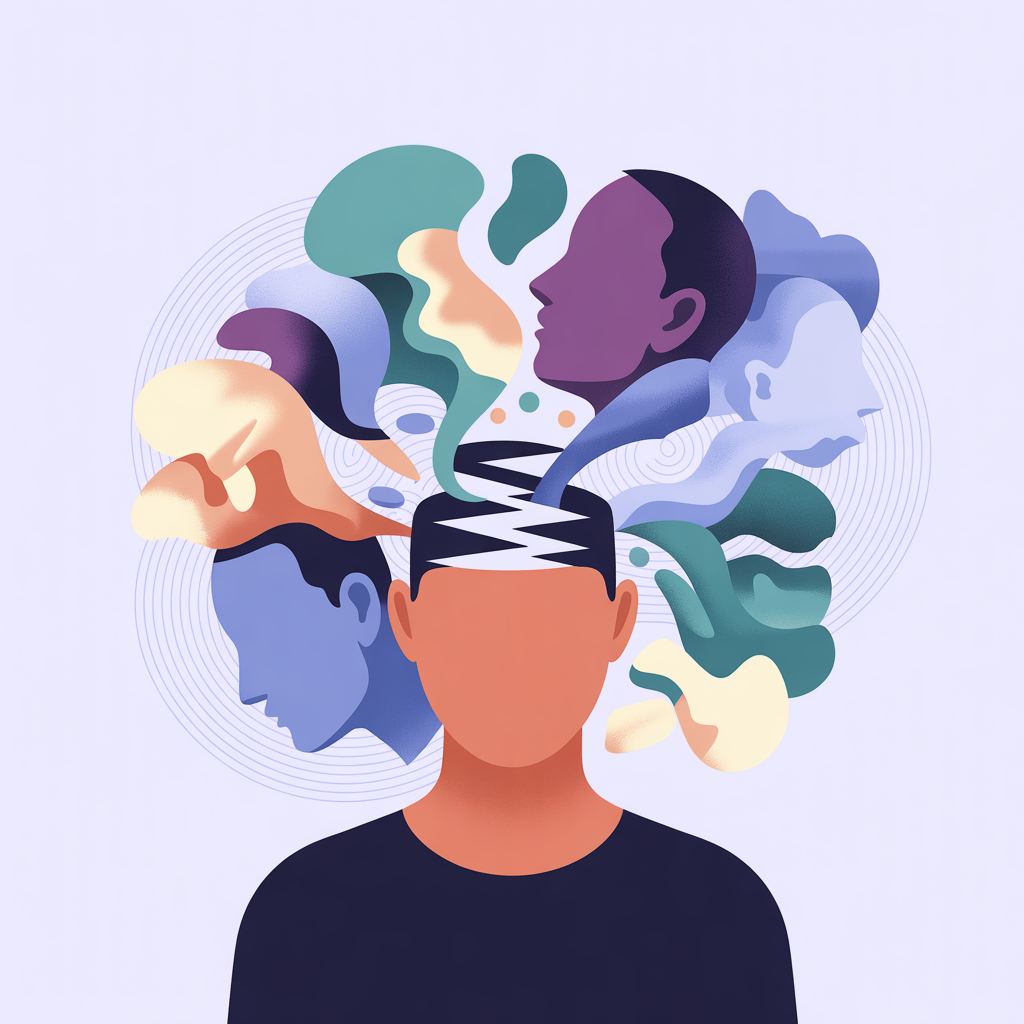
Schizophrenia is a serious and chronic mental disorder that affects how a person thinks, feels, and behaves. People living with schizophrenia may seem as though they have lost touch with reality, which can be deeply distressing for both the individual and their loved ones. Although schizophrenia is not as common as other mental health conditions, its symptoms can be severe and disabling when left unrecognized or untreated.
Understanding what schizophrenia looks like in real life is the first step toward getting help. Symptoms typically emerge in early adulthood — in the late teens to early 30s — and can vary greatly from person to person. This article explores the most important schizophrenia symptoms, its main causes, and answers some of the most frequently asked questions about this condition.
1. Hallucinations
One of the most well-known and defining symptoms of schizophrenia is experiencing hallucinations — perceiving things that are not actually present in the environment. These can affect any of the senses, but the most common type in schizophrenia is auditory hallucinations, where the person hears voices that no one else can hear.
- Auditory hallucinations: The voices may be familiar or strange, and they can be commanding, commenting on the person’s behavior, or conversing with each other. These voices often feel completely real to the individual.
- Visual hallucinations: Seeing people, objects, lights, or patterns that do not exist.
- Tactile hallucinations: Feeling sensations on the body, such as insects crawling under the skin, without a physical cause.
- Olfactory or gustatory hallucinations: Smelling or tasting things that are not present.
Hallucinations can be frightening and disorienting, and they often contribute significantly to the distress experienced by individuals with schizophrenia.
2. Delusions
Delusions are fixed, false beliefs that are held with strong conviction, even when presented with contradictory evidence. They are among the most common positive symptoms of schizophrenia and can take many forms:
- Persecutory delusions: The belief that one is being followed, watched, spied on, or conspired against by others (e.g., government agencies, neighbors, or strangers).
- Grandiose delusions: An inflated sense of identity, power, or importance — such as believing oneself to be a famous person, a deity, or someone with special abilities.
- Referential delusions: The belief that ordinary events, gestures, or media messages are specifically directed at or about the individual.
- Somatic delusions: False beliefs about one’s own body or health, such as believing that internal organs have been replaced or that one is infested with parasites.
- Thought insertion or broadcasting: Believing that outside forces are putting thoughts into one’s mind, or that one’s thoughts are being broadcast to others.
Delusions can interfere deeply with a person’s daily functioning and relationships, as they shape the way the individual interprets reality.
3. Disorganized Thinking and Speech
People with schizophrenia often struggle with disorganized thinking, which becomes apparent through their speech patterns. This symptom is sometimes called “formal thought disorder” and can manifest in several ways:
- Loose associations (derailment): Rapidly shifting from one topic to another with little or no logical connection between ideas.
- Word salad: Speaking in a jumbled mixture of words and phrases that have no coherent meaning.
- Tangentiality: Giving responses that are only vaguely related to the question asked, or going off on tangents that never return to the original point.
- Neologisms: Creating new, made-up words that have personal meaning but are not understood by others.
- Clang associations: Choosing words based on their sounds or rhymes rather than their meaning.
This symptom can make it very difficult for individuals with schizophrenia to communicate effectively, which can lead to social isolation and difficulties in daily life.
4. Grossly Disorganized or Abnormal Motor Behavior
Schizophrenia can also affect a person’s physical behavior in noticeable ways. Disorganized or abnormal motor behavior may appear as:
- Unpredictable agitation: Sudden outbursts or inappropriate emotional or physical reactions without an apparent trigger.
- Catatonia: A state in which the person becomes unresponsive and remains motionless for extended periods of time, or holds unusual bodily postures.
- Repetitive movements: Performing purposeless, repetitive actions that seem to have no goal.
- Resistance to instructions: Showing resistance or complete lack of response to directions or requests from others.
- Bizarre posturing: Maintaining strange, rigid, or uncomfortable body positions.
These behaviors can significantly hinder a person’s ability to perform basic daily activities and engage in social interactions.
5. Negative Symptoms — Flat Affect
Negative symptoms refer to a diminishment or absence of normal behaviors and emotional expressions. Among the most noticeable negative symptoms is flat affect — a significant reduction in emotional expressiveness. This may look like:
- Speaking in a monotone voice with little variation in tone or pitch.
- Reduced or absent facial expressions, even in situations that would normally evoke emotional responses.
- Lack of eye contact and poor non-verbal communication.
- Little or no body language during conversations.
It is important to note that flat affect does not necessarily mean the person is not feeling emotions internally — it refers specifically to the outward expression of those emotions.
6. Avolition (Loss of Motivation)
Avolition is a profound decrease in motivation and the ability to initiate and sustain purposeful activities. This negative symptom can have a major impact on daily life and may present as:
- Neglecting personal hygiene and basic self-care routines.
- Inability to start or complete tasks at work, school, or home.
- Spending long hours doing nothing or sitting idle without any apparent purpose.
- Losing interest in hobbies, relationships, or activities that were previously enjoyable.
Avolition is often misunderstood as laziness or lack of willpower, but it is a genuine neurological symptom of schizophrenia that requires professional attention and support.
7. Alogia (Poverty of Speech)
Alogia, often referred to as poverty of speech, is a negative symptom characterized by a significant reduction in speech output. Individuals with alogia may:
- Give very brief, minimal responses to questions — sometimes only one or two words.
- Speak less spontaneously and rarely initiate conversation.
- Take notably longer to respond during conversations.
- Provide answers that are empty of meaningful content despite using grammatically correct sentences.
Alogia reflects underlying disruptions in thought processes and can make social communication particularly challenging for people with schizophrenia.
8. Anhedonia (Inability to Feel Pleasure)
Anhedonia is the reduced ability or complete inability to experience pleasure from activities that were once enjoyable. This symptom goes beyond simply feeling sad — it is a fundamental change in how the brain processes reward and enjoyment. Signs of anhedonia include:
- Losing interest in social activities, friendships, or romantic relationships.
- No longer finding joy in hobbies, music, food, or other previously pleasurable experiences.
- Emotional detachment from people and events.
- Difficulty feeling anticipation or excitement about future events.
Anhedonia is a deeply isolating symptom that can contribute to social withdrawal and depression in individuals with schizophrenia.
9. Social Withdrawal and Isolation
One of the early signs of schizophrenia — particularly before a full psychotic episode — is a gradual but noticeable withdrawal from social situations. This may include:
- Avoiding gatherings, family events, or social interactions with friends.
- Becoming increasingly reclusive and spending most time alone.
- Dropping out of school, quitting work, or abandoning previously valued social roles.
- Difficulty maintaining existing relationships due to unusual or erratic behavior.
Social withdrawal can be a product of multiple schizophrenia symptoms — including paranoid delusions, hallucinations, and flat affect — all of which make social engagement feel overwhelming or impossible.
10. Cognitive Impairments
Schizophrenia often affects a person’s cognitive functions, including memory, attention, and executive functioning. These impairments can be subtle but are frequently among the most disabling aspects of the disorder:
- Working memory deficits: Difficulty holding and using information in mind for short periods, such as forgetting what was just said in a conversation.
- Poor attention and concentration: Trouble focusing on tasks, reading, or following conversations.
- Impaired executive function: Difficulty with planning, organizing, problem-solving, and making decisions.
- Slowed processing speed: Taking longer than usual to process and respond to information.
- Reduced verbal fluency: Difficulty finding words or expressing ideas clearly.
These cognitive symptoms can significantly interfere with academic performance, job functioning, and the ability to manage everyday tasks independently.
11. Lack of Insight (Anosognosia)
A particularly challenging and often overlooked symptom of schizophrenia is anosognosia — a lack of awareness that one has a mental illness. This is not denial in the psychological sense; it is a neurological condition in which the person genuinely does not recognize that their perceptions and beliefs are symptoms of a disorder. This may result in:
- Refusing to accept a diagnosis of schizophrenia.
- Stopping medication or refusing professional help because the person does not believe they are unwell.
- Misinterpreting hallucinations or delusions as real experiences rather than symptoms.
- Conflict with family members or caregivers who are trying to provide support.
Anosognosia affects approximately 50% of people with schizophrenia and is one of the leading reasons why individuals do not seek or adhere to treatment.
12. Sleep Disturbances
Sleep problems are extremely common in schizophrenia and are often present even before the onset of other psychotic symptoms. These disturbances can include:
- Insomnia: Difficulty falling asleep or staying asleep through the night.
- Hypersomnia: Sleeping excessively or during unusual hours, such as sleeping through the day and being awake at night.
- Disrupted circadian rhythms: A reversal of the normal sleep-wake cycle, leading to significant daily dysfunction.
- Vivid or disturbing dreams: Nightmares that blur the line between sleep and waking hallucinations.
- Difficulty maintaining consistent sleep patterns: Frequently changing sleep schedules with no clear reason.
Sleep disruptions in schizophrenia are believed to be closely linked to the same neurological imbalances that drive psychotic symptoms, and poor sleep can exacerbate other symptoms such as hallucinations and cognitive impairment.
Main Causes of Schizophrenia
The exact causes of schizophrenia are not fully understood, but research suggests that it results from a complex interaction of multiple factors:
- Genetics: Schizophrenia tends to run in families. Having a first-degree relative — such as a parent or sibling — with schizophrenia significantly increases the risk of developing the condition. However, most people with a genetic predisposition do not develop the disorder.
- Brain chemistry and structure: Imbalances in neurotransmitters — particularly dopamine and glutamate — play a central role in schizophrenia. Brain imaging studies have also revealed structural differences, such as enlarged ventricles and reduced gray matter, in individuals with the disorder.
- Prenatal environment: Exposure to viral infections, malnutrition, or significant stress during fetal development — particularly in the second trimester — has been associated with a higher risk of schizophrenia.
- Early life trauma: Childhood abuse, neglect, or exposure to significant trauma can increase vulnerability to developing schizophrenia, especially in those with genetic susceptibility.
- Substance use: Heavy use of cannabis, especially during adolescence, has been linked to an increased risk of developing psychosis and schizophrenia in predisposed individuals. Other substances such as LSD, amphetamines, and cocaine may also trigger or worsen psychotic episodes.
- Environmental and social stressors: Growing up in urban environments, experiencing poverty, social isolation, or discrimination has been associated with elevated risk, though these factors are not causes in isolation.
- Immune system dysfunction: Some research points to abnormal immune responses and inflammation in the brain as potential contributing factors in the development of schizophrenia.
Prevention of Schizophrenia
There is currently no guaranteed way to prevent schizophrenia, particularly given the strong role of genetics. However, certain strategies may help reduce the risk or delay the onset of symptoms, especially in individuals who are at high risk:
- Avoiding substance use: Refraining from cannabis and other psychoactive substances — especially during adolescence — is one of the most significant modifiable risk factors.
- Early intervention: Recognizing and addressing early signs of psychosis promptly can help prevent the full development of the disorder and improve long-term outcomes.
- Managing stress: Learning healthy coping mechanisms for stress through mindfulness, therapy, and social support can help protect mental health in vulnerable individuals.
- Prenatal care: Ensuring proper nutrition, avoiding infections, and reducing stress during pregnancy may lower the risk of schizophrenia in offspring.
- Building strong social support: A connected, supportive social environment can act as a protective factor against the development and worsening of mental health conditions.
- Mental health education: Increasing awareness about early signs and reducing stigma encourages people to seek professional help sooner.
If you or someone you know is showing early signs of schizophrenia, it is essential to consult a qualified mental health professional as soon as possible.
Frequently Asked Questions (FAQ)
What is schizophrenia?
Schizophrenia is a chronic mental disorder characterized by disturbances in thinking, perception, emotion, and behavior. It typically involves episodes of psychosis, including hallucinations and delusions, along with negative symptoms like flat affect and avolition.
What are the early signs of schizophrenia?
Early signs often include social withdrawal, declining performance at school or work, unusual or paranoid thoughts, sleep disturbances, difficulty concentrating, and odd or disorganized speech. These symptoms may appear gradually, sometimes years before a full psychotic episode.
What does schizophrenia look like in daily life?
A person with schizophrenia may appear disconnected from reality — responding to voices others cannot hear, holding beliefs that seem bizarre or unfounded, neglecting self-care, or withdrawing from social contact. Their speech may be hard to follow, and their emotional responses may appear blunted or inappropriate.
Do I have schizophrenia?
Only a qualified mental health professional — such as a psychiatrist — can diagnose schizophrenia. If you are experiencing hallucinations, persistent unusual beliefs, disorganized thinking, or other symptoms described in this article, it is strongly recommended that you seek a professional evaluation as soon as possible.
Is schizophrenia the same as having a “split personality”?
No. This is a very common misconception. Schizophrenia is not the same as dissociative identity disorder (formerly called “split personality disorder”). Schizophrenia involves a break from reality, while dissociative identity disorder involves multiple distinct identity states within one person.
Can schizophrenia be managed without medication?
Medication is generally considered a cornerstone of schizophrenia management by the medical community. However, any decisions about medication should be made in close consultation with a licensed psychiatrist. Alongside medical care, psychotherapy, social support, and lifestyle strategies can also play important supportive roles.
Is schizophrenia hereditary?
Genetics plays a significant role in schizophrenia risk. Having a close family member with the disorder increases the likelihood of developing it. However, most people with a family history of schizophrenia do not develop the condition themselves, suggesting that environmental and other biological factors are also important.
At what age does schizophrenia typically develop?
Schizophrenia most commonly develops in late adolescence to early adulthood — typically between the ages of 16 and 30. It tends to emerge slightly earlier in males than in females. Childhood onset is rare, and late-onset schizophrenia (after age 40) is also possible but less common.
References: