
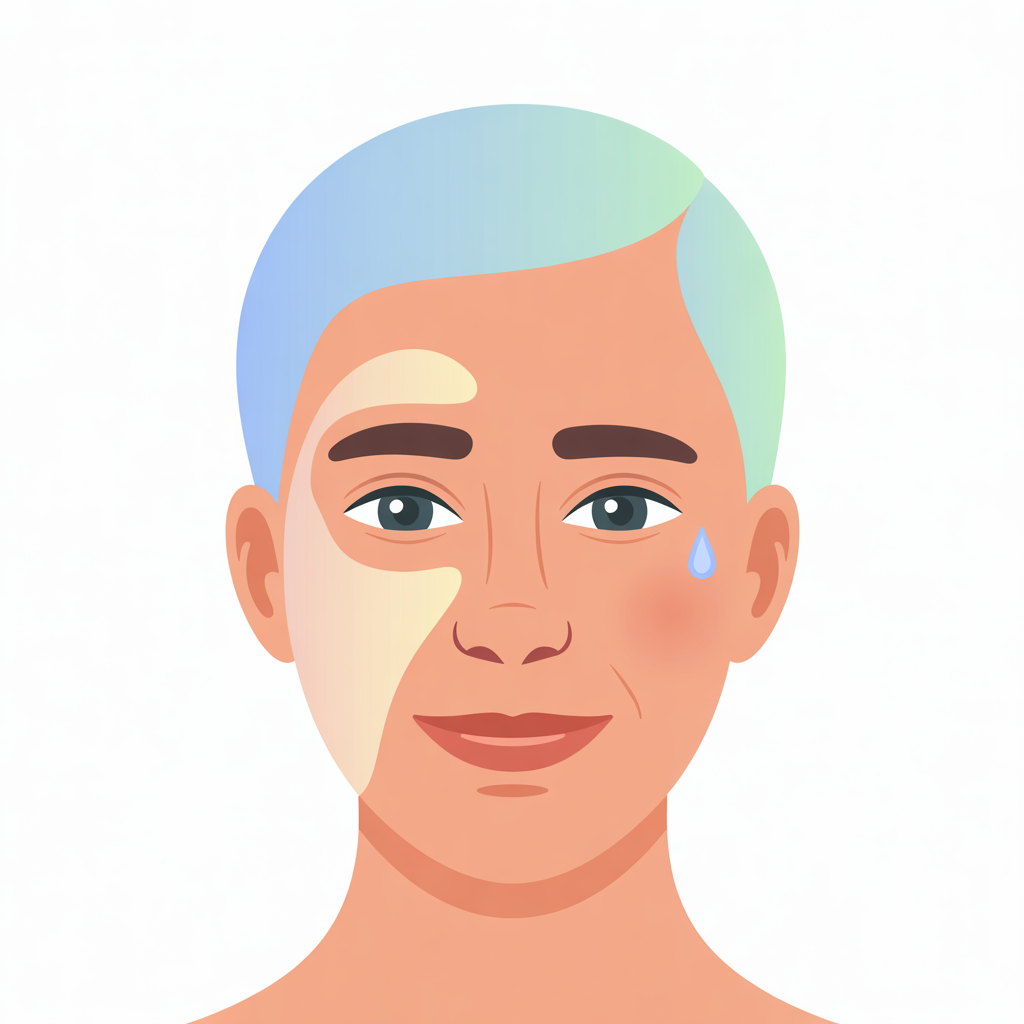
Bell’s palsy is a condition that causes sudden, temporary weakness or paralysis of the muscles on one side of the face. It occurs when the nerve that controls your facial muscles — the facial nerve (cranial nerve VII) — becomes inflamed, swollen, or compressed. While the exact cause is not always clear, Bell’s palsy can affect anyone at any age, though it is more common in people between the ages of 15 and 60.
The onset of Bell’s palsy is typically rapid, with symptoms developing over a period of hours to days. Although the condition is usually temporary and most people recover fully within a few weeks to months, it can be alarming and disruptive. Recognizing the symptoms early is crucial for seeking timely medical attention and improving outcomes.
Below are the most common symptoms of Bell’s palsy that you should be aware of.
1. Sudden Weakness or Paralysis on One Side of the Face
One of the most hallmark symptoms of Bell’s palsy is sudden muscle weakness or complete paralysis that affects one side of the face. This typically develops rapidly — sometimes overnight or within a matter of hours. The affected side of the face may appear to “droop” or look noticeably different from the unaffected side.
- The drooping can affect the mouth, cheek, and eye area simultaneously.
- In rare cases, both sides of the face can be affected, though this is uncommon.
- The weakness may range from mild to total paralysis depending on the severity of nerve inflammation.
This sudden onset can be frightening, and many people initially fear they are experiencing a stroke. However, Bell’s palsy is distinguishable because it affects the entire half of the face, including the forehead, whereas a stroke-related facial droop typically spares the forehead.
2. Drooping of the Mouth and Difficulty Smiling
A visible drooping of one corner of the mouth is a very common and noticeable sign of Bell’s palsy. Because the facial muscles on the affected side lose their normal function, the mouth may appear uneven or lopsided at rest and when attempting to smile or speak.
- Smiling may cause the mouth to pull toward the unaffected side, creating an asymmetrical appearance.
- Patients may have difficulty forming words clearly due to loss of muscle control around the lips.
- Drooling may occur because it becomes difficult to keep the mouth closed or to control the movement of lips.
This symptom can affect daily activities such as eating, drinking, and communicating, leading to social embarrassment and emotional distress for many individuals.
3. Difficulty Closing the Eye on the Affected Side
Because Bell’s palsy affects the facial nerve responsible for eyelid movement, many patients find it difficult or impossible to close their eye on the affected side. This condition is referred to as lagophthalmos.
- The eye may remain partially or fully open even during sleep, which can lead to dryness and irritation of the cornea.
- Without proper lubrication, the eye is at risk of developing corneal abrasions or even infections.
- Patients may notice excessive tearing (epiphora) as the eye’s natural drainage system is disrupted.
Eye care is particularly important for those with Bell’s palsy. Using artificial tears, eye drops, or protective eye patches — especially at night — is often recommended to protect the exposed eye. Always consult a healthcare professional for proper eye care guidance.
4. Loss of the Ability to Make Facial Expressions
Bell’s palsy significantly impairs the ability to make normal facial expressions on the affected side. The facial muscles responsible for expressing emotions — such as raising eyebrows, wrinkling the forehead, or frowning — may become partially or completely unresponsive.
- Patients may be unable to raise the eyebrow on the affected side.
- The forehead may appear smooth and expressionless on the affected side compared to the opposite side.
- Blinking may be reduced or absent on the affected side, contributing to eye dryness and irritation.
This loss of expressiveness can make it harder for others to interpret emotions and may contribute to feelings of self-consciousness, anxiety, and depression in some patients.
5. Pain or Discomfort Around the Jaw or Behind the Ear
Many people with Bell’s palsy report pain or discomfort in the area around the ear, jaw, or behind the ear on the affected side. This pain often precedes the facial weakness and can serve as an early warning sign of the condition.
- The pain may feel like a dull ache, sharp stabbing sensation, or throbbing discomfort.
- It can radiate from behind the ear to the jaw or the back of the skull.
- The discomfort is typically on the same side as the facial paralysis.
This pre-onset pain is thought to be caused by inflammation of the facial nerve as it travels through a narrow bony canal in the skull just behind the ear (the stylomastoid foramen). If you experience this type of pain suddenly, it is worth consulting a healthcare provider promptly.
6. Changes in Taste (Dysgeusia)
Bell’s palsy can affect the branch of the facial nerve responsible for taste sensation, leading to altered or reduced ability to taste food and beverages. This symptom, known as dysgeusia, typically affects the front two-thirds of the tongue on the affected side.
- Foods may taste bland, metallic, or unusually different from normal.
- Some patients report a complete loss of taste (ageusia) on the affected side of the tongue.
- The loss of taste is usually temporary and tends to improve as the condition resolves.
While not dangerous on its own, taste changes can reduce appetite and enjoyment of meals, which may affect overall nutrition and quality of life during recovery.
7. Increased Sensitivity to Sound (Hyperacusis)
Some people with Bell’s palsy experience an unusual sensitivity to sound, a condition known as hyperacusis. This occurs because the facial nerve controls a tiny muscle in the middle ear called the stapedius, which helps to dampen loud sounds. When this nerve is affected, the stapedius cannot function properly.
- Everyday sounds may seem unusually loud or jarring.
- High-pitched sounds, music, or background noise can become overwhelming or even painful.
- The sensitivity typically affects the ear on the same side as the facial paralysis.
This symptom can make it difficult to be in noisy environments, affecting work, social interactions, and daily comfort. It usually resolves as the facial nerve heals over time.
8. Headache
Headaches are a commonly reported symptom in individuals with Bell’s palsy, particularly in the early stages of the condition. The headache may be related to the inflammation of the facial nerve or may accompany the pain around the ear and jaw.
- The headache may range from mild to moderate in intensity.
- It is often felt on the same side as the facial weakness.
- Some individuals experience a general sensation of fatigue or malaise alongside the headache.
While a headache alone does not indicate Bell’s palsy, when it occurs alongside other symptoms such as facial drooping or ear pain, it warrants prompt medical evaluation to rule out more serious conditions like a stroke or brain tumor.
9. Drooling and Difficulty Eating or Drinking
Due to the loss of muscle control around the mouth and lips, people with Bell’s palsy often experience difficulty eating and drinking. This can be one of the most practically disruptive symptoms of the condition.
- Food and liquids may spill from the weakened side of the mouth.
- Chewing may become difficult or uncomfortable due to reduced control over the cheek and jaw muscles.
- Drooling is common, particularly when speaking or eating, because the lip cannot maintain a proper seal.
- Swallowing may feel slightly unusual or awkward in some patients.
These challenges can lead to social embarrassment and a preference for softer foods or modified eating positions to compensate for the weakened facial muscles.
What Causes Bell’s Palsy?
The exact cause of Bell’s palsy is not fully understood, but several factors are believed to contribute to the inflammation and compression of the facial nerve:
- Viral infections: The most widely accepted theory links Bell’s palsy to viral infections, particularly the herpes simplex virus (HSV-1), which is also responsible for cold sores. Other viruses such as the varicella-zoster virus (chickenpox/shingles), Epstein-Barr virus, and cytomegalovirus have also been associated with the condition.
- Inflammation and swelling: Viral reactivation can cause the facial nerve to become inflamed and swollen. Since the nerve travels through a narrow bony canal, even slight swelling can compress it significantly.
- Weakened immune system: Individuals with a compromised immune system — due to illness, stress, or fatigue — may be more susceptible to viral reactivation and Bell’s palsy.
- Pregnancy: Pregnant women, particularly in the third trimester, have a higher risk of developing Bell’s palsy, possibly due to immune system changes and increased fluid retention.
- Diabetes: People with diabetes are at higher risk of nerve-related conditions, including Bell’s palsy.
- Upper respiratory infections: Some cases appear to follow a cold or flu-like illness, suggesting a connection between respiratory viral infections and facial nerve inflammation.
- Genetic factors: There may be a hereditary predisposition in some individuals, as Bell’s palsy can occasionally run in families.
Can Bell’s Palsy Be Prevented?
Because the exact cause of Bell’s palsy is not always known, there is no guaranteed way to prevent it entirely. However, certain lifestyle habits may help reduce the risk by supporting nerve health and immune function:
- Maintain a healthy immune system: Eating a balanced diet rich in vitamins and minerals, getting regular exercise, and ensuring adequate sleep can help keep your immune system strong and reduce the risk of viral infections that may trigger Bell’s palsy.
- Manage stress effectively: Chronic stress can weaken the immune system and may increase susceptibility to viral reactivation. Practicing stress-reduction techniques such as meditation, yoga, or deep breathing exercises may be beneficial.
- Control underlying health conditions: Managing conditions such as diabetes and high blood pressure can reduce the risk of nerve damage and complications.
- Avoid known triggers for viral reactivation: For individuals with a history of herpes simplex virus infection, avoiding known triggers such as excessive sun exposure, fever, fatigue, or emotional stress may help prevent viral reactivation.
- Get vaccinated: Vaccines for varicella (chickenpox) and shingles may help reduce the risk of Bell’s palsy associated with the varicella-zoster virus.
- Practice good hygiene: Washing hands regularly and avoiding close contact with individuals who have active cold sores or viral infections can help reduce the risk of contracting viruses linked to Bell’s palsy.
Frequently Asked Questions (FAQs) About Bell’s Palsy
Q: What is Bell’s palsy?
A: Bell’s palsy is a condition that causes sudden, temporary weakness or paralysis of the muscles on one side of the face due to inflammation or compression of the facial nerve. It is not caused by a stroke and is generally not permanent.
Q: How long does Bell’s palsy last?
A: Most people begin to notice improvement within 2 to 3 weeks after onset. The majority of patients recover fully within 3 to 6 months. In some cases, residual weakness or complications may persist longer.
Q: Is Bell’s palsy the same as a stroke?
A: No. Although facial drooping is a symptom of both Bell’s palsy and stroke, they are different conditions. In Bell’s palsy, the entire one side of the face is affected, including the forehead. In a stroke, the forehead is usually spared. If you experience sudden facial drooping along with arm weakness, speech difficulty, or vision changes, seek emergency medical care immediately as these could indicate a stroke.
Q: Can Bell’s palsy affect both sides of the face?
A: Bilateral Bell’s palsy (affecting both sides of the face) is rare, occurring in approximately 1% of cases. When both sides are affected, it is important to investigate for underlying conditions such as Lyme disease or other systemic disorders.
Q: Is Bell’s palsy contagious?
A: Bell’s palsy itself is not contagious. However, the viral infections that may trigger it, such as herpes simplex virus, can be transmitted from person to person.
Q: When should I see a doctor for Bell’s palsy?
A: You should seek medical attention immediately if you notice sudden facial weakness, drooping, or inability to close one eye. Prompt evaluation is important to rule out more serious conditions and to begin appropriate care as early as possible.
Q: Can Bell’s palsy recur?
A: Yes, Bell’s palsy can recur, though recurrence is uncommon. Some studies suggest a recurrence rate of around 7–15%. Recurrent episodes may occur on the same or opposite side of the face.
Q: What should I do while waiting for Bell’s palsy to resolve?
A: Consult a healthcare provider for personalized guidance. Eye care (using artificial tears and eye protection) is especially important. Always consult a doctor before taking any medication, as treatment decisions should be made under professional medical supervision.
References: