
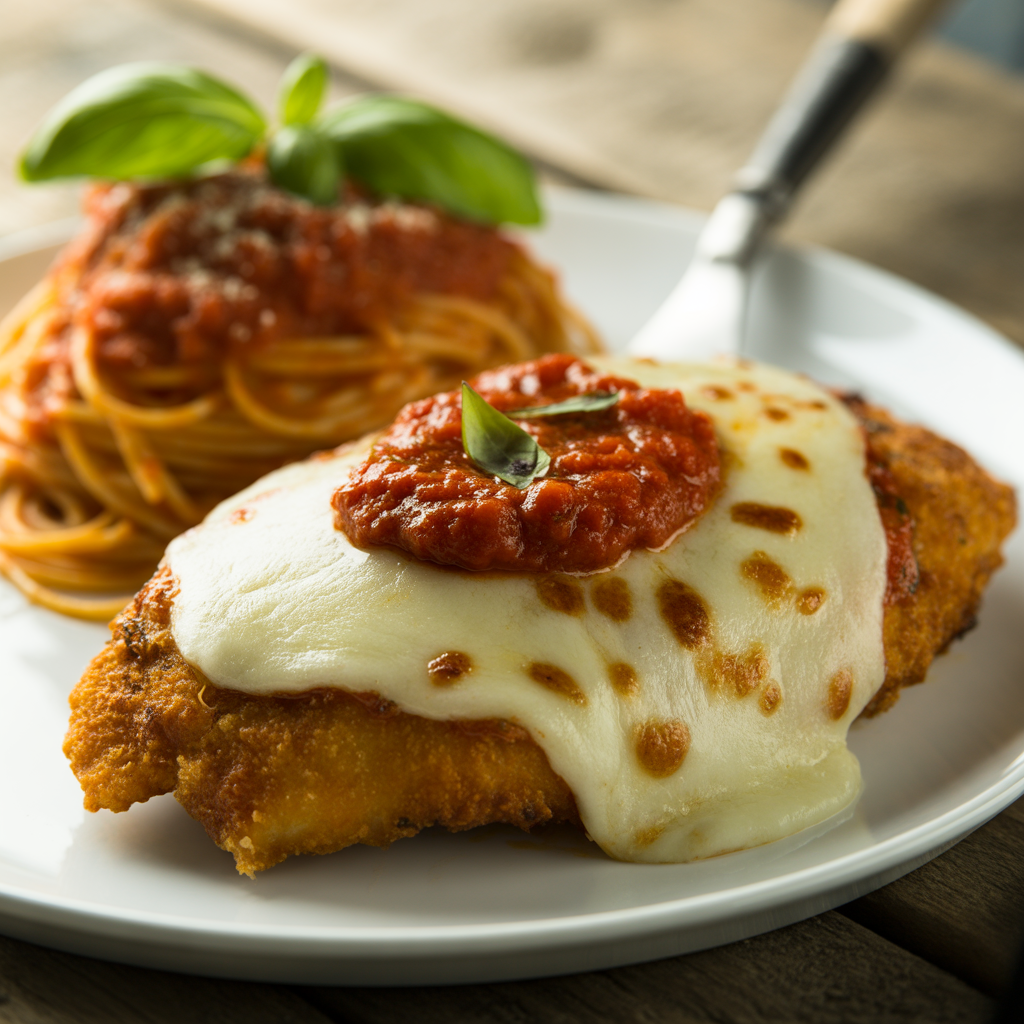
Chicken Parmesan is one of the most beloved Italian-American dishes — a golden, crispy breaded chicken breast smothered in marinara sauce and topped with gooey, melted cheese. But achieving that perfect balance of crispy coating and cheesy topping can be tricky if you don’t know the right techniques. In this guide, we’ll walk you through every step to make the ultimate Chicken Parmesan that’s perfectly crispy on the outside, juicy on the inside, and loaded with melted cheese on top.
What Is Chicken Parmesan?
Chicken Parmesan (also known as Chicken Parmigiana) is a classic dish made from breaded and fried chicken cutlets topped with tomato-based marinara sauce and melted mozzarella and Parmesan cheese. It’s typically served over pasta or with a side of garlic bread. The key to a great Chicken Parm lies in the crispy breading and the quality of the cheese melt.
Ingredients You’ll Need
Before you start cooking, gather all the necessary ingredients. Using fresh, high-quality ingredients makes a significant difference in the final result.
For the Chicken:
- 2 large boneless, skinless chicken breasts
- 1 cup all-purpose flour
- 2 large eggs
- 2 tablespoons whole milk
- 1 cup Italian-style breadcrumbs
- ½ cup Panko breadcrumbs
- ½ cup freshly grated Parmesan cheese
- 1 teaspoon garlic powder
- 1 teaspoon onion powder
- 1 teaspoon dried oregano
- 1 teaspoon dried basil
- Salt and black pepper to taste
- Olive oil or vegetable oil for frying
For the Topping:
- 1½ cups marinara sauce (homemade or store-bought)
- 1½ cups shredded mozzarella cheese
- ½ cup freshly grated Parmesan cheese
- Fresh basil leaves for garnish
Step-by-Step Instructions
Step 1: Prepare the Chicken Breasts
The most important first step is to pound the chicken breasts to an even thickness. Place each chicken breast between two sheets of plastic wrap or in a zip-lock bag. Use a meat mallet or rolling pin to pound them to about ½ inch thickness. This ensures even cooking and prevents the outside from burning before the inside is cooked through.
After pounding, season both sides generously with salt and black pepper. Let the chicken sit at room temperature for about 15 minutes before breading — this helps the breading stick better and promotes more even cooking.
Step 2: Set Up Your Breading Station
A proper breading station is essential for achieving a crispy, even coating. Set up three shallow dishes:
- Dish 1 – Flour: Add 1 cup of all-purpose flour seasoned with a pinch of salt and pepper.
- Dish 2 – Egg Wash: Beat 2 eggs with 2 tablespoons of milk until well combined.
- Dish 3 – Breadcrumb Mixture: Combine Italian breadcrumbs, Panko breadcrumbs, grated Parmesan, garlic powder, onion powder, oregano, and basil. Mix well.
Pro Tip: Adding Panko breadcrumbs to the mix is the secret to extra crispiness. Panko has a lighter, flakier texture than regular breadcrumbs, which creates a crunchier crust when fried.
Step 3: Bread the Chicken
Dredge each chicken breast in flour first, shaking off any excess. This dry layer helps the egg wash adhere properly. Next, dip the floured chicken into the egg wash, letting any excess drip off. Finally, press the chicken firmly into the breadcrumb mixture, coating both sides evenly. Press gently with your hands to make sure the breadcrumbs stick well.
Place the breaded chicken on a wire rack and let it rest for 5–10 minutes. This resting period helps the breading set, which prevents it from falling off during frying.
Step 4: Fry the Chicken to Golden Perfection
Pour about ¼ inch of oil into a large, heavy-bottomed skillet (cast iron works best). Heat the oil over medium-high heat until it reaches 350°F (175°C). You can test the oil by dropping in a small breadcrumb — if it sizzles immediately, the oil is ready.
Carefully place the breaded chicken into the hot oil. Do not overcrowd the pan — fry one or two pieces at a time if necessary. Cook for about 3–4 minutes per side until deeply golden brown and crispy. The internal temperature should reach at least 165°F (74°C).
Transfer the fried chicken to a paper towel-lined plate to drain excess oil.
Step 5: Add the Sauce and Cheese
Here’s where the magic happens. Preheat your oven to 425°F (220°C). Transfer the fried chicken breasts to a baking sheet or oven-safe skillet.
Spoon about 2–3 tablespoons of marinara sauce onto the center of each chicken breast. Be careful not to cover the entire surface — leaving the edges of the breading exposed allows them to remain crispy in the oven. If you smother the whole piece in sauce, the crust will steam and become soggy.
Next, top the sauce with a generous amount of shredded mozzarella cheese, followed by a sprinkle of grated Parmesan. The combination of mozzarella (for stretch and melt) and Parmesan (for sharp, salty flavor) creates the most satisfying cheesy topping.
Step 6: Bake Until Bubbly and Golden
Place the baking sheet in the preheated oven and bake for 10–15 minutes, until the cheese is fully melted, bubbly, and starting to turn golden brown at the edges. For extra color on the cheese, switch the oven to broil for the last 1–2 minutes — but watch it carefully to avoid burning.
Once out of the oven, let the Chicken Parmesan rest for 2–3 minutes before serving. Garnish with fresh basil leaves for color and flavor.
Tips for Keeping Chicken Parmesan Crispy
The biggest challenge with Chicken Parmesan is maintaining the crispiness of the breading after adding sauce and cheese. Here are the most effective tricks:
- Use Panko breadcrumbs: As mentioned, Panko creates a lighter, crunchier crust compared to standard breadcrumbs.
- Don’t oversauce: Only apply sauce to the center of the chicken, keeping the edges dry and crispy.
- Don’t skip the frying step: Some recipes bake the chicken from the start, but frying first creates a much crispier base that holds up better under the sauce and cheese.
- Use a wire rack: After frying, place the chicken on a wire rack instead of a flat plate to prevent steam from building up underneath, which would soften the crust.
- Bake at high heat: A hot oven (425°F) helps keep the crust crispy while melting the cheese quickly.
- Serve immediately: Chicken Parmesan is best enjoyed right out of the oven. The longer it sits, the softer the crust becomes.
Tips for the Cheesiest Chicken Parmesan
Getting that perfect, gooey, pull-apart cheese layer is just as important as the crispy crust:
- Use freshly shredded cheese: Pre-shredded cheese from a bag contains anti-caking agents that prevent it from melting as smoothly. Shred your own mozzarella from a block for the best melt.
- Layer the cheeses: Use mozzarella as the base layer for gooeyness, then add Parmesan on top for a salty, savory crust.
- Add a slice of fresh mozzarella: For an ultra-luxurious result, place a slice of fresh mozzarella on top of the shredded mozzarella. It creates an incredibly creamy, stretchy melt.
- Broil at the end: A quick 1–2 minute broil gives the cheese beautiful golden-brown spots, adding both flavor and visual appeal.
Best Marinara Sauce for Chicken Parmesan
The sauce is an important element that ties the entire dish together. While store-bought marinara works in a pinch, making a quick homemade sauce elevates the dish significantly.
Quick Homemade Marinara (10 minutes):
- 2 tablespoons olive oil
- 3 cloves garlic, minced
- 1 can (28 oz) crushed San Marzano tomatoes
- 1 teaspoon dried basil
- 1 teaspoon dried oregano
- Salt, pepper, and a pinch of sugar to taste
Heat olive oil in a saucepan over medium heat. Sauté garlic for 1 minute until fragrant. Add crushed tomatoes and herbs. Simmer for 10–15 minutes, seasoning to taste. Simple, fresh, and far better than anything from a jar.
What to Serve With Chicken Parmesan
Chicken Parmesan is a versatile dish that pairs well with many sides:
- Spaghetti or linguine with marinara sauce — the classic combination
- Garlic bread or ciabatta for mopping up the sauce
- Caesar salad for a fresh, crisp contrast
- Roasted vegetables such as zucchini, bell peppers, or asparagus
- Steamed broccoli for a simple, healthy side
Common Mistakes to Avoid
Even experienced cooks can run into issues with Chicken Parmesan. Here are the most common mistakes and how to avoid them:
- Skipping pounding the chicken: Uneven thickness leads to uneven cooking — the thin parts dry out while the thick parts remain undercooked.
- Oil not hot enough: If the oil is too cool, the chicken will absorb it and become greasy instead of crispy.
- Soggy breading: This happens when the chicken rests in sauce for too long. Always sauce the chicken right before baking and serve immediately.
- Too much sauce: Overloading the chicken with marinara is one of the most common reasons for a soggy crust.
- Using low-quality cheese: Cheap, pre-shredded cheese won’t melt well. Invest in good mozzarella for the best results.
Can You Make Chicken Parmesan Ahead of Time?
Yes, you can prepare components of Chicken Parmesan ahead of time to save effort during busy weeknights:
- Bread and fry the chicken up to a day in advance. Store on a wire rack in the refrigerator uncovered to maintain crispiness.
- Make the marinara sauce up to 3 days ahead and store in the refrigerator.
- When ready to serve, top the pre-fried chicken with sauce and cheese, then bake at 425°F until the cheese is melted and the chicken is heated through (about 15–18 minutes).
How to Store and Reheat Leftovers
Store leftover Chicken Parmesan in an airtight container in the refrigerator for up to 3 days. To reheat and maintain crispiness:
- Oven method (best): Reheat at 375°F (190°C) on a wire rack for 15–20 minutes until heated through and crispy again.
- Air fryer method: Reheat at 350°F for 5–8 minutes for great results.
- Avoid the microwave — it makes the breading soggy and the chicken rubbery.
Nutritional Information (Per Serving, Approximate)
- Calories: 550–650 kcal
- Protein: 50g
- Carbohydrates: 30g
- Fat: 25g
- Sodium: 900mg
Nutritional values vary depending on portion size and specific ingredients used.
Final Thoughts
Making the perfect crispy and cheesy Chicken Parmesan at home is absolutely achievable when you follow the right steps. The combination of double-breaded chicken fried to golden perfection, a perfectly portioned layer of marinara, and a generous blanket of freshly melted mozzarella and Parmesan is nothing short of spectacular. Remember: pound the chicken evenly, use Panko for crunch, go easy on the sauce, and always use freshly shredded cheese. Follow these tips, and you’ll have a restaurant-quality Chicken Parmesan on your dinner table every single time.