
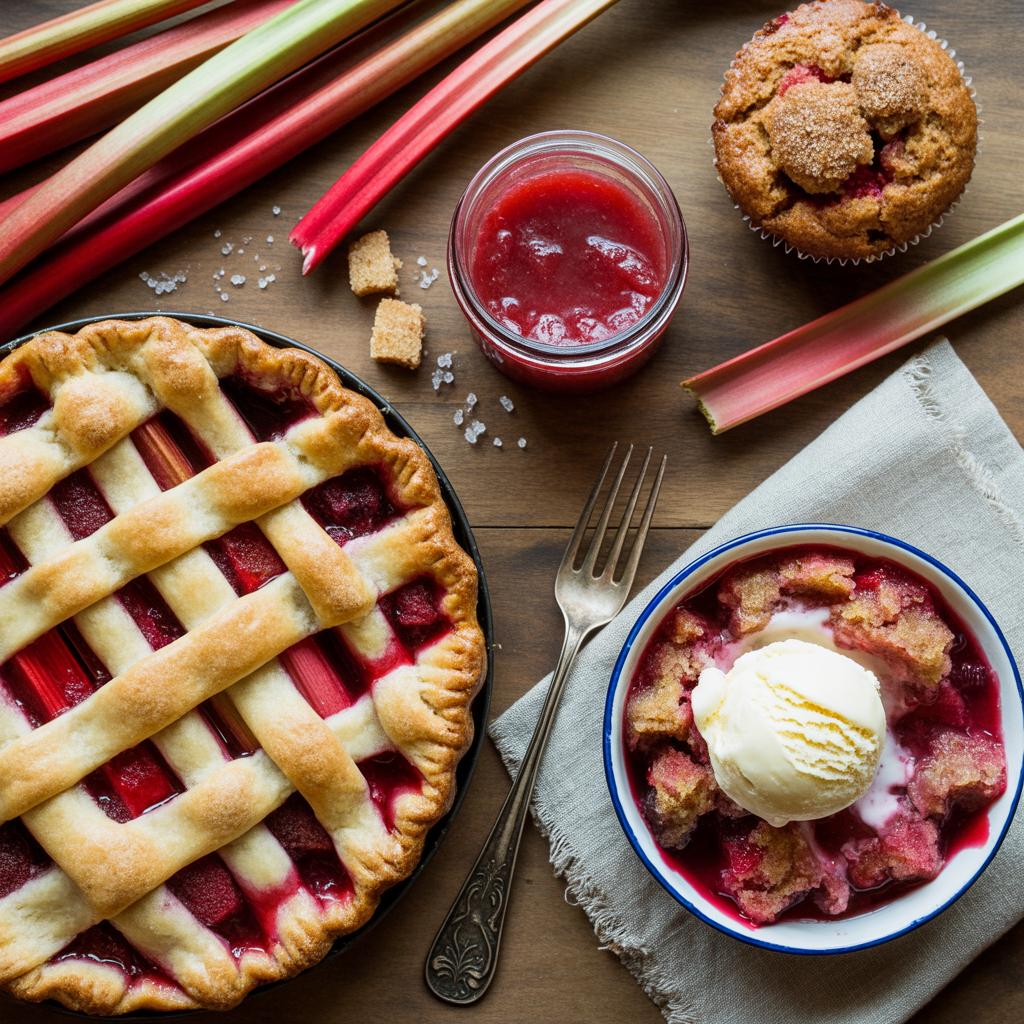
Rhubarb is one of nature’s most unique ingredients — bold, tangy, and absolutely delicious when paired with the right flavors. Whether you’re a seasoned baker or a curious home cook, rhubarb recipes offer an exciting world of sweet-tart possibilities that go far beyond the classic strawberry rhubarb pie. In this comprehensive guide, we’ll explore the best rhubarb recipes, share expert tips, and help you make the most of this vibrant stalk every season.
What Is Rhubarb and Why Do People Love It?
Rhubarb (Rheum rhabarbarum) is a vegetable that is almost universally used as a fruit in cooking. Its crimson and pale green stalks have a sharp, mouth-puckering tartness that makes it a prized ingredient in desserts, jams, and even savory dishes. Unlike most produce, rhubarb is rarely eaten raw — its power lies in how it transforms when cooked with sugar, heat, and complementary flavors.
Rhubarb season typically runs from April through June in most regions, although hothouse rhubarb can be found year-round. During peak season, the stalks are at their most tender and flavorful, making it the perfect time to stock up and cook in batches.
Important Safety Note: Only the stalks of rhubarb are edible. The leaves contain high levels of oxalic acid and are toxic — always discard them before cooking.
How to Select and Prepare Rhubarb
Choosing the Best Stalks
- Look for stalks that are firm, crisp, and glossy
- Avoid stalks that are limp, soft, or have brown spots
- Deeply red stalks tend to be sweeter and more visually appealing in desserts
- Greener stalks are equally flavorful and often more tart — perfect for savory applications
Basic Preparation Steps
- Wash stalks thoroughly under cold water
- Trim and discard the leaf ends and the root end
- Peel stringy fibers from older, thicker stalks (younger stalks don’t need peeling)
- Cut into ½-inch to 1-inch pieces depending on the recipe
Storing Rhubarb
Fresh rhubarb keeps in the refrigerator for up to one week when wrapped loosely in plastic or stored in an airtight bag. For long-term storage, chop into pieces and freeze on a baking sheet before transferring to freezer bags — it keeps well for up to 12 months.
Classic Rhubarb Recipes You Need to Try
1. Classic Strawberry Rhubarb Pie
No rhubarb recipe list would be complete without the iconic strawberry rhubarb pie. The natural sweetness of strawberries perfectly balances rhubarb’s sharpness, creating a filling that is both complex and irresistible.
Ingredients:
- 3 cups fresh rhubarb, chopped
- 2 cups fresh strawberries, hulled and halved
- 1 cup granulated sugar
- ¼ cup cornstarch
- 1 tablespoon lemon juice
- 1 teaspoon vanilla extract
- Pinch of salt
- 2 prepared pie crusts (homemade or store-bought)
- 2 tablespoons unsalted butter, cut into pieces
- 1 egg, beaten (for egg wash)
- 1 tablespoon coarse sugar for sprinkling
Instructions:
- Preheat your oven to 400°F (200°C).
- In a large bowl, combine rhubarb, strawberries, sugar, cornstarch, lemon juice, vanilla, and salt. Toss well and let sit for 15 minutes.
- Line a 9-inch pie dish with one crust. Pour the filling in and dot with butter.
- Top with the second crust, crimp the edges, and cut slits for ventilation.
- Brush with egg wash and sprinkle with coarse sugar.
- Bake for 20 minutes, then reduce heat to 375°F (190°C) and bake for another 35–40 minutes until the crust is golden and filling is bubbling.
- Cool completely before slicing — at least 2 hours.
2. Rhubarb Crisp
Easier than pie and just as satisfying, a rhubarb crisp features a bubbling, jammy filling beneath a golden oat topping. Serve warm with a scoop of vanilla ice cream for a truly show-stopping dessert.
Ingredients:
For the filling:
- 5 cups rhubarb, chopped (about 1-inch pieces)
- ¾ cup granulated sugar
- 2 tablespoons cornstarch
- 1 teaspoon orange zest
For the crisp topping:
- 1 cup rolled oats
- ½ cup all-purpose flour
- ½ cup packed brown sugar
- ¼ teaspoon cinnamon
- ¼ teaspoon salt
- 6 tablespoons cold unsalted butter, cubed
Instructions:
- Preheat oven to 375°F (190°C). Grease an 8×8 or 9×9 baking dish.
- Mix rhubarb, sugar, cornstarch, and orange zest. Spread into the dish.
- In a separate bowl, combine oats, flour, brown sugar, cinnamon, and salt. Work in cold butter with your fingers until the mixture resembles coarse crumbs.
- Sprinkle topping evenly over the rhubarb.
- Bake for 40–45 minutes until topping is golden and filling is bubbling at the edges.
- Let rest 10 minutes before serving.
3. Rhubarb Compote
A simple rhubarb compote is one of the most versatile things you can make. It takes only 15 minutes and can be spooned over yogurt, pancakes, oatmeal, ice cream, or stirred into cocktails.
Ingredients:
- 4 cups rhubarb, chopped
- ½ cup sugar (adjust to taste)
- 2 tablespoons water
- 1 tablespoon fresh lemon juice
- Optional: 1 teaspoon vanilla or a strip of orange peel
Instructions:
- Combine all ingredients in a medium saucepan over medium heat.
- Stir until sugar dissolves, then cook for 10–15 minutes, stirring occasionally, until rhubarb is completely softened and the mixture has thickened.
- Remove from heat and let cool. Store in the refrigerator for up to 2 weeks.
4. Rhubarb Muffins
These tender, bakery-style muffins are studded with chunks of tart rhubarb and topped with a crunchy cinnamon sugar crust. They’re perfect for breakfast, brunch, or an afternoon snack.
Ingredients:
- 2½ cups all-purpose flour
- 1 teaspoon baking soda
- 1 teaspoon baking powder
- ½ teaspoon salt
- 1 teaspoon cinnamon
- ¾ cup packed brown sugar
- 1 cup buttermilk
- ½ cup vegetable oil
- 1 large egg
- 2 teaspoons vanilla extract
- 2 cups rhubarb, finely chopped
- Topping: 2 tablespoons sugar + ½ teaspoon cinnamon mixed together
Instructions:
- Preheat oven to 375°F (190°C). Line a 12-cup muffin pan with liners.
- Whisk together flour, baking soda, baking powder, salt, and cinnamon.
- In another bowl, whisk together brown sugar, buttermilk, oil, egg, and vanilla.
- Fold wet ingredients into dry until just combined. Fold in rhubarb.
- Divide batter evenly among muffin cups. Sprinkle with cinnamon sugar topping.
- Bake 20–22 minutes until a toothpick inserted in the center comes out clean.
- Cool for 5 minutes before removing from pan.
5. Rhubarb Upside-Down Cake
This stunning cake features caramelized rhubarb arranged on the bottom of the pan that becomes a gorgeous, jeweled topping when flipped. It’s as impressive as it is delicious.
Ingredients:
For the topping (bottom of pan):
- 4 tablespoons unsalted butter, melted
- ½ cup brown sugar
- 3 cups rhubarb, sliced into ½-inch pieces
For the cake:
- 1½ cups all-purpose flour
- 1½ teaspoons baking powder
- ¼ teaspoon salt
- ½ cup unsalted butter, softened
- ¾ cup granulated sugar
- 2 large eggs
- 1 teaspoon vanilla extract
- ½ cup whole milk
Instructions:
- Preheat oven to 350°F (175°C). Pour melted butter into a 9-inch round cake pan and sprinkle with brown sugar. Arrange rhubarb on top.
- Whisk together flour, baking powder, and salt.
- Beat butter and sugar until fluffy. Add eggs one at a time, then vanilla.
- Alternate adding flour mixture and milk, mixing until just combined.
- Pour batter over the rhubarb layer and smooth the top.
- Bake 45–50 minutes until a toothpick comes out clean.
- Let cool 10 minutes, then carefully invert onto a plate. Serve warm or at room temperature.
6. Rhubarb Jam
Making your own rhubarb jam is incredibly rewarding and requires no pectin. The result is a thick, glossy, sweet-tart spread that is magnificent on toast, scones, or swirled into yogurt.
Ingredients:
- 4 cups rhubarb, chopped
- 2 cups granulated sugar
- 3 tablespoons lemon juice
- Optional: 1 teaspoon vanilla extract or ½ teaspoon ground ginger
Instructions:
- Combine rhubarb, sugar, and lemon juice in a large heavy-bottomed pot. Stir well and let sit for 30 minutes to macerate.
- Bring to a boil over medium-high heat, stirring frequently.
- Reduce heat to medium and simmer for 20–25 minutes, stirring often, until the jam thickens and coats the back of a spoon.
- Test the set: place a small spoonful on a cold plate and push it — if it wrinkles, it’s ready.
- Ladle into sterilized jars and seal. Refrigerate for up to 3 weeks, or process for canning.
7. Rhubarb Custard Bars
These dreamy bars feature a buttery shortbread crust, a silky rhubarb custard filling, and a light dusting of powdered sugar. They’re perfect for potlucks, picnics, and bake sales.
Ingredients:
Crust:
- 2 cups all-purpose flour
- ¼ cup powdered sugar
- Pinch of salt
- 1 cup cold unsalted butter, cubed
Custard filling:
- 4 large eggs
- 2 cups granulated sugar
- ⅓ cup all-purpose flour
- ¾ cup heavy cream
- 4 cups rhubarb, finely diced
Instructions:
- Preheat oven to 350°F (175°C). Grease a 9×13-inch baking pan.
- For the crust, pulse flour, powdered sugar, and salt in a food processor. Add butter and pulse until crumbly. Press evenly into the pan.
- Bake crust for 15 minutes until lightly golden.
- Whisk together eggs, sugar, flour, and cream. Stir in rhubarb. Pour over hot crust.
- Bake for 40–45 minutes until set and lightly golden on top.
- Cool completely, then dust with powdered sugar and cut into bars.
8. Rhubarb Sorbet
This vibrant, dairy-free frozen dessert is bracingly refreshing. The natural color of red rhubarb creates a stunning rosy-pink sorbet that looks as beautiful as it tastes.
Ingredients:
- 4 cups rhubarb, chopped
- 1 cup water
- 1 cup sugar
- 2 tablespoons lemon juice
- Optional: 1 teaspoon rose water or fresh mint
Instructions:
- Combine rhubarb, water, and sugar in a saucepan. Bring to a boil, then simmer 10–12 minutes until rhubarb is completely soft.
- Let cool slightly, then blend until completely smooth. Strain through a fine mesh sieve.
- Stir in lemon juice and any optional flavoring. Chill completely in the refrigerator.
- Churn in an ice cream maker according to manufacturer’s instructions, or pour into a shallow pan and freeze, stirring every 30 minutes until firm.
9. Savory Rhubarb Chutney
Rhubarb isn’t just for desserts! This sweet and tangy chutney pairs beautifully with grilled meats, cheese boards, roasted pork, and duck. It’s one of the most underrated ways to use rhubarb.
Ingredients:
- 3 cups rhubarb, chopped
- 1 cup red onion, finely diced
- ½ cup brown sugar
- ⅓ cup apple cider vinegar
- 1 teaspoon fresh ginger, grated
- ½ teaspoon red pepper flakes
- ½ teaspoon allspice
- Salt to taste
Instructions:
- Combine all ingredients in a saucepan over medium heat.
- Bring to a simmer and cook 25–30 minutes, stirring frequently, until thick and jammy.
- Taste and adjust seasoning. Cool before serving.
- Store in the refrigerator for up to 3 weeks.
10. Rhubarb Simple Syrup
This gorgeous ruby-red syrup is one of the easiest rhubarb preparations and one of the most useful. Use it to flavor cocktails, lemonades, sparkling water, salad dressings, or drizzle over desserts.
Ingredients:
- 2 cups rhubarb, chopped
- 1 cup water
- 1 cup sugar
Instructions:
- Combine all ingredients in a saucepan over medium heat.
- Stir until sugar dissolves, then simmer 15–20 minutes.
- Strain through a fine mesh sieve, pressing to extract all the liquid.
- Cool and store in a sealed jar in the refrigerator for up to 2 weeks.
Flavor Pairings That Elevate Rhubarb
Rhubarb plays well with many ingredients. Here are the best flavor combinations to inspire your next recipe:
| Rhubarb Pairs With | Why It Works |
|---|---|
| Strawberry | Sweetness balances tartness — a classic pairing |
| Ginger | Warmth and spice amplify rhubarb’s complexity |
| Vanilla | Softens the sharpness and adds creaminess |
| Orange | Citrus zest brightens and lifts the flavor |
| Raspberry | Similar tartness with added floral notes |
| Cardamom | Exotic, aromatic spice adds depth |
| Cream cheese | Rich tang complements rhubarb beautifully |
| Apple | Mild sweetness and texture contrast |
| Honey | Natural sweetener that adds floral complexity |
| Rose water | Delicate floral note that elevates the color and flavor |
Expert Tips for Cooking with Rhubarb
1. Adjust Sugar Carefully
Rhubarb’s tartness level can vary significantly depending on the variety and time of season. Always taste your rhubarb before cooking and adjust the sugar in your recipe accordingly. Start conservatively — you can always add more sweetness at the end.
2. Don’t Overcook It
Rhubarb breaks down very quickly. For a chunky filling or compote with texture, cook it gently and briefly. Overcooking results in a stringy, mushy consistency. Watch it closely and remove from heat as soon as it’s tender.
3. Use a Thickener in Pies and Crisps
Rhubarb releases a lot of liquid during baking. Always use a starch thickener like cornstarch, tapioca starch, or flour in your fillings to prevent a watery result. Allow pies to cool completely before cutting for the best, set slices.
4. Balance Sweet and Tart
The goal with rhubarb is balance, not the elimination of tartness. A little sharpness is what makes rhubarb special. Pair it with naturally sweet ingredients and use just enough sugar to take the harsh edge off while preserving its signature zip.
5. Frozen Rhubarb Works Beautifully
Don’t let the end of rhubarb season stop you from cooking your favorite recipes. Frozen rhubarb works just as well as fresh in cooked applications — no thawing needed for most recipes. Simply add it directly to pies, crisps, and compotes.
6. The Color Factor
If you want vibrant pink or red color in your finished dish, use deeply red stalks and avoid overcooking, which causes the color to fade to a muddy pink-brown. Adding a little lemon juice helps preserve the bright color.
Frequently Asked Questions About Rhubarb
Is rhubarb a fruit or a vegetable?
Botanically, rhubarb is a vegetable. However, in 1947 a US Customs Court ruled it a fruit for trade purposes because it was primarily used as a fruit in cooking. Today it is commonly treated as a fruit in culinary contexts.
Can you eat rhubarb raw?
Yes, the stalks are technically safe to eat raw, but they are extremely tart and quite unpleasant without some form of sweetening or cooking. Some people dip raw stalks in sugar, but most recipes call for cooking.
How much sugar do you need for rhubarb?
A general guideline is ¼ to ½ cup of sugar per cup of rhubarb, but this depends entirely on personal preference and the specific recipe. Early-season rhubarb and greener stalks tend to be more tart and may need more sweetening.
Why is my rhubarb pie too watery?
This is usually caused by insufficient thickener or cutting slices before the pie has fully cooled. Make sure to use the right amount of cornstarch or tapioca, and let your pie rest for at least 2–3 hours after baking.
Can I substitute rhubarb in recipes?
If you can’t find rhubarb, the closest substitute for tartness is tart cranberries or green apples with a squeeze of lemon. However, nothing truly replicates rhubarb’s unique flavor, so substitutions will significantly change the result.
Rhubarb Nutrition Facts
Beyond its incredible flavor, rhubarb offers some nutritional benefits worth knowing:
- Low in calories: About 26 calories per cup of raw rhubarb
- Rich in Vitamin K: Important for bone health and blood clotting
- Contains Vitamin C: Supports immune function
- Good source of fiber: Supports digestive health
- Contains antioxidants: Including anthocyanins responsible for the red color
- Note: Rhubarb is high in oxalic acid, so those prone to kidney stones should consume it in moderation
Seasonal Rhubarb: Making the Most of the Harvest
If you’re lucky enough to have a rhubarb plant in your garden, you know that the harvest can be abundant. Here are smart ways to use large quantities:
- Freeze in batches: Chop and freeze for year-round use
- Make a big batch of compote to refrigerate and use over several weeks
- Can or jar rhubarb jam using proper canning techniques for shelf-stable storage
- Make a large batch of simple syrup and gift to friends and neighbors
- Bake and freeze: Muffins, crisps, and bar cookies freeze beautifully
Final Thoughts
Rhubarb is a truly special ingredient — tart, vibrant, and endlessly versatile. From the timeless strawberry rhubarb pie to creative savory chutneys and refreshing sorbets, the best rhubarb recipes showcase this ingredient’s remarkable ability to transform into something magical. Whether you’re working with fresh seasonal stalks or frozen rhubarb from your last harvest, these recipes will help you make the most of every bite.
The sweet-tart flavor of rhubarb is unlike anything else in your kitchen. Once you fall in love with it, you’ll find yourself looking forward to rhubarb season every year — and counting down the days until you can cook with it again.