
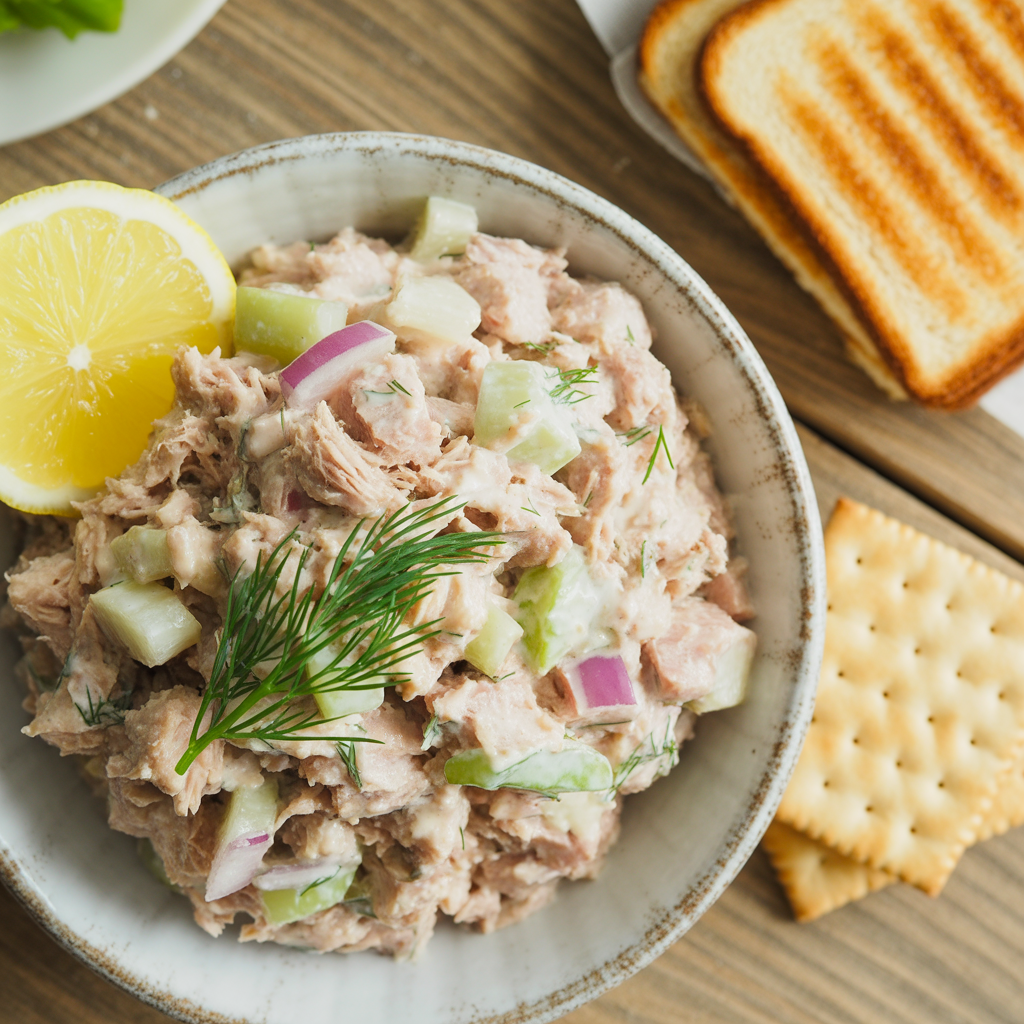
If you’re looking for a quick, satisfying meal that’s packed with protein and bursting with flavor, this Classic Tuna Salad is exactly what you need. Whether you’re meal prepping for the week, making a fast lunch, or looking for a healthy high-protein snack, this recipe checks every box. It comes together in just 10 minutes with simple pantry staples and delivers a creamy, delicious result every single time.
Why You’ll Love This Classic Tuna Salad
- Ready in 10 minutes – No cooking required, just mix and serve.
- High in protein – Tuna is one of the best lean protein sources available.
- Versatile – Serve it on bread, crackers, lettuce wraps, or straight from the bowl.
- Budget-friendly – Canned tuna is affordable and widely available.
- Meal-prep friendly – Stays fresh in the fridge for up to 3–4 days.
Ingredients You’ll Need
This recipe serves 2–3 people and uses simple, everyday ingredients:
- 2 cans (5 oz each) of tuna in water, drained well
- 3 tablespoons mayonnaise (use full-fat for creaminess or light for fewer calories)
- 1 teaspoon Dijon mustard
- 2 stalks celery, finely diced
- 2 tablespoons red onion, finely minced
- 1 tablespoon fresh lemon juice
- Salt and black pepper to taste
- Optional: 1 tablespoon fresh dill or parsley, chopped
- Optional: 1 tablespoon sweet pickle relish or diced dill pickles
- Optional: 1 hard-boiled egg, chopped
Equipment Needed
- Medium mixing bowl
- Fork or spoon for mixing
- Can opener
- Cutting board and knife
Step-by-Step Instructions
Step 1: Drain the Tuna Thoroughly
Open the cans of tuna and drain as much liquid as possible. For the best texture, press the tuna against the inside of the can lid to squeeze out extra moisture. Excess water will make your salad watery and dilute the flavors.
Step 2: Break Up the Tuna
Transfer the drained tuna into a medium mixing bowl. Use a fork to flake it apart into smaller pieces. You can keep some larger chunks for texture or break it down finely — it’s entirely up to your preference.
Step 3: Add the Creamy Base
Add the mayonnaise and Dijon mustard to the bowl. Start with 3 tablespoons of mayo and adjust to your desired creaminess. The Dijon mustard adds a subtle tang and depth of flavor that elevates the whole salad.
Step 4: Add the Vegetables and Flavor Boosters
Add the finely diced celery, minced red onion, and fresh lemon juice. The celery provides a satisfying crunch, the onion adds sharpness, and the lemon juice brightens everything up. If you like a touch of sweetness, add a tablespoon of sweet pickle relish.
Step 5: Season and Mix
Season generously with salt and freshly cracked black pepper. Stir everything together until well combined. Taste and adjust seasoning as needed. If you want more creaminess, add a little more mayo. For extra tanginess, squeeze in more lemon juice.
Step 6: Chill (Optional but Recommended)
For the best flavor, cover the bowl and refrigerate for at least 15–30 minutes before serving. This allows all the flavors to meld together beautifully. However, if you’re in a hurry, it’s perfectly delicious served immediately.
Serving Suggestions
One of the best things about classic tuna salad is how many ways you can serve it. Here are some popular options:
- Classic sandwich: Spread between two slices of toasted whole wheat or sourdough bread with lettuce and tomato.
- Lettuce wraps: Spoon into large romaine or butter lettuce leaves for a low-carb option.
- Stuffed avocado: Fill a halved avocado for a creamy, healthy meal.
- On crackers: Serve with whole grain crackers as a snack or appetizer.
- Stuffed tomatoes: Hollow out large tomatoes and fill with tuna salad for an elegant presentation.
- Tuna melt: Spoon onto bread, top with cheese, and broil for 3–4 minutes until bubbly.
- With cucumber slices: Use thick cucumber rounds as a low-carb cracker alternative.
Nutrition Information (Per Serving)
Based on approximately 3 servings per recipe:
- Calories: ~220 kcal
- Protein: ~28g
- Fat: ~10g
- Carbohydrates: ~2g
- Fiber: ~0.5g
- Sodium: ~380mg
*Nutrition values are approximate and may vary depending on specific brands and ingredient quantities used.
Tips for the Best Tuna Salad
Choose the Right Tuna
Tuna in water is the best choice for tuna salad — it has a cleaner flavor and lower fat content. Avoid tuna packed in oil for this recipe, as it can make the salad greasy. Albacore (white tuna) tends to have a firmer, milder texture, while chunk light tuna has a stronger flavor. Either works great.
Don’t Skip the Drain
Properly draining the tuna is crucial. A soggy tuna salad is nobody’s favorite. Press firmly with the can lid or use a fine mesh strainer to get rid of as much liquid as possible.
Mince Vegetables Finely
Finely mincing the onion and celery ensures you get a little bit of flavor and crunch in every bite without overwhelming any single forkful.
Balance the Creaminess
If you want a lighter version, substitute half the mayo with plain Greek yogurt. This reduces calories while maintaining a creamy texture and adding even more protein to the dish.
Let It Rest
Resting the tuna salad in the refrigerator for at least 15 minutes makes a noticeable difference in flavor. The lemon juice slightly softens the onion and the seasonings fully infuse into the mixture.
Healthy Substitutions and Variations
Greek Yogurt Tuna Salad
Replace all or half of the mayonnaise with plain Greek yogurt. This swap cuts calories significantly while adding an extra protein boost. The flavor is slightly tangier, which many people love.
Avocado Tuna Salad
Mash a ripe avocado and use it in place of mayo for a dairy-free, whole-food version. It’s incredibly creamy and loaded with healthy fats.
Spicy Tuna Salad
Add a teaspoon of sriracha or a pinch of cayenne pepper to give the salad a spicy kick. A dash of hot sauce works wonderfully too.
Mediterranean Tuna Salad
Add chopped Kalamata olives, diced cucumber, cherry tomatoes, and a squeeze of lemon. Skip the mayo and use olive oil and lemon juice as the dressing for a Mediterranean-inspired version.
Keto-Friendly Version
Tuna salad is naturally low in carbohydrates. Serve it in lettuce wraps or with cucumber slices instead of bread or crackers to keep it fully keto-compliant.
How to Store Tuna Salad
Store your tuna salad in an airtight container in the refrigerator. It will stay fresh for 3 to 4 days. Give it a good stir before serving, as some liquid may separate during storage. Do not freeze tuna salad — the mayonnaise will separate and the texture will become grainy and unpleasant when thawed.
Frequently Asked Questions
Can I use fresh tuna instead of canned?
Absolutely! Cook fresh tuna steaks (seared or baked) and flake them into the salad. The flavor will be slightly different — fresher and less briny — but equally delicious.
How do I reduce the strong smell of canned tuna?
Rinsing the drained tuna under cold water can help reduce the strong fishy smell. The lemon juice in the recipe also helps neutralize any overpowering aromas.
Is tuna salad healthy?
Yes! Tuna is an excellent lean protein source and is rich in omega-3 fatty acids, vitamin D, and B vitamins. The healthiness of the overall salad depends on the ingredients — using Greek yogurt instead of mayo and serving on vegetables instead of white bread makes it even more nutritious.
Can I make tuna salad without mayo?
Definitely. You can use Greek yogurt, mashed avocado, hummus, or a simple olive oil and lemon dressing as an alternative to mayo.
How much protein is in tuna salad?
A single serving of this recipe provides approximately 25–30 grams of protein, making it an excellent high-protein meal option for muscle building, weight management, or simply staying fuller for longer.
Final Thoughts
This Classic Tuna Salad is the kind of recipe you’ll come back to again and again. It’s endlessly adaptable, takes almost no time to prepare, and delivers on both flavor and nutrition. Whether you’re a seasoned cook or just starting out in the kitchen, this recipe is foolproof and satisfying every time. Make a big batch on Sunday and enjoy quick, healthy lunches all week long. Try it today and discover why this timeless dish has been a kitchen staple for generations.