
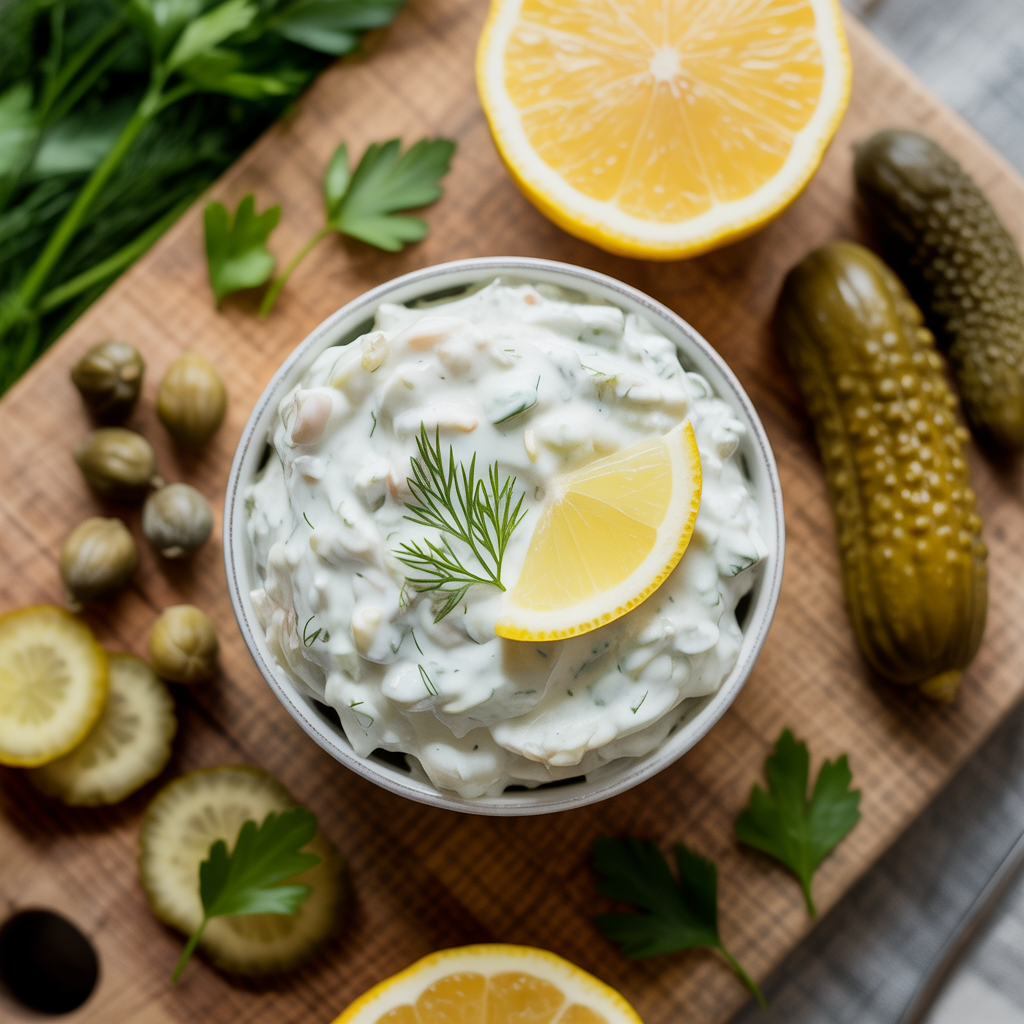
Tartar sauce is one of those classic condiments that can elevate a simple dish of fried fish into something truly memorable. Whether you’re serving it alongside crispy fish and chips, crab cakes, shrimp, or even as a dipping sauce for vegetables, a well-made tartar sauce should be creamy, tangy, and packed with flavor. In this guide, we’ll walk you through everything you need to know to make the perfect homemade tartar sauce from scratch.
What Is Tartar Sauce?
Tartar sauce is a cold condiment traditionally made with a mayonnaise base mixed with chopped pickles or relish, capers, lemon juice, and fresh herbs. It originated in French cuisine and has since become a staple in American and British cooking, most commonly paired with seafood dishes.
Unlike store-bought versions that can taste flat or overly sweet, homemade tartar sauce offers a bright, bold flavor profile that you can customize to your exact taste preferences.
Why Make Tartar Sauce at Home?
- Better flavor: Fresh ingredients make a noticeable difference in taste compared to jarred versions.
- Customizable: You control the tanginess, sweetness, and texture.
- Quick and easy: It takes less than 10 minutes to prepare.
- No preservatives: You know exactly what goes into it.
- Cost-effective: Made with pantry staples you likely already have.
Ingredients You’ll Need
To make a classic creamy and tangy tartar sauce, gather the following ingredients:
Base Ingredients
- 1 cup mayonnaise – Use a full-fat, high-quality mayo for the creamiest result. Hellmann’s or Duke’s are popular choices.
- 3 tablespoons dill pickles or pickle relish – Finely chopped dill pickles provide that signature tanginess. Avoid sweet relish unless you prefer a sweeter sauce.
- 1 tablespoon capers – Drained and finely chopped. Capers add a briny, sharp depth of flavor.
- 2 tablespoons fresh lemon juice – Freshly squeezed is highly recommended for the brightest citrus flavor.
- 1 teaspoon lemon zest – Amplifies the lemon flavor without adding more liquid.
Flavor Enhancers
- 1 teaspoon Dijon mustard – Adds a subtle sharpness and helps emulsify the sauce.
- 1 tablespoon fresh dill – Chopped. You can substitute with 1 teaspoon of dried dill.
- 1 tablespoon fresh parsley – Finely chopped for a fresh herbal note.
- 1 small shallot or ¼ small onion – Very finely minced. Shallots offer a milder, more elegant flavor.
- Salt and black pepper – To taste.
- A dash of hot sauce (optional) – For a subtle kick.
- ½ teaspoon Worcestershire sauce (optional) – Adds umami depth.
Step-by-Step Instructions
Step 1: Prepare Your Ingredients
Before mixing, make sure all your add-ins are prepped properly:
- Finely chop the dill pickles. You want small, uniform pieces so the sauce has a pleasant texture without large chunks. After chopping, place them in a paper towel and gently squeeze out excess moisture. This step is crucial — too much liquid will thin out your sauce.
- Drain and chop the capers finely.
- Mince the shallot as finely as possible to prevent overwhelming any single bite.
- Squeeze your lemon juice and zest the lemon before juicing it.
- Chop the fresh herbs.
Step 2: Combine the Ingredients
In a medium-sized mixing bowl, add the mayonnaise as your base. Add the drained and chopped dill pickles, capers, lemon juice, lemon zest, Dijon mustard, minced shallot, fresh dill, and parsley. Stir everything together thoroughly until well combined.
Step 3: Season and Taste
Season your tartar sauce with salt and freshly ground black pepper. Taste the sauce and adjust as needed:
- If it needs more tang, add a bit more lemon juice or a splash of pickle brine.
- If it needs more creaminess, add a little more mayonnaise.
- If it needs more brightness, add extra fresh dill or parsley.
- If you want more bite, increase the Dijon mustard or add a dash of hot sauce.
Step 4: Refrigerate Before Serving
This is arguably the most important step. Cover the bowl with plastic wrap or transfer the sauce to an airtight container and refrigerate it for at least 30 minutes before serving. Chilling allows the flavors to meld together, resulting in a more cohesive, flavorful sauce. For best results, let it rest for 1–2 hours or even overnight.
Tips for the Creamiest Tartar Sauce
- Use full-fat mayonnaise: Low-fat mayo tends to be thinner and less flavorful. Full-fat is the foundation of a truly creamy sauce.
- Squeeze out pickle moisture: Wet pickles are the number one cause of runny tartar sauce. Always drain and press them before adding.
- Don’t skip the resting time: A freshly made tartar sauce tastes sharp and disjointed. Resting allows the acidic ingredients to soften the sharp edges of the onion and integrate fully with the mayo.
- Chop everything finely: Uniform, small pieces ensure every bite has a balanced distribution of flavor and a pleasant creamy texture.
- Use Greek yogurt for a lighter version: Substitute half the mayo with full-fat Greek yogurt for a tangier, lighter sauce without sacrificing creaminess.
Tips for the Tangiest Tartar Sauce
- Use dill pickles, not sweet pickles: Dill pickles deliver the classic tangy punch. Sweet pickles will make your sauce taste more like a mild spread.
- Add pickle brine: A teaspoon of brine from the pickle jar amplifies the tang significantly.
- Fresh lemon juice over bottled: Bottled lemon juice lacks the bright acidity of freshly squeezed. Always go fresh when possible.
- Capers are non-negotiable: Their sharp, salty, briny flavor adds a tangy complexity that plain pickles alone can’t replicate.
- Add a tiny splash of white wine vinegar: If you love extra acidity, a small amount of white wine vinegar deepens the tangy notes beautifully.
Common Variations of Tartar Sauce
Once you’ve mastered the classic version, try experimenting with these popular variations:
Spicy Tartar Sauce
Add 1–2 teaspoons of sriracha, Tabasco, or finely chopped jalapeño for a sauce with heat. This version pairs particularly well with spicy fried catfish or Cajun-seasoned shrimp.
Lemon Herb Tartar Sauce
Double the lemon zest and add extra fresh herbs like tarragon and chives. This lighter, more aromatic version is perfect alongside delicate white fish like flounder or sole.
Remoulade-Style Tartar Sauce
Add Creole mustard, smoked paprika, a pinch of cayenne, and a dash of hot sauce. This New Orleans-inspired version is excellent with crab cakes and po’boys.
Avocado Tartar Sauce
Blend half a ripe avocado into the base along with lime juice instead of lemon. This creates a rich, creamy, vibrant green sauce with a unique flavor twist.
Greek Yogurt Tartar Sauce
Replace half the mayonnaise with full-fat Greek yogurt for extra tanginess and a lighter consistency that’s still wonderfully creamy.
How to Store Homemade Tartar Sauce
Store your tartar sauce in an airtight container in the refrigerator for up to 1 week. Because it contains mayonnaise, it should never be left at room temperature for more than 2 hours. Do not freeze tartar sauce — mayonnaise separates when frozen and thawed, resulting in a broken, watery texture.
Give the sauce a quick stir before serving if it has been stored for more than a day, as slight separation is normal.
What to Serve With Tartar Sauce
Tartar sauce is incredibly versatile. Here are some of the best foods to pair it with:
- Fish and chips – The quintessential British pairing.
- Fried shrimp – Crispy coconut or breaded shrimp dipped in tangy tartar sauce is irresistible.
- Crab cakes – A classic American favorite.
- Fish sandwiches and fish tacos – Use it as a spread instead of mayonnaise.
- Baked or pan-fried salmon – The tanginess cuts through the richness of the fish.
- Fried oysters or clams – A natural pairing for these briny shellfish.
- Veggie dipping sauce – Pairs surprisingly well with crudités and fried zucchini.
- Onion rings – A tangy alternative to ketchup.
Frequently Asked Questions
Can I make tartar sauce without capers?
Yes. If you don’t have capers, you can increase the amount of dill pickles slightly and add a small amount of green olives for a similar briny quality. However, capers do provide a unique flavor that’s worth seeking out.
What’s the difference between tartar sauce and remoulade?
Both are mayonnaise-based condiments, but remoulade typically includes mustard, hot sauce, Creole spices, and sometimes anchovies or horseradish. Tartar sauce is generally simpler, focusing on pickles, capers, and lemon.
Can I use sweet pickle relish instead of dill pickles?
You can, but be aware that sweet relish will make your tartar sauce noticeably sweeter and less tangy. If using sweet relish, reduce it to 1–2 tablespoons and add extra lemon juice to compensate.
Why is my tartar sauce too runny?
The most common cause is excess moisture from the pickles. Always drain and squeeze your chopped pickles before adding them. Another cause could be over-squeezing the lemon juice — measure it carefully rather than free-pouring.
How far in advance can I make tartar sauce?
You can make tartar sauce up to 3 days in advance. In fact, making it a day ahead allows the flavors to develop more fully. Just store it covered in the refrigerator.
Nutrition Information (Approximate Per 2 Tablespoons)
- Calories: 100–120 kcal
- Fat: 10–12g
- Sodium: 200–280mg
- Carbohydrates: 1–2g
- Protein: 0g
Note: Values vary depending on the brand of mayonnaise and specific ingredients used.
Final Thoughts
Making tartar sauce at home is one of the simplest and most rewarding things you can do to elevate your seafood dishes. With just a handful of ingredients and less than 10 minutes of active preparation, you can create a sauce that is luxuriously creamy, perfectly tangy, and bursting with fresh flavor — far superior to anything you’ll find in a jar at the grocery store.
Remember the key principles: use full-fat mayo, squeeze your pickles dry, add fresh lemon juice and zest, include capers for brininess, and always let the sauce chill before serving. Follow these guidelines and you’ll have a tartar sauce that friends and family will ask about every single time.
Now that you know how to make the perfect homemade tartar sauce, it’s time to get cooking. Try it this weekend alongside your favorite fried fish or seafood dish — you won’t go back to store-bought again!