
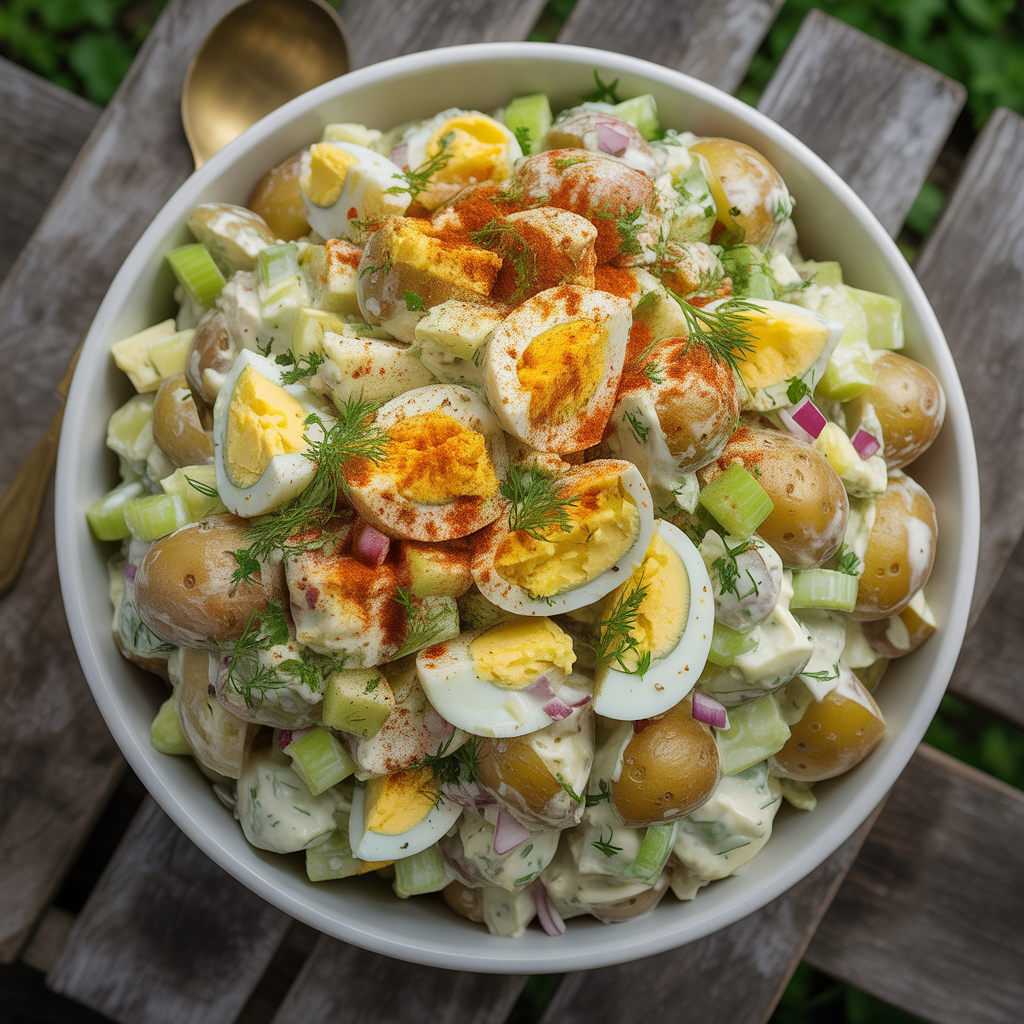
Potato salad is one of those timeless dishes that shows up at barbecues, picnics, potlucks, and family gatherings. But there’s a big difference between a bland, watery potato salad and one that’s creamy, flavorful, and absolutely irresistible. If you’ve ever wondered why some potato salads taste so much better than others, you’re in the right place. This guide covers everything you need to know — from choosing the right potatoes to nailing the perfect creamy dressing and mix-ins that will have everyone asking for the recipe.
Why Potato Salad Fails (And How to Avoid It)
Before diving into the recipe, it helps to understand the most common mistakes people make when preparing potato salad:
- Using the wrong type of potato — Some potatoes turn mushy, while others stay too firm.
- Not seasoning the potatoes while hot — Potatoes absorb flavor best when they’re warm.
- Overdressing or underdressing — Too much dressing makes it soupy; too little makes it dry.
- Skipping the vinegar or acid — Acid brightens the entire dish and keeps it from tasting flat.
- Not chilling long enough — Potato salad needs time to let the flavors meld together.
Knowing these pitfalls puts you ahead of the game before you even start cooking.
Choosing the Best Potatoes for Creamy Potato Salad
The type of potato you use is the single most important decision you’ll make. Here’s a quick breakdown:
Waxy Potatoes (Best Choice for Creamy Salad)
Waxy potatoes like Yukon Gold, red potatoes, and fingerlings hold their shape after cooking and have a naturally buttery, creamy texture. They don’t fall apart when mixed with dressing, which gives your salad a clean, appealing look and satisfying bite.
- Yukon Gold: The gold standard. Slightly buttery flavor, creamy interior, and holds its shape beautifully.
- Red Potatoes: Firm, slightly sweet, and you can leave the skin on for extra color and nutrition.
- Fingerling Potatoes: Great for a rustic look when halved or sliced.
Starchy Potatoes (Use with Caution)
Russet potatoes are high in starch and tend to fall apart during mixing, creating a mushy texture. However, if you prefer a chunkier, more broken-down salad (similar to a mashed-potato style), they can work — just be very gentle when tossing.
How to Cook Potatoes for Potato Salad
The cooking method matters more than most people realize. Follow these steps for perfectly cooked potatoes every time:
Step 1: Cut Uniformly
Cut your potatoes into evenly sized chunks — about 1-inch pieces — so they cook at the same rate. If you’re using small red or fingerling potatoes, you can halve them.
Step 2: Start in Cold Water
Place the cut potatoes in a pot and cover with cold, salted water. Starting in cold water ensures they cook evenly from the outside in. If you drop them into boiling water, the outside cooks too fast while the center stays raw.
Step 3: Salt the Water Generously
This is a crucial step. Use about 1 tablespoon of salt per quart of water. Potatoes are notoriously bland on their own, and salting the cooking water seasons them all the way through — something you can’t achieve by just adding salt to the dressing later.
Step 4: Cook Until Just Tender
Bring the water to a boil, then reduce to a simmer. Cook for 12–15 minutes, or until a fork slides in easily but the potatoes still hold together. Don’t overcook — overcooked potatoes will break apart and make your salad mushy.
Step 5: Drain and Season While Hot
Drain the potatoes and immediately transfer them to a large bowl. While they’re still hot, drizzle with 1–2 tablespoons of apple cider vinegar (or white wine vinegar) and a little olive oil. The warm potatoes will absorb this seasoning deeply, adding a subtle tang that makes the finished salad much more complex and flavorful.
Let them cool for about 15–20 minutes before adding the creamy dressing — if they’re too hot, they’ll break down the mayonnaise and make the dressing greasy.
The Secret to the Creamiest Potato Salad Dressing
The dressing is where the magic happens. A truly creamy potato salad dressing balances richness, tang, sweetness, and seasoning. Here’s a tried-and-true formula:
Classic Creamy Dressing Ingredients
- ¾ cup mayonnaise — Use full-fat mayo for the richest result. Duke’s and Hellmann’s are popular choices.
- ¼ cup sour cream or Greek yogurt — This adds tanginess and lightens the dressing slightly. Greek yogurt is a great swap for a healthier version.
- 2 tablespoons yellow mustard or Dijon mustard — Mustard adds depth and a little sharpness.
- 1–2 tablespoons apple cider vinegar — Acid is essential for balancing the richness.
- 1 teaspoon sugar or honey — Just a touch of sweetness rounds out the flavors.
- Salt and black pepper to taste
- Optional: a dash of celery salt or garlic powder for extra savoriness.
How to Mix the Dressing
Whisk all the dressing ingredients together in a small bowl until completely smooth. Taste and adjust — add more vinegar if you want it tangier, more mayo if you want it richer, or more mustard for boldness. Getting the dressing right before it touches the potatoes is key.
Pro Tip: Make Extra Dressing
Potatoes continue to absorb dressing as the salad chills. Make a little extra and stir it in right before serving if the salad looks dry. This ensures every bite stays creamy.
The Best Mix-Ins for Crowd-Pleasing Potato Salad
Mix-ins add texture, flavor, and color to your potato salad. Here are the classics and some creative additions:
Classic Mix-Ins
- Hard-boiled eggs: Add creaminess and protein. Slice or chop them and fold in gently.
- Celery: Provides a satisfying crunch that contrasts the soft potatoes.
- Red onion or white onion: Adds sharpness. If you find raw onion too pungent, soak it in cold water for 10 minutes to mellow the flavor.
- Sweet pickle relish or diced dill pickles: Brings brightness and tanginess. Use dill pickles for a savory edge or sweet relish for a classic deli-style flavor.
- Fresh parsley or dill: Adds freshness and color.
Elevated Add-Ins
- Crispy bacon: Who doesn’t love bacon? Add it just before serving so it stays crispy.
- Chives or green onions: A milder alternative to red onion with a fresh, mild flavor.
- Roasted garlic: Mellow, sweet, and deeply savory.
- Jalapeño: For a spicy kick that makes the salad stand out.
- Shredded cheddar cheese: Especially good in loaded baked potato-style versions.
- Capers: Briny and punchy — great if you love bold flavors.
Step-by-Step Creamy Potato Salad Recipe
Now let’s put it all together with a complete, foolproof recipe.
Ingredients
For the Salad:
- 3 pounds Yukon Gold or red potatoes, cut into 1-inch chunks
- 1 tablespoon salt (for cooking water)
- 2 tablespoons apple cider vinegar (for seasoning hot potatoes)
- 4 hard-boiled eggs, chopped
- 3 stalks celery, diced
- ½ red onion, finely diced
- ¼ cup dill pickles or sweet pickle relish
- 2 tablespoons fresh parsley or dill, chopped
For the Dressing:
- ¾ cup mayonnaise (full-fat)
- ¼ cup sour cream
- 2 tablespoons Dijon or yellow mustard
- 1½ tablespoons apple cider vinegar
- 1 teaspoon sugar
- Salt and pepper to taste
Instructions
- Cook the potatoes: Place potato chunks in a large pot and cover with cold, salted water. Bring to a boil, then reduce to a simmer. Cook for 12–15 minutes until fork-tender. Drain well.
- Season hot potatoes: Transfer drained potatoes to a large mixing bowl. Drizzle with 2 tablespoons of apple cider vinegar. Toss gently and let cool for 15–20 minutes.
- Make the dressing: Whisk together all dressing ingredients in a bowl until smooth. Taste and adjust seasoning.
- Combine: Add the cooled potatoes, hard-boiled eggs, celery, onion, and pickles to the bowl. Pour the dressing over everything and gently fold together until evenly coated. Be careful not to over-mix or you’ll break the potatoes.
- Chill: Cover and refrigerate for at least 1–2 hours, preferably overnight. This allows the flavors to develop fully.
- Serve: Before serving, taste and adjust seasoning. Add extra dressing if needed. Garnish with fresh parsley, a sprinkle of paprika, or chives.
Tips for Making Potato Salad Ahead of Time
Potato salad is actually better when made in advance — the flavors improve as it sits. Here’s how to plan ahead:
- Make it 1 day ahead: This gives the potatoes time to absorb all the flavors from the dressing.
- Store separately: If adding crispy bacon or other crunchy toppings, keep them separate and add just before serving.
- Reserve some dressing: Keep a few tablespoons of dressing on the side to freshen up the salad when serving.
- Refrigerate covered: Store in an airtight container for up to 3–5 days in the refrigerator.
How to Keep Potato Salad Cold and Safe at a Party
Food safety is especially important with mayo-based salads at outdoor events. Follow these tips:
- Serve potato salad in a bowl nested over a larger bowl of ice to keep it cold.
- Don’t leave it out for more than 2 hours at room temperature (or 1 hour if it’s above 90°F/32°C).
- Use a serving spoon to prevent cross-contamination.
- Bring the salad out of the fridge right before serving.
Popular Potato Salad Variations
Once you’ve mastered the classic version, try one of these crowd-favorite variations:
Southern-Style Potato Salad
Uses more mustard (often yellow mustard), sweet pickle relish, and hard-boiled eggs. Often slightly sweeter and tangier than the classic version. A staple at Southern barbecues.
German Potato Salad
Served warm with a vinegar-bacon dressing instead of mayonnaise. Uses crispy bacon, apple cider vinegar, and a touch of sugar for a sweet-tangy-smoky combination. No mayo — but absolutely delicious.
Dill Pickle Potato Salad
Uses pickle juice in the dressing along with plenty of chopped dill pickles. Incredibly tangy and flavorful — perfect for pickle lovers.
Loaded Baked Potato Salad
Inspired by loaded baked potatoes, this version includes sour cream, cheddar cheese, bacon, and chives. Rich, indulgent, and always a hit.
Healthy Lightened-Up Potato Salad
Swap full-fat mayo for Greek yogurt, use fewer eggs, and add extra vegetables like cucumber, bell pepper, or radish for crunch. You get all the flavor with fewer calories.
Frequently Asked Questions About Potato Salad
Can I make potato salad without mayonnaise?
Absolutely. You can use Greek yogurt, avocado, or olive oil as the base for a mayo-free dressing. German-style potato salad is also mayo-free and uses a warm vinegar-bacon dressing.
How long does potato salad last in the fridge?
Stored in an airtight container, potato salad stays fresh for 3 to 5 days in the refrigerator. Always smell and taste it before serving leftovers.
Why is my potato salad watery?
This usually happens when the potatoes weren’t drained thoroughly or were added to the dressing while still too hot. Make sure your potatoes are well-drained and allow them to steam-dry for a few minutes after draining before mixing.
Can I freeze potato salad?
Freezing is not recommended. Mayonnaise separates when frozen and thawed, and the potato texture becomes grainy and unpleasant.
Should potato salad be served cold or at room temperature?
For food safety and best texture, serve it chilled or at room temperature. Take it out of the fridge 15–20 minutes before serving to take the chill off — this enhances the flavor.
Final Thoughts
Making the creamiest, most crowd-pleasing potato salad isn’t difficult — it just requires the right potatoes, a well-balanced dressing, good mix-ins, and enough time to chill. Whether you’re making a classic version for a Fourth of July cookout or experimenting with loaded or pickle-forward variations, these principles will guide you to a potato salad that people will rave about.
The secret really comes down to this: season at every stage, use great mayo, add acid, and let it rest. Do those four things consistently, and your potato salad will go from forgettable to absolutely unforgettable. Happy cooking!