
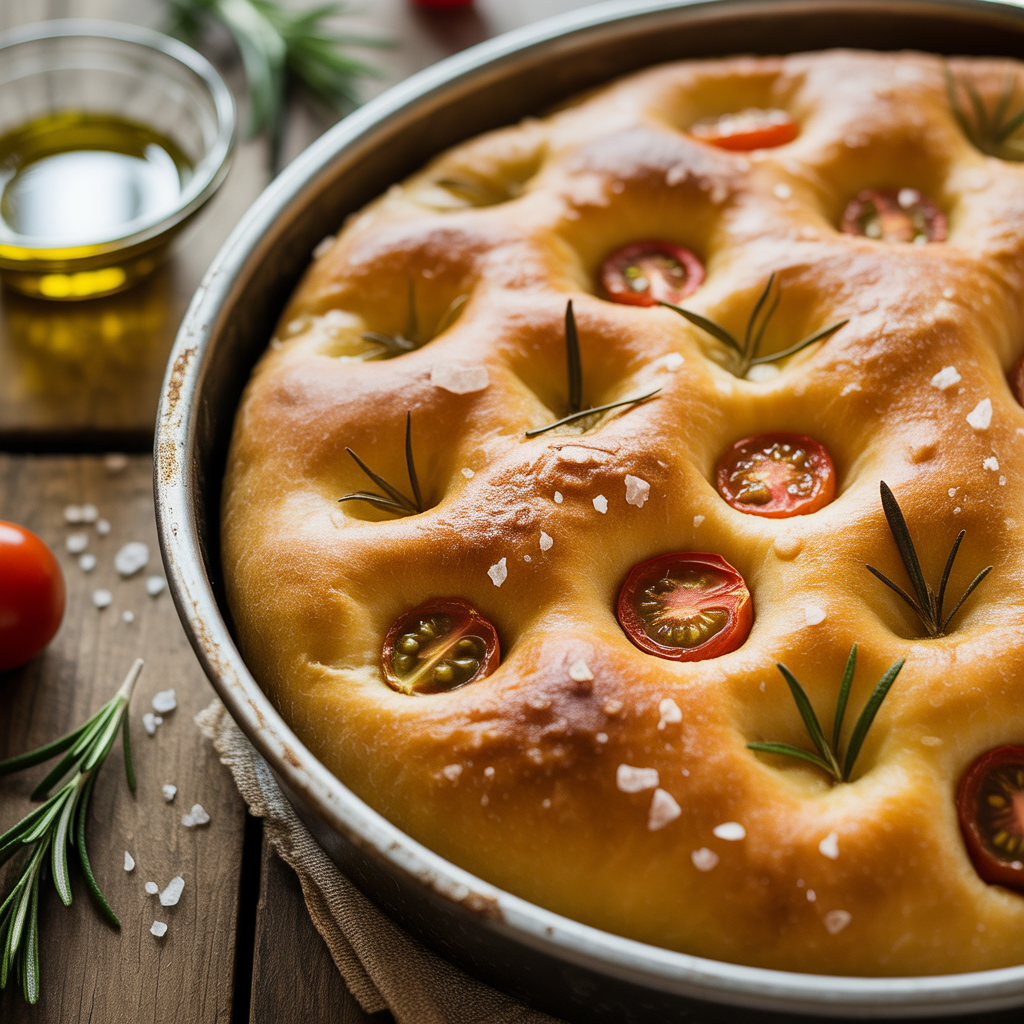
Focaccia bread is one of Italy’s most beloved baked goods — golden on the outside, pillowy soft on the inside, and packed with olive oil flavor. Whether you’re a beginner baker or someone looking to perfect your technique, this guide will walk you through everything you need to know to make focaccia that is both fluffy and crispy every single time.
What Makes Focaccia Fluffy and Crispy?
The magic of great focaccia lies in two things: a well-hydrated dough and generous amounts of olive oil. The high hydration creates an open, airy crumb, while the olive oil coating the pan and the top of the dough creates that signature crispy, golden crust. Understanding this balance is the first step to baking perfect focaccia.
Ingredients You Will Need
- 3 ½ cups (420g) all-purpose flour or bread flour
- 2 ¼ teaspoons (1 packet) active dry yeast or instant yeast
- 1 ½ teaspoons salt
- 1 teaspoon sugar
- 1 ½ cups (360ml) warm water (around 110°F / 43°C)
- 4–6 tablespoons extra virgin olive oil (plus more for drizzling)
- Flaky sea salt for topping
- Optional toppings: fresh rosemary, olives, cherry tomatoes, garlic, onions
Equipment You Will Need
- Large mixing bowl
- 9×13 inch baking pan or a rimmed sheet pan
- Stand mixer with a dough hook (optional)
- Plastic wrap or a damp kitchen towel
- Oven thermometer (recommended)
Step-by-Step Instructions
Step 1: Activate Your Yeast
In a large bowl, combine the warm water, sugar, and yeast. Stir gently and let it sit for 5 to 10 minutes until the mixture becomes frothy and bubbly. This step confirms that your yeast is active and ready to work. If the mixture doesn’t foam, your yeast may be expired — start over with fresh yeast.
Tip: If you are using instant yeast, you can skip this step and mix all ingredients directly together.
Step 2: Mix the Dough
Add the flour, salt, and 2 tablespoons of olive oil to the yeast mixture. Stir with a wooden spoon or use a stand mixer with the dough hook on medium speed. Mix until a shaggy, sticky dough forms. Focaccia dough is naturally very sticky and wet — this is intentional and what gives it a fluffy texture. Do not be tempted to add too much extra flour.
Step 3: First Rise (Bulk Fermentation)
Drizzle 1 tablespoon of olive oil over the dough and use your hands or a spatula to coat the dough lightly. Cover the bowl with plastic wrap or a damp towel and let the dough rise in a warm place for 1 to 2 hours, or until it has roughly doubled in size.
Pro Tip: For even better flavor and fluffiness, do a cold fermentation. After mixing, cover the dough and refrigerate it for 12 to 24 hours. The slow rise develops deeper flavor and an even more airy crumb. Take it out of the fridge 1 hour before baking to come to room temperature.
Step 4: Prepare the Baking Pan
This is one of the most critical steps for achieving a crispy bottom. Pour 3 to 4 tablespoons of olive oil generously into your baking pan and spread it evenly to coat the entire bottom and sides. Do not skimp on the oil — it is what creates the crispy, almost fried bottom crust that focaccia is famous for.
Step 5: Transfer and Stretch the Dough
Gently transfer the risen dough into the oiled pan. Using your fingertips, press and stretch the dough toward the edges of the pan. If the dough keeps springing back, let it rest for 5 to 10 minutes and then try again. Forcing it will tear the gluten structure. Allow the dough to relax and eventually it will stretch to fill the pan.
Step 6: Second Rise
Cover the pan loosely and let the dough rise again for 45 minutes to 1 hour at room temperature. The dough should look puffy and bubbly. This second rise is important — skipping it will result in a denser texture.
Step 7: Dimple the Dough
Once the dough has puffed up, it’s time for the most satisfying step. Drizzle an additional 1 to 2 tablespoons of olive oil over the top of the dough. Then, using all your fingers, press straight down into the dough to create deep dimples all over the surface. Push your fingers all the way down to the bottom of the pan without tearing through.
These dimples are not just decorative — they trap olive oil and toppings, create texture, and help the focaccia bake evenly. The more dimples, the better.
Step 8: Add Toppings
Now is the time to customize your focaccia. Sprinkle the surface generously with flaky sea salt. Then add any optional toppings you like:
- Fresh rosemary sprigs — the classic choice
- Halved cherry tomatoes — press them gently into the dimples
- Sliced olives — for a briny, savory bite
- Thinly sliced garlic or onions — for deeper flavor
- Grated Parmesan cheese — for a rich, savory crust
Step 9: Bake the Focaccia
Preheat your oven to 425°F (220°C). Place the focaccia in the oven and bake for 20 to 25 minutes, or until the top is deeply golden brown and the edges are visibly crispy. The bottom should also be golden and crisp — you can lift a corner with a spatula to check.
Important: Every oven is different. Use an oven thermometer to verify the temperature is accurate. A too-cool oven will result in pale, soft focaccia that lacks that desired crust.
Step 10: Rest and Serve
Remove the focaccia from the oven and let it rest in the pan for 5 minutes. Then transfer it to a wire rack to cool slightly. Cooling on a rack prevents the bottom from becoming soggy. Serve warm or at room temperature, cut into squares or rectangles.
Key Tips for Fluffy Focaccia
- Use high-hydration dough: Don’t add extra flour even if the dough seems too sticky. Wet dough = fluffy focaccia.
- Don’t rush the rise: Give the dough enough time to develop. A longer, slower rise always produces better results.
- Use bread flour for more chew: Bread flour has higher protein content than all-purpose flour, resulting in a chewier, more structured crumb.
- Fold the dough: During the first rise, perform 2–3 sets of stretch-and-fold every 30 minutes. This strengthens the gluten and traps air bubbles for a fluffier texture.
- Room temperature matters: Yeast is temperature-sensitive. A warm environment (75–80°F / 24–27°C) is ideal for rising.
Key Tips for Crispy Focaccia
- Use a metal baking pan: Metal conducts heat better than glass or ceramic, producing a crispier bottom crust.
- Be generous with olive oil: The olive oil in the pan essentially fries the bottom of the focaccia. More oil = crispier crust.
- Bake at high heat: A hot oven (425°F / 220°C) ensures rapid browning and a crispy exterior before the inside dries out.
- Use a dark-colored pan: Dark pans absorb more heat and help brown the bottom more effectively.
- Bake on the lower oven rack: This puts the bottom of the pan closer to the heat source, improving bottom crispiness.
Common Mistakes to Avoid
1. Adding Too Much Flour
This is the most common mistake. Focaccia dough should be sticky and wet. Adding too much flour creates a dense, bready loaf rather than a light, airy focaccia. Trust the process and work with the sticky dough using oiled hands instead of floured ones.
2. Not Using Enough Olive Oil
Focaccia is not a low-fat bread. The olive oil is essential for flavor, texture, and the crispy crust. Using too little will result in a dry, pale bread without that signature crunch.
3. Skipping the Second Rise
The second rise after placing the dough in the pan is crucial. Baking the dough too soon after transferring it will result in a flat, dense focaccia without the light, open crumb you’re looking for.
4. Overbaking or Underbaking
The top should be a deep, rich golden brown — not pale, not burnt. Check for color and also check the bottom with a spatula. If the top browns too quickly, tent it loosely with aluminum foil.
5. Using Cold Ingredients
Cold water can slow down yeast activity dramatically. Always use warm water (around 110°F / 43°C). Similarly, if you’ve done a cold ferment, allow the dough to come to room temperature before baking.
Focaccia Variations to Try
Once you’ve mastered the basic recipe, experiment with these delicious variations:
- Focaccia di Recco: A thin, crispy style filled with fresh cheese — a Ligurian specialty.
- Focaccia Barese: Made with semolina flour and topped with tomatoes and olives — a Bari classic.
- Focaccia with caramelized onions and balsamic: A sweet and savory combination that is absolutely irresistible.
- Cheese focaccia: Mix shredded cheese directly into the dough or layer it on top for a decadent result.
- Herb-infused focaccia: Add dried herbs like thyme, oregano, or basil directly into the dough for extra fragrance.
How to Store Focaccia
Focaccia is best eaten the day it is made when it is at peak crispiness and freshness. However, if you have leftovers:
- Room temperature: Store in an airtight container or wrapped in foil for up to 2 days.
- Refrigerator: Store for up to 5 days, though the texture may become slightly denser.
- Freezer: Wrap individual slices in plastic wrap and freeze for up to 1 month. Thaw at room temperature and reheat in a 375°F oven for 5–10 minutes to restore crispiness.
To reheat: Place in a preheated oven at 375°F (190°C) for 5–8 minutes. Avoid microwaving as it will make the crust soft and chewy instead of crispy.
Serving Suggestions
Focaccia is incredibly versatile and works in many ways:
- Serve as a side bread alongside soups, salads, or pasta dishes.
- Use as a base for sandwiches — slice horizontally and fill with deli meats, cheeses, and vegetables.
- Serve as an appetizer with dipping oil, hummus, or marinara sauce.
- Use as a pizza base — top with sauce, cheese, and your favorite toppings and bake until bubbly.
- Pair with a cheese and charcuterie board for an elegant entertaining spread.
Frequently Asked Questions
Can I make focaccia without a stand mixer?
Absolutely. Focaccia dough requires very little kneading compared to traditional bread dough. You can mix it entirely by hand with a wooden spoon or spatula. The stretch-and-fold method during the rise replaces most of the kneading work.
Why is my focaccia dense and flat?
This usually happens due to inactive yeast, insufficient rising time, or adding too much flour. Make sure your yeast is fresh and active, give the dough enough time to rise fully, and resist the urge to add extra flour to the sticky dough.
Can I use whole wheat flour?
Yes, but whole wheat flour absorbs more water and produces a denser crumb. For the best results, substitute no more than 50% of the all-purpose flour with whole wheat flour and slightly increase the amount of water.
Can I make focaccia without yeast?
There are recipes that use baking powder as a leavener, but the result will be more like a flatbread than traditional focaccia. The yeast is key to developing the airy, open crumb and the complex flavor that makes focaccia special.
Why should I use extra virgin olive oil?
Extra virgin olive oil has a rich, fruity flavor that is central to focaccia’s taste. Regular olive oil or vegetable oil will work in a pinch, but the flavor won’t be the same. For a bread where oil plays such a starring role, quality matters.
Final Thoughts
Making focaccia that is both fluffy on the inside and crispy on the outside comes down to a few non-negotiable principles: a wet, high-hydration dough, plenty of good olive oil, adequate rising time, and a hot oven. Once you understand these fundamentals, focaccia becomes one of the easiest and most rewarding breads you can bake at home.
Don’t be afraid to experiment with toppings, flavors, and timing. Every bake will teach you something new, and even imperfect focaccia is absolutely delicious. So preheat your oven, pull out your olive oil, and get ready to bake the best focaccia of your life.