
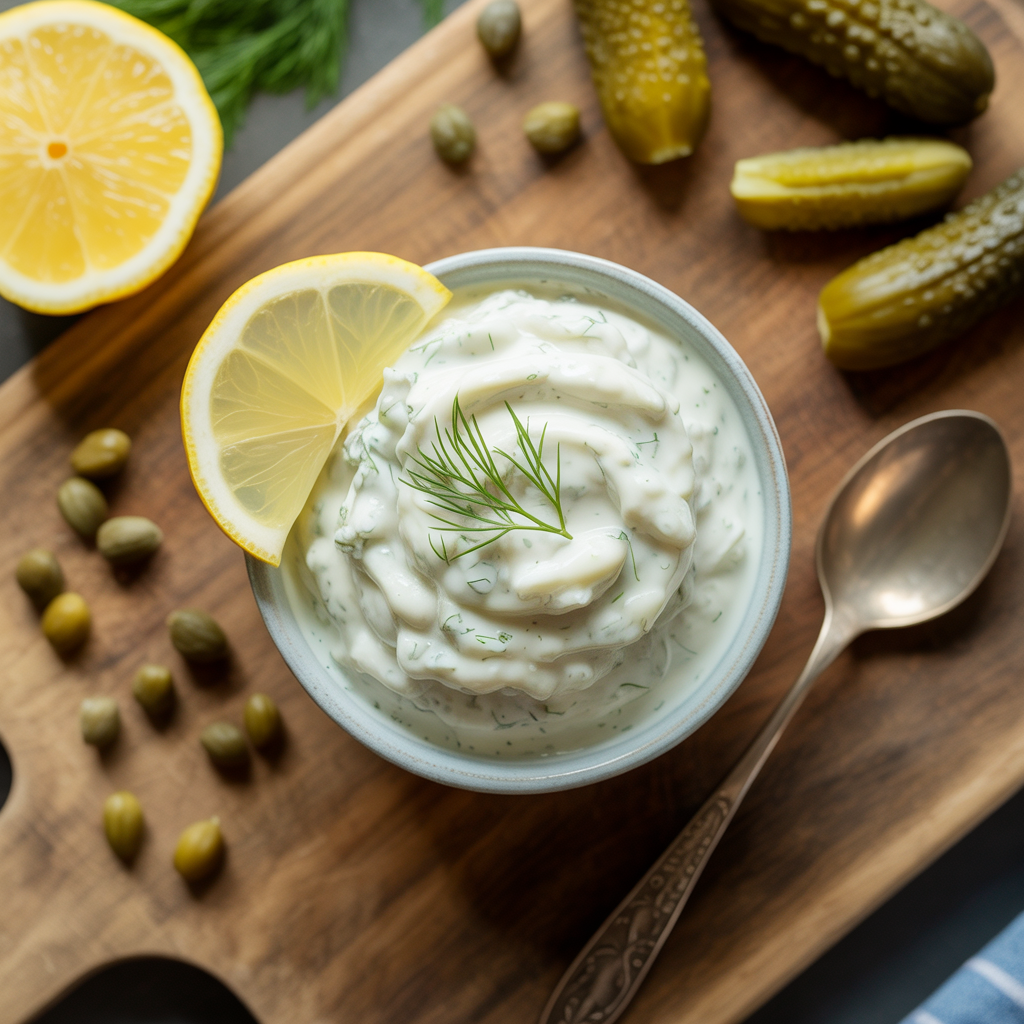
If you’ve ever dipped a crispy fish fillet or a golden onion ring into a store-bought tartar sauce and thought, “This could be so much better,” you’re absolutely right. Homemade tartar sauce is one of those simple condiments that takes just minutes to make but elevates any seafood dish to restaurant-quality levels. In this guide, you’ll find everything you need to make the best homemade tartar sauce — creamy, tangy, and perfectly balanced.
What Is Tartar Sauce?
Tartar sauce is a cold, creamy condiment traditionally served alongside seafood dishes like fried fish, fish and chips, crab cakes, shrimp, and calamari. It has a mayonnaise base combined with tangy ingredients such as pickles or relish, lemon juice, capers, and herbs. The result is a rich, savory sauce with a pleasant zing that complements the mild flavor of most seafood perfectly.
The name “tartar” is believed to have originated in France, inspired by the Tartar people of Central Asia, though the sauce itself is a classic of Western cuisine — especially in the United Kingdom and the United States.
Why Make Tartar Sauce at Home?
You might be wondering: why bother making tartar sauce from scratch when you can just grab a jar from the grocery store? Here are a few compelling reasons:
- Better flavor: Homemade tartar sauce is fresher, creamier, and more vibrant than anything from a bottle.
- Customizable: You control the ingredients — more tang, less sweetness, extra herbs — it’s up to you.
- No preservatives: Store-bought versions are loaded with artificial additives. Homemade is clean and simple.
- Quick and easy: This recipe takes under 10 minutes to prepare with ingredients you likely already have.
- Cost-effective: A batch of homemade tartar sauce costs a fraction of the price of a premium store-bought jar.
Ingredients You’ll Need
This recipe uses simple, pantry-friendly ingredients. Here’s what you’ll need to make approximately 1 cup (about 8 servings) of tartar sauce:
- 1 cup mayonnaise — Use full-fat mayo for the creamiest result. Hellmann’s or Duke’s are popular choices.
- 2 tablespoons dill pickle relish — Or finely chopped dill pickles. This adds the signature tangy crunch.
- 1 tablespoon capers, finely chopped — Optional but highly recommended for a briny depth of flavor.
- 1 tablespoon fresh lemon juice — Freshly squeezed is best for brightness.
- 1 teaspoon lemon zest — Amplifies the citrus flavor without adding extra liquid.
- 1 teaspoon Dijon mustard — Adds a subtle sharpness and helps emulsify the sauce.
- 1 tablespoon fresh dill, chopped — Or ½ teaspoon dried dill. Dill is the classic herb for tartar sauce.
- 1 tablespoon finely minced shallot or onion — For a mild savory bite.
- Salt and black pepper to taste
- Pinch of cayenne pepper — Optional, for a touch of heat.
Step-by-Step Instructions
Step 1: Gather and Prep Your Ingredients
Before you start mixing, make sure all your ingredients are ready. Finely chop the pickles (if not using relish), mince the capers, chop the shallot, and zest and juice the lemon. Having everything prepped makes the process fast and smooth.
Step 2: Combine the Base
In a medium mixing bowl, add the mayonnaise and Dijon mustard. Stir them together until well combined. This forms the creamy, emulsified base of your sauce.
Step 3: Add the Tangy Elements
Add the dill pickle relish, chopped capers, lemon juice, and lemon zest to the bowl. Stir everything together until evenly incorporated.
Step 4: Add the Aromatics and Herbs
Fold in the minced shallot and fresh dill. These ingredients add complexity and freshness to the sauce.
Step 5: Season to Taste
Add salt, black pepper, and cayenne pepper (if using) to taste. Give the sauce a good stir and taste it. Adjust seasoning as needed — a little more lemon for brightness, more pickles for tang, or more salt for depth.
Step 6: Chill Before Serving
Cover the bowl with plastic wrap or transfer the sauce to an airtight jar. Refrigerate for at least 30 minutes before serving. This resting time allows the flavors to meld and develop beautifully. The sauce will taste even better after an hour or two.
Tips for the Best Homemade Tartar Sauce
- Use high-quality mayonnaise: Since mayo is the primary ingredient, the quality makes a significant difference. Full-fat mayo produces a richer, creamier sauce.
- Don’t skip the resting time: Letting the sauce chill in the refrigerator is key. The flavors intensify and harmonize over time.
- Fresh lemon is a must: Bottled lemon juice lacks the brightness and aroma of freshly squeezed lemon. Always use fresh.
- Chop ingredients finely: Larger chunks of pickle or shallot can overpower each bite. A fine chop ensures a balanced flavor in every spoonful.
- Taste as you go: Everyone’s palate is different. Adjust the balance of tangy, savory, and salty to your personal preference.
- Make it ahead: Tartar sauce actually improves with time. Make it the night before for the best results.
Variations and Customizations
One of the best things about homemade tartar sauce is how easily you can adapt it. Here are some popular variations:
Sweet Pickle Tartar Sauce
Swap the dill pickle relish for sweet pickle relish. This version has a milder, slightly sweeter flavor that works well for kids or those who prefer less tang.
Spicy Tartar Sauce
Add 1–2 teaspoons of hot sauce (like Tabasco or Frank’s) or increase the cayenne pepper. You can also stir in a teaspoon of horseradish for a wasabi-like kick.
Herb-Packed Tartar Sauce
Add a tablespoon of finely chopped fresh parsley, chives, or tarragon in addition to the dill. This creates a more herbaceous, bright-flavored sauce.
Greek Yogurt Tartar Sauce (Lighter Version)
Replace half or all of the mayonnaise with full-fat plain Greek yogurt. This significantly reduces calories and fat while maintaining a creamy texture and adding a pleasant tartness.
Avocado Tartar Sauce
Blend in half a ripe avocado for a creamy, green-hued twist that adds healthy fats and a buttery flavor.
Old Bay Tartar Sauce
Add 1 teaspoon of Old Bay seasoning for a Maryland-style tartar sauce that pairs especially well with crab cakes and steamed shrimp.
What to Serve With Tartar Sauce
Homemade tartar sauce is incredibly versatile. Here are the best ways to use it:
- Fried fish: Classic fish and chips, beer-battered cod, or panko-crusted tilapia.
- Fish tacos: Use it as a creamy drizzle instead of sour cream or chipotle mayo.
- Crab cakes: The briny tang of tartar sauce complements the sweetness of crab beautifully.
- Shrimp: Grilled, fried, or coconut shrimp all pair well with this sauce.
- Salmon patties: A fantastic dipping sauce for pan-fried salmon cakes.
- Onion rings and french fries: Move over, ketchup — tartar sauce is a surprisingly addictive dipping sauce for fries.
- Veggie fritters: Zucchini fritters, corn fritters, or cauliflower bites taste amazing with this creamy dip.
- As a sandwich spread: Use it instead of mayo on a fish sandwich, lobster roll, or BLT for an extra flavor punch.
How to Store Homemade Tartar Sauce
Store your homemade tartar sauce in an airtight container or glass jar in the refrigerator. It will keep well for up to 2 weeks. Stir before each use, as the ingredients may separate slightly over time.
Important: Do not freeze tartar sauce. Mayonnaise does not freeze well and will separate upon thawing, ruining the texture of the sauce.
Frequently Asked Questions
Can I make tartar sauce without mayonnaise?
Yes! You can use Greek yogurt, sour cream, or vegan mayo as alternatives. Each will give a slightly different flavor and texture, but all work well as a base.
What’s the difference between tartar sauce and remoulade?
Both are mayonnaise-based condiments, but remoulade (especially the Louisiana version) is spicier and often contains Creole mustard, hot sauce, horseradish, and paprika. Tartar sauce is milder and more pickle-forward.
Can I use pickle juice instead of lemon juice?
Yes, and it’s a great trick! A teaspoon or two of pickle brine adds an extra tangy punch to the sauce. You can use it alongside or instead of lemon juice.
Is tartar sauce gluten-free?
This recipe is naturally gluten-free, as long as you use a gluten-free mayonnaise. Always check the labels on your individual ingredients to be safe.
Why does my tartar sauce taste too sweet?
You may have used sweet pickle relish. Switch to dill pickle relish or finely chopped dill pickles for a less sweet, more traditional flavor. Adding a bit more lemon juice can also balance out excess sweetness.
Can I make tartar sauce vegan?
Absolutely. Simply use vegan mayonnaise (brands like Hellmann’s Vegan or Just Mayo work great) and all other ingredients in this recipe are already plant-based.
Nutritional Information (Per Serving, Approximately 2 Tablespoons)
Please note that nutritional values are approximate and will vary based on the specific brands and ingredients used.
- Calories: ~95 kcal
- Total Fat: 10g
- Saturated Fat: 1.5g
- Cholesterol: 8mg
- Sodium: 190mg
- Carbohydrates: 1g
- Sugars: 0.5g
- Protein: 0.1g
The Complete Recipe at a Glance
Prep Time: 10 minutes | Chill Time: 30 minutes | Total Time: 40 minutes | Servings: 8 (2 tablespoons each)
Ingredients:
- 1 cup mayonnaise
- 2 tablespoons dill pickle relish
- 1 tablespoon capers, finely chopped
- 1 tablespoon fresh lemon juice
- 1 teaspoon lemon zest
- 1 teaspoon Dijon mustard
- 1 tablespoon fresh dill, chopped
- 1 tablespoon shallot, finely minced
- Salt and black pepper to taste
- Pinch of cayenne pepper (optional)
Instructions:
- In a medium bowl, combine mayonnaise and Dijon mustard. Stir until smooth.
- Add dill pickle relish, chopped capers, lemon juice, and lemon zest. Mix well.
- Fold in the minced shallot and fresh dill.
- Season with salt, black pepper, and cayenne pepper to taste.
- Cover and refrigerate for at least 30 minutes before serving.
- Stir before serving and enjoy!
Final Thoughts
Making your own tartar sauce at home is one of those small kitchen wins that makes a big difference at the dinner table. With just a handful of ingredients and about 10 minutes of hands-on time, you’ll have a sauce that’s creamier, tangier, and far more flavorful than anything from a store shelf.
Whether you’re serving it alongside a classic Friday night fish fry, using it to dress up a simple salmon patty, or dipping crispy fries into it on a lazy afternoon, this homemade tartar sauce recipe is sure to become a staple in your kitchen. Try it once, and you’ll never go back to the jarred version again.
Did you make this recipe? Leave a comment below and let us know how it turned out! Feel free to share your own variations and tips — we’d love to hear from you.