
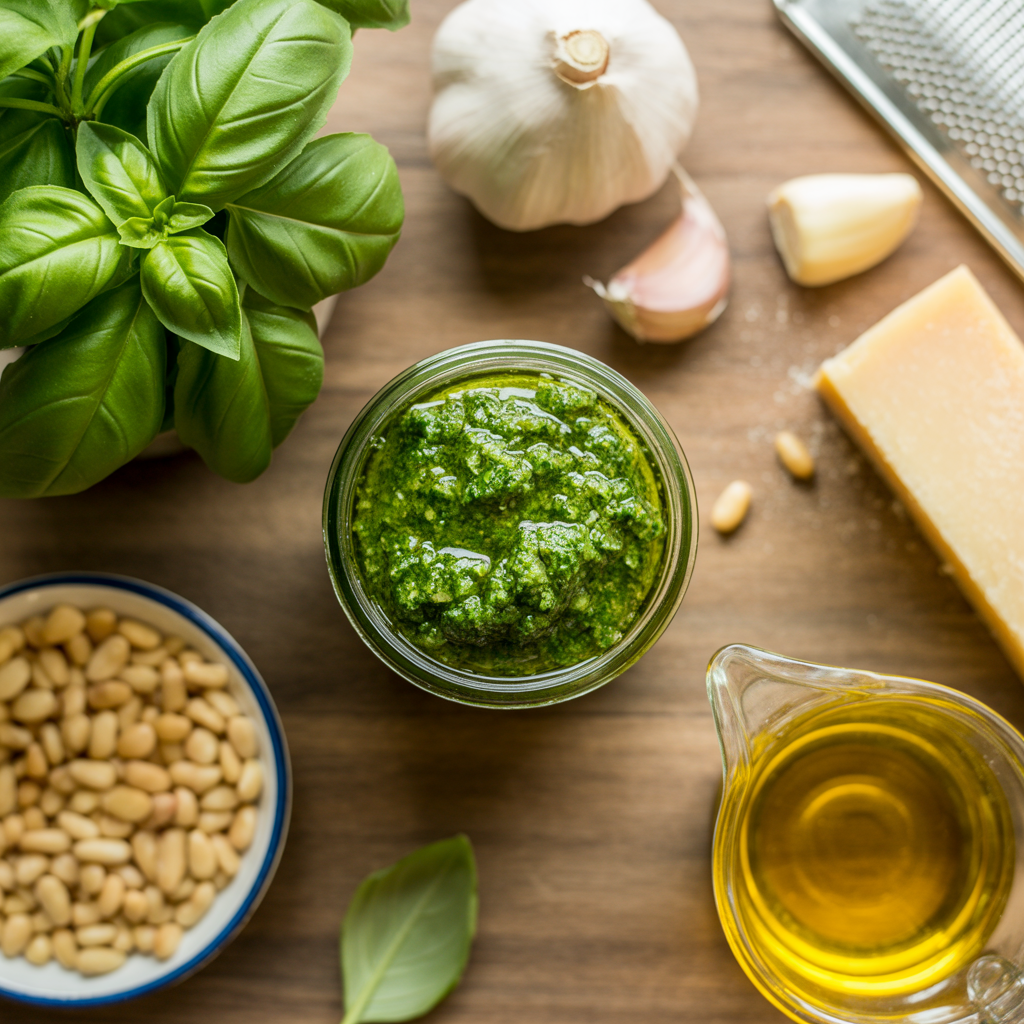
If you’ve ever tasted fresh homemade pesto, you know it’s in a completely different league from the jarred version at the grocery store. Bright, vibrant, and bursting with the flavors of fresh basil, nutty Parmesan, and pungent garlic, this classic Italian sauce is surprisingly simple to make at home — and once you do, you’ll never go back.
In this guide, we’ll walk you through everything you need to know: the ingredients, the step-by-step process, tips for the best results, storage advice, and creative ways to use your freshly made pesto.
What Is Pesto?
Pesto (short for pesto alla Genovese) is a traditional Italian sauce originating from Genoa, in the Liguria region of northern Italy. The name comes from the Italian word pestare, meaning “to pound” or “to crush,” which refers to the original method of making pesto using a mortar and pestle.
The classic recipe combines fresh basil leaves, garlic, Parmesan cheese (or Pecorino Romano), pine nuts, and extra-virgin olive oil. The result is a rich, fragrant, and deeply flavorful green sauce that is incredibly versatile in the kitchen.
Why Make Pesto at Home?
- Better flavor: Fresh ingredients make a world of difference. Homemade pesto has a brighter, more complex taste than store-bought versions.
- No preservatives: You control exactly what goes into it — no additives, no artificial flavors.
- Customizable: Adjust the garlic, salt, nuts, or cheese to match your personal taste.
- Quick and easy: It takes less than 10 minutes to prepare from start to finish.
- Cost-effective: Making it at home is often cheaper, especially if you grow your own basil.
Ingredients You’ll Need
This recipe makes approximately 1 cup of pesto, enough for about 4 servings of pasta.
- 2 cups (about 60g) fresh basil leaves — packed, washed, and thoroughly dried
- 3–4 cloves garlic — peeled (adjust to your taste preference)
- ½ cup (50g) freshly grated Parmesan cheese — use a block and grate it yourself for best results
- ⅓ cup (45g) pine nuts — lightly toasted (optional but recommended)
- ½ cup (120ml) extra-virgin olive oil — high quality makes a big difference
- ½ teaspoon sea salt — or to taste
- ¼ teaspoon freshly ground black pepper
- 1–2 tablespoons fresh lemon juice — optional, helps preserve the green color and adds brightness
Ingredient Notes and Substitutions
- Basil: Use sweet basil (Genovese basil) for the most authentic flavor. Avoid wilted or yellowing leaves.
- Nuts: Can’t find pine nuts or find them too expensive? Substitute with walnuts, cashews, almonds, or sunflower seeds.
- Cheese: Pecorino Romano can replace or be mixed with Parmesan for a slightly sharper, saltier flavor. For a vegan version, use nutritional yeast.
- Oil: Use a good-quality extra-virgin olive oil. The flavor of the oil will directly impact the pesto.
- Garlic: Raw garlic can be strong — start with 2 cloves if you prefer a milder flavor.
Equipment Needed
- Food processor or blender (the quick, modern method)
- OR a mortar and pestle (the traditional method)
- Measuring cups and spoons
- Box grater or microplane for the cheese
- A rubber spatula
- An airtight jar or container for storage
How to Make Homemade Pesto — Step by Step
Step 1: Prepare Your Basil
Rinse the fresh basil leaves under cold water and gently pat them dry with a paper towel or use a salad spinner. It’s important that the leaves are very dry, as excess water can make your pesto watery and dull in color. Remove any thick stems.
Step 2: Toast the Pine Nuts (Optional but Recommended)
Place the pine nuts in a dry skillet over medium-low heat. Stir frequently for 2–3 minutes until they are lightly golden and fragrant. Be careful — pine nuts can burn quickly! Remove from heat and allow to cool before using.
Toasting the nuts deepens their nutty flavor and adds a subtle richness to the pesto.
Step 3: Blend the Garlic and Nuts
Add the garlic cloves and toasted pine nuts to the bowl of your food processor. Pulse several times until they are coarsely chopped. This builds a flavorful base for the sauce.
Step 4: Add the Basil
Add the fresh basil leaves to the food processor. Pulse again until the basil is roughly chopped and combined with the garlic and nuts. Don’t over-process at this stage — you want a textured paste, not a completely smooth purée just yet.
Step 5: Add the Parmesan
Add the freshly grated Parmesan cheese, salt, black pepper, and lemon juice (if using). Pulse a few more times to combine everything evenly.
Step 6: Drizzle in the Olive Oil
With the food processor running on low speed, slowly drizzle in the extra-virgin olive oil through the feed tube. This gradual incorporation helps emulsify the sauce and creates a smoother, more cohesive texture.
Stop to scrape down the sides of the bowl with a rubber spatula as needed. Continue blending until you reach your desired consistency — some people prefer a chunkier pesto, others like it smoother.
Step 7: Taste and Adjust
Taste the pesto and adjust seasoning as needed:
- Add more salt if it tastes flat.
- Add more garlic if you want more punch.
- Add more olive oil if it seems too thick.
- Add more Parmesan for extra richness and depth.
- A squeeze of lemon juice can brighten all the flavors.
Step 8: Use or Store
Your pesto is ready to use immediately! Toss it with freshly cooked pasta, spread it on bread, or use it in any number of creative applications (more ideas below).
Traditional Method: Using a Mortar and Pestle
If you want to make pesto the authentic Italian way, reach for your mortar and pestle. While it requires more time and effort, many cooks believe this method produces a superior texture and flavor because the grinding action releases the essential oils in the basil more gently than a blender’s sharp blades.
- Start with the garlic and a pinch of coarse salt. Grind into a smooth paste.
- Add the pine nuts and grind until broken down but still slightly textured.
- Add the basil leaves in small batches, pounding and rotating the pestle in a circular motion.
- Once the basil forms a rough paste, add the Parmesan and mix well.
- Slowly stir in the olive oil by hand to finish the sauce.
The result is a pesto with a slightly more rustic texture and often a more vibrant green color.
Tips for Making the Best Homemade Pesto
- Use the freshest basil possible. The younger and fresher the leaves, the better the flavor. Avoid basil that has started to flower, as it can taste slightly bitter.
- Dry the basil thoroughly. Wet leaves will dilute the sauce and can cause premature browning.
- Don’t over-process. Over-blending generates heat, which can oxidize the basil and turn your pesto brown. Pulse in short bursts and work quickly.
- Chill your food processor bowl beforehand by placing it in the refrigerator for 15 minutes. This keeps the pesto green and vibrant.
- Grate your own Parmesan. Pre-grated cheese often contains anti-caking agents that affect texture and flavor.
- Salt the pasta water generously when using pesto on pasta. Under-seasoned pasta can make even the best pesto taste bland.
- Reserve pasta water when mixing pesto with pasta — a splash of starchy pasta water helps emulsify the sauce and helps it coat the noodles beautifully.
How to Keep Pesto Green
One common problem with homemade pesto is that it can turn brown quickly due to oxidation. Here are several tricks to keep it vibrant green:
- Add a squeeze of fresh lemon juice — the acidity slows oxidation.
- Blanch the basil briefly (10 seconds) in boiling water, then immediately transfer to ice water. Pat dry before using.
- Pour a thin layer of extra-virgin olive oil on top of your stored pesto to create a protective barrier.
- Store in an airtight container with as little air as possible.
- Press plastic wrap directly onto the surface of the pesto before sealing the lid.
How to Store Homemade Pesto
Refrigerator
Transfer pesto to an airtight glass jar. Pour a thin layer of olive oil over the surface to seal it from the air. Store in the refrigerator for up to 5–7 days.
Freezer
Pesto freezes beautifully. Here’s the best way to freeze it:
- Ice cube tray method: Spoon pesto into an ice cube tray and freeze until solid. Transfer the frozen cubes to a zip-lock freezer bag. Each cube is approximately 1–2 tablespoons — perfect for individual portions. Frozen pesto keeps for up to 3 months.
- Jar method: Pour pesto into small freezer-safe jars, leaving headspace for expansion. Cover the surface with a thin layer of olive oil before sealing.
Tip: If you plan to freeze pesto, consider leaving out the cheese and adding it fresh when you thaw and use the sauce — this gives a fresher flavor.
How to Use Homemade Pesto
The uses for pesto go far beyond pasta. Here are some delicious ideas:
Classic Uses
- Pasta pesto: Toss with linguine, spaghetti, fusilli, or trofie pasta. Add a splash of pasta water for a silky sauce.
- Pesto pizza: Spread as a base instead of tomato sauce. Top with mozzarella, cherry tomatoes, and arugula.
- Bruschetta: Spread on toasted baguette slices and top with fresh tomatoes or burrata.
- Caprese salad upgrade: Drizzle over fresh mozzarella and sliced tomatoes instead of plain olive oil.
Creative Uses
- Pesto chicken: Spoon under the skin of chicken breasts before roasting or use as a marinade.
- Pesto eggs: Stir a spoonful into scrambled eggs or dollop on a fried egg on toast.
- Pesto soup: Swirl into minestrone or tomato soup just before serving.
- Pesto sandwich spread: Replace mayo or mustard on sandwiches and wraps.
- Roasted vegetables: Toss with zucchini, bell peppers, or potatoes before roasting.
- Pesto dip: Mix with cream cheese or Greek yogurt for a quick appetizer dip.
- Pesto vinaigrette: Whisk with white wine vinegar and a bit more olive oil for a salad dressing.
- Stuffed mushrooms: Fill portobello mushrooms with pesto and cheese and bake until bubbly.
Pesto Variations to Try
Once you’ve mastered the classic recipe, experiment with these delicious variations:
- Sun-dried tomato pesto (Pesto Rosso): Replace basil with sun-dried tomatoes for a rich, intense red sauce.
- Arugula pesto: Use peppery arugula in place of basil for a more assertive flavor.
- Spinach and walnut pesto: A milder, budget-friendly alternative that’s also great for kids.
- Kale pesto: Blanch kale first to soften it, then use it in place of basil for a hearty, earthy version.
- Cilantro pesto (Chimichurri-inspired): Use fresh cilantro and add jalapeño for a Latin-inspired twist.
- Mint pesto: Combine fresh mint with peas and Parmesan for a springtime delight.
- Vegan pesto: Replace Parmesan with nutritional yeast and use a nut of your choice.
Nutritional Information (Per 2-tablespoon serving)
This is an approximate nutritional breakdown based on the recipe above:
- Calories: ~160 kcal
- Total Fat: ~16g
- Saturated Fat: ~3g
- Carbohydrates: ~2g
- Protein: ~3g
- Sodium: ~180mg
Pesto is rich in healthy monounsaturated fats from olive oil, antioxidants from fresh basil, and calcium and protein from Parmesan cheese. It’s a nutrient-dense condiment that adds great flavor with relatively minimal calories per serving.
Frequently Asked Questions
Can I make pesto without a food processor?
Yes! You can use a blender, a high-powered immersion blender, or the traditional mortar and pestle. A mortar and pestle actually produces exceptional results, though it takes longer.
Why did my pesto turn brown?
Browning is caused by oxidation when basil is exposed to air. To prevent this: add lemon juice, work quickly, don’t over-process, store with an olive oil barrier, and press plastic wrap directly onto the surface.
Is pesto gluten-free?
Yes, traditional basil pesto made with the classic ingredients is naturally gluten-free. Always check labels if buying store-bought versions, as some may contain additives.
Can I use dried basil instead of fresh?
We strongly recommend against this. Dried basil has a completely different flavor profile and texture. Fresh basil is essential for authentic, vibrant pesto.
How much pesto do I need per serving of pasta?
As a general rule, use about 2–3 tablespoons of pesto per serving (100g dry pasta). Always thin with a splash of reserved pasta water for the best sauce consistency.
Can I make pesto ahead of time?
Absolutely. Pesto can be made 1–2 days ahead and stored in the refrigerator, or frozen for up to 3 months. Just make sure to seal it properly to prevent browning.
Final Thoughts
Making pesto at home is one of the most rewarding things you can do in the kitchen. With just a handful of fresh, high-quality ingredients and less than 10 minutes of your time, you can create a sauce that is infinitely superior to anything from a jar. Whether you toss it with al dente pasta, spread it on crispy crostini, or swirl it into a warm bowl of soup, homemade pesto is a true celebration of simple Italian cooking at its finest.
So grab that bunch of fresh basil, fire up your food processor, and get blending. Your taste buds will thank you.