
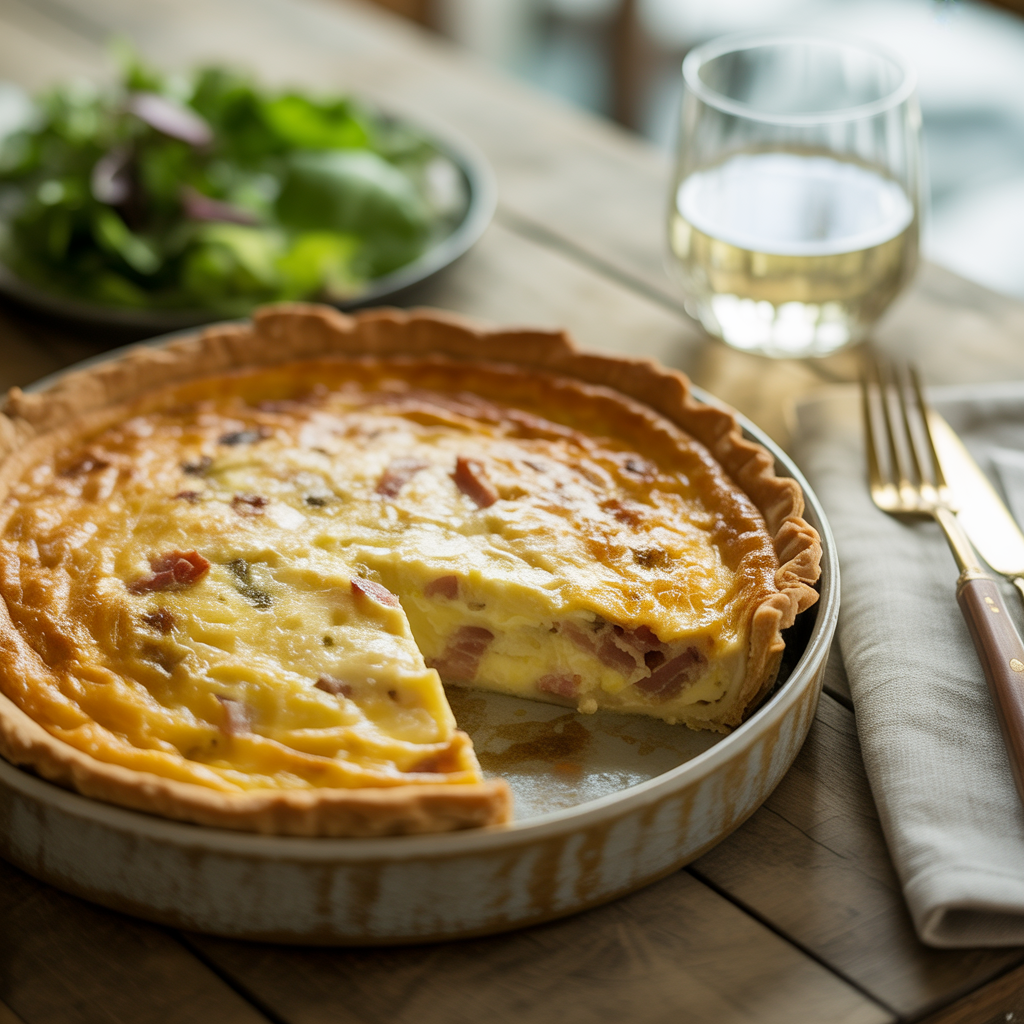
If you’ve ever wanted to make a quiche that looks like it came straight from a French bakery — with a golden, flaky crust and a silky, creamy filling — you’re in the right place. This easy quiche recipe walks you through every step, from making the perfect pie crust to achieving that luscious, custardy center. Whether you’re planning a weekend brunch, a light dinner, or a make-ahead meal, this classic quiche recipe will become your go-to favorite.
What Is Quiche?
Quiche is a savory French tart made with a buttery pastry crust filled with a mixture of eggs, cream, cheese, and various fillings like vegetables, bacon, or ham. The most famous version is Quiche Lorraine, which features bacon and Gruyère cheese. However, quiche is incredibly versatile — you can customize the filling with whatever ingredients you love or have on hand.
Why You’ll Love This Recipe
- Simple ingredients: Most items are already in your pantry or fridge.
- Versatile: Swap fillings to suit any taste or dietary preference.
- Make-ahead friendly: Quiche reheats beautifully, making it perfect for meal prep.
- Impressive yet easy: Looks gourmet but requires minimal baking skills.
- Perfect for any meal: Serve it for breakfast, brunch, lunch, or dinner.
Ingredients You’ll Need
For the Flaky Pie Crust
- 1 ¼ cups (160g) all-purpose flour
- ½ teaspoon salt
- ½ cup (113g) unsalted butter, very cold and cubed
- 3–4 tablespoons ice water
For the Creamy Egg Filling
- 4 large eggs
- 1 cup (240ml) heavy cream
- ½ cup (120ml) whole milk
- ½ teaspoon salt
- ¼ teaspoon black pepper
- ¼ teaspoon ground nutmeg (optional but recommended)
For the Classic Filling (Quiche Lorraine Style)
- 6 strips bacon, cooked and crumbled
- 1 cup (100g) shredded Gruyère or Swiss cheese
- ½ cup (50g) finely chopped onion, sautéed until soft
Equipment Needed
- 9-inch pie dish or tart pan with removable bottom
- Rolling pin
- Mixing bowls
- Whisk
- Pie weights or dried beans (for blind baking)
- Parchment paper
Step-by-Step Instructions
Step 1: Make the Flaky Pie Crust
- Combine dry ingredients: In a large bowl, whisk together the flour and salt.
- Cut in the butter: Add the cold, cubed butter to the flour mixture. Using a pastry cutter, two knives, or your fingertips, work the butter into the flour until the mixture resembles coarse crumbs with some pea-sized pieces of butter remaining. Those chunks of butter are key to a flaky crust!
- Add ice water: Drizzle in the ice water, one tablespoon at a time, mixing gently with a fork after each addition. Stop adding water when the dough just begins to hold together when you pinch it. Be careful not to overwork the dough.
- Form and chill: Turn the dough out onto a lightly floured surface, shape it into a flat disk, wrap it in plastic wrap, and refrigerate for at least 30 minutes (or up to 2 days).
Step 2: Roll Out and Blind Bake the Crust
- Preheat your oven to 375°F (190°C).
- Roll the dough: On a lightly floured surface, roll the chilled dough into a circle about 12 inches in diameter and ⅛ inch thick.
- Transfer to pie dish: Carefully drape the dough over your rolling pin and transfer it into the pie dish. Gently press it into the corners and up the sides. Trim any excess dough, leaving about a ½-inch overhang. Fold the overhang under itself and crimp the edges decoratively.
- Chill again: Place the crust-lined dish in the freezer for 15 minutes. This prevents shrinkage during baking.
- Blind bake: Line the chilled crust with parchment paper and fill it with pie weights or dried beans. Bake for 15 minutes. Then remove the weights and parchment, prick the bottom lightly with a fork, and bake for another 5–7 minutes until the crust is just lightly golden. Remove from the oven and set aside.
Why Blind Bake? Blind baking (pre-baking the crust without filling) ensures the bottom crust cooks through completely and stays crisp rather than becoming soggy from the egg custard filling.
Step 3: Prepare the Filling
- Cook the bacon: In a skillet over medium heat, cook the bacon strips until crispy. Transfer to a paper towel-lined plate to drain, then crumble into pieces.
- Sauté the onion: In the same skillet, cook the chopped onion in a small amount of bacon drippings or butter over medium heat until soft and translucent, about 5 minutes. Set aside.
- Make the custard: In a large bowl, whisk together the eggs, heavy cream, whole milk, salt, pepper, and nutmeg until well combined and smooth. Don’t over-whisk — you don’t want too many air bubbles, which can cause the filling to puff up and crack.
Step 4: Assemble the Quiche
- Reduce the oven temperature to 325°F (163°C).
- Scatter the crumbled bacon and sautéed onion evenly over the bottom of the pre-baked crust.
- Sprinkle the shredded Gruyère cheese over the bacon and onion layer.
- Slowly and carefully pour the egg custard mixture over the top, filling it to just below the rim of the crust. Pour slowly to avoid air bubbles.
Step 5: Bake the Quiche
- Place the quiche on a baking sheet (this makes it easier to move in and out of the oven and catches any drips).
- Bake at 325°F (163°C) for 40–50 minutes, until the edges are set but the very center still has a slight jiggle — like Jell-O, not like liquid.
- Remove from the oven and let the quiche cool on a wire rack for at least 15–20 minutes before slicing. This resting time allows the custard to fully set.
How to know when quiche is done: The edges should be firmly set and the center should wobble just slightly when you gently shake the pan. It will continue to set as it cools. Overbaking leads to a rubbery, eggy texture — so err on the side of slightly underdone.
Tips for the Best Quiche Every Time
- Keep butter cold: Cold butter is the secret to a flaky crust. If the butter starts to soften while you’re working with it, pop the dough back in the fridge for 10 minutes.
- Use full-fat dairy: Heavy cream and whole milk give the filling its rich, creamy texture. Low-fat substitutes will result in a less satisfying custard.
- Don’t skip the blind bake: A properly blind-baked crust is the difference between a crispy, flaky base and a soggy one.
- Grate your own cheese: Pre-shredded cheese contains anti-caking agents that prevent it from melting as smoothly. Freshly grated cheese melts better and tastes superior.
- Season well: Taste your filling ingredients before assembling. Bacon can be salty, so adjust the salt in your custard accordingly.
- Low and slow baking: Baking at a lower temperature (325°F) ensures the custard cooks gently and evenly, resulting in a smoother, creamier texture.
Delicious Quiche Filling Variations
Once you’ve mastered the basic technique, the filling possibilities are endless. Here are some popular combinations to try:
Spinach and Feta Quiche
- 1 cup fresh spinach, wilted and squeezed dry
- ½ cup crumbled feta cheese
- ¼ cup sun-dried tomatoes, chopped
Mushroom and Swiss Quiche
- 1 cup mushrooms, sliced and sautéed
- 1 cup shredded Swiss cheese
- 2 cloves garlic, minced and sautéed with mushrooms
Ham and Cheddar Quiche
- ¾ cup diced cooked ham
- 1 cup shredded sharp cheddar cheese
- 2 tablespoons chives, chopped
Vegetarian Roasted Vegetable Quiche
- 1 cup roasted bell peppers, zucchini, and red onion
- ½ cup goat cheese, crumbled
- Fresh thyme leaves
Smoked Salmon Quiche
- 3 oz smoked salmon, torn into pieces
- 2 tablespoons capers
- ½ cup cream cheese, softened and mixed into the custard
- Fresh dill
Can I Use a Store-Bought Pie Crust?
Absolutely! If you’re short on time, a high-quality store-bought refrigerated pie crust works perfectly. Simply unroll it into your pie dish, press it in, and follow the blind-baking instructions above. The homemade crust will taste better, but a good store-bought option is a great shortcut for busy days.
How to Store and Reheat Quiche
Storing
- Refrigerator: Let the quiche cool completely, then cover tightly with plastic wrap or foil. It will keep in the fridge for up to 4 days.
- Freezer: Quiche freezes very well. Once fully cooled, wrap it tightly in plastic wrap and then in aluminum foil. Freeze for up to 3 months. Thaw overnight in the refrigerator before reheating.
Reheating
- Oven (best method): Place the quiche (whole or slices) on a baking sheet and heat at 325°F (163°C) for 15–20 minutes until warmed through. This keeps the crust crispy.
- Microwave (quick method): Heat individual slices on a microwave-safe plate for 1–2 minutes. The crust won’t be as crispy, but it’s fast and convenient.
Make-Ahead Instructions
Quiche is an outstanding make-ahead dish. Here are your options:
- Crust ahead: Make and blind bake the crust up to 2 days in advance. Store covered at room temperature.
- Full quiche ahead: Bake the entire quiche, cool it, and refrigerate. Reheat before serving.
- Freeze unbaked filling: You can also freeze the raw assembled quiche (crust + filling) and bake it directly from frozen — just add 15–20 extra minutes of baking time.
What to Serve with Quiche
Quiche is a satisfying dish on its own, but it pairs beautifully with:
- A simple green salad with vinaigrette — the freshness balances the richness of the quiche.
- Fresh fruit salad for a brunch spread.
- Roasted asparagus or steamed green beans for a light dinner.
- Tomato soup for a cozy, comforting meal.
- Crusty French bread or a warm baguette.
Common Quiche Mistakes to Avoid
- Soggy crust: Always blind bake your crust and make sure your fillings aren’t too wet (squeeze out excess moisture from vegetables).
- Rubbery filling: This happens when you overbake. Pull the quiche out when the center still jiggles slightly.
- Cracked filling: Usually caused by overbaking or using too high a temperature. Bake low and slow at 325°F.
- Crust shrinkage: Chill the dough before and after rolling, and don’t stretch the dough when placing it in the pan.
- Bland flavor: Don’t under-season your custard. Season the eggs, and taste your filling ingredients before adding them.
Frequently Asked Questions
Can I make quiche without cream?
Yes, you can substitute the heavy cream with half-and-half or whole milk only, but the filling will be less rich and custardy. For the creamiest results, stick with heavy cream or at least use a mixture of cream and whole milk.
How many eggs do I need for a quiche?
For a standard 9-inch quiche, 4 large eggs combined with 1 ½ cups of dairy (cream and milk) is the ideal ratio for a smooth, creamy custard that sets properly.
Can I make a crustless quiche?
Absolutely! Simply grease your pie dish well and pour the egg custard and fillings directly into it without a crust. Bake at 325°F for 35–45 minutes. This is a great low-carb option.
Why is my quiche watery?
Watery quiche is usually caused by vegetables with high water content (like zucchini, mushrooms, or spinach) that weren’t cooked down beforehand. Always sauté or roast your vegetables first and drain any excess liquid before adding them to the quiche.
Can I eat quiche cold?
Yes! Quiche is delicious served at room temperature or even cold straight from the fridge. Many people prefer it this way for packed lunches or picnics.
Recipe Card Summary
- Prep Time: 30 minutes
- Chill Time: 45 minutes
- Cook Time: 50–60 minutes
- Total Time: Approximately 2 hours
- Servings: 6–8 slices
- Difficulty: Easy to Intermediate
Final Thoughts
Mastering a homemade quiche is one of those kitchen skills that will serve you for a lifetime. With a crisp, flaky crust and a rich, creamy egg custard filling, this easy quiche recipe delivers restaurant-quality results right from your own oven. Once you understand the basic ratios and techniques, you can endlessly customize the fillings to match the season, your mood, or whatever’s in your fridge. Whether you’re hosting a brunch, feeding your family on a Sunday morning, or meal-prepping for the week ahead, this quiche recipe is sure to impress every single time.
Give it a try, and don’t be surprised when it becomes the most requested dish in your household!