
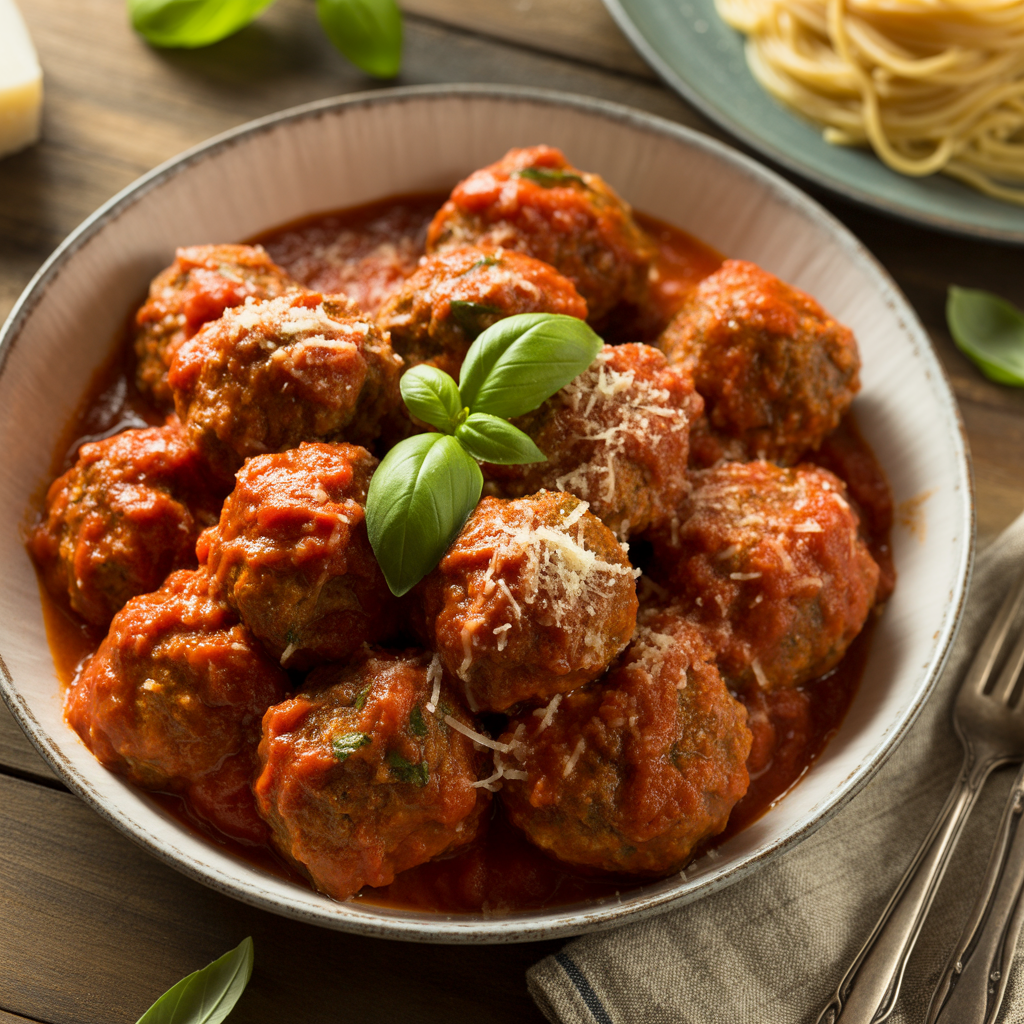
If you’ve ever craved a plate of perfectly juicy, tender meatballs smothered in rich tomato sauce, you’re in the right place. This easy meatball recipe delivers homemade results that beat anything from a can or a freezer bag. Whether you’re serving them over spaghetti, stuffing them into a sub roll, or enjoying them on their own as an appetizer, these meatballs are guaranteed to impress.
Why You’ll Love This Meatball Recipe
- Simple ingredients: Everything you need is likely already in your kitchen.
- Incredibly juicy: A blend of techniques keeps every bite moist and flavorful.
- Versatile: Works with beef, pork, turkey, or a combination.
- Make-ahead friendly: Freeze them raw or cooked for quick weeknight meals.
- Family approved: Kids and adults alike go back for seconds every time.
Ingredients You’ll Need
This recipe makes approximately 24 medium-sized meatballs (about 1.5 inches each).
For the Meatballs:
- 1 lb (450g) ground beef (80/20 fat ratio recommended)
- 1/2 lb (225g) ground pork
- 1/2 cup breadcrumbs (plain or Italian seasoned)
- 1/4 cup whole milk
- 1/3 cup freshly grated Parmesan cheese
- 2 large eggs
- 3 cloves garlic, minced
- 1/4 cup fresh parsley, finely chopped
- 1 teaspoon salt
- 1/2 teaspoon black pepper
- 1/2 teaspoon dried oregano
- 1/4 teaspoon red pepper flakes (optional)
- 1 teaspoon Worcestershire sauce
For Cooking (Oven Method):
- Olive oil spray or 2 tablespoons olive oil
For Serving (Optional):
- Marinara or tomato sauce
- Cooked spaghetti or pasta of choice
- Extra Parmesan and fresh basil
Key Secrets to Juicy, Tender Meatballs
Before we dive into the steps, let’s talk about what truly makes a meatball extraordinary. These tips are the difference between dry, rubbery balls and the tender, moist ones you dream about.
1. Use a Meat Blend
Using a combination of ground beef and ground pork gives you the best of both worlds — rich flavor from the beef and extra fat and tenderness from the pork. If you prefer, you can also use a beef/pork/veal combination, which is a classic Italian-American approach.
2. The Panade Method
Soaking breadcrumbs in milk before mixing them into the meat is called a panade. This technique keeps the meatballs moist during cooking because the milk-soaked breadcrumbs act as a moisture reservoir inside the meat.
3. Don’t Overmix
Overworking the meat develops the proteins too much, leading to dense, tough meatballs. Mix just until the ingredients are combined — a light hand is your best tool here.
4. Don’t Overpack
When rolling, use a gentle touch. Compacting the meat too tightly will result in a dense texture. Roll loosely and evenly.
5. Choose the Right Fat Content
For ground beef, an 80/20 ratio (80% lean, 20% fat) is ideal. Leaner beef (like 90/10) can result in drier meatballs.
Step-by-Step Instructions
Step 1: Make the Panade
In a large mixing bowl, combine the breadcrumbs and milk. Stir them together and let the mixture sit for 5 minutes. The breadcrumbs will absorb the milk and become soft and paste-like. This is your panade.
Step 2: Mix the Ingredients
To the bowl with the panade, add the eggs, minced garlic, grated Parmesan, fresh parsley, salt, black pepper, dried oregano, red pepper flakes (if using), and Worcestershire sauce. Mix everything together until combined.
Now add the ground beef and ground pork. Using your hands (or a fork), gently mix everything until just combined. Do not overmix.
Step 3: Shape the Meatballs
Using a cookie scoop, ice cream scoop, or your hands, portion out the meat mixture into equal amounts — about 1.5 tablespoons each for medium meatballs. Roll them gently between your palms into smooth balls.
Pro Tip: Lightly oil your hands before rolling to prevent sticking and for a smoother finish.
Place the rolled meatballs on a baking sheet lined with parchment paper or a lightly greased baking rack.
Step 4: Cook the Meatballs
You have two great options — baking or pan-frying. Both work wonderfully. Here’s how to do each:
Option A: Baking (Recommended for Ease)
- Preheat your oven to 400°F (200°C).
- Lightly spray or brush the meatballs with olive oil.
- Bake for 18–22 minutes, or until the internal temperature reaches 165°F (74°C).
- For extra browning, broil on high for the last 2–3 minutes.
Option B: Pan-Frying (Best for Flavor and Crust)
- Heat 2 tablespoons of olive oil in a large skillet over medium-high heat.
- Add meatballs in a single layer, without overcrowding the pan.
- Cook for about 2–3 minutes per side, turning carefully to brown all sides evenly.
- Total cooking time is about 10–12 minutes, until fully cooked through.
Option C: Simmer in Sauce
After browning in a skillet (just sear the outside, not fully cooked), transfer the meatballs into a pot of simmering marinara sauce. Let them finish cooking in the sauce over low heat for 20–25 minutes. This method infuses the meatballs with incredible sauce flavor.
How to Serve Meatballs
Once your meatballs are cooked, the serving possibilities are endless:
- Classic Spaghetti and Meatballs: Serve over al dente spaghetti with a generous ladle of marinara sauce and freshly grated Parmesan.
- Meatball Sub: Tuck 4–5 meatballs into a hoagie roll, top with marinara and melted mozzarella, then broil until bubbly.
- Appetizer Style: Serve with toothpicks and a dipping sauce at parties.
- Soup: Add to Italian wedding soup or a simple broth-based soup.
- Meal Prep Bowl: Pair with roasted vegetables and rice or quinoa.
How to Store Meatballs
Refrigerator
Store cooked meatballs in an airtight container in the refrigerator for up to 4 days. Reheat in the microwave, oven (350°F for 10 minutes), or directly in a simmering sauce.
Freezer
Meatballs freeze beautifully. Here’s how:
- To freeze raw: Place shaped meatballs on a baking sheet and freeze until solid (about 1–2 hours), then transfer to a zip-lock freezer bag. Freeze for up to 3 months. Cook from frozen by adding 5–7 minutes to the baking time.
- To freeze cooked: Let them cool completely, then freeze in a single layer before transferring to a bag. Reheat directly from frozen in sauce or in the oven at 350°F.
Variations and Substitutions
Turkey or Chicken Meatballs
Substitute the beef and pork with ground turkey or ground chicken for a lighter version. Since poultry is leaner, add an extra tablespoon of olive oil to the mixture to maintain moisture.
Gluten-Free Meatballs
Replace the breadcrumbs with gluten-free breadcrumbs or finely ground rolled oats. The texture will still be excellent.
Dairy-Free Option
Swap the milk for unsweetened almond milk or oat milk, and omit the Parmesan or use a dairy-free alternative.
Extra Cheesy Meatballs
Add a small cube of fresh mozzarella into the center of each meatball before rolling closed for a melted cheese surprise inside.
Spicy Meatballs
Double the red pepper flakes and add 1/2 teaspoon of cayenne pepper to the mixture for a kick of heat.
Common Mistakes to Avoid
- Using only lean beef: Always use at least 80/20 fat ratio for juicy results.
- Skipping the panade: Don’t leave out the milk-soaked breadcrumbs — they’re essential for moisture.
- Overmixing the meat: Mix gently and stop as soon as everything is just combined.
- Making them too big: Oversized meatballs can end up dry on the outside before they cook through. Stick to 1–1.5 inch balls for the best texture.
- Skipping the rest: After mixing, let the meat mixture rest in the fridge for 15–30 minutes before rolling. This helps the ingredients meld and makes rolling easier.
Frequently Asked Questions
Can I make meatballs ahead of time?
Absolutely. You can mix and shape the meatballs up to 24 hours in advance and store them covered on a baking sheet in the refrigerator. You can also cook them fully ahead of time and reheat when needed.
What’s the best way to keep meatballs moist?
The combination of the panade (breadcrumbs soaked in milk), fat in the meat, and eggs all work together to lock in moisture. Avoid overcooking — once they reach an internal temperature of 165°F, take them off the heat.
Can I bake meatballs instead of frying?
Yes! Baking is actually easier, less messy, and still produces delicious results. Bake at 400°F for 18–22 minutes. If you miss the crust that pan-frying gives, use the broiler for the last few minutes.
How do I know when meatballs are fully cooked?
The safest way is to use an instant-read meat thermometer. The internal temperature should reach 165°F (74°C). If you don’t have a thermometer, cut one open — it should be completely brown inside with no pink.
Can I use all beef instead of a blend?
Yes, all-beef meatballs work fine. Just make sure you use 80/20 ground beef and don’t skip the panade. They’ll be slightly less rich than a beef-pork blend but still delicious.
Nutrition Information (Per Meatball, Approximate)
- Calories: 85 kcal
- Protein: 6g
- Fat: 6g
- Carbohydrates: 2g
- Sodium: 120mg
Nutritional values are estimates and will vary based on specific ingredients used.
Final Tips for the Best Homemade Meatballs
- Always use fresh garlic and fresh parsley — they make a noticeable difference in flavor.
- Grate your own Parmesan cheese from a block for the best taste and melt.
- Use a cookie scoop for consistent sizing so all meatballs cook evenly.
- Rest the cooked meatballs for 5 minutes before serving — this allows the juices to redistribute.
- Double or triple the batch and freeze extras — future you will be grateful.
There you have it — a truly foolproof, easy meatball recipe that delivers juicy, tender, homemade results every single time. Whether it’s a Sunday dinner with the whole family or a casual weeknight meal, these meatballs are a guaranteed crowd-pleaser. Give them a try, and don’t be surprised when everyone asks for the recipe.