
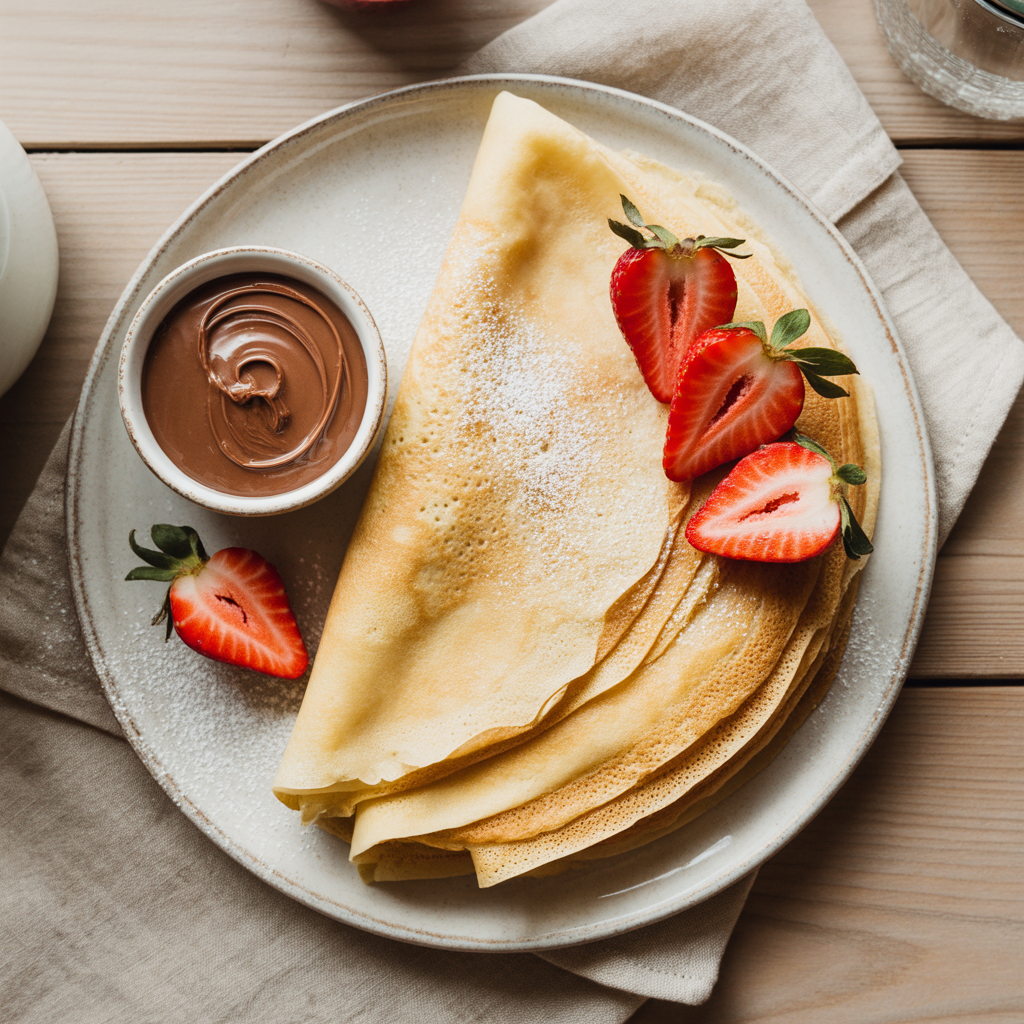
If you’ve ever wanted to make restaurant-quality crepes at home, you’re in the right place. This easy crepe recipe delivers thin, soft, and perfectly golden crepes every single time — whether you’re filling them with sweet Nutella and strawberries or savory ham and cheese. No special equipment required, just a simple batter and a little technique.
What Are Crepes?
Crepes are ultra-thin French pancakes made from a simple batter of flour, eggs, milk, butter, and a pinch of salt. Unlike thick American pancakes, crepes are delicate, flexible, and can be filled with virtually anything. They originated in Brittany, France, and have become a beloved dish worldwide — enjoyed at breakfast, brunch, dessert, or even as a light dinner.
Why You’ll Love This Recipe
- Quick and simple: The batter comes together in under 5 minutes.
- Versatile: Works for both sweet and savory fillings.
- No special tools needed: Just a non-stick pan and a spatula.
- Make-ahead friendly: The batter can rest overnight for even better results.
- Crowd-pleasing: Perfect for feeding a group or impressing guests.
Ingredients You’ll Need
This recipe makes approximately 10–12 crepes. Here’s what you’ll need:
Basic Crepe Batter
- 1 cup (125g) all-purpose flour
- 2 large eggs
- 1 ½ cups (360ml) whole milk
- 2 tablespoons (30g) unsalted butter, melted
- 1 tablespoon granulated sugar (omit for savory crepes)
- ½ teaspoon vanilla extract (for sweet crepes)
- Pinch of salt
- Extra butter or oil for the pan
Optional Ingredients for Sweet Crepes
- 1 teaspoon orange zest
- 1 tablespoon rum or Grand Marnier
Optional Ingredients for Savory Crepes
- Replace milk with part water for a lighter texture
- Add fresh herbs like chives or thyme to the batter
Step-by-Step Instructions
Step 1: Make the Batter
In a large mixing bowl, whisk together the flour and salt. Create a well in the center, then add the eggs. Begin whisking the eggs, slowly incorporating the flour from the sides. Gradually pour in the milk while continuing to whisk until you have a smooth, lump-free batter. Stir in the melted butter, sugar, and vanilla extract if using.
Blender method: For an even faster approach, simply add all ingredients to a blender and blend on high for 30 seconds. This also creates an ultra-smooth batter.
Step 2: Rest the Batter (Important!)
Cover the bowl with plastic wrap or a clean kitchen towel and let the batter rest for at least 30 minutes at room temperature, or refrigerate for up to 24 hours. This resting period allows the gluten to relax, which results in softer, more pliable crepes that are less likely to tear. This step is one of the most important secrets to perfect crepes — don’t skip it!
Step 3: Heat Your Pan
Place an 8-inch or 10-inch non-stick skillet or crepe pan over medium heat. Once the pan is hot, add a small amount of butter (about ½ teaspoon) and swirl it to coat the entire surface. The pan should be just hot enough that a drop of batter sizzles immediately when it hits the surface.
Step 4: Cook the Crepes
Pour approximately ¼ cup (60ml) of batter into the center of the hot pan. Immediately lift the pan off the heat and tilt it in a circular motion so the batter spreads out into a thin, even circle. Return the pan to the heat.
Cook for about 1 to 2 minutes, until the edges start to look dry and the bottom is lightly golden. Use a thin spatula to carefully loosen the edges and flip the crepe. Cook the second side for just 30 to 60 seconds — it won’t color as evenly as the first side, but that’s perfectly normal.
Slide the finished crepe onto a plate. Repeat with the remaining batter, adding a tiny bit of butter to the pan between crepes as needed.
Step 5: Serve and Fill
Your crepes are now ready to be filled, folded, and enjoyed! Serve them warm for the best experience.
How to Fold Crepes
There are several classic ways to fold and present crepes:
- Half-moon fold: Fold the crepe in half, then in half again to create a triangle shape. This is the most common presentation.
- Rolled: Spread your filling across the crepe and roll it up like a log.
- Open-faced: Leave the crepe flat and pile toppings on top.
- Parcel: Place filling in the center and fold all four sides inward to create a square package.
Sweet Crepe Filling Ideas
Sweet crepes are a dream dessert or breakfast. Try these delicious combinations:
- Classic Lemon & Sugar: Squeeze fresh lemon juice and sprinkle granulated sugar — a timeless French favorite.
- Nutella & Banana: Spread Nutella and add sliced bananas for an indulgent treat.
- Strawberries & Whipped Cream: Fresh strawberries with lightly sweetened whipped cream.
- Caramel Apple: Sautéed cinnamon apples with salted caramel sauce.
- Mixed Berry Compote: A warm berry sauce spooned over the crepe.
- Crêpes Suzette: Crepes served in a classic orange butter sauce, optionally flambéed with Grand Marnier.
Savory Crepe Filling Ideas
Savory crepes (also known as “galettes” in France when made with buckwheat flour) make a fantastic light meal:
- Ham, Egg & Cheese: A classic Parisian street food combination.
- Spinach & Ricotta: Creamy, satisfying, and vegetarian-friendly.
- Smoked Salmon & Cream Cheese: Elegant and perfect for brunch.
- Mushroom & Gruyère: Earthy mushrooms with melted nutty cheese.
- Chicken & Béchamel: A rich and comforting filling.
Expert Tips for Perfect Crepes Every Time
1. Use the Right Pan
A good non-stick skillet or a dedicated crepe pan is essential. Carbon steel crepe pans are the traditional choice in French kitchens and heat very evenly. Whatever you use, make sure it’s properly heated before adding the batter.
2. Don’t Skip the Rest Time
As mentioned earlier, resting the batter for at least 30 minutes — or ideally overnight — makes a significant difference in texture. Overnight-rested batter produces noticeably softer and more flexible crepes.
3. Your First Crepe Will Likely Be a Throwaway
The first crepe is almost always imperfect — it helps gauge the heat and season the pan. Don’t be discouraged; just eat it as a cook’s treat and continue with the rest. Every crepe after the first should come out beautifully.
4. Get the Batter Consistency Right
The batter should be the consistency of heavy cream — thin enough to spread easily but not watery. If it’s too thick, whisk in a tablespoon of milk at a time. If it’s too thin, add a small spoonful of flour.
5. Control the Heat
Medium heat is the sweet spot. Too hot and the batter will set before you can spread it; too cool and the crepe won’t develop that beautiful golden color. Adjust the heat as needed between crepes.
6. Use Just Enough Batter
Resist the urge to pour too much batter. Thin crepes require thin batter layers. A standard ¼ cup is usually ideal for a 10-inch pan. You can always do a test pour to gauge how much works best for your pan size.
7. Don’t Flip Too Early
Wait until the edges look set and slightly dry before attempting to flip. Flipping too early will cause the crepe to tear. The surface of the crepe should no longer look wet or shiny in the center.
Common Mistakes and How to Avoid Them
Lumpy Batter
If your batter has lumps, it’s likely because you added the milk too quickly. To fix this, simply strain the batter through a fine mesh sieve before cooking. Using a blender from the start prevents this problem entirely.
Crepes Are Too Thick
Too much batter in the pan or batter that’s too thick. Make sure you’re using the right amount and tilting the pan quickly to spread it into a thin layer.
Crepes Are Tearing
This can be caused by skipping the resting period, not enough fat in the batter, or a pan that’s not properly coated. Make sure the pan has enough butter and that you’ve let the batter rest.
Crepes Are Sticking
Usually a sign that the pan isn’t hot enough or doesn’t have enough butter. Make sure to preheat the pan properly and add a little butter between each crepe.
How to Make Crepes Ahead of Time
Crepes are excellent for meal prepping and entertaining. Here’s how to make them in advance:
- Batter: Store covered in the refrigerator for up to 48 hours. Give it a gentle stir before using.
- Cooked crepes: Stack them with a small piece of parchment paper or wax paper between each one to prevent sticking. Wrap the stack tightly in plastic wrap.
- Refrigerator: Cooked crepes keep well in the fridge for up to 3 days.
- Freezer: Freeze stacked crepes (with parchment between each) for up to 2 months. Thaw in the refrigerator overnight.
To reheat, simply warm them in a dry non-stick pan for about 30 seconds per side, or microwave briefly with a damp paper towel over them.
Variations to Try
Gluten-Free Crepes
Substitute the all-purpose flour with a 1:1 gluten-free flour blend or use buckwheat flour. Buckwheat crepes have a wonderful nutty flavor and are traditionally used for savory fillings in Brittany.
Dairy-Free Crepes
Replace the milk with oat milk, almond milk, or coconut milk, and use melted coconut oil instead of butter. These work surprisingly well and are just as delicious.
Whole Wheat Crepes
Use half whole wheat flour and half all-purpose flour for a slightly heartier, more nutritious crepe with a pleasant nutty undertone.
Chocolate Crepes
Add 2 tablespoons of unsweetened cocoa powder and an extra tablespoon of sugar to the batter. These are incredible filled with whipped cream and raspberries.
Nutrition Information (Per Plain Crepe)
The following is an approximate nutritional breakdown per crepe (without filling), based on 12 crepes per batch:
- Calories: ~80 kcal
- Carbohydrates: 10g
- Protein: 3g
- Fat: 3g
- Sugar: 1g
Note: Nutritional values will vary depending on fillings and toppings used.
Frequently Asked Questions
Can I make crepes without a special crepe pan?
Absolutely! A regular 8-inch or 10-inch non-stick skillet works perfectly. A dedicated crepe pan is nice to have but not necessary for home cooking.
Why do my crepes have holes in them?
Holes usually form when the pan is too hot and the batter sets too quickly before it can spread evenly, or when the batter is too thin. Adjust the heat and tweak the batter consistency.
Should crepe batter be cold when I use it?
If you’ve refrigerated your batter overnight, take it out and let it come to room temperature for about 15–20 minutes before cooking. Cold batter can seize up in the hot pan.
Can I double this recipe?
Yes! This recipe doubles and triples easily, making it ideal for parties and brunches.
What’s the difference between a crepe and a thin pancake?
Crepes contain no leavening agent (like baking powder or baking soda), which is what makes them so thin and flat. Traditional pancakes use a leavening agent to create a fluffy, thick texture. Crepe batter also tends to be much thinner in consistency.
Final Thoughts
Once you master this easy crepe recipe, you’ll find yourself making them again and again. They’re one of those wonderfully simple dishes that feel elegant and special without requiring much effort. Whether you’re making a sweet dessert spread for family or a sophisticated brunch for friends, crepes always impress.
The most important things to remember: rest your batter, use the right amount of heat, and don’t worry if the first one isn’t perfect — it never is! With a little practice, you’ll be flipping beautiful, paper-thin crepes like a seasoned French chef.
Now gather your ingredients, heat up that pan, and get cooking. Your perfect crepe is just minutes away!