
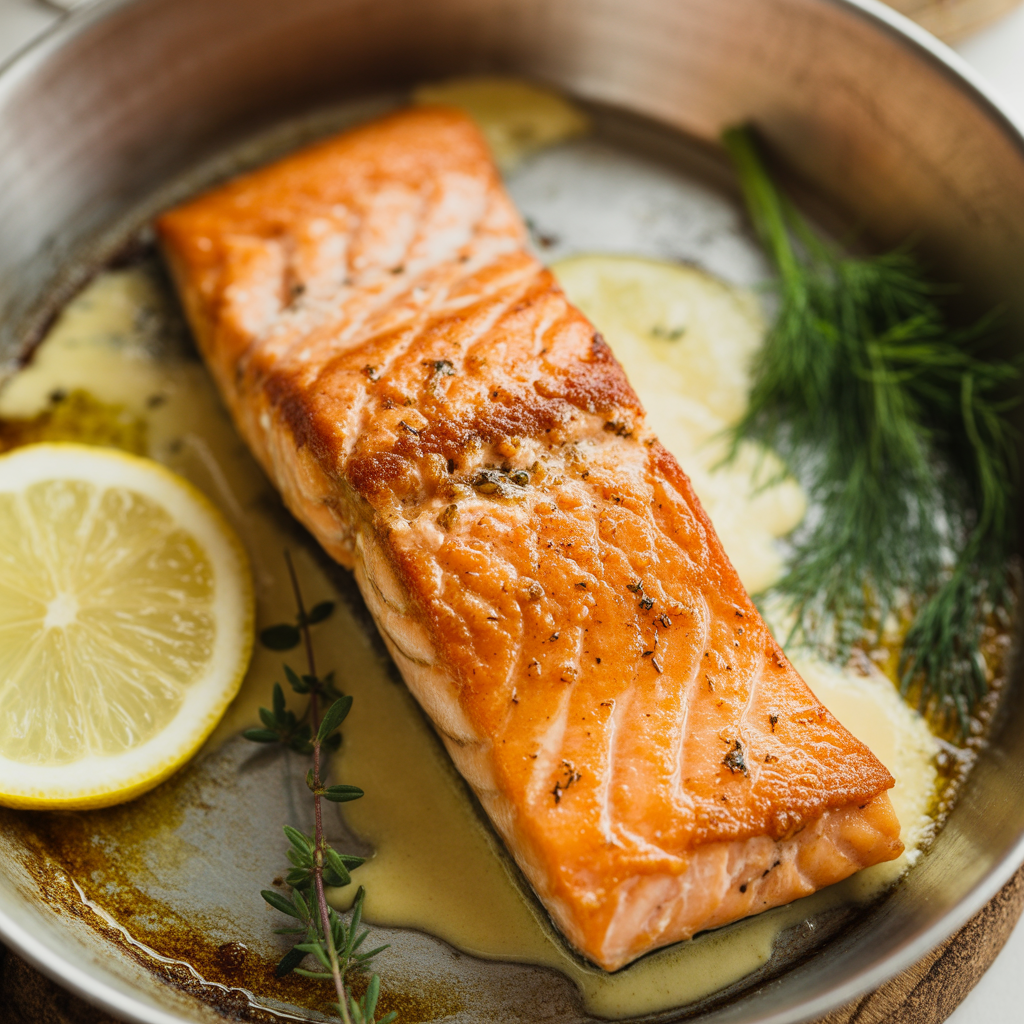
If you’ve ever wondered how restaurants achieve that perfectly crispy salmon skin with a tender, flaky interior, you’re in the right place. This guide will walk you through everything you need to know to recreate that restaurant-quality pan-seared salmon right in your own kitchen — no special equipment required.
Why Pan-Seared Salmon Is the Best Cooking Method
Pan-searing salmon is one of the fastest and most reliable ways to cook this beloved fish. Unlike baking or poaching, pan-searing creates a golden, crispy crust on the outside while locking in moisture so the inside stays buttery and flaky. It takes under 15 minutes from start to finish, making it ideal for weeknight dinners or impressive dinner party mains.
Ingredients You’ll Need
- 4 salmon fillets (6 oz each, skin-on preferred)
- 2 tablespoons olive oil or avocado oil
- 1 tablespoon unsalted butter
- 3 cloves garlic, minced
- 1 teaspoon kosher salt
- ½ teaspoon freshly ground black pepper
- ½ teaspoon smoked paprika (optional but recommended)
- 1 lemon, sliced into rounds
- Fresh herbs for garnish: dill, parsley, or thyme
Essential Equipment
- A heavy-bottomed skillet (cast iron or stainless steel works best)
- Fish spatula or a thin, flexible spatula
- Paper towels
- Kitchen tongs
- Instant-read thermometer (optional but helpful)
Step-by-Step Instructions
Step 1: Prepare the Salmon Fillets
Remove salmon fillets from the refrigerator at least 15–20 minutes before cooking. Bringing the fish closer to room temperature ensures even cooking. Pat each fillet completely dry with paper towels — this is the single most important step for achieving crispy skin. Any surface moisture will cause the fish to steam instead of sear.
Step 2: Season Generously
Season both sides of each fillet with kosher salt, black pepper, and smoked paprika. Don’t be shy with the seasoning — salmon is a rich, fatty fish that can handle bold flavors. Season just before cooking to prevent the salt from drawing out extra moisture.
Step 3: Heat the Pan Properly
Place your skillet over medium-high heat and let it preheat for about 2–3 minutes. Add the olive oil and allow it to shimmer and just begin to smoke lightly. A properly preheated pan is the secret to a non-stick sear — if the pan isn’t hot enough, the fish will stick and tear.
Step 4: Sear Skin-Side Down First
Place the salmon fillets skin-side down in the hot pan. Press each fillet gently with a spatula for the first 10 seconds to ensure full contact between the skin and the pan — this prevents the skin from curling up. Cook on the skin side for 4–5 minutes without moving the fish. You’ll notice the flesh turning opaque from the bottom up. The salmon is almost ready to flip when it’s about 70% cooked through.
Step 5: Flip and Finish
Using a fish spatula, carefully flip each fillet. Add the butter and minced garlic to the pan. As the butter melts, tilt the pan and baste the salmon repeatedly with the butter-garlic mixture using a spoon. Cook for another 1–2 minutes on the flesh side.
Step 6: Check for Doneness
The ideal internal temperature for salmon is 125°F to 130°F (52°C–54°C) for medium, or 145°F (63°C) for well-done as recommended by the FDA. You can also check doneness by pressing the thickest part — it should flake easily but still look slightly translucent in the very center for the best texture. Avoid overcooking, as salmon becomes dry and chalky past 145°F.
Step 7: Rest and Serve
Remove the salmon from the pan and let it rest for 2–3 minutes before serving. This allows the juices to redistribute throughout the fillet. Serve with lemon slices and a sprinkle of fresh herbs.
Pro Tips for the Crispiest Salmon
- Dry the skin thoroughly: We can’t stress this enough. Moisture is the enemy of crispiness.
- Use a hot pan: A cold pan leads to sticking and steaming instead of searing.
- Don’t move the fish: Let it cook undisturbed on the skin side until it releases naturally.
- Score the skin lightly: If the skin still tends to curl, make 2–3 shallow cuts through the skin before cooking.
- Choose thick fillets: Thicker cuts (at least 1 inch) are more forgiving and easier to get right.
- Use a cast iron skillet: It retains heat exceptionally well and produces the best crust.
How to Choose the Best Salmon for This Recipe
Not all salmon is created equal. Here’s a quick guide to the most common varieties:
- King (Chinook) Salmon: The richest and most flavorful, with the highest fat content. Ideal for pan-searing.
- Sockeye Salmon: Deep red, firm flesh with a robust flavor. Excellent for this method.
- Atlantic Salmon: Widely available and affordable. Slightly milder in flavor but still delicious when seared.
- Coho Salmon: A middle ground between Sockeye and Atlantic — a great all-purpose option.
When shopping, look for fillets with bright, vibrant color, firm texture, and no fishy smell. Fresh salmon should smell like the ocean — mild and clean. If buying frozen, thaw overnight in the refrigerator for best results.
Sauce Ideas to Pair with Crispy Salmon
Pan-seared salmon is incredibly versatile. Here are some quick sauces that complement its richness beautifully:
- Lemon Butter Sauce: Melt butter with fresh lemon juice, capers, and a pinch of salt. Simple and classic.
- Honey Garlic Glaze: Combine 2 tablespoons honey, 1 tablespoon soy sauce, and minced garlic. Drizzle over the fish before serving.
- Creamy Dill Sauce: Mix Greek yogurt or sour cream with fresh dill, lemon zest, and a pinch of salt.
- Mango Avocado Salsa: Dice mango, avocado, red onion, cilantro, and lime juice for a fresh tropical topping.
- Teriyaki Glaze: Brush on during the last minute of cooking for a sweet-savory finish.
What to Serve with Pan-Seared Salmon
Pair your crispy salmon with these complementary sides for a complete and satisfying meal:
- Roasted asparagus or broccoli
- Garlic mashed potatoes or cauliflower mash
- Steamed jasmine rice or wild rice pilaf
- A fresh arugula or spinach salad with lemon vinaigrette
- Sautéed zucchini or green beans with almonds
- Orzo pasta with lemon and herbs
How to Store and Reheat Leftover Salmon
If you have leftover cooked salmon, store it in an airtight container in the refrigerator for up to 3 days. To reheat without drying it out:
- Oven method: Place salmon on a baking sheet, add a splash of water or a lemon slice on top, cover loosely with foil, and heat at 275°F (135°C) for about 15 minutes.
- Skillet method: Reheat over low-medium heat with a small amount of butter or oil, covered with a lid.
- Avoid the microwave: It tends to make salmon rubbery and can create unpleasant odors.
Leftover salmon is also delicious cold — flake it over salads, toss it into pasta, mix it into grain bowls, or use it in salmon patties.
Nutritional Benefits of Salmon
Beyond its incredible flavor, salmon is a nutritional powerhouse. A single 6-oz fillet provides:
- Protein: Approximately 34 grams — supporting muscle repair and satiety
- Omega-3 Fatty Acids: Among the highest of any food — beneficial for heart health, brain function, and reducing inflammation
- Vitamin D: One of the few natural food sources of this essential vitamin
- Vitamin B12: Supports nerve function and red blood cell formation
- Selenium: A powerful antioxidant mineral
- Potassium: Helps regulate blood pressure
Eating salmon 2–3 times per week is widely recommended by nutritionists and cardiologists as part of a heart-healthy diet.
Common Mistakes to Avoid
- Skipping the drying step: Wet salmon won’t sear — it will steam.
- Using the wrong pan: Non-stick pans don’t get hot enough for a great crust. Use cast iron or stainless steel.
- Flipping too early: If the fish sticks when you try to flip, it’s not ready. Wait another 30 seconds.
- Overcooking: Salmon continues to cook after you remove it from heat. Pull it slightly before it reaches your target temperature.
- Cooking straight from the fridge: Cold salmon cooks unevenly. Always bring it to room temperature first.
- Crowding the pan: Cook in batches if necessary. Overcrowding lowers the pan temperature and leads to steaming.
Variations and Flavor Twists
Once you master the basic technique, try these exciting flavor variations:
- Blackened Salmon: Coat the fillets in a blend of cayenne pepper, paprika, garlic powder, onion powder, thyme, and oregano before searing.
- Asian-Inspired: Marinate briefly in soy sauce, ginger, sesame oil, and a touch of honey. Pat dry before searing.
- Mediterranean Style: Season with lemon zest, oregano, and sun-dried tomato. Serve with tzatziki.
- Herb-Crusted: Press chopped fresh herbs (parsley, chives, dill) onto the flesh side before searing flesh-side down first.
- Maple Dijon: Brush the flesh side with a mixture of Dijon mustard and maple syrup during the last minute of cooking.
Frequently Asked Questions
Should I cook salmon with the skin on or off?
For pan-searing, we strongly recommend keeping the skin on. The skin acts as a natural barrier that protects the delicate flesh from the direct heat, and a crispy salmon skin is absolutely delicious. Once cooked, you can easily slide it off if you prefer not to eat it.
How do I know when salmon is done without a thermometer?
Insert a fork or the tip of a knife into the thickest part and gently twist. If the flesh flakes easily and has turned from translucent to opaque, it’s done. For medium doneness, the very center should still appear slightly translucent and glossy.
Can I use frozen salmon for this recipe?
Yes, but make sure to thaw it properly first. Thaw overnight in the refrigerator, then pat dry very thoroughly before cooking. Avoid thawing in the microwave, as this partially cooks the fish unevenly.
Why does my salmon always stick to the pan?
The pan likely wasn’t hot enough before you added the oil and fish. Alternatively, you tried to flip it too soon. Let the pan preheat fully, add oil until it shimmers, and don’t try to move the fish until it releases naturally from the pan surface.
Can I make this recipe dairy-free?
Absolutely. Simply omit the butter or substitute with a dairy-free alternative like vegan butter or coconut oil. The salmon will still develop a beautiful crust using only olive oil.
Final Thoughts
Mastering the crispy pan-seared salmon is a cooking skill that will serve you for a lifetime. Once you understand the key principles — dry the fish, preheat the pan, sear skin-side down first, and don’t rush the flip — you’ll be able to execute this dish perfectly every single time. It’s healthy, fast, incredibly flavorful, and endlessly versatile.
Whether you’re cooking a quick Tuesday night dinner or impressing guests at a weekend gathering, this recipe delivers restaurant-quality results with minimal effort. Give it a try tonight, and we promise it will become a permanent fixture in your dinner rotation.