
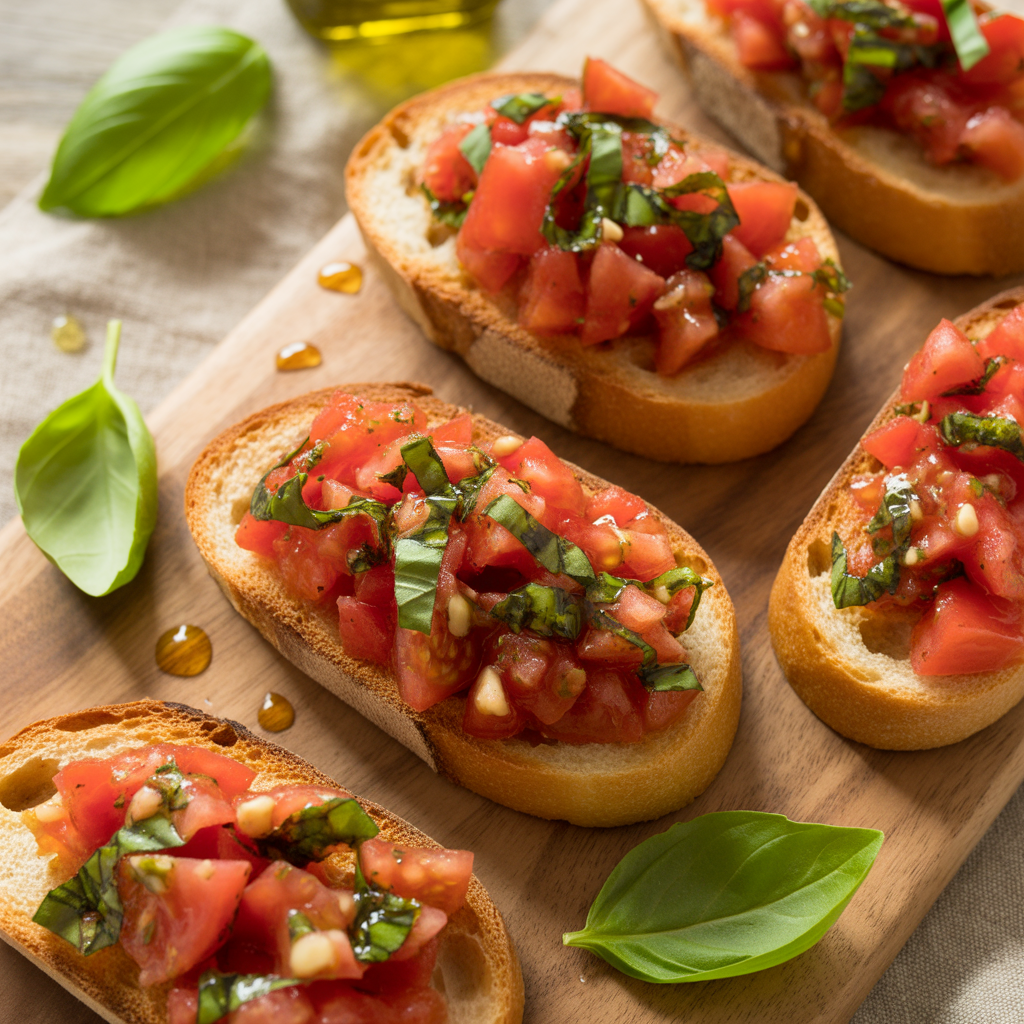
What Is Bruschetta?
Bruschetta (pronounced “broo-SKEH-tah”) is a classic Italian appetizer that has won hearts around the world. Originating from central Italy, this beloved dish consists of grilled or toasted bread rubbed with garlic and topped with a vibrant mixture of fresh tomatoes, basil, and a drizzle of high-quality olive oil. It is the perfect example of how simple, fresh ingredients can create something truly extraordinary.
Whether you are hosting a dinner party, looking for a quick snack, or preparing an elegant starter, bruschetta is always a crowd-pleaser. This recipe focuses on the most classic and beloved version — the fresh tomato, basil, and garlic bruschetta — delivering authentic Italian flavors right to your kitchen.
Why You Will Love This Bruschetta Recipe
- Quick and easy: Ready in under 20 minutes from start to finish.
- Fresh and flavorful: Uses ripe, seasonal tomatoes and fragrant fresh basil.
- Versatile: Perfect as an appetizer, snack, or light meal.
- Crowd-pleasing: Loved by both adults and children alike.
- Budget-friendly: Made with affordable, widely available ingredients.
- No special equipment needed: Just a grill pan, oven, or toaster works perfectly.
Ingredients
This recipe serves 4 to 6 people as an appetizer (makes approximately 12 pieces).
For the Tomato Topping
- 4 medium ripe Roma tomatoes (or 3 large vine-ripened tomatoes), diced
- 1/4 cup fresh basil leaves, thinly sliced (chiffonade)
- 3 cloves garlic — 2 minced finely, 1 left whole for rubbing the bread
- 3 tablespoons extra-virgin olive oil (plus more for drizzling)
- 1 tablespoon balsamic vinegar (optional but highly recommended)
- 1/2 teaspoon sea salt (or to taste)
- 1/4 teaspoon freshly ground black pepper
- 1/4 teaspoon red pepper flakes (optional, for a subtle kick)
For the Bread
- 1 baguette or Italian ciabatta loaf, sliced diagonally into 1/2-inch thick pieces
- 2 tablespoons extra-virgin olive oil (for brushing the bread)
- 1 whole garlic clove (for rubbing)
Optional Toppings & Garnishes
- Freshly grated Parmesan or shaved Pecorino Romano
- A drizzle of high-quality balsamic glaze
- Fresh mozzarella slices
- Flaky sea salt for finishing
Step-by-Step Instructions
Step 1: Prepare the Tomato Mixture
Start by dicing your tomatoes into small, uniform pieces — about 1/4 to 1/2 inch in size. If your tomatoes are especially juicy, you can remove the seeds by cutting them in half and gently squeezing out the excess liquid before dicing. This prevents your bruschetta from becoming soggy.
Place the diced tomatoes in a medium mixing bowl. Add the minced garlic, sliced fresh basil, extra-virgin olive oil, balsamic vinegar (if using), salt, pepper, and red pepper flakes. Gently toss everything together until well combined.
Important tip: Let the tomato mixture rest for at least 10 to 15 minutes at room temperature. This resting time allows all the flavors to meld together beautifully, creating a more cohesive and flavorful topping.
Step 2: Slice and Toast the Bread
While the tomato mixture is resting, prepare your bread. Slice the baguette or ciabatta diagonally into pieces approximately 1/2 inch thick. Diagonal slices give you a larger surface area for the toppings and look more elegant when served.
Brush both sides of each bread slice lightly with extra-virgin olive oil. You can toast the bread using one of the following methods:
- Grill method (most authentic): Preheat a grill or grill pan over medium-high heat. Grill the bread slices for 1 to 2 minutes per side until golden brown with distinct grill marks.
- Oven method: Preheat your oven to 400°F (200°C). Arrange the slices on a baking sheet and bake for 5 to 7 minutes, flipping halfway through, until golden and crisp.
- Broiler method: Place the slices under the broiler for 1 to 2 minutes per side. Watch closely to prevent burning.
- Toaster method: Simply toast the slices in your toaster until golden and crispy.
Step 3: Rub with Garlic
This step is what truly sets authentic bruschetta apart. As soon as the bread comes off the grill or out of the oven, while it is still hot, take the whole garlic clove and rub it directly onto one side of each warm toast. The rough surface of the toasted bread acts like a grater, releasing the garlic’s essential oils into the bread. This infuses the toast with a wonderful, subtle garlic flavor that is not overpowering.
Step 4: Assemble the Bruschetta
Spoon the tomato mixture generously over the garlic-rubbed side of each toast. Make sure each piece gets a good amount of the juicy tomato topping. If desired, drizzle a tiny bit of extra olive oil or balsamic glaze over the top for an added layer of richness.
If you are adding optional toppings like fresh mozzarella or Parmesan, layer those on first before adding the tomato mixture, or place them on top afterward.
Step 5: Serve Immediately
Bruschetta is best served immediately after assembling. The contrast between the crispy, warm toast and the cool, fresh tomato topping is what makes this dish so irresistible. If the bread sits too long with the topping, it can become soggy.
Arrange the finished bruschetta on a serving platter, garnish with a few extra fresh basil leaves, and serve right away.
Tips for the Best Bruschetta
Choose the Right Tomatoes
The quality of your tomatoes makes a significant difference in this recipe. Since tomatoes are the star ingredient, use the ripest, most flavorful tomatoes you can find. Roma tomatoes are a classic choice because they are meatier and have less water content. Vine-ripened tomatoes, heirloom tomatoes, or even cherry tomatoes (halved or quartered) also work beautifully. Avoid using out-of-season, pale, or flavorless tomatoes — they will result in a disappointing bruschetta.
Use the Best Olive Oil You Can Afford
Extra-virgin olive oil is non-negotiable for an authentic bruschetta. It adds richness, flavor depth, and a beautiful fruitiness that cheaper oils simply cannot replicate. Since this recipe uses so few ingredients, the quality of each one matters enormously.
Do Not Skip the Garlic Rub
Rubbing a raw garlic clove directly onto the hot toast is a traditional technique that delivers a more nuanced, aromatic garlic flavor compared to simply spreading minced garlic on top. Do not skip this step — it is essential to the authentic bruschetta experience.
Salt the Tomatoes at the Right Time
Salt draws moisture out of tomatoes. If you are concerned about soggy bread, wait until just before serving to add the salt to your tomato mixture. Alternatively, salt the diced tomatoes, let them sit in a colander for 10 minutes, and drain the excess liquid before mixing with the other ingredients.
Use Fresh Basil Only
Dried basil is not a suitable substitute in this recipe. Fresh basil has a bright, aromatic quality that is essential to the flavor profile of bruschetta. If fresh basil is unavailable, fresh flat-leaf parsley can work as a substitute, but it will change the overall character of the dish.
Choose the Right Bread
A crusty, sturdy bread is essential. Baguette, ciabatta, or a rustic Italian loaf all work well. Avoid soft sandwich breads as they will not hold up to the toppings and will become mushy quickly.
Variations and Customizations
Classic Bruschetta with Mozzarella
Add a slice of fresh buffalo mozzarella on top of the toast before spooning on the tomato mixture. This creates a richer, creamier version that is absolutely divine.
Bruschetta with Avocado
Spread a thin layer of mashed avocado on the toasted bread before adding the tomato topping. This adds a creamy texture and a modern twist on the classic.
Bruschetta with Roasted Tomatoes
Instead of using raw tomatoes, roast your tomatoes in the oven at 375°F (190°C) for 20 to 25 minutes with olive oil, garlic, and a pinch of salt. Roasting concentrates the sweetness of the tomatoes and creates an incredibly deep, rich flavor.
White Bean Bruschetta
Spread a layer of seasoned white bean puree on the toast before adding the tomato topping. This makes the bruschetta heartier and more filling.
Bruschetta with Prosciutto
Layer thin slices of prosciutto di Parma on the toast before adding the tomatoes and basil. The salty, savory prosciutto pairs beautifully with the bright, fresh tomatoes.
Caprese Bruschetta
Top the toast with alternating slices of fresh tomato and fresh mozzarella, a few basil leaves, a drizzle of olive oil, and a balsamic glaze. This is essentially a caprese salad served on toasted bread.
What to Serve with Bruschetta
Bruschetta is most commonly served as an appetizer, but it pairs wonderfully with many dishes. Here are some great serving suggestions:
- A mixed green salad or arugula salad with lemon vinaigrette
- A charcuterie or antipasto platter with cured meats, olives, and cheeses
- Pasta dishes such as spaghetti aglio e olio or penne arrabbiata
- Grilled chicken, fish, or vegetables
- A bowl of minestrone or tomato soup
- A glass of crisp white wine such as Pinot Grigio, Sauvignon Blanc, or Vermentino
- A light rosé or a refreshing Italian Aperol Spritz
Make-Ahead Tips and Storage
Can I Make Bruschetta Ahead of Time?
You can prepare components of this recipe in advance, but for the best texture and flavor, assemble the bruschetta just before serving.
- Tomato topping: The tomato mixture can be prepared up to 2 hours in advance and stored in the refrigerator. Bring it to room temperature before serving.
- Toasted bread: The bread can be toasted several hours in advance and stored at room temperature in an airtight container or a bag. However, once assembled, bruschetta should be eaten right away.
How to Store Leftovers
Unfortunately, assembled bruschetta does not store well as the bread quickly becomes soggy. However, you can store the tomato topping separately in an airtight container in the refrigerator for up to 2 days. Use it on fresh toast the next day, or repurpose it as a topping for grilled chicken, fish, or even pasta.
Nutritional Information (Approximate per serving)
The following nutritional values are approximate and based on one serving of 2 bruschetta pieces:
- Calories: 160–190 kcal
- Carbohydrates: 22g
- Protein: 4g
- Fat: 7g (mostly from healthy olive oil)
- Fiber: 2g
- Sodium: 280mg
Bruschetta is a relatively light and nutritious appetizer, especially when made with quality olive oil and fresh vegetables. It is naturally vegetarian and can easily be made vegan.
Frequently Asked Questions (FAQ)
How do you pronounce bruschetta?
In Italian, bruschetta is pronounced “broo-SKEH-tah”. The “ch” in Italian makes a hard “k” sound. While the mispronunciation “broo-SHEH-tah” is widespread in English-speaking countries, saying it correctly is a fun way to honor the dish’s Italian heritage.
What kind of bread is best for bruschetta?
A rustic, crusty bread with a dense crumb is ideal. Baguette, ciabatta, or a traditional Italian sourdough loaf are all excellent choices. The bread needs to be sturdy enough to hold the toppings without becoming immediately soggy.
Can I use canned tomatoes instead of fresh?
Fresh tomatoes are strongly preferred for this recipe, especially during summer when tomatoes are at their peak. Canned tomatoes tend to be too wet and lack the bright, vibrant flavor of fresh ripe tomatoes. If fresh tomatoes are unavailable, use high-quality canned whole peeled tomatoes and drain them very well before using.
Is bruschetta served hot or cold?
Traditionally, the bread is served warm and toasted, while the tomato topping is at room temperature (not cold from the refrigerator). The combination of warm, crispy bread with a cool, fresh topping is one of the most delightful aspects of this dish.
Can I make gluten-free bruschetta?
Yes! Simply use your favorite gluten-free bread or gluten-free baguette. Toast it in the same way, and the recipe works perfectly. Many gluten-free breads have a good texture for bruschetta when toasted properly.
What is the difference between bruschetta and crostini?
Both are Italian toasted bread appetizers, but they differ in size and bread type. Bruschetta is typically made with larger, thicker slices of rustic bread, while crostini are smaller, thinner, and often made with a baguette. Crostini are also usually fully dried out in the oven, while bruschetta is grilled or toasted to maintain a slight chewiness inside.
The History of Bruschetta
Bruschetta has a rich history that dates back to ancient Rome, where olive oil producers would offer freshly pressed olive oil on slices of bread to allow people to taste and evaluate the oil’s quality. The word “bruschetta” comes from the Roman dialect verb bruscare, meaning “to roast over coals.”
Historically, bruschetta was peasant food — a way to make use of stale or day-old bread by giving it new life with a rub of garlic and a drizzle of precious olive oil. The tomato topping that we know and love today was added after tomatoes became popular in Italy in the 16th and 17th centuries following their introduction from the Americas.
Today, bruschetta is enjoyed worldwide and has become one of the most recognizable symbols of Italian cuisine, celebrated for its simplicity, freshness, and bold flavors.
Final Thoughts
This classic bruschetta recipe with fresh tomatoes, basil, and garlic is a testament to the beauty of Italian cooking — simple ingredients, handled with care and respect, produce something far greater than the sum of their parts. The key to an outstanding bruschetta lies in using the finest quality ingredients you can find: perfectly ripe tomatoes, fragrant fresh basil, pungent garlic, exceptional extra-virgin olive oil, and good crusty bread.
Whether you are making it for a casual weeknight snack or an elegant dinner party starter, this bruschetta recipe is guaranteed to impress. Follow the steps, use fresh ingredients, and do not rush the process — your guests will be asking for seconds.
Now go ahead, make this recipe, and bring a little taste of Italy into your home today!