
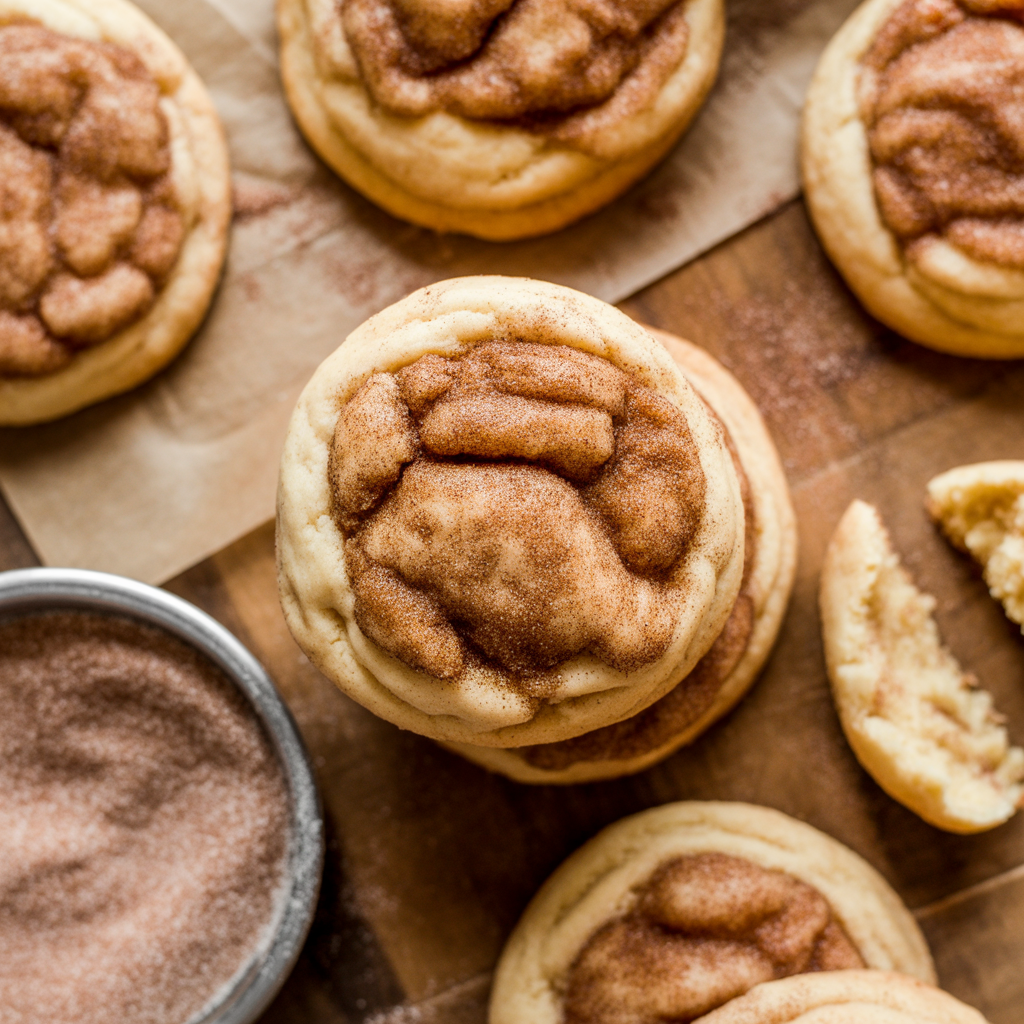
Snickerdoodles are a classic American cookie loved for their signature cinnamon-sugar coating and slightly tangy flavor. But the real secret that separates a good snickerdoodle from a great one? That irresistibly soft, chewy texture that makes you reach for a second (or third) cookie. If your snickerdoodles have been coming out flat, crispy, or cakey, this guide is exactly what you need.
What Makes Snickerdoodles Soft and Chewy?
Before diving into tips and tricks, it helps to understand the science behind soft and chewy cookies. Texture in cookies is influenced by several key factors:
- Moisture content: More moisture = softer cookies
- Fat type and amount: Butter vs. shortening, melted vs. creamed
- Sugar ratio: Brown sugar retains moisture; white sugar promotes spreading
- Flour amount: Too much flour leads to dry, cakey cookies
- Leavening agents: Cream of tartar is key to classic snickerdoodle chewiness
- Baking time and temperature: Underbaking slightly keeps cookies soft
Now let’s break down each element so you can master soft and chewy snickerdoodles every single time.
The Essential Ingredients for Soft Chewy Snickerdoodles
1. Use Cream of Tartar — Don’t Skip It
Cream of tartar is the ingredient that makes a snickerdoodle a snickerdoodle. It reacts with baking soda to create a leavening effect, but more importantly, it gives the cookie its characteristic tangy flavor and contributes to a chewy texture. Without it, you essentially have a plain cinnamon sugar cookie.
Use the ratio: 2 parts cream of tartar to 1 part baking soda. For example, 2 teaspoons cream of tartar + 1 teaspoon baking soda.
2. Choose the Right Butter
Always use unsalted butter at room temperature for the best results. Room-temperature butter creams properly with sugar, creating air pockets that give structure without being too dense.
Some bakers swear by using melted butter for an even chewier texture, similar to how it works in chocolate chip cookies. If you go this route, chill the dough before baking to prevent excessive spreading.
3. Add Brown Sugar
Traditional snickerdoodle recipes use only white granulated sugar. However, substituting a portion of the white sugar with brown sugar is the #1 trick for getting chewier cookies. Brown sugar contains molasses, which adds moisture and promotes a denser, chewier bite.
A great ratio: ¾ cup white sugar + ¼ cup packed brown sugar per standard batch.
4. Add an Extra Egg Yolk
Egg whites can make cookies cakey and dry. Adding an extra egg yolk (in addition to the whole egg) increases fat content without adding extra liquid, resulting in a richer, chewier texture.
5. Use Bread Flour or Increase All-Purpose Flour Slightly
Higher protein flour, like bread flour, develops more gluten, which creates a chewier bite. You can substitute up to half the all-purpose flour with bread flour. Alternatively, make sure to measure your all-purpose flour correctly using the spoon-and-level method to avoid accidentally adding too much.
6. Don’t Skip the Cornstarch
Adding 1–2 teaspoons of cornstarch to your dough helps create that soft, melt-in-your-mouth texture. Cornstarch weakens the gluten structure just enough to keep cookies tender without making them cakey.
The Perfect Soft and Chewy Snickerdoodle Recipe
Ingredients
For the Cookie Dough:
- 2 ¾ cups (345g) all-purpose flour
- 2 teaspoons cream of tartar
- 1 teaspoon baking soda
- 1 teaspoon cornstarch
- ½ teaspoon salt
- 1 cup (2 sticks / 227g) unsalted butter, softened to room temperature
- ¾ cup (150g) granulated white sugar
- ¼ cup (50g) packed light brown sugar
- 1 large egg + 1 egg yolk, room temperature
- 2 teaspoons pure vanilla extract
For the Cinnamon-Sugar Coating:
- ¼ cup (50g) granulated sugar
- 2 teaspoons ground cinnamon
Instructions
- Whisk dry ingredients: In a medium bowl, whisk together flour, cream of tartar, baking soda, cornstarch, and salt. Set aside.
- Cream butter and sugars: In a large mixing bowl, beat softened butter with both sugars using a hand mixer or stand mixer on medium-high speed for 3–4 minutes until pale and fluffy. This step is crucial — don’t rush it.
- Add eggs and vanilla: Add the whole egg, egg yolk, and vanilla extract. Beat for another 1–2 minutes until fully incorporated and smooth.
- Add dry ingredients: Gradually add the flour mixture to the wet ingredients, mixing on low speed just until combined. Do not overmix.
- Chill the dough: Cover the bowl with plastic wrap and refrigerate for at least 30 minutes (or up to 48 hours). This is a non-negotiable step for soft, thick cookies.
- Preheat your oven: Set oven to 375°F (190°C). Line baking sheets with parchment paper.
- Make cinnamon-sugar coating: Mix ¼ cup sugar and 2 teaspoons cinnamon in a small bowl.
- Scoop and roll: Scoop dough into balls (about 1.5 tablespoons each). Roll each ball generously in the cinnamon-sugar mixture.
- Bake: Place dough balls 2 inches apart on the prepared baking sheet. Bake for 9–11 minutes, until the edges are set but the centers still look slightly underdone and puffy.
- Cool on the pan: Allow cookies to cool on the baking sheet for 5 minutes before transferring to a wire rack. They will firm up as they cool but remain soft and chewy in the center.
Key Techniques for Soft, Chewy Snickerdoodles
Chill Your Dough — Always
Chilling the dough is arguably the most important technique for soft and chewy snickerdoodles. Here’s why:
- Cold fat melts more slowly in the oven, preventing excessive spreading
- Chilling allows flour to fully hydrate, improving texture
- Rested dough develops more complex flavors
For best results, chill for a minimum of 30 minutes. Overnight chilling (24–48 hours) produces even more flavorful, beautifully textured cookies.
Don’t Overbake — Pull Them Out Early
This is where most home bakers go wrong. Snickerdoodles should look underdone when you pull them from the oven. The centers should appear puffy, soft, and slightly underset. They will continue cooking from residual heat on the hot baking sheet.
If you wait until the cookies look done in the oven, they will be overdone and crunchy once cooled. Trust the process and pull them out at 9–11 minutes.
Use a Cookie Scoop for Uniform Size
Using a cookie scoop ensures all your cookies are the same size, which means they bake evenly. Unevenly sized cookies result in some being overbaked while others are underdone.
Bake One Sheet at a Time
For optimal results, bake one baking sheet at a time in the center rack of your oven. Stacking two sheets can cause uneven heat distribution, leading to bottoms burning and tops underbaking.
Use Room Temperature Ingredients
Make sure your butter and eggs are at room temperature before starting. Cold butter doesn’t cream properly with sugar, and cold eggs can cause the batter to curdle. Set them out on the counter for 30–60 minutes before baking.
Measure Flour Correctly
Too much flour is the number one cause of dry, cakey cookies. Always measure flour using the spoon-and-level method:
- Fluff the flour in the bag with a spoon
- Spoon it into your measuring cup
- Level off the top with a straight edge
Better yet, use a kitchen scale for precision.
Common Snickerdoodle Problems and How to Fix Them
Problem: Cookies Are Spreading Too Much and Turning Flat
Solution: Your butter may be too warm or melted. Make sure butter is softened but not greasy. Always chill your dough before baking. Also check that your baking soda and cream of tartar are fresh.
Problem: Cookies Are Cakey and Dry
Solution: You’ve likely added too much flour or too many egg whites. Use the extra egg yolk trick, reduce flour slightly, add cornstarch, and incorporate brown sugar for moisture.
Problem: Cookies Are Too Crispy
Solution: You’re overbaking them. Pull cookies from the oven when they still look slightly underdone. Also, check your oven temperature with an oven thermometer — many ovens run hotter than the dial indicates.
Problem: No Tangy Flavor
Solution: Make sure you’re using cream of tartar. It’s not optional — it’s what makes snickerdoodles uniquely tangy and chewy.
Problem: Cinnamon Sugar Falls Off
Solution: Roll the dough balls generously and press them well into the coating. Make sure your dough balls have a slightly tacky surface. If the dough is too cold, the coating won’t adhere well — let balls sit for a minute before rolling.
How to Store Snickerdoodles to Keep Them Soft
Once baked, proper storage is essential for maintaining that soft, chewy texture.
- Room temperature: Store in an airtight container at room temperature for up to 5 days. Place a slice of bread in the container — the bread releases moisture that keeps cookies soft.
- Refrigerator: Not recommended, as refrigeration dries cookies out faster.
- Freezer (baked cookies): Freeze in an airtight container for up to 3 months. Thaw at room temperature.
- Freezer (raw dough balls): Roll into balls, freeze on a baking sheet, then transfer to a zip-lock bag. Bake from frozen, adding 2–3 extra minutes to baking time.
Fun Variations to Try
Once you’ve mastered the classic, try these delicious variations:
- Brown Butter Snickerdoodles: Brown the butter before using for a nutty, caramel-like depth of flavor
- Stuffed Snickerdoodles: Stuff with Nutella, caramel, or cream cheese filling
- Pumpkin Snickerdoodles: Add pumpkin puree and pumpkin pie spice for a fall twist
- Chai Snickerdoodles: Replace cinnamon with chai spice blend in the coating
- Gluten-Free Snickerdoodles: Substitute 1:1 gluten-free flour blend
Quick Tips Summary
- ✅ Use cream of tartar — it’s non-negotiable
- ✅ Replace some white sugar with brown sugar
- ✅ Add an extra egg yolk
- ✅ Add cornstarch to the dough
- ✅ Chill the dough at least 30 minutes
- ✅ Bake at 375°F for only 9–11 minutes
- ✅ Pull from oven when centers look underdone
- ✅ Let cool on the baking sheet for 5 minutes
- ✅ Store with a slice of bread to maintain softness
Final Thoughts
Making soft and chewy snickerdoodles is all about understanding why each ingredient and technique matters. By using cream of tartar, incorporating brown sugar and an extra egg yolk, chilling your dough, and pulling cookies from the oven just before they look done, you’ll consistently produce bakery-quality snickerdoodles with perfectly soft centers, slightly crisp edges, and that irresistible cinnamon-sugar crust.
Now that you know all the secrets, it’s time to preheat that oven. Happy baking!