
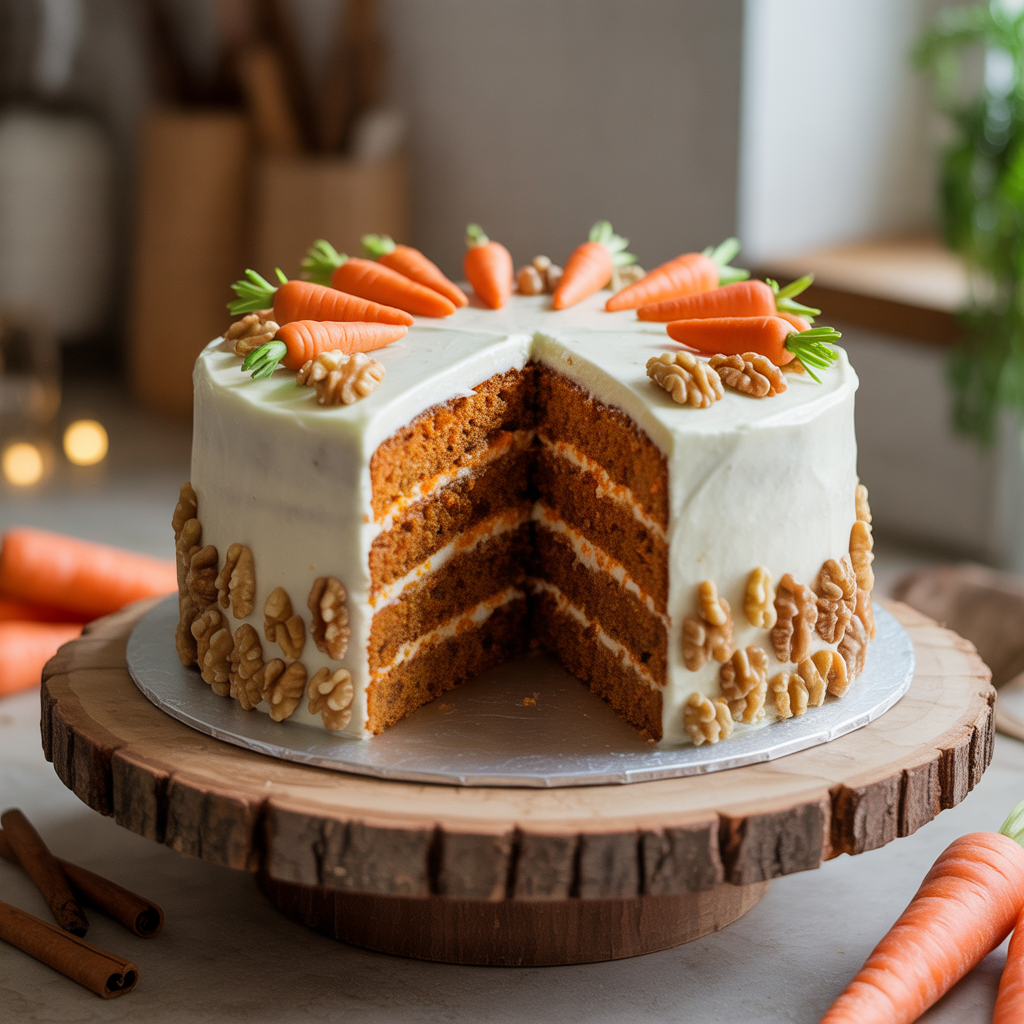
If you’re searching for the ultimate carrot cake recipe — one that’s incredibly moist, warmly spiced, and topped with luscious cream cheese frosting — you’ve come to the right place. This foolproof recipe delivers a bakery-quality cake right from your own kitchen. Whether you’re baking for a birthday, Easter celebration, or simply craving something special, this carrot cake will become your go-to favorite.
Why You’ll Love This Carrot Cake
- Incredibly moist texture thanks to fresh grated carrots and oil
- Perfectly spiced with cinnamon, nutmeg, and ginger
- Rich cream cheese frosting that’s smooth, tangy, and not too sweet
- Easy to make with simple pantry ingredients
- Stays fresh and moist for days
Ingredients You’ll Need
For the Carrot Cake
- 2 cups (250g) all-purpose flour
- 2 teaspoons baking powder
- 1 teaspoon baking soda
- ½ teaspoon salt
- 2 teaspoons ground cinnamon
- ½ teaspoon ground nutmeg
- ½ teaspoon ground ginger
- ¼ teaspoon ground cloves (optional, for extra depth)
- 4 large eggs, at room temperature
- 1½ cups (300g) granulated sugar
- ½ cup (100g) packed light brown sugar
- 1 cup (240ml) vegetable oil (or melted coconut oil)
- ¼ cup (60g) plain yogurt or sour cream
- 2 teaspoons pure vanilla extract
- 3 cups (300g) freshly grated carrots (about 4–5 medium carrots)
- 1 cup (100g) chopped walnuts or pecans (optional)
- ½ cup (75g) raisins (optional)
For the Cream Cheese Frosting
- 16 oz (450g) full-fat cream cheese, softened to room temperature
- ½ cup (115g) unsalted butter, softened to room temperature
- 4 cups (480g) powdered sugar, sifted
- 2 teaspoons pure vanilla extract
- 1–2 tablespoons heavy cream (as needed for consistency)
- Pinch of salt
Equipment Needed
- Two 9-inch round cake pans (or one 9×13 inch pan)
- Box grater or food processor with grater attachment
- Large mixing bowls
- Electric hand mixer or stand mixer
- Rubber spatula
- Wire cooling racks
- Offset spatula for frosting
Step-by-Step Instructions
Step 1: Prep Your Pans and Oven
Preheat your oven to 350°F (175°C). Grease two 9-inch round cake pans generously with butter or non-stick spray, then line the bottoms with parchment paper. Grease the parchment as well. This ensures your cakes release cleanly every time.
Step 2: Mix the Dry Ingredients
In a large bowl, whisk together the flour, baking powder, baking soda, salt, cinnamon, nutmeg, ginger, and cloves until evenly combined. Set aside. Pre-mixing the dry ingredients ensures the spices and leavening agents are evenly distributed throughout the cake.
Step 3: Combine the Wet Ingredients
In a separate large bowl, beat together the eggs, granulated sugar, and brown sugar using an electric mixer on medium-high speed for about 2 minutes until slightly thickened. Add the vegetable oil, yogurt (or sour cream), and vanilla extract. Mix on low speed until just combined.
Step 4: Bring It All Together
Gradually add the dry ingredient mixture to the wet ingredients, folding gently with a rubber spatula until just combined. Do not overmix — a few small streaks of flour are okay. Overmixing develops gluten and can make your cake dense and tough.
Step 5: Fold in the Carrots and Add-ins
Fold in the freshly grated carrots until evenly distributed. If using, gently fold in the chopped walnuts or pecans and raisins. The batter will be thick — that’s perfectly normal!
Pro Tip: Use freshly grated carrots, not pre-shredded packaged carrots. Fresh carrots contain more moisture and flavor, which is the secret to an incredibly moist carrot cake.
Step 6: Bake the Cakes
Divide the batter evenly between your two prepared cake pans. Smooth the tops with a spatula. Bake in the preheated oven for 28–35 minutes, or until a toothpick inserted in the center comes out clean or with just a few moist crumbs.
Start checking at the 28-minute mark. Every oven is different, so avoid opening the oven door during the first 25 minutes of baking.
Step 7: Cool Completely
Remove the cakes from the oven and let them cool in the pans for 15 minutes. Then, carefully run a knife around the edges and invert the cakes onto wire racks. Peel off the parchment paper and allow them to cool completely — at least 1–2 hours — before frosting. Frosting a warm cake will cause the cream cheese frosting to melt and slide off.
Step 8: Make the Cream Cheese Frosting
In a large bowl, beat the softened cream cheese and butter together with an electric mixer on medium-high speed for about 3 minutes, until smooth and fluffy. Scrape down the sides of the bowl as needed.
Reduce the speed to low and gradually add the sifted powdered sugar, about 1 cup at a time, mixing until incorporated. Add the vanilla extract and pinch of salt. Increase to medium-high speed and beat for another 2 minutes until fluffy and smooth.
If the frosting is too thick, add 1 tablespoon of heavy cream at a time. If it’s too thin, refrigerate for 15–20 minutes to firm up before using.
Step 9: Frost and Assemble the Cake
- Place one cake layer on your serving plate or cake board. If the top has domed, trim it with a serrated knife for a flat surface.
- Spread a generous layer of cream cheese frosting (about 1 cup) evenly over the top using an offset spatula.
- Place the second cake layer on top and press down gently.
- Apply a thin crumb coat of frosting all over the outside of the cake. Refrigerate for 20–30 minutes to set.
- Apply the final, thick layer of frosting over the top and sides. Smooth with your spatula or create a rustic swirled look.
Step 10: Decorate (Optional)
Garnish your finished carrot cake with any of the following:
- Roughly chopped walnuts or pecans pressed around the sides or sprinkled on top
- Toasted coconut flakes
- Small fondant or marzipan carrots for a classic look
- A light dusting of cinnamon
- Fresh edible flowers for elegant presentation
How to Get a Perfectly Moist Carrot Cake: Key Tips
1. Use Oil Instead of Butter
Unlike many cakes that use butter, carrot cake uses oil as the fat. Oil remains liquid at room temperature, which is what keeps carrot cake so incredibly moist even after refrigeration. Butter solidifies when cold, which can make a cake feel dry from the fridge.
2. Don’t Skip the Brown Sugar
The combination of granulated sugar and brown sugar adds both sweetness and moisture. Brown sugar contains molasses, which also deepens the flavor beautifully.
3. Add Sour Cream or Yogurt
Adding plain yogurt or sour cream to the batter adds fat and acidity, which tenderizes the gluten and contributes to a softer, more moist crumb.
4. Grate Your Own Carrots
Always use freshly grated carrots. Pre-packaged shredded carrots are drier, tougher, and won’t incorporate as well into the batter.
5. Do Not Overbake
Pull the cake from the oven as soon as a toothpick comes out with just a few moist crumbs. Overbaking is the number one cause of dry carrot cake.
Variations and Substitutions
Carrot Cake Cupcakes
This recipe makes approximately 24 cupcakes. Fill cupcake liners ⅔ full and bake at 350°F for 18–22 minutes. Perfect for parties and easier to serve!
9×13 Sheet Cake
Pour all the batter into a greased 9×13 inch baking pan and bake for 40–50 minutes. Frost directly in the pan for a simple, crowd-pleasing dessert.
Gluten-Free Carrot Cake
Substitute the all-purpose flour with a 1:1 gluten-free baking flour blend. Ensure your baking powder and other ingredients are certified gluten-free.
Dairy-Free Version
Use coconut oil in place of vegetable oil, dairy-free yogurt, and make the frosting with dairy-free cream cheese and vegan butter.
Add Pineapple for Extra Moisture
Many bakers swear by adding ½ cup of crushed pineapple (well-drained) to carrot cake batter. It adds sweetness and keeps the cake incredibly moist without a strong pineapple flavor.
Spice It Up
Feel free to adjust the spices to your taste. Add more cinnamon for a warmer flavor, increase the ginger for a spicier kick, or add a pinch of cardamom for a unique twist.
Make-Ahead and Storage Instructions
Make Ahead
- Cake layers: Bake, cool completely, wrap tightly in plastic wrap and store at room temperature for up to 2 days, or freeze for up to 3 months.
- Frosting: Make up to 5 days ahead and refrigerate in an airtight container. Bring to room temperature and re-whip before using.
Storing the Frosted Cake
Because of the cream cheese frosting, this cake must be refrigerated. Store in an airtight container or cover with plastic wrap and keep in the refrigerator for up to 5 days.
For the best flavor and texture, bring individual slices to room temperature for about 20–30 minutes before serving. Cold cream cheese frosting can taste dense; at room temperature it becomes silky and perfect.
Freezing
You can freeze the fully assembled and frosted cake. Place it in the freezer uncovered for 1–2 hours to firm up the frosting, then wrap tightly in plastic wrap followed by aluminum foil. Freeze for up to 3 months. Thaw overnight in the refrigerator.
Common Questions About Carrot Cake
Can I use baby carrots instead of regular carrots?
Yes, you can grate baby carrots, but regular full-size carrots tend to have better moisture content and are easier to grate in large quantities.
Why did my carrot cake sink in the middle?
Sinking is usually caused by underbaking, opening the oven door too early, or too much leavening agent. Always use the toothpick test before removing from the oven and measure your baking powder and soda carefully.
Can I add coconut to carrot cake?
Absolutely! Add ½ cup of sweetened shredded coconut to the batter for extra texture and flavor. It’s a classic addition that works beautifully.
Is it better to use salted or unsalted butter in the frosting?
Always use unsalted butter in the frosting so you can control the salt level. The pinch of salt added separately enhances the flavors without making the frosting taste salty.
My cream cheese frosting is too runny. How do I fix it?
This is usually caused by cream cheese or butter that was too warm when beaten. Refrigerate the frosting for 20–30 minutes and then re-whip. You can also add more powdered sugar to stiffen it up.
Serving Suggestions
This carrot cake pairs beautifully with:
- A hot cup of chai tea or spiced coffee
- A glass of cold milk
- A scoop of vanilla ice cream alongside a warm slice
- Fresh berries on the side for a pop of color and brightness
Nutrition Information (Per Slice, Approximate)
Based on 12 slices from a two-layer 9-inch cake with cream cheese frosting.
- Calories: ~580 kcal
- Carbohydrates: 72g
- Protein: 6g
- Fat: 30g
- Saturated Fat: 11g
- Fiber: 2g
- Sugar: 55g
Nutritional values are estimates and may vary based on specific ingredients used.
Final Tips for Success
The secret to the best carrot cake is simple: use quality ingredients, don’t rush the cooling process before frosting, and always grate your carrots fresh.
- Bring all refrigerated ingredients (eggs, butter, cream cheese) to room temperature before starting
- Sift your powdered sugar to avoid lumps in the frosting
- Don’t overmix the cake batter once the flour is added
- Taste and adjust your spices — every spice blend is different in potency
- Use a kitchen scale for the most accurate measurements
Now you have everything you need to bake the most moist, spiced, and delicious carrot cake of your life. This recipe has been tested, perfected, and loved by countless home bakers. Once you try it, you’ll never need another carrot cake recipe again. Happy baking!