If you want to attract hummingbirds to your garden, one of the best things you can do is provide them with a reliable source of nectar. Making your own hummingbird food at home is simple, cost-effective, and — most importantly — healthier for the birds than many commercial options. The key is getting the sugar-to-water ratio right. In this guide, you’ll learn exactly how to make hummingbird food, why the ratio matters, and how to keep your feeder clean and safe for these tiny visitors.
Why Homemade Hummingbird Food Is Better
Many store-bought hummingbird nectars contain artificial dyes, preservatives, or additives that can be harmful to hummingbirds over time. Making your own nectar at home means you know exactly what goes into it. It’s also significantly cheaper and just as effective at attracting these beautiful birds.
Hummingbirds are attracted to flowers that produce nectar with a sugar concentration of roughly 20–25%, which closely mirrors the classic homemade recipe ratio of 1 part sugar to 4 parts water.
The Correct Sugar-to-Water Ratio for Hummingbird Food
The universally recommended and scientifically supported ratio for hummingbird nectar is:
1 part white granulated sugar : 4 parts water
This means:
- 1 cup of sugar + 4 cups of water
- ½ cup of sugar + 2 cups of water
- ¼ cup of sugar + 1 cup of water
This ratio creates a solution that closely mimics the natural nectar found in flowers that hummingbirds typically feed on. It provides the right amount of energy without being too concentrated or too diluted.
Can You Use a Different Ratio?
You may have seen some sources recommend a 1:3 ratio (1 part sugar to 3 parts water) during colder months or for extra energy. While this is slightly more concentrated, it is generally considered safe for short-term use. However, using a ratio stronger than 1:3 can put strain on the birds’ kidneys and liver.
On the other hand, a ratio weaker than 1:4 (such as 1:5) provides less energy per feeding and may be less attractive to hummingbirds.
Stick to 1:4 as your standard recipe.
What Type of Sugar Should You Use?
Always use plain white granulated sugar — this is the closest in composition to the sucrose found in natural flower nectar.
Sugars to AVOID:
- Brown sugar – Contains molasses, which has iron that can be harmful to hummingbirds.
- Powdered (confectioners’) sugar – Often contains anti-caking agents like cornstarch, which can cause digestive issues.
- Raw or turbinado sugar – Also contains higher levels of iron and other minerals.
- Honey – Can ferment rapidly and promote dangerous fungal growth that causes a fatal tongue disease in hummingbirds.
- Artificial sweeteners – Provide zero calories, meaning hummingbirds get no energy from the nectar at all.
- Agave syrup or other natural sweeteners – Not recommended due to differing sugar compositions.
Step-by-Step Instructions: How to Make Hummingbird Food
What You’ll Need:
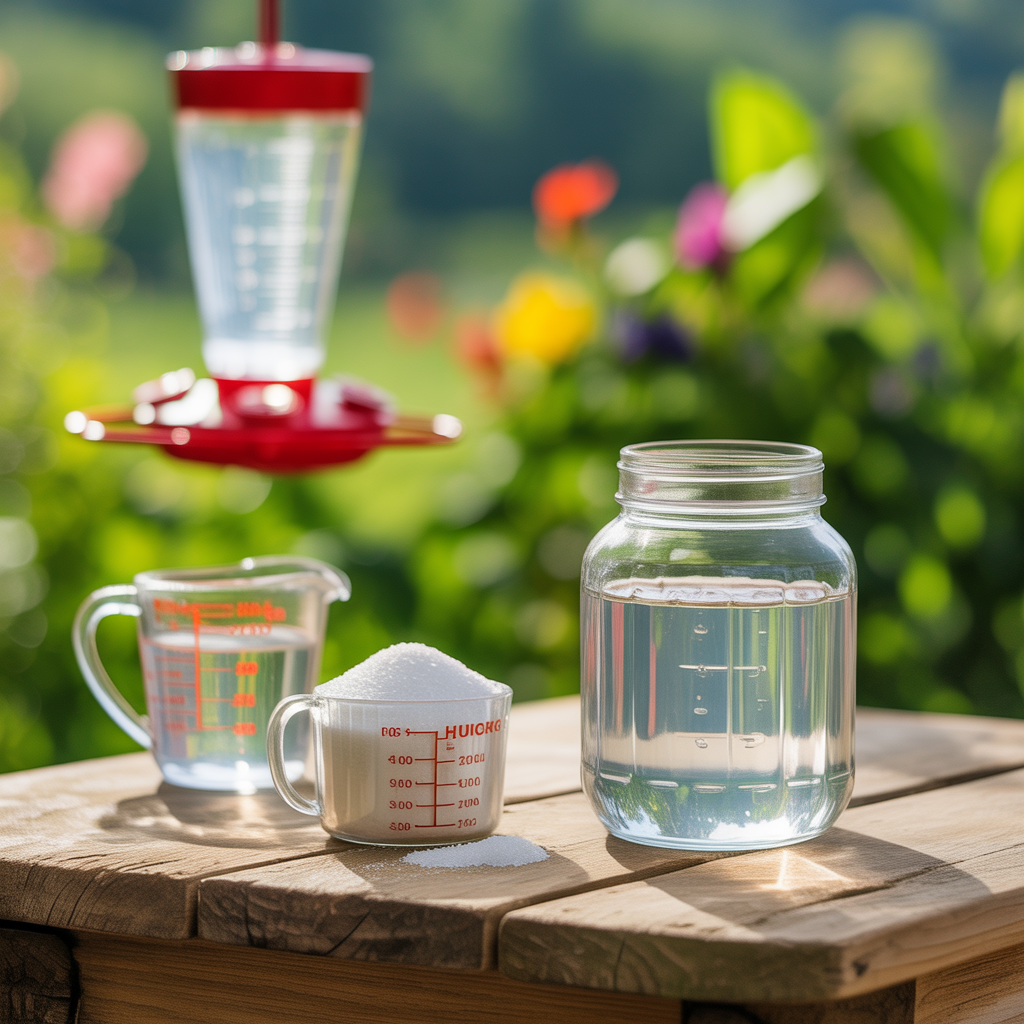
- 1 cup white granulated sugar
- 4 cups water (tap water is fine; use filtered if your tap water is heavily chlorinated)
- A saucepan or microwave-safe container
- A spoon or whisk
- A clean jar or container for storage
Method 1: Stovetop (Recommended)
- Measure your water. Pour 4 cups of water into a saucepan.
- Heat the water. Bring it to a boil over medium-high heat.
- Add the sugar. Once boiling, add 1 cup of white granulated sugar.
- Stir until dissolved. Stir continuously until the sugar is completely dissolved. This only takes about 1–2 minutes.
- Remove from heat. Take the saucepan off the burner.
- Cool completely. Allow the mixture to cool to room temperature before filling your feeder. Putting hot nectar in a plastic feeder can warp the feeder and encourage faster fermentation.
- Fill the feeder. Pour the cooled nectar into your clean hummingbird feeder.
- Store the extra. Refrigerate any leftover nectar in a sealed container for up to 1–2 weeks.
Method 2: No-Boil Method (Quick Alternative)
- Mix 1 cup of white granulated sugar with 4 cups of warm or hot tap water.
- Stir vigorously until the sugar is fully dissolved.
- Allow to cool before using.
Boiling is preferred because it helps slow fermentation and may kill any mold spores or bacteria in the water, but the no-boil method works well if you plan to refrigerate the nectar immediately and use it quickly.
Should You Add Red Food Coloring?
No. Do not add red food coloring.
This is one of the most common mistakes people make. While hummingbirds are attracted to the color red, the dye in the nectar is unnecessary and potentially harmful. Most hummingbird feeders already have red parts on them — that is more than enough to attract hummingbirds. The red color on the feeder itself does the job of drawing the birds in.
Research suggests that artificial dyes may cause health problems in hummingbirds over time. Keep your nectar clear.
How Often Should You Change the Nectar?
Fresh nectar is critical. Nectar that has gone bad can harbor mold, bacteria, and fermented alcohol — all of which are dangerous to hummingbirds.
- In hot weather (above 90°F / 32°C): Change nectar every 1–2 days.
- In warm weather (70–90°F / 21–32°C): Change nectar every 3–4 days.
- In cooler weather (below 70°F / 21°C): Change nectar every 5–7 days.
If you notice the nectar turning cloudy or see black mold growing inside the feeder, change the nectar immediately and clean the feeder thoroughly.
How to Clean Your Hummingbird Feeder Properly
A clean feeder is just as important as fresh nectar. Dirty feeders can breed black mold (Candida) and harmful bacteria that can be fatal to hummingbirds.
Cleaning Steps:
- Empty the feeder completely. Discard any leftover nectar.
- Disassemble the feeder fully — remove all parts.
- Rinse with hot water. Do not use soap — soap residue can be harmful. Hot water alone is sufficient for routine cleaning.
- Use a bottle brush to scrub the inside of the bottle and feeding ports.
- For stubborn mold: Soak the parts in a solution of 1 part white vinegar to 4 parts water for an hour, then scrub and rinse thoroughly.
- Rinse extensively with clean water to remove all traces of vinegar.
- Air dry completely before refilling.
Avoid using bleach or dish soap unless absolutely necessary, and if you do, rinse the feeder extremely well afterward.
Tips for Attracting More Hummingbirds
Getting the nectar right is the first step. Here are a few extra tips to make your yard a hummingbird haven:
- Choose a feeder with red parts — hummingbirds are strongly attracted to red and orange colors.
- Place the feeder in a shaded area — shade slows nectar fermentation and keeps the birds comfortable while feeding.
- Hang multiple feeders — hummingbirds can be territorial; multiple feeders help ensure all birds get a turn.
- Plant hummingbird-friendly flowers nearby, such as trumpet vine, salvia, bee balm, cardinal flower, and petunias.
- Keep the feeder away from windows to prevent fatal bird strikes.
- Add a mister or water feature — hummingbirds love to bathe in fine mist.
Frequently Asked Questions
Can I use tap water to make hummingbird nectar?
Yes, regular tap water is generally fine. If your tap water is heavily chlorinated or treated with fluoride, you may want to use filtered or bottled water. However, boiling tap water before use can help dissipate chlorine.
How long does homemade hummingbird food last in the refrigerator?
Properly stored in a sealed container in the refrigerator, homemade hummingbird nectar will stay fresh for up to 1 to 2 weeks. Always smell and inspect it before use.
Is it safe to make a large batch of hummingbird nectar?
Yes. Making a larger batch and refrigerating it is perfectly safe and convenient. Just make sure to store it in a clean, airtight container and use it within two weeks.
What time of year should I put out a hummingbird feeder?
In most parts of North America, hummingbird season runs from April through October. In warmer southern regions, some hummingbirds may be present year-round. Put feeders out about 1–2 weeks before you expect hummingbirds to arrive in your area.
Why aren’t hummingbirds coming to my feeder?
If hummingbirds aren’t visiting, try these fixes: Make sure the nectar is fresh, place the feeder in a more visible and shaded spot, check that the feeding ports aren’t clogged, and be patient — it can take time for birds to discover a new feeder.
Summary: Quick Reference Guide
| Factor | Recommendation |
|---|---|
| Sugar-to-water ratio | 1 part sugar : 4 parts water |
| Best type of sugar | Plain white granulated sugar |
| Food coloring | Never — leave nectar clear |
| Honey or brown sugar | Never use these |
| Nectar change frequency (hot weather) | Every 1–2 days |
| Nectar change frequency (cool weather) | Every 5–7 days |
| Refrigerator shelf life | Up to 1–2 weeks |
| Cleaning agent | Hot water + bottle brush (vinegar for mold) |
Final Thoughts
Making hummingbird food at home is one of the easiest and most rewarding things you can do for your local wildlife. With just two ingredients — white sugar and water — and the correct 1:4 ratio, you can create a safe, effective, and natural nectar that hummingbirds will love. Skip the red dye, skip the honey, and keep your feeder clean. Do those three things, and you’ll have hummingbirds visiting your yard all season long.
Happy bird watching!