
If you’ve ever tasted store-bought hummus and thought, “This is good, but I know it could be better” — you’re absolutely right. Homemade hummus is creamier, fresher, and infinitely more satisfying than anything you’ll find in a plastic tub. This guide will walk you through everything you need to know to make the perfect batch at home, from selecting the best ingredients to pro tips for achieving that ultra-smooth, restaurant-quality texture.
What Is Hummus?
Hummus (also spelled “houmous”) is a creamy Middle Eastern dip and spread made primarily from cooked chickpeas (also known as garbanzo beans), tahini (sesame seed paste), lemon juice, garlic, and olive oil. It has been a staple food in the Middle East and Mediterranean regions for centuries and has gained worldwide popularity for its rich flavor and impressive nutritional profile.
Whether you’re using it as a dip for pita bread and vegetables, spreading it on sandwiches and wraps, or serving it as part of a mezze platter, hummus is one of the most versatile foods you can make in your kitchen.
Why Make Hummus at Home?
- Better Flavor: Fresh ingredients mean bolder, more vibrant taste.
- Superior Texture: You control the smoothness — from chunky rustic to silky smooth.
- No Preservatives: Homemade hummus contains none of the additives or preservatives found in commercial versions.
- Cost-Effective: A can of chickpeas and a jar of tahini go a long way.
- Customizable: Easily adjust garlic, lemon, salt, and add-ins to match your personal preference.
Ingredients You’ll Need
This recipe makes approximately 2 cups of hummus, which is perfect for 4–6 servings as an appetizer or snack.
Main Ingredients
- 1 can (15 oz / 425g) chickpeas (garbanzo beans), drained and rinsed — or 1.5 cups cooked from dry
- 3 tablespoons fresh lemon juice (about 1 large lemon)
- 3 tablespoons tahini (well-stirred)
- 1 small clove of garlic, minced (or more to taste)
- 2 tablespoons extra-virgin olive oil, plus more for serving
- ½ teaspoon ground cumin
- ½ teaspoon kosher salt, or to taste
- 2–4 tablespoons cold water (to adjust consistency)
Optional Garnishes
- A drizzle of extra-virgin olive oil
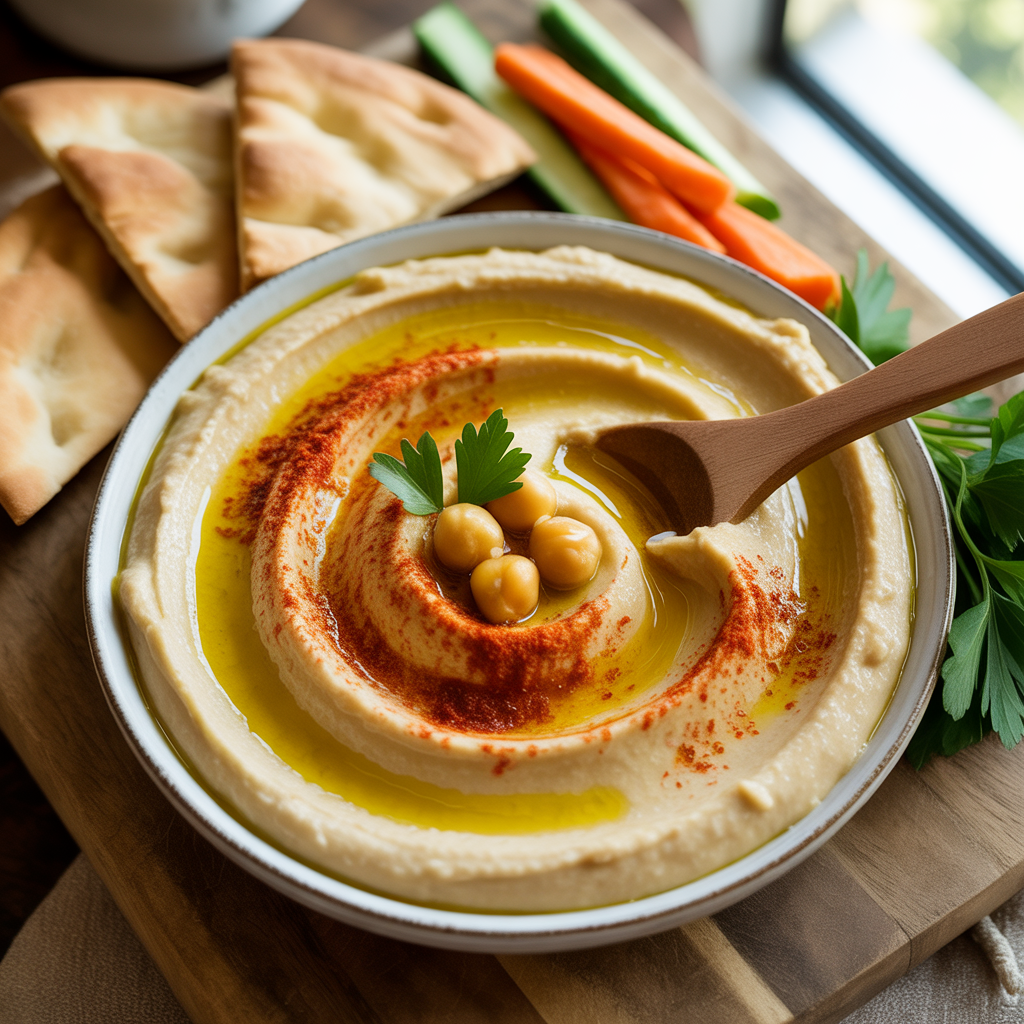
- A sprinkle of smoked paprika or sumac
- Fresh chopped parsley
- A few whole chickpeas
- Toasted pine nuts
Equipment Needed
- Food processor or high-powered blender
- Can opener (if using canned chickpeas)
- Fine mesh strainer or colander
- Measuring spoons and cups
- Serving bowl
Step-by-Step Instructions
Step 1: Prepare the Chickpeas
Drain and rinse your canned chickpeas thoroughly under cold water. For an extra smooth hummus, take the time to remove the skins from the chickpeas. While this step is optional, it makes a noticeable difference in texture. To peel them quickly, rub a handful of chickpeas between two clean kitchen towels — the skins will slip right off.
Pro Tip: If you want an even creamier result, simmer the drained chickpeas in water with ½ teaspoon of baking soda for about 20 minutes until they are very soft. Drain and rinse before using.
Step 2: Blend the Tahini and Lemon First
This is one of the most important secrets to ultra-smooth hummus. Add the tahini and lemon juice to your food processor and process for about 1 full minute. The mixture will turn pale, thick, and creamy. This step whips air into the tahini, which is the foundation of a fluffy, smooth hummus.
Step 3: Add Garlic and Salt
Add the minced garlic and salt to the tahini-lemon mixture. Process for another 30 seconds until well combined. The acid from the lemon helps mellow out the raw garlic flavor, making it pleasant rather than overpowering.
Step 4: Add the Chickpeas and Cumin
Add half of the chickpeas to the food processor and process for 1 minute. Then add the remaining chickpeas along with the ground cumin and process for another minute. Scrape down the sides of the bowl as needed.
Step 5: Add Olive Oil and Cold Water
With the food processor running, drizzle in the olive oil. Then add cold water, one tablespoon at a time, until you reach your desired consistency. For dipping, a thicker consistency works well. For spreading, a slightly looser texture is better.
Continue processing for 3–4 more minutes total — yes, this long! The extended blending time is what gives homemade hummus that stunningly smooth, almost whipped texture that most people associate with restaurant-quality hummus.
Step 6: Taste and Adjust
Give your hummus a taste and adjust the seasoning as needed. You might want:
- More lemon juice for brightness
- More salt for depth
- More garlic for a punchier flavor
- More tahini for a nuttier profile
- More water for a lighter texture
Step 7: Serve and Garnish
Transfer the hummus to a wide, shallow serving bowl. Using the back of a spoon, create a shallow well or swirl on the surface. Drizzle generously with extra-virgin olive oil and add your desired garnishes. Serve immediately with warm pita bread, pita chips, or fresh cut vegetables.
Tips for the Smoothest Hummus Ever
- Use cold water: Cold water helps create a lighter, fluffier texture when blending.
- Process longer than you think: At least 4–5 minutes of total blending time is the key to silky hummus.
- Good quality tahini matters: Look for tahini made from 100% sesame seeds with no additives. It should be pourable and slightly bitter, not dry or chalky.
- Fresh lemon juice is non-negotiable: Bottled lemon juice will not give you the same bright, clean flavor.
- Peel the chickpeas: Even removing half the skins makes the hummus noticeably smoother.
- Let it rest: Allow the hummus to sit for 30 minutes at room temperature before serving so the flavors meld together beautifully.
Hummus Variations to Try
Once you’ve mastered the classic recipe, these popular variations are easy and delicious:
Roasted Red Pepper Hummus
Add ½ cup of roasted red peppers (drained if from a jar) along with the chickpeas. Process as normal. This version has a beautiful orange color and a sweet, smoky flavor.
Roasted Garlic Hummus
Replace the raw garlic with a whole head of roasted garlic. The roasted garlic gives the hummus a mellow, caramelized sweetness without any sharp bite.
Avocado Hummus
Add one ripe avocado along with the chickpeas for a green, creamy twist packed with healthy fats.
Spicy Jalapeño Hummus
Add 1–2 pickled or fresh jalapeños for a spicy kick. Pairs wonderfully with corn tortilla chips.
Beet Hummus
Blend in ½ cup of roasted or canned beets for a stunning magenta-colored hummus with an earthy sweetness.
Sun-Dried Tomato Hummus
Add ¼ cup of sun-dried tomatoes (packed in oil, drained) for an intense, savory depth of flavor.
Nutritional Benefits of Hummus
Hummus isn’t just delicious — it’s genuinely healthy. Here’s a look at what makes this dip a nutritional powerhouse:
Rich in Plant-Based Protein
Chickpeas are an excellent source of plant-based protein, providing about 3–4 grams per 2-tablespoon serving. This makes hummus a great option for vegetarians and vegans looking to meet their daily protein needs.
High in Fiber
The dietary fiber in chickpeas promotes healthy digestion, helps regulate blood sugar levels, and keeps you feeling full longer. A serving of hummus can contribute significantly to your daily fiber intake.
Healthy Fats
Both tahini and olive oil are rich in heart-healthy monounsaturated and polyunsaturated fats, which support cardiovascular health and reduce inflammation.
Vitamins and Minerals
Hummus provides a good amount of folate, manganese, copper, phosphorus, and iron. Tahini is also a rich source of calcium, making hummus a surprisingly good option for bone health.
Low Glycemic Index
Chickpeas have a low glycemic index, meaning they cause a slow, steady rise in blood sugar rather than a spike, making hummus a smart snack choice for people managing blood sugar levels.
How to Serve Hummus
The serving possibilities for hummus are nearly endless:
- Classic dip: Serve with warm pita bread, pita chips, naan, or flatbread.
- Veggie platter: Pair with carrot sticks, cucumber slices, bell pepper strips, cherry tomatoes, and celery.
- Sandwich and wrap spread: Use as a healthier alternative to mayo or mustard.
- Buddha bowls and grain bowls: Dollop onto rice, quinoa, or farro bowls.
- Topped with protein: Serve as a base for grilled chicken, lamb, or falafel.
- On toast: Spread on whole-grain toast and top with sliced avocado, cucumber, and everything bagel seasoning.
- In pasta: Thin it down with pasta cooking water and toss with noodles for a quick, creamy sauce.
How to Store Homemade Hummus
Proper storage keeps your hummus fresh and safe to eat for several days.
- Refrigerator: Store in an airtight container in the refrigerator for up to 5–7 days. Drizzle a thin layer of olive oil over the top before sealing to prevent it from drying out.
- Freezer: Hummus freezes very well. Transfer to a freezer-safe container, drizzle with olive oil on top, and freeze for up to 4 months. Thaw overnight in the refrigerator and stir well before serving.
- Reviving leftovers: If refrigerated hummus has thickened, stir in a tablespoon or two of cold water or olive oil to restore the creamy consistency.
Common Mistakes to Avoid
- Not blending long enough: This is the number one mistake. Hummus needs at least 3–5 minutes of blending for the right texture.
- Using low-quality tahini: Bitter, grainy tahini will ruin the flavor of your hummus. Invest in a good brand.
- Skipping the lemon-tahini pre-blend: Blending tahini with lemon juice first creates the creamy base that makes homemade hummus exceptional.
- Adding too much garlic: Raw garlic is strong. Start with one small clove and add more to taste.
- Not tasting as you go: Seasoning is everything in hummus. Always taste before serving.
Frequently Asked Questions
Can I use dried chickpeas instead of canned?
Absolutely! In fact, many hummus purists prefer dried chickpeas for their superior flavor and creamier texture. Soak 1 cup of dried chickpeas overnight in cold water. Drain, rinse, and cook in fresh water (with a pinch of baking soda) for about 1–2 hours until very soft. Drain, rinse, and use as you would canned chickpeas.
Is hummus vegan and gluten-free?
Yes! Classic hummus made with the ingredients listed above is naturally vegan, vegetarian, and gluten-free. Always check labels if you are using store-bought tahini or canned chickpeas to confirm no gluten-containing additives have been included.
Why is my hummus bitter?
Bitterness is most often caused by the tahini. Try a different brand, as quality varies greatly. It can also result from too much raw garlic or using the skins of overcooked chickpeas. A little extra lemon juice can help balance any bitterness.
Can I make hummus without tahini?
Yes, tahini-free hummus is a popular option. You can substitute tahini with Greek yogurt (non-vegan), sunflower seed butter, or simply leave it out and increase the olive oil slightly. The flavor will be different but still delicious.
How many calories are in homemade hummus?
A 2-tablespoon serving of homemade hummus contains approximately 70–80 calories, depending on the exact recipe. It provides about 2–3g of protein, 2g of fiber, and 4–5g of healthy fat per serving.
Final Thoughts
Making hummus at home is one of those kitchen skills that pays dividends every single time. Once you experience the difference between a batch of fresh, homemade hummus and a store-bought container, it’s very hard to go back. The process is simple, the ingredients are affordable and accessible, and the results are consistently impressive.
Whether you’re making it for a party, meal prepping for the week, or simply looking for a healthier snack option, this homemade hummus recipe delivers on every front: smooth, creamy, nutritious, and bursting with flavor. Give it a try — your blender is all you need.