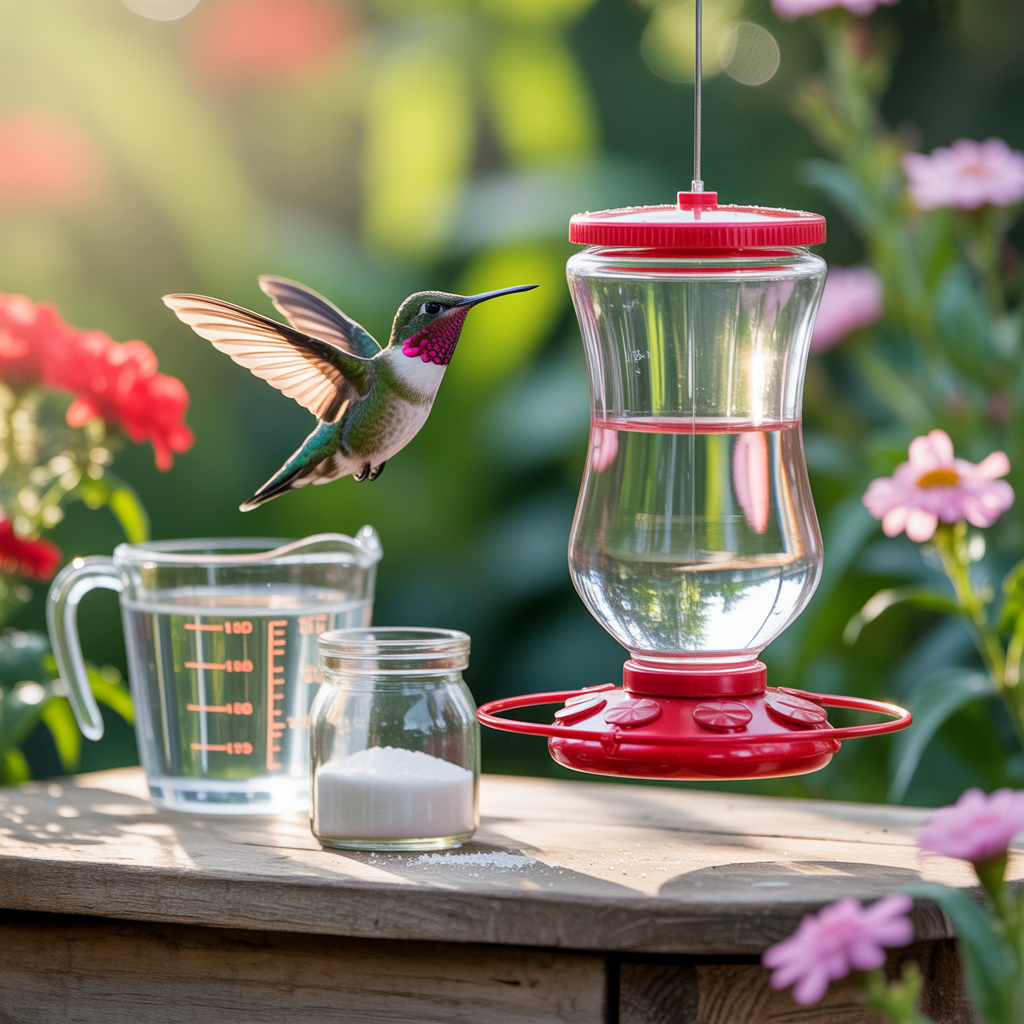
Making your own hummingbird food at home is one of the easiest and most rewarding things you can do for these tiny, energetic birds. With just two simple ingredients — sugar and water — you can create the perfect nectar that hummingbirds love. In this guide, we’ll walk you through everything you need to know about the ideal sugar water ratio, how to prepare it safely, and important tips to keep your feathered visitors healthy and coming back.
Why Make Homemade Hummingbird Food?
Store-bought hummingbird nectars often contain artificial dyes, preservatives, and other additives that are unnecessary and potentially harmful to hummingbirds. Homemade nectar is:
- Cheaper than commercial options
- Healthier — no artificial red dyes or chemicals
- Easy to make with ingredients you already have at home
- Fresher — you control when it’s made and how long it’s been sitting
Hummingbirds rely heavily on nectar as their primary energy source. Providing a clean, properly made food source can make a significant difference in their health and well-being.
The Perfect Hummingbird Food Recipe: Sugar Water Ratio
The ideal ratio for hummingbird nectar closely mimics the natural sugar concentration found in flower nectar:
Standard Ratio: 1 Part Sugar to 4 Parts Water (1:4)
- 1 cup white granulated sugar
- 4 cups water
This 1:4 ratio creates a solution that is approximately 20% sucrose, which closely matches the average sugar content of the flowers hummingbirds naturally feed on.
Step-by-Step Instructions
- Measure your ingredients. Use 1 cup of plain white granulated sugar for every 4 cups of water.
- Boil the water. Bring the water to a full boil in a clean saucepan. Boiling helps dissolve the sugar completely and kills any mold spores or bacteria that could harm hummingbirds.
- Add the sugar. Once the water is boiling, remove it from the heat and stir in the sugar. Stir until the sugar is completely dissolved. Do not boil the sugar water mixture, as this can change the concentration.
- Let it cool completely. Allow the nectar to cool to room temperature before filling your feeder. Hot nectar can warp plastic feeders and may harm birds.
- Fill your feeder. Pour the cooled nectar into a clean hummingbird feeder.
- Store the remainder. Any leftover nectar can be stored in the refrigerator in a sealed container for up to 1–2 weeks.
Can You Make Hummingbird Food Without Boiling?
Yes, technically you can dissolve sugar in warm or room-temperature water without boiling, especially if you’re in a hurry. However, boiling is strongly recommended for two key reasons:
- It fully dissolves the sugar, preventing crystallization in the feeder.
- It kills potential mold spores and bacteria in the water, making the nectar safer for hummingbirds.
If you skip boiling, make sure you change the nectar more frequently — every 1 to 2 days in warm weather.
What Type of Sugar Should You Use?
Always use plain white granulated cane sugar. This is the only safe and recommended sweetener for hummingbird nectar. Here’s a breakdown of what to use and what to avoid:
✅ Use These
- White granulated sugar (cane sugar) — The best choice. Its sucrose composition closely matches natural flower nectar.
❌ Avoid These
- Brown sugar — Contains molasses, which can cause digestive issues and ferments quickly.
- Powdered/confectioner’s sugar — Often contains cornstarch, which can clog feeders and harm birds.
- Raw or turbinado sugar — Has impurities and higher iron content, which can be harmful.
- Honey — Ferments rapidly and can promote dangerous fungal growth that causes a fatal tongue disease in hummingbirds.
- Artificial sweeteners (Splenda, Stevia, etc.) — Provide no calories or energy for hummingbirds. Potentially toxic.
- Corn syrup — Wrong type of sugar; not suitable for hummingbirds.
- Fruit juice — Ferments quickly and contains acids not suitable for hummingbird metabolism.
Should You Add Red Dye to Hummingbird Food?
No — absolutely not. Despite what some commercial products suggest, red food dye is completely unnecessary and potentially harmful. Hummingbirds are attracted to the color red on the feeder itself, not in the nectar. Most hummingbird feeders are designed with red parts specifically for this reason.
Adding red dye (especially Red Dye #40) to homemade nectar has been linked to potential harm in hummingbirds. There is no proven benefit and several potential risks, so skip the dye entirely.
How Often Should You Change Hummingbird Nectar?
Freshness is critical. Nectar that sits in a feeder too long can ferment and grow mold or bacteria, which can seriously sicken or kill hummingbirds. Follow these guidelines:
- Hot weather (above 90°F / 32°C): Change every 1–2 days
- Warm weather (70–90°F / 21–32°C): Change every 2–3 days
- Cooler weather (below 70°F / 21°C): Change every 4–5 days
Even if the nectar looks clear, it can still contain harmful microorganisms. When in doubt, change it out.
How to Clean Your Hummingbird Feeder
A clean feeder is just as important as fresh nectar. Follow these steps each time you refill:
- Empty any remaining nectar from the feeder.
- Disassemble all parts of the feeder.
- Wash thoroughly with hot water and a bottle brush. Avoid soap if possible, as residue can be harmful.
- If you see black mold, soak the parts in a solution of 1 part white vinegar to 4 parts water for an hour, then scrub and rinse well.
- Rinse all parts several times with clean, hot water.
- Allow to air dry completely or refill with fresh nectar immediately.
Never use bleach, soap with fragrance, or commercial cleaning agents inside your hummingbird feeder, as residue can poison the birds.
Hummingbird Food Recipe Variations by Batch Size
Here’s a quick reference chart for different batch sizes using the 1:4 ratio:
| Sugar | Water | Total Nectar (approx.) |
|---|---|---|
| ¼ cup | 1 cup | ~1 cup |
| ½ cup | 2 cups | ~2 cups |
| 1 cup | 4 cups | ~4 cups |
| 2 cups | 8 cups | ~8 cups |
Make only as much as you’ll use within 1–2 weeks, since the refrigerated nectar should not be kept longer than that.
Tips for Attracting More Hummingbirds
Beyond providing great food, here are some tips to attract more hummingbirds to your yard:
- Use multiple feeders — Hummingbirds can be territorial. Multiple feeders placed out of sight of each other help more birds feed peacefully.
- Place feeders in shade — This slows fermentation and keeps the nectar cooler and fresher longer.
- Plant hummingbird-friendly flowers — Trumpet vine, salvia, bee balm, and cardinal flower are excellent choices.
- Add a water feature — Hummingbirds love a gentle misting fountain for bathing.
- Put feeders out early — Set out your feeders in late March or early April before hummingbirds arrive during migration.
- Keep feeders up late in the season — Contrary to popular belief, keeping feeders up through fall does not prevent hummingbirds from migrating. It helps late-season migrants refuel.
Frequently Asked Questions (FAQ)
Can I use tap water for hummingbird nectar?
Yes, tap water is generally fine for making hummingbird nectar, especially if your tap water is safe to drink. If your tap water has a strong chlorine taste or smell, you may want to use filtered water instead. Distilled water is also an acceptable option.
Is a 1:3 ratio okay for hummingbirds?
A 1:3 ratio (1 cup sugar to 3 cups water) creates a slightly more concentrated solution. While it won’t immediately harm hummingbirds, the standard 1:4 ratio is recommended as it best mimics natural nectar. More concentrated solutions ferment faster and can be harder on the birds’ kidneys over time.
Why is my hummingbird nectar cloudy?
Cloudy nectar is a sign that it has begun to ferment or grow mold. Discard it immediately, clean your feeder thoroughly, and refill with fresh nectar. Cloudy nectar can be harmful or fatal to hummingbirds.
Do hummingbirds eat anything other than nectar?
Yes! While nectar provides the energy hummingbirds need, they also eat small insects and spiders for protein, fat, and essential nutrients. Nectar alone does not provide complete nutrition. This is another reason why maintaining a natural garden environment alongside your feeders is beneficial.
How long does homemade hummingbird food last?
Homemade hummingbird nectar lasts up to 1–2 weeks in the refrigerator. In a feeder, it should be changed every 1–5 days depending on the outdoor temperature.
Final Thoughts
Making hummingbird food at home couldn’t be simpler. With the correct 1:4 sugar to water ratio, plain white granulated sugar, and a commitment to keeping your feeder clean and the nectar fresh, you’ll create a safe and attractive feeding station that hummingbirds will visit again and again. Skip the red dye, avoid harmful sugar substitutes, and enjoy the magical experience of watching these incredible little birds up close in your garden.
Now that you have everything you need, mix up a batch of homemade hummingbird nectar today and hang out your feeder — your hummingbird visitors will thank you!