
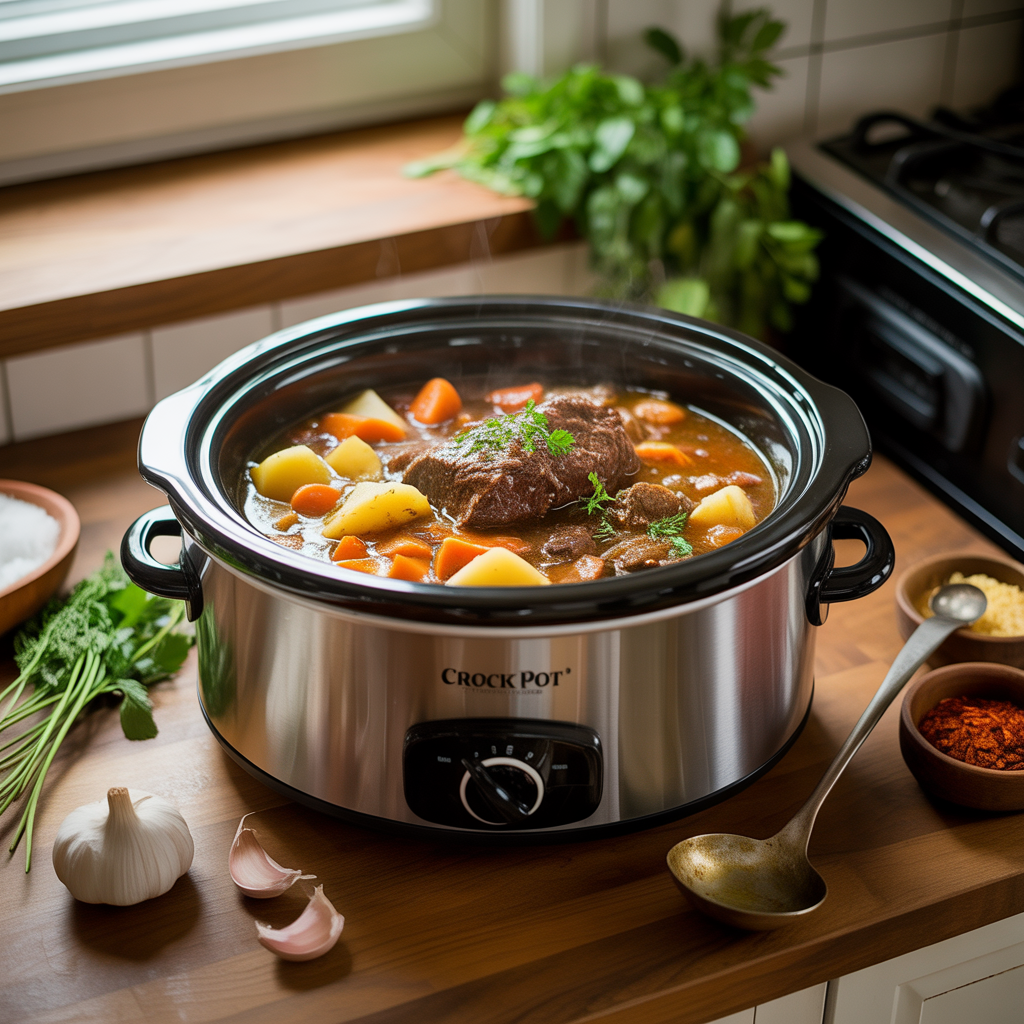
If you’re looking for a hands-off way to prepare delicious, home-cooked meals, a crock pot (also known as a slow cooker) might just become your new best friend in the kitchen. Whether you’re a busy parent, a working professional, or simply someone who loves the idea of coming home to a ready-made meal, using a crock pot can transform the way you cook. In this guide, we’ll walk you through everything you need to know — from the basics of how a crock pot works to tips, tricks, and easy recipes to get you started.
What Is a Crock Pot?
A crock pot is a brand name that has become synonymous with slow cookers in general. It’s a countertop electric cooking appliance that uses low, steady heat over an extended period of time — typically 4 to 10 hours — to cook food slowly and evenly. The appliance consists of three main parts:
- The heating base: Contains the electric heating element that generates consistent low heat.
- The ceramic or stoneware insert: The inner pot where food is placed. It retains heat exceptionally well.
- The lid: A glass or plastic cover that traps steam and moisture inside, helping food cook in its own juices.
Crock pots typically come with at least two heat settings — Low and High — and many modern models also include a Warm setting to keep food at a safe temperature after cooking is complete.
Why Use a Crock Pot?
There are many compelling reasons why millions of home cooks rely on slow cookers every week:
- Convenience: Add your ingredients in the morning, set the temperature, and come home to a fully cooked meal.
- Energy efficiency: Slow cookers use less electricity than a conventional oven running for the same amount of time.
- Budget-friendly: Cheaper cuts of meat become incredibly tender after hours of slow cooking.
- Flavor development: Long cooking times allow spices, herbs, and ingredients to meld together beautifully.
- Minimal cleanup: Most meals cook in one pot, meaning fewer dishes to wash.
- Versatility: From soups and stews to desserts and dips, a crock pot can do it all.
How to Use a Crock Pot: Step-by-Step
Step 1: Choose the Right Size
Crock pots come in a range of sizes, typically from 1.5 quarts to 8 quarts. The right size depends on what you’re cooking and how many people you’re feeding:
- 1.5 – 2 quarts: Great for dips, sauces, and small side dishes. Ideal for 1–2 people.
- 3 – 4 quarts: Perfect for couples or small families. Good for soups and casseroles.
- 5 – 6 quarts: The most popular size. Feeds 4–6 people comfortably. Handles roasts and large batches of chili.
- 7 – 8 quarts: Best for large families, meal prepping, or cooking whole chickens and large roasts.
As a general rule, your crock pot should be filled at least half full but no more than two-thirds full for best results.
Step 2: Prepare Your Ingredients
Before you start layering ingredients in the crock pot, a little preparation goes a long way:
- Brown your meat first (optional but recommended): Searing meat in a skillet before adding it to the slow cooker adds color and depth of flavor through the Maillard reaction. It’s not required, but it makes a noticeable difference.
- Chop vegetables uniformly: This ensures even cooking. Root vegetables like carrots and potatoes take longer to cook than softer vegetables like zucchini or spinach.
- Trim excess fat: Because slow cookers trap moisture, excess fat has nowhere to go. Trim visible fat from meats before cooking.
- Use frozen or fresh ingredients: You can use both, but if using frozen meat, it’s safer to thaw it first to ensure it reaches a safe internal temperature within the proper time frame.
Step 3: Layer Ingredients Correctly
The order in which you add ingredients matters. Here’s the standard layering approach:
- Root vegetables first: Place dense vegetables like potatoes, carrots, onions, and turnips on the bottom and sides of the pot. They cook slower than meat and need the most heat.
- Meat in the middle: Place your protein on top of the vegetables. Larger cuts should go in the center.
- Delicate ingredients last: Add items like fresh herbs, dairy products (cream, milk, cheese), and tender vegetables (peas, spinach, zucchini) during the last 30–60 minutes of cooking to prevent them from becoming mushy or curdling.
- Add liquids: Pour in your broth, sauce, or water. Because slow cookers seal in moisture, you typically need less liquid than you would in a stovetop recipe — usually about half the amount called for.
Step 4: Set the Temperature and Time
Most recipes call for one of two settings:
- Low setting: Cooks food at approximately 190°F–200°F (88°C–93°C). Best for all-day cooking of 6–10 hours. Ideal for tough cuts of meat that benefit from slow braising.
- High setting: Cooks food at approximately 300°F (149°C). Best for cooking in 3–4 hours. Suitable when you’re short on time, but low-and-slow generally produces more tender results.
A general conversion rule: 1 hour on High = approximately 2 hours on Low.
Step 5: Put the Lid On and Let It Cook
Once everything is in the pot and the temperature is set, place the lid firmly on top and resist the urge to lift it. Every time you remove the lid, you release steam and heat, which can add 15–30 minutes to your cooking time. Trust the process!
If you absolutely must check on your food, do so quickly and replace the lid immediately.
Step 6: Check for Doneness
Use a meat thermometer to verify that proteins have reached a safe internal temperature:
- Chicken and poultry: 165°F (74°C)
- Ground meat: 160°F (71°C)
- Beef, pork, lamb, veal (whole cuts): 145°F (63°C)
Vegetables should be fork-tender. If anything needs more time, replace the lid and continue cooking, checking every 30 minutes.
Step 7: Serve or Store
Once your meal is done, switch to the Warm setting if you’re not ready to eat right away. Food can safely stay on Warm for up to 2–4 hours.
For storage, transfer leftovers to airtight containers and refrigerate within 2 hours of cooking. Do not store food in the ceramic insert in the refrigerator, as this can cause bacterial growth due to slow cooling.
Essential Crock Pot Tips and Tricks
Use Less Liquid Than You Think
One of the most common crock pot mistakes is adding too much liquid. Slow cookers trap steam, which creates additional moisture. If a recipe was originally designed for the stovetop or oven, reduce the liquid by about 30–50% when converting it for the slow cooker.
Don’t Overfill or Underfill
Overfilling your slow cooker (past two-thirds full) can cause overflow and uneven cooking. Underfilling (less than half full) can cause food to overcook or burn. Always aim for the sweet spot.
Add Thickeners at the End
If you want a thick sauce or gravy, don’t add flour or cornstarch at the beginning — it won’t thicken the same way. Instead, mix cornstarch with a small amount of cold water (a slurry) and stir it in during the last 30 minutes of cooking with the lid off, or remove the liquid and reduce it in a saucepan on the stovetop.
Use the Right Cuts of Meat
Slow cooking is ideal for tough, collagen-rich cuts that would otherwise be chewy. These include:
- Chuck roast
- Brisket
- Pork shoulder
- Chicken thighs (better than breasts, which can dry out)
- Lamb shanks
- Short ribs
Lean cuts like chicken breasts or pork loin can dry out over long cooking times, so use them with care and don’t overcook.
Fresh Herbs vs. Dried Herbs
Dried herbs and spices are better suited for slow cooking, as they hold up to the long cooking time. Fresh herbs like parsley, cilantro, or basil should be added at the end of cooking to preserve their flavor and color.
Line Your Crock Pot for Easy Cleanup
Slow cooker liners are disposable bags that fit inside the ceramic insert. They make cleanup incredibly easy — just toss the liner when you’re done. Alternatively, spray the insert with nonstick cooking spray before adding ingredients.
Don’t Add Dairy Until the End
Milk, cream, sour cream, and cheese can curdle or separate during long cooking. Stir them in during the last 15–30 minutes of cooking for creamy, smooth results.
Cook Pasta and Rice Separately
Pasta and rice added at the beginning of a long cook will turn to mush. Cook them separately according to package instructions and stir them into the finished dish just before serving. Alternatively, add them during the last 30–45 minutes if cooking on High.
How to Convert Regular Recipes for the Crock Pot
Most stovetop or oven recipes can be adapted for the slow cooker with a few adjustments:
- Reduce liquid by half: As mentioned, slow cookers don’t allow liquid to evaporate.
- Extend cooking time: If an oven recipe takes 1 hour at 350°F, plan for 4 hours on High or 6–8 hours on Low in the crock pot.
- Add delicate ingredients later: Dairy, fresh herbs, and tender vegetables should go in at the end.
- Brown meat beforehand: For best flavor and texture, sear meat in a skillet before transferring to the slow cooker.
- Adjust seasonings: Long cooking can intensify or diminish certain flavors. Taste and adjust seasoning at the end of cooking.
5 Easy Crock Pot Recipes to Get You Started
1. Classic Slow Cooker Beef Stew
Ingredients:
- 2 lbs beef chuck, cut into 1-inch cubes
- 4 medium potatoes, cubed
- 3 carrots, sliced
- 1 onion, chopped
- 3 garlic cloves, minced
- 2 cups beef broth
- 1 tablespoon tomato paste
- 1 teaspoon dried thyme
- Salt and pepper to taste
Instructions: Layer potatoes, carrots, and onion on the bottom of the crock pot. Season beef with salt and pepper and place on top. Mix broth, tomato paste, garlic, and thyme; pour over beef. Cook on Low for 8–10 hours or High for 4–5 hours. Thicken with a cornstarch slurry if desired.
2. Pulled Pork
Ingredients:
- 3–4 lbs pork shoulder
- 1 cup BBQ sauce
- 1/2 cup apple cider vinegar
- 1/2 cup chicken broth
- 1 tablespoon brown sugar
- 1 tablespoon garlic powder
- 1 tablespoon onion powder
- 1 teaspoon smoked paprika
- Salt and pepper to taste
Instructions: Rub pork shoulder with seasonings. Place in crock pot. Mix BBQ sauce, vinegar, broth, and sugar; pour over pork. Cook on Low for 8–10 hours. Shred with two forks and mix with juices. Serve on buns.
3. Slow Cooker Chicken Tortilla Soup
Ingredients:
- 1.5 lbs boneless chicken thighs
- 1 can (15 oz) black beans, drained
- 1 can (15 oz) corn, drained
- 1 can (14.5 oz) diced tomatoes
- 1 can (10 oz) enchilada sauce
- 2 cups chicken broth
- 1 tablespoon cumin
- 1 tablespoon chili powder
- Salt and pepper to taste
Instructions: Add all ingredients to crock pot. Cook on Low for 6–8 hours or High for 3–4 hours. Shred chicken and stir back in. Serve topped with tortilla strips, sour cream, and shredded cheese.
4. Slow Cooker Mac and Cheese
Ingredients:
- 2 cups dry elbow macaroni
- 2 cups shredded cheddar cheese
- 1 cup milk
- 1 can (12 oz) evaporated milk
- 1/2 cup sour cream
- Salt, pepper, and garlic powder to taste
Instructions: Cook pasta until just under al dente. Add to crock pot with remaining ingredients. Stir to combine. Cook on Low for 2–3 hours, stirring occasionally, until cheese is melted and creamy.
5. Slow Cooker Honey Garlic Chicken
Ingredients:
- 2 lbs chicken thighs
- 1/3 cup honey
- 1/4 cup soy sauce
- 4 cloves garlic, minced
- 1 tablespoon ketchup
- 1 tablespoon cornstarch mixed with 2 tablespoons water
Instructions: Place chicken in crock pot. Mix honey, soy sauce, garlic, and ketchup; pour over chicken. Cook on Low for 4–5 hours. Remove chicken and stir in cornstarch slurry. Cook on High for 20 minutes to thicken sauce. Serve over rice.
Crock Pot Safety Guidelines
While slow cookers are generally very safe to use, here are some important precautions to keep in mind:
- Always start with room temperature ingredients when possible. Adding frozen meat directly can keep temperatures in the “danger zone” (40°F–140°F) for too long, allowing bacteria to grow.
- Don’t leave raw meat on the counter before adding it. Prep your ingredients in the morning and go — don’t let them sit at room temperature.
- Never fill past two-thirds full to prevent overflow and ensure safe cooking.
- Keep the crock pot on a stable, heat-safe surface away from the edges of countertops and away from flammable materials.
- Never immerse the heating base in water. Only the ceramic insert and lid are dishwasher safe (check your specific model’s manual).
- Don’t place a cold ceramic insert into a preheated base — this thermal shock can crack the insert.
- Refrigerate leftovers promptly and never reheat food in the slow cooker. Use a stovetop or microwave for reheating.
Cleaning and Maintaining Your Crock Pot
Proper maintenance will extend the life of your slow cooker and keep it working efficiently:
- Let it cool before cleaning: Allow the ceramic insert to cool completely before washing to prevent thermal cracking.
- Soak stubborn stains: Fill the insert with warm soapy water and let it soak for 15–20 minutes. Avoid abrasive scrubbers that can damage the surface.
- Clean the base with a damp cloth: Never submerge the heating base in water. Wipe it down with a damp cloth.
- Check for cracks: Periodically inspect the ceramic insert for cracks or chips. A damaged insert should be replaced.
- Store properly: Store with the lid off or slightly ajar to prevent musty odors from developing.
Frequently Asked Questions About Using a Crock Pot
Can I leave my crock pot on while I’m away from home?
Yes! That’s one of the main benefits of a slow cooker. As long as you follow safety guidelines and ensure the appliance is in good working condition, it is designed to cook unattended. However, place it on a stable, heat-safe surface and keep it away from flammable items.
Can I put a crock pot insert in the oven?
Most ceramic inserts are oven-safe up to about 400°F, but always check your specific model’s manual. Never put the lid in the oven unless it is explicitly rated for oven use.
Why is my food watery?
Slow cookers trap all moisture. Reduce liquid by 30–50% compared to stovetop recipes, and remove the lid for the last 30 minutes of cooking to allow some liquid to evaporate if needed.
Can I cook dried beans in a crock pot?
Yes, but with an important caveat: kidney beans must be boiled on the stovetop for at least 10 minutes before slow cooking to eliminate a naturally occurring toxin called phytohaemagglutinin. Other beans are generally safe to cook from dry in the slow cooker, but pre-soaking speeds up the process.
How do I know if my slow cooker is cooking at the right temperature?
You can test your slow cooker by filling it two-thirds full with room temperature water, putting on the lid, and running it on Low for 8 hours. The water should reach approximately 185°F–200°F. Use a thermometer to verify.
Final Thoughts
Using a crock pot is one of the easiest and most rewarding ways to prepare delicious home-cooked meals with minimal effort. Once you understand the basics — the right ingredient layering, appropriate liquid amounts, and proper cook times — you’ll find that slow cooking opens up a world of easy, flavorful, and budget-friendly meal possibilities. Whether you’re making a hearty beef stew on a cold winter night or preparing a big batch of pulled pork for a weekend gathering, your crock pot is ready to do the heavy lifting so you don’t have to.
Start simple, experiment with your favorite flavors, and soon enough, slow cooking will become a staple of your weekly meal routine. Happy cooking!