
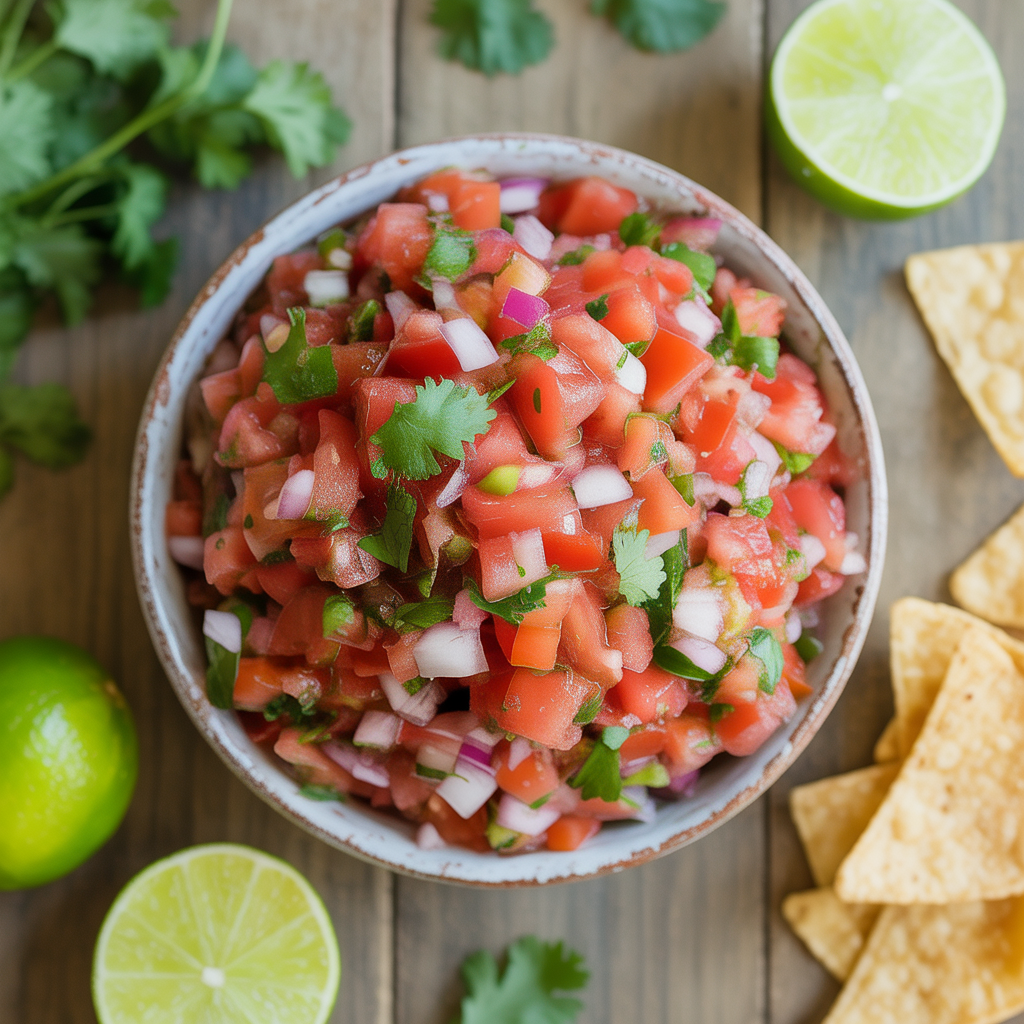
What Is Pico de Gallo?
Pico de Gallo is a classic Mexican fresh salsa made from simple, raw ingredients. Unlike blended salsas, Pico de Gallo is always chunky, bright, and refreshing. It is sometimes called salsa fresca or salsa cruda, meaning “fresh sauce” in Spanish. The name “Pico de Gallo” literally translates to “rooster’s beak,” though the exact origin of the name remains a fun culinary mystery.
This beloved condiment is incredibly versatile. You can serve it with tortilla chips, spoon it over tacos, grilled chicken, fish, eggs, or use it as a topping for burrito bowls. The best part? It takes less than 15 minutes to make with no cooking required.
Why Homemade Pico de Gallo Is Always Better
Store-bought salsa simply cannot compete with a fresh, homemade Pico de Gallo. When you make it yourself, you control every ingredient — the ripeness of the tomatoes, the heat level of the jalapeños, and the amount of lime juice and cilantro. The result is a salsa that is:
- Brighter in flavor — fresh lime juice and raw vegetables create a vibrant taste
- Chunkier in texture — no blending means you get satisfying bites of each ingredient
- Healthier — no preservatives, added sugars, or excess sodium
- Customizable — adjust heat, salt, and acidity to your personal preference
Ingredients You Need for the Best Pico de Gallo
The secret to great Pico de Gallo lies in using the freshest, highest-quality ingredients possible. Here is what you need:
Core Ingredients
- 4 medium Roma tomatoes (or 3 large vine-ripened tomatoes) — Roma tomatoes are preferred because they have fewer seeds and less water content, which keeps your salsa from getting soggy
- ½ medium white onion — white onion gives a sharp, clean bite that is traditional in Mexican cooking
- 1–2 jalapeño peppers — adjust based on your heat preference; remove seeds for milder heat
- ½ cup fresh cilantro — loosely packed and roughly chopped; this is non-negotiable for authentic flavor
- 2 tablespoons fresh lime juice (about 1–2 limes) — always use fresh lime, never bottled
- ½ teaspoon salt — or more to taste; salt helps draw out the tomato juices and marry the flavors
Optional Add-Ins
- 1 clove garlic, minced — adds depth of flavor
- ½ teaspoon cumin — for a subtle earthy note
- Mango or peach — diced, for a sweet tropical twist
- Avocado — diced, for a creamy variation
- Serrano pepper — for extra heat instead of or in addition to jalapeño
How to Choose the Best Tomatoes
Tomatoes are the star of Pico de Gallo, so choosing the right ones makes a huge difference. Here are your best options:
- Roma tomatoes: The number one choice. They are meaty, have fewer seeds, and lower water content. Perfect for chunky salsa.
- Vine-ripened tomatoes: Excellent flavor. Slightly juicier than Roma but still great for this recipe.
- Heirloom tomatoes: Packed with complex flavor. Use them when they are in season for the most delicious result.
- Cherry or grape tomatoes: Work well when other tomatoes are out of season. Simply halve or quarter them.
Avoid refrigerated or unripe tomatoes. Cold tomatoes lose their flavor and texture. Always use tomatoes that are at room temperature and fully ripe.
Step-by-Step Instructions: How to Make Pico de Gallo
Step 1: Prepare the Tomatoes
Wash and dry your tomatoes thoroughly. Cut them in half and use a small spoon or your fingers to remove the seeds and excess juice from the core. This step is critical — it prevents your Pico de Gallo from becoming watery. Then dice the tomatoes into small, even pieces, approximately ¼ to ½ inch in size. Place the diced tomatoes into a medium mixing bowl.
Step 2: Dice the Onion
Peel and finely dice the white onion. For the best texture, cut pieces slightly smaller than your tomato pieces. If raw onion is too sharp for your taste, you can soak the diced onion in cold water for 5–10 minutes before adding it. This mellows the bite significantly. Drain well before mixing in.
Step 3: Prepare the Jalapeño
Slice the jalapeño in half lengthwise. For mild heat, use a spoon to scrape out the seeds and white membrane — this is where most of the heat lives. For medium to hot salsa, leave some or all of the seeds in. Finely mince the jalapeño and add it to the bowl.
Pro tip: Always wash your hands thoroughly after handling jalapeños, and avoid touching your face or eyes.
Step 4: Chop the Cilantro
Rinse the fresh cilantro and pat it dry. Remove any thick stems — you only want the leaves and thin stems. Roughly chop the cilantro — not too fine. You want visible pieces of herb throughout the salsa for both flavor and appearance. Add it to the bowl.
Step 5: Add Lime Juice and Salt
Squeeze fresh lime juice directly over the ingredients. Start with one lime (about 1 tablespoon of juice) and adjust to taste. Sprinkle ½ teaspoon of salt over everything.
Step 6: Toss and Taste
Gently toss all ingredients together with a spoon or spatula. Taste the salsa and adjust seasoning. Add more salt for depth, more lime juice for brightness, more jalapeño for heat, or more cilantro for freshness. Let the salsa rest for at least 10 to 15 minutes before serving. This resting time allows the flavors to meld together beautifully.
Tips for Keeping Pico de Gallo Chunky (Not Watery)
The number one complaint about homemade Pico de Gallo is that it becomes watery over time. Here is how to prevent that:
- Remove tomato seeds and gel: This single step eliminates most excess liquid.
- Salt and drain: After dicing tomatoes, toss with a pinch of salt and let them sit in a colander for 5 minutes to drain excess moisture before combining with other ingredients.
- Use Roma tomatoes: They naturally have less water than beefsteak or regular garden tomatoes.
- Don’t over-mix: Stirring too aggressively breaks down the tomato pieces and releases more juice.
- Serve shortly after making: Pico de Gallo is best within the first hour of preparation for maximum freshness and crunch.
How to Serve Pico de Gallo
Pico de Gallo is one of the most versatile condiments in Mexican cuisine. Here are some of the best ways to enjoy it:
- With tortilla chips — the classic and most popular way
- On tacos — beef, chicken, fish, or shrimp tacos all benefit from a spoonful of fresh pico
- Over grilled meats — steak, chicken, or fish with pico on top is a game changer
- In burritos and burrito bowls
- On scrambled eggs or omelets — a fresh breakfast upgrade
- Over nachos — add after baking for fresh flavor
- With avocado toast
- As a topping for soups like black bean soup or tortilla soup
How to Store Pico de Gallo
Pico de Gallo is best consumed fresh, but it can be stored properly for later use:
- Refrigerator: Store in an airtight container for up to 3 days. The lime juice acts as a natural preservative. Drain any excess liquid that accumulates before serving.
- Do not freeze: Freezing completely destroys the texture of raw tomatoes and onions, making the salsa mushy when thawed.
- Make ahead tip: You can prep all the ingredients separately and combine them 30 minutes before serving for the freshest result.
Common Mistakes to Avoid
Even with such a simple recipe, there are a few pitfalls to watch out for:
- Using unripe or refrigerated tomatoes: Cold storage ruins tomato flavor and texture. Always use room temperature, ripe tomatoes.
- Skipping the seed removal: This leads to a watery, diluted salsa. Take the extra two minutes to deseed your tomatoes.
- Using dried cilantro: Only fresh cilantro works in this recipe. Dried cilantro has a completely different flavor profile.
- Using bottled lime juice: Fresh lime juice has a brightness that bottled versions simply cannot replicate.
- Over-chopping the ingredients: Pico de Gallo should be chunky. Aim for ¼ inch pieces rather than mincing everything into tiny bits.
- Not tasting as you go: This recipe is all about balance. Always taste and adjust before serving.
Variations of Pico de Gallo
Mango Pico de Gallo
Add 1 cup of diced ripe mango to the classic recipe. The sweetness of the mango pairs beautifully with the heat of jalapeño and the acidity of lime. This version is particularly delicious with fish tacos and shrimp dishes.
Pineapple Pico de Gallo
Replace half the tomatoes with diced fresh pineapple for a tropical and tangy variation. This version is incredible with pulled pork or al pastor tacos.
Avocado Pico de Gallo
Add one diced ripe avocado to the classic recipe. This creates a deconstructed guacamole-style salsa that is incredibly creamy and satisfying. Add the avocado just before serving to prevent browning.
Roasted Tomato Pico de Gallo
For a deeper, smokier flavor, lightly char the tomatoes and jalapeños on a dry skillet or under the broiler before dicing. This creates a hybrid between Pico de Gallo and a traditional cooked salsa.
Cucumber Pico de Gallo
Add ½ cup of diced cucumber for extra crunch and a cooling effect. Great for hot summer days or as a topping for spicy dishes.
Nutritional Benefits of Pico de Gallo
Beyond its incredible flavor, Pico de Gallo is a nutritional powerhouse:
- Low in calories: A typical serving (about ¼ cup) contains only 15–20 calories
- Rich in Vitamin C: Tomatoes, lime juice, and jalapeños are all excellent sources
- High in antioxidants: Lycopene from tomatoes has been linked to reduced risk of certain diseases
- Anti-inflammatory: Jalapeños contain capsaicin, which has known anti-inflammatory properties
- No fat: Completely fat-free in its classic form
- Hydrating: High water content from tomatoes helps with hydration
Frequently Asked Questions
Can I make Pico de Gallo without cilantro?
Yes, if you are one of the people who genetically perceive cilantro as soapy, you can substitute flat-leaf parsley for a similar fresh herb flavor. The result will be slightly different but still delicious.
What is the difference between Pico de Gallo and salsa?
Traditional Pico de Gallo is always raw and chunky with distinct pieces of each ingredient. Regular salsa is often blended or cooked, resulting in a smoother, more liquid texture. Pico de Gallo is technically a type of fresh salsa (salsa fresca).
How spicy is Pico de Gallo?
The heat level is entirely up to you. Removing all seeds and membranes from the jalapeño makes it very mild. Leaving seeds in or adding a serrano pepper makes it spicy. Start with less heat and add more after tasting.
Can I use red onion instead of white onion?
Absolutely. Red onion adds a slightly milder, sweeter flavor and a beautiful pop of color to the salsa. Yellow onion works too but has a stronger flavor that may overpower the fresh tomatoes.
Why is my Pico de Gallo watery?
The excess water is coming from the tomatoes. To fix this, make sure you are removing the seeds and gel before dicing. You can also salt the diced tomatoes and let them drain in a colander for a few minutes before mixing everything together.
Quick Reference Recipe Card
Prep Time: 10–15 minutes | Resting Time: 10–15 minutes | Servings: 6–8
Ingredients:
- 4 Roma tomatoes, seeded and diced
- ½ white onion, finely diced
- 1–2 jalapeños, seeded and minced
- ½ cup fresh cilantro, chopped
- 2 tablespoons fresh lime juice
- ½ teaspoon salt (or to taste)
Instructions:
- Seed and dice tomatoes into ¼-inch pieces.
- Finely dice white onion.
- Mince jalapeño, removing seeds for less heat.
- Roughly chop fresh cilantro.
- Combine all ingredients in a bowl.
- Add lime juice and salt; toss gently.
- Taste and adjust seasoning.
- Let rest 10–15 minutes before serving.
Making fresh Pico de Gallo at home is one of the simplest and most rewarding things you can do in the kitchen. With just a handful of fresh ingredients and no cooking required, you can create a salsa that beats anything from a jar, every single time. Whether you stick to the classic recipe or experiment with one of the many variations, fresh Pico de Gallo is guaranteed to become a staple in your kitchen.