
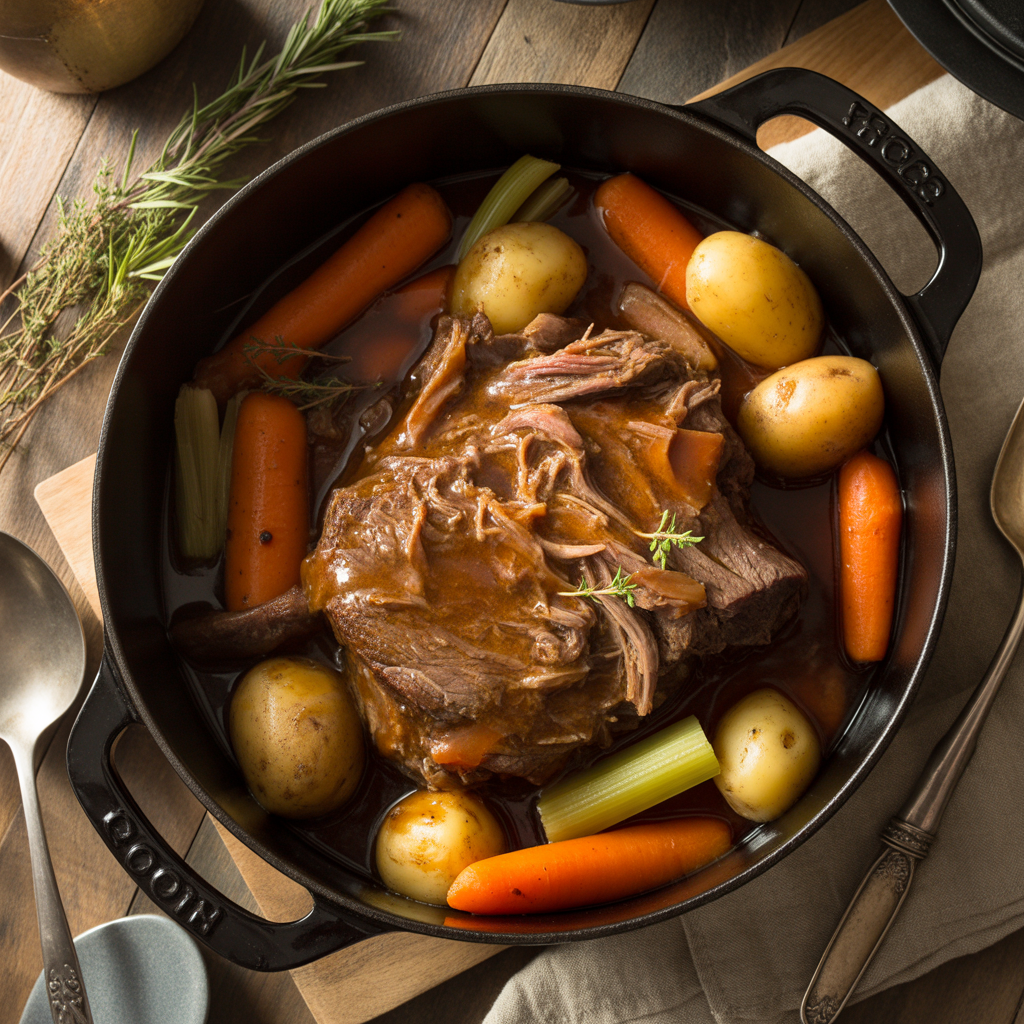
There’s nothing quite like a classic pot roast to bring the whole family together. This timeless comfort food features fall-apart tender beef, hearty vegetables, and a deeply rich, savory gravy that will have everyone asking for seconds. Whether you’re cooking for a Sunday dinner or a special occasion, this recipe has everything you need to make the perfect pot roast from scratch.
What Is Pot Roast?
Pot roast is a slow-cooked beef dish made by braising a tough cut of beef in liquid — usually broth, wine, or a combination of both — along with vegetables and aromatics. The long, slow cooking process breaks down the tough connective tissues in the meat, resulting in incredibly tender, flavorful beef that practically melts in your mouth. The cooking liquid reduces and thickens into a luscious gravy that ties the entire dish together.
Why You’ll Love This Recipe
- One-pot meal: Everything cooks in a single Dutch oven or roasting pan, minimizing cleanup.
- Fall-apart tender beef: Slow braising guarantees juicy, fork-tender meat every time.
- Rich, flavorful gravy: Made naturally from the braising liquid — no packets or powders needed.
- Budget-friendly: Uses inexpensive cuts of beef that transform beautifully with low and slow cooking.
- Make-ahead friendly: Pot roast tastes even better the next day, making it perfect for meal prepping.
Best Cut of Beef for Pot Roast
Choosing the right cut of beef is the most important step for a successful pot roast. You want a cut that is tough and well-marbled with connective tissue, because that fat and collagen break down during the long cooking process to create tender meat and a rich, glossy gravy.
- Chuck roast (recommended): The most popular choice. It comes from the shoulder area and has excellent marbling. It becomes incredibly tender and flavorful after slow cooking.
- Brisket: A flat cut from the chest area with great flavor. It takes a bit longer to cook but produces wonderful results.
- Round roast (bottom or top round): Leaner than chuck, it works well but may be slightly less tender. Good for those who prefer less fat.
- Rump roast: Similar to round, it’s a leaner option that still braises beautifully.
Pro tip: Avoid lean cuts like sirloin or tenderloin — they will dry out and become tough during the long braising process.
Ingredients
This recipe serves 6–8 people and uses simple, wholesome ingredients that you likely already have on hand.
For the Roast:
- 3–4 lb (1.4–1.8 kg) chuck roast
- 2 teaspoons kosher salt
- 1 teaspoon black pepper
- 1 teaspoon garlic powder
- 1 teaspoon onion powder
- 2 tablespoons olive oil or vegetable oil
For the Braising Liquid & Vegetables:
- 1 large yellow onion, roughly chopped
- 4 cloves garlic, minced
- 3 medium carrots, cut into 2-inch pieces
- 3 stalks celery, cut into 2-inch pieces
- 1 lb (450g) baby potatoes or Yukon gold potatoes, halved
- 2 tablespoons tomato paste
- 1 cup (240ml) dry red wine (such as Cabernet Sauvignon or Merlot — optional but recommended)
- 2 cups (480ml) beef broth (low sodium)
- 1 tablespoon Worcestershire sauce
- 2 sprigs fresh rosemary
- 3 sprigs fresh thyme
- 2 bay leaves
For the Gravy (optional finish):
- 2 tablespoons cornstarch
- 2 tablespoons cold water
- Salt and pepper to taste
Equipment You’ll Need
- Large Dutch oven (5–7 quart) with a lid, OR a heavy roasting pan with aluminum foil
- Tongs
- Cutting board and sharp knife
- Measuring cups and spoons
- Ladle or large spoon
- Small bowl (for cornstarch slurry)
Step-by-Step Instructions
Step 1: Preheat the Oven
Preheat your oven to 325°F (163°C). This low-and-slow temperature is key to breaking down the tough meat fibers without drying them out.
Step 2: Season and Sear the Beef
Pat the chuck roast completely dry with paper towels — this is essential for getting a good sear. Removing excess moisture allows the meat to brown rather than steam in the pan.
Mix together the salt, pepper, garlic powder, and onion powder. Generously season all sides of the roast with the spice mixture, pressing it gently into the meat.
Heat the olive oil in a large Dutch oven over medium-high heat until the oil shimmers and is very hot. Carefully place the roast in the pot and sear without moving it for 3–4 minutes per side until a deep, golden-brown crust forms on all sides (including the ends). This step is called the Maillard reaction and it builds incredible flavor in both the meat and the eventual gravy. Do not skip this step!
Once seared, remove the roast and set it aside on a plate.
Step 3: Sauté the Aromatics
Reduce the heat to medium. Add the chopped onion to the same pot (with all those delicious brown bits still in there) and sauté for 3–4 minutes, stirring occasionally, until softened and lightly golden.
Add the minced garlic and cook for another 1 minute until fragrant.
Stir in the tomato paste and cook for 2 minutes, allowing it to caramelize slightly. This deepens the flavor of the sauce and adds a rich, umami backbone to the gravy.
Step 4: Deglaze the Pan
If using red wine, pour it into the pot now. Use a wooden spoon or silicone spatula to scrape up all the browned bits (fond) stuck to the bottom of the pan — this is pure flavor! Let the wine simmer and reduce for about 2–3 minutes.
If not using wine, you can deglaze with a bit of the beef broth instead.
Step 5: Build the Braising Liquid
Add the beef broth and Worcestershire sauce to the pot. Stir to combine. Nestle the seared roast back into the pot. The liquid should come about halfway up the sides of the roast — not fully submerge it. Add more broth if needed.
Tuck the rosemary sprigs, thyme sprigs, and bay leaves around the roast.
Step 6: Add Vegetables & Braise
Add the carrots, celery, and potatoes around the roast. These will absorb the braising liquid and become deeply flavorful as they cook.
Cover the Dutch oven with its lid (or tightly cover the roasting pan with heavy-duty aluminum foil). Transfer to the preheated oven.
Braise for 3 to 4 hours, or until the beef is fall-apart tender and can be easily shredded with two forks. A 3 lb roast will typically take about 3 hours; a 4 lb roast may take 3.5–4 hours. Check at the 3-hour mark by inserting a fork — if it slides in and out easily with no resistance, the roast is done.
Step 7: Make the Gravy
Once the roast is done, carefully remove it from the pot and place it on a cutting board or serving platter. Cover loosely with foil to rest. Remove the herb sprigs and bay leaves from the braising liquid.
To make the gravy, you have two options:
- Thin, natural au jus style: Simply ladle the braising liquid over the roast and vegetables as-is. It will be flavorful and lighter in consistency.
- Thick, classic gravy: Transfer the braising liquid to a saucepan and bring to a simmer over medium heat. In a small bowl, whisk together 2 tablespoons of cornstarch with 2 tablespoons of cold water until smooth. Slowly whisk the cornstarch slurry into the simmering liquid and cook for 2–3 minutes, stirring constantly, until the gravy thickens to your liking. Season with salt and pepper to taste.
Step 8: Serve
Use two forks to gently pull the beef apart into large, rustic chunks. Arrange the beef and vegetables on a large serving platter. Ladle the rich gravy generously over everything. Garnish with fresh chopped parsley if desired.
Cooking Times at a Glance
| Roast Weight | Oven Time (325°F) | Internal Temp Target |
|---|---|---|
| 2–2.5 lbs | 2.5 – 3 hours | 200–205°F (93–96°C) |
| 3–3.5 lbs | 3 – 3.5 hours | 200–205°F (93–96°C) |
| 4–4.5 lbs | 3.5 – 4 hours | 200–205°F (93–96°C) |
Note: Unlike steaks, pot roast is best cooked well past the standard “done” temperature. You want an internal temperature of 200–205°F to ensure the collagen has fully broken down and the meat is truly tender.
Slow Cooker / Crockpot Variation
You can absolutely make this pot roast in a slow cooker for an even more hands-off experience.
- Season and sear the roast as described in Steps 1–2 (this step is important even for the slow cooker method).
- Sauté the aromatics and deglaze the pan as in Steps 3–4.
- Transfer everything to your slow cooker: place the vegetables on the bottom, nestle the seared roast on top, and pour the braising liquid over everything.
- Cook on LOW for 8–10 hours or on HIGH for 5–6 hours, until the beef is fall-apart tender.
- Make the gravy using the liquid from the slow cooker as described in Step 7.
Instant Pot / Pressure Cooker Variation
Short on time? The Instant Pot can produce a tender pot roast in a fraction of the oven time.
- Set the Instant Pot to the “Sauté” function and sear the seasoned roast on all sides. Remove and set aside.
- Sauté the onions, garlic, and tomato paste in the pot. Deglaze with wine or broth.
- Add the broth, Worcestershire sauce, herbs, and the seared roast. Place the vegetables around it.
- Secure the lid, set the valve to “Sealing,” and cook on Manual / High Pressure for 60–70 minutes for a 3 lb roast (add 10 minutes for each additional pound).
- Allow the pressure to naturally release for 15–20 minutes, then carefully quick-release any remaining pressure.
- Make the gravy using the “Sauté” function on the liquid remaining in the pot.
Expert Tips for the Best Pot Roast
- Always sear the meat first. This creates a flavorful crust and builds the base of your gravy through the fond left in the pan. Never skip this step.
- Don’t rush the cook time. Pot roast needs time to break down its connective tissue. If it’s still tough at 3 hours, put it back in for another 30–45 minutes.
- Use low sodium broth. You’ll be reducing the braising liquid for gravy, and using regular-sodium broth can make it overly salty.
- Add vegetables at the right time. Root vegetables like potatoes and carrots can handle the full 3–4 hour braise. If using more delicate vegetables like green beans or peas, add them in the last 30 minutes.
- Let the meat rest. After removing from the oven, let the roast rest covered for at least 10–15 minutes before pulling it apart. This helps the juices redistribute throughout the meat.
- Use room temperature meat. Take the roast out of the fridge 30–60 minutes before cooking to help it cook more evenly.
- Season your gravy carefully. Always taste and adjust seasoning at the end, as the braising liquid concentrates in flavor as it reduces.
What to Serve with Pot Roast
Pot roast is a complete meal on its own, but here are some wonderful sides to complement it:
- Mashed potatoes: Creamy mashed potatoes are the ultimate vehicle for all that rich gravy.
- Egg noodles: Wide egg noodles tossed in butter are a classic pairing.
- Crusty bread: Perfect for soaking up every drop of the gravy.
- Roasted Brussels sprouts or green beans: A fresh, slightly bitter green vegetable balances the richness of the beef.
- Dinner rolls: Soft, fluffy rolls are great for the whole family.
- Caesar salad or simple green salad: Provides a refreshing contrast to the hearty pot roast.
How to Store and Reheat Leftovers
Refrigerating:
Store leftover pot roast (beef, vegetables, and gravy) together in an airtight container in the refrigerator for up to 4 days. The flavors actually deepen and improve overnight, making leftovers even more delicious than the first serving.
Freezing:
Pot roast freezes beautifully. Place cooled leftovers in freezer-safe bags or containers and freeze for up to 3 months. Thaw overnight in the refrigerator before reheating.
Reheating:
- On the stovetop (best method): Place the beef and gravy in a saucepan over low heat. Cover and heat gently, stirring occasionally, until warmed through. Add a splash of broth if the gravy has thickened too much.
- In the oven: Place in an oven-safe dish, cover tightly with foil, and reheat at 325°F for 20–30 minutes until hot.
- In the microwave: Cover loosely and reheat in 1-minute increments, stirring between each, until heated through.
Creative Ways to Use Leftover Pot Roast
If you have leftover pot roast, don’t just reheat it the same way every time. Here are some delicious ideas:
- Pot roast sandwiches: Pile tender beef on a hoagie roll with provolone cheese and caramelized onions for an incredible French dip or beef sandwich.
- Pot roast tacos: Shred the beef and serve in warm corn tortillas with salsa, avocado, and cilantro.
- Beef pot pie: Mix leftover beef, vegetables, and gravy with a bit of extra broth and pour into a pie crust for a hearty pot pie.
- Pot roast hash: Dice leftover beef and potatoes and cook them in a skillet with onions and bell peppers for a hearty breakfast hash topped with fried eggs.
- Beef stew: Add extra broth and additional vegetables to the leftovers and simmer for a quick beef stew.
- Shepherd’s pie: Layer shredded beef and vegetables in a casserole dish and top with creamy mashed potatoes. Bake until golden.
Common Pot Roast Mistakes to Avoid
- Not searing the meat: Skipping this step results in pale, less flavorful beef and a thin, weak gravy.
- Cooking at too high a temperature: High heat will make the beef tough and dry. Low and slow is the only way.
- Using too much liquid: You’re braising, not boiling. The liquid should only come halfway up the roast. Too much liquid dilutes the flavor of the gravy.
- Using the wrong cut of beef: Lean cuts will dry out. Stick to chuck roast or brisket for best results.
- Not seasoning enough: Beef needs generous seasoning. Don’t be shy with the salt and pepper.
- Opening the lid too often: Every time you open the lid, heat escapes and lengthens the cooking time. Resist the urge to peek!
Frequently Asked Questions
Can I make pot roast without wine?
Absolutely! Simply replace the red wine with an equal amount of beef broth. You can also add a tablespoon of balsamic vinegar or red wine vinegar to mimic the slight acidity that wine brings to the dish.
How do I know when my pot roast is done?
The best way is to check with a fork. If the fork slides in and out of the thickest part of the meat with little to no resistance, and the meat pulls apart easily, it’s done. An internal temperature of 200–205°F (93–96°C) is your target.
My pot roast is tough — what went wrong?
If your pot roast is tough, it simply needs more time. This is the most common mistake. Put it back in the oven for another 30–60 minutes and check again. Toughness means the collagen hasn’t fully broken down yet — more time will fix this.
Can I add other vegetables?
Yes! Parsnips, turnips, rutabaga, and mushrooms are all wonderful additions. Add hardier root vegetables at the start of cooking. Add mushrooms and softer vegetables in the last 45–60 minutes.
Can I use frozen beef for this recipe?
It’s best to fully thaw the beef before cooking. A frozen roast will take significantly longer to cook, and you won’t be able to achieve a proper sear on the outside.
Is pot roast better the next day?
Yes! Many cooks believe pot roast actually tastes better the next day. As it sits overnight, the flavors meld and deepen beautifully. If you have time, cook it a day ahead, refrigerate, and reheat gently for serving.
Nutrition Information (Approximate per serving)
Based on 8 servings with vegetables and gravy:
- Calories: 480–520 kcal
- Protein: 42–48g
- Fat: 22–28g
- Carbohydrates: 18–22g
- Fiber: 3g
- Sodium: 580–650mg
Note: Nutritional values are estimates and will vary based on specific ingredients and portion sizes used.
Final Thoughts
This classic pot roast recipe is truly one of those dishes that delivers maximum comfort with minimum fuss. Once you’ve seared the beef and built your braising liquid, the oven does all the heavy lifting for you. The result is fork-tender, deeply flavorful beef surrounded by melt-in-your-mouth vegetables and bathed in the most incredible, rich gravy you’ve ever tasted.
Whether you’re making it for a cozy Sunday family dinner, a holiday gathering, or just a cold weeknight when you need something deeply satisfying, this pot roast will never let you down. Make it once, and it’s guaranteed to become a permanent fixture in your recipe rotation.
Give this recipe a try and let us know how it turns out in the comments below. Don’t forget to share your photos — we’d love to see your pot roast creations!