
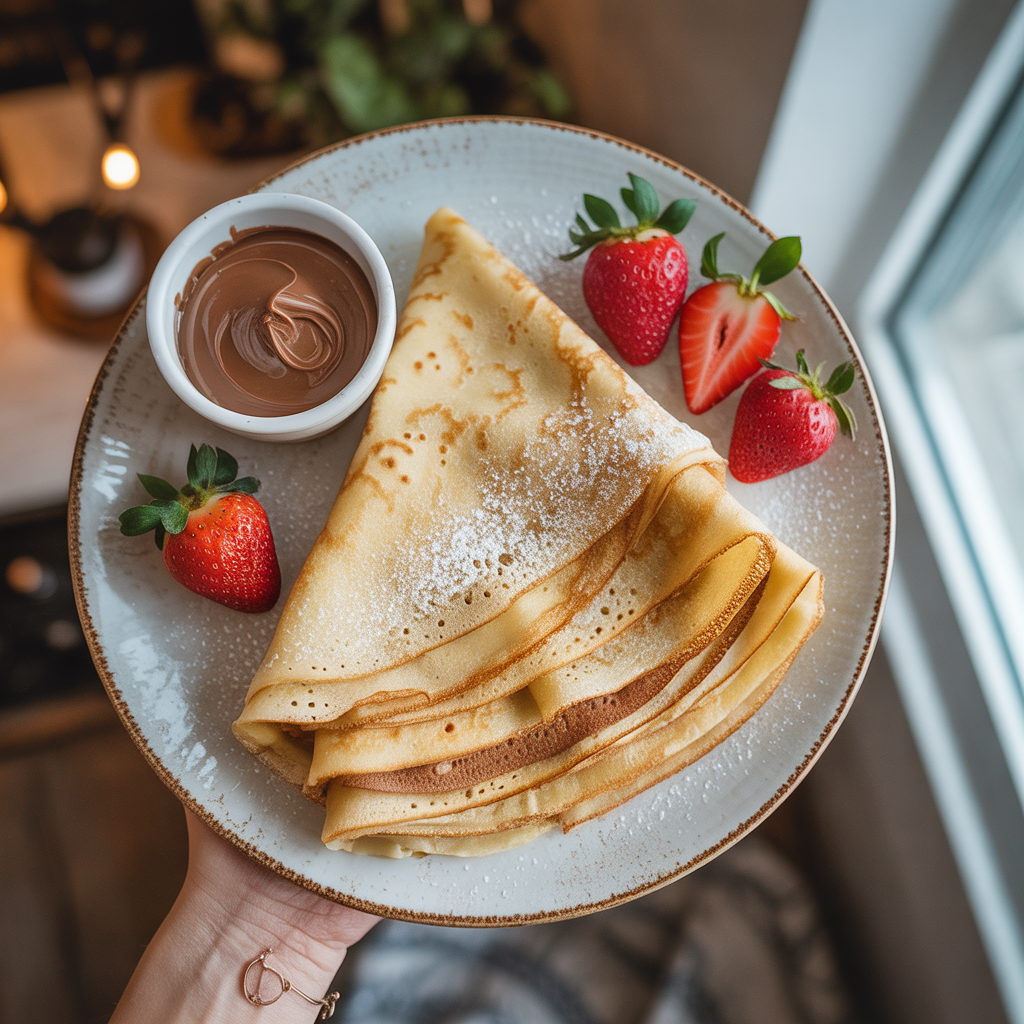
Making crepes that are thin, soft, and perfectly golden is a skill that seems intimidating at first, but once you understand the key techniques and the science behind them, you’ll be flipping beautiful crepes every single time. Whether you’re making sweet crepes for breakfast or savory crepes for dinner, this comprehensive guide covers everything you need to know — from the batter to the pan to the perfect fold.
What Makes a Perfect Crepe?
A perfect crepe has three defining qualities:
- Thin: Almost translucent, with no thick or doughy center
- Soft: Flexible enough to fold or roll without cracking
- Even texture: Lightly golden on the outside with no rubbery or eggy aftertaste
Achieving all three requires the right batter consistency, proper resting time, the right pan, and the correct cooking technique. Let’s break each one down.
Ingredients You Need for Classic Crepes
The beauty of crepe batter is that it uses simple pantry staples. Here’s what you need for a basic sweet crepe recipe (makes about 10–12 crepes):
- 1 cup (125g) all-purpose flour
- 2 large eggs
- 1 ½ cups (360ml) whole milk
- 2 tablespoons unsalted butter, melted (plus more for the pan)
- 1 tablespoon sugar (omit for savory crepes)
- 1 teaspoon vanilla extract (optional, for sweet crepes)
- A pinch of salt
Ingredient Tips for Better Results
- Use whole milk: Fat content in whole milk creates a richer, softer crepe. You can substitute with 2% milk, but avoid skim milk as it produces a tougher texture.
- Room temperature eggs: Cold eggs can cause the butter to solidify when mixed, creating lumps in the batter.
- Melted butter in the batter: This is a crucial step — butter prevents the crepes from sticking to the pan and adds a subtle richness.
- Salt enhances flavor: Even in sweet crepes, a pinch of salt balances and deepens the overall taste.
How to Make the Perfect Crepe Batter
The batter is the foundation of everything. The goal is a smooth, lump-free, slightly runny batter — thinner than pancake batter but not as thin as water.
Step 1: Mix the Batter
There are two reliable methods to make crepe batter:
Blender Method (Fastest and Smoothest)
- Add all ingredients to a blender.
- Blend on medium-high for 30 seconds until completely smooth.
- Scrape down the sides and blend for another 10 seconds.
The blender method is ideal because it incorporates air and ensures zero lumps. It’s the preferred method for beginners.
Whisk Method (Traditional)
- Sift the flour into a large mixing bowl and make a well in the center.
- Add eggs, melted butter, sugar, and salt into the well.
- Whisk from the center outward, gradually incorporating the flour.
- Slowly add the milk while continuing to whisk until smooth.
The key with the whisk method is to add the milk slowly to prevent lumps from forming. If you end up with lumps, strain the batter through a fine mesh sieve.
Step 2: Rest the Batter (Critical Step)
This is the most commonly skipped step — and it makes the biggest difference. After mixing, cover the batter with plastic wrap and let it rest in the refrigerator for at least 30 minutes, ideally 1–2 hours.
Why Resting Matters:
- It allows the gluten in the flour to relax, preventing rubbery crepes.
- Any air bubbles incorporated during mixing dissipate, resulting in smoother crepes.
- The flour fully hydrates, creating a more cohesive and tender batter.
You can even make the batter the night before and refrigerate it overnight. Just give it a good stir before cooking, as the ingredients may settle.
Step 3: Check the Batter Consistency
After resting, your batter should have the consistency of heavy cream — it should coat the back of a spoon lightly and run off in a thin, steady stream. If it’s too thick, add a tablespoon of milk at a time and stir. If it’s too thin, add a teaspoon of flour and whisk thoroughly.
Choosing the Right Pan
The pan you use has a significant impact on your crepes. Here are the best options:
Crepe Pan (Best Choice)
A dedicated crepe pan has low, sloped sides and a flat cooking surface, making it easy to spread batter evenly and flip crepes. Sizes range from 8 to 10 inches, with 9 inches being ideal for home cooking.
Non-Stick Skillet (Most Accessible)
A good quality non-stick skillet works excellently. Use an 8–10 inch pan for standard crepes. The non-stick surface means you use less butter and have more control.
Cast Iron Skillet (Advanced)
A well-seasoned cast iron skillet can produce beautifully golden crepes with slightly crispy edges. However, it requires more skill to heat evenly and a well-seasoned surface to prevent sticking.
What to Avoid:
- Stainless steel pans without non-stick coating — crepes will stick and tear.
- Pans that are too large — you lose control over the thin, even spread.
- Pans that are warped — uneven heat causes uneven cooking.
How to Cook Crepes: Step-by-Step
Step 1: Preheat the Pan Properly
Heat your pan over medium to medium-high heat for about 2 minutes before adding any butter. A properly preheated pan is essential for even cooking. To test if the pan is ready, flick a drop of water onto the surface — if it sizzles and evaporates immediately, the pan is ready.
Step 2: Grease the Pan
Add a small amount of butter (about ½ teaspoon) to the pan and swirl it around to coat the entire surface. Use a paper towel to spread it evenly and remove any excess. Too much butter will cause the edges to fry and become crispy rather than soft.
After the first crepe, you may only need to butter the pan every 2–3 crepes, as the batter itself contains butter.
Step 3: Pour and Swirl the Batter
This is the most technique-sensitive step in making crepes:
- Lift the pan off the heat slightly.
- Pour about 3 tablespoons (45ml) of batter into the center of the pan.
- Immediately tilt and rotate the pan in a circular motion to spread the batter into a thin, even circle.
- Work quickly — the batter begins to set within seconds.
Tips for a Perfect Swirl:
- Use a ladle or a measuring cup for consistent portion sizes.
- Tilt the pan at a 45-degree angle and rotate in a smooth, continuous motion.
- If you’re using a crepe spreader (a T-shaped wooden tool), pour the batter in the center and use the spreader in circular motions to thin it out evenly.
- Less batter = thinner crepe. Start with 3 tablespoons and adjust based on your pan size and preferred thickness.
Step 4: Cook the First Side
Return the pan to the heat and cook the crepe for 60–90 seconds on the first side. You’ll know it’s ready to flip when:
- The edges start to look dry and slightly golden
- The top surface of the crepe no longer looks wet or glossy
- The crepe releases easily from the pan when you gently shake it
Step 5: Flip the Crepe
There are two ways to flip a crepe:
Using a Spatula (Safest Method)
- Use a thin, flexible spatula to loosen the edges of the crepe.
- Slide the spatula under the center of the crepe.
- Flip it quickly and confidently in one smooth motion.
Tossing by Hand (Traditional Method)
- Loosen the edges with a spatula or by shaking the pan.
- Grip the handle with both hands.
- Flick the pan upward with a sharp motion, letting the crepe flip in the air.
- Catch it back in the pan.
The toss method looks impressive and is great for shows, but a spatula flip is just as effective for home cooking.
Step 6: Cook the Second Side
Cook the second side for only 20–30 seconds. The second side will look spotty and won’t have the same uniform color as the first — this is perfectly normal. The first side is always the “presentation side.”
Step 7: Stack and Keep Warm
As you cook each crepe, stack them on a plate. Crepes won’t stick together when stacked. If you’re not serving them immediately, cover the stack with a clean kitchen towel or foil to keep them warm and prevent drying out.
Common Problems and How to Fix Them
Problem: Crepes Are Too Thick
Cause: Batter is too thick, or too much batter was poured.
Fix: Add a tablespoon of milk to thin the batter, or use less batter per crepe and swirl more quickly and widely.
Problem: Crepes Are Tearing When Flipped
Cause: Crepe is undercooked, pan isn’t hot enough, or the batter is too thin.
Fix: Wait until the edges are completely dry before flipping. Make sure the pan is properly preheated. If the batter is too thin, add a teaspoon of flour.
Problem: Crepes Are Rubbery or Chewy
Cause: Batter wasn’t rested, or too much gluten developed from over-mixing.
Fix: Always rest the batter for at least 30 minutes. Mix until just combined — don’t overbeat the batter.
Problem: Crepes Are Sticking to the Pan
Cause: Pan isn’t hot enough, not enough butter, or pan surface is damaged.
Fix: Preheat the pan thoroughly before adding butter. Add a small amount of butter before each crepe if needed. If your non-stick coating is scratched or worn, it may be time for a new pan.
Problem: Uneven or Holey Crepes
Cause: Batter not swirled fast enough, or there are lumps in the batter.
Fix: Work faster when swirling, and strain the batter through a sieve to remove any lumps.
Problem: First Crepe Always Fails
This is completely normal! The first crepe is universally known as the “test crepe” — it helps season the pan and gives you a feel for the heat and batter consistency. Eat it as the cook’s treat and don’t worry about it.
Tips and Tricks for the Best Crepes
- Temperature control is key: Medium heat is the sweet spot. Too high and the crepe cooks too fast and becomes brittle. Too low and it turns pale and rubbery.
- Consistent portion sizes: Using a ladle or a ¼ cup measuring cup ensures every crepe is the same size and thickness.
- Keep the batter cold: When making a large batch, keep the batter refrigerated between pours. Cold batter on a hot pan produces the best thin crepes.
- Use a butter brush or paper towel: For the most even buttering, use a pastry brush or a folded paper towel dipped in melted butter to coat the pan.
- Don’t rush the swirl: Practice makes perfect. The swirl motion takes a few tries to master — the more you practice, the better your crepes become.
- Add a touch of brown butter: For extra flavor, use browned butter (beurre noisette) instead of regular melted butter in the batter.
Sweet vs. Savory Crepes: Key Differences
Sweet Crepes
Sweet crepes include sugar and often vanilla in the batter. They pair beautifully with:
- Nutella and banana
- Fresh strawberries and whipped cream
- Lemon juice and powdered sugar (classic French style)
- Caramel and sea salt
- Jam and butter
Savory Crepes (Galettes)
Traditional French savory crepes, called galettes, are made with buckwheat flour and no sugar. However, regular crepe batter without sugar works well for savory fillings such as:
- Ham, egg, and cheese (the classic “Complète”)
- Sautéed mushrooms and gruyère
- Smoked salmon and cream cheese
- Spinach and ricotta
- Chicken and béchamel sauce
How to Make Crepes Ahead of Time
Crepes are perfect for meal prepping because they store very well:
Refrigerator Storage
Stack cooked crepes with a sheet of parchment paper or wax paper between each one to prevent sticking. Wrap the stack in plastic wrap or store in an airtight container. They’ll keep in the refrigerator for up to 3 days.
Freezer Storage
Layer crepes with parchment paper between each one, then wrap the entire stack tightly in plastic wrap and place in a freezer-safe bag. Frozen crepes keep for up to 2 months.
Reheating Crepes
- In a pan: Reheat for 20–30 seconds per side over low heat.
- In the microwave: Wrap a stack of 3–4 crepes in a damp paper towel and microwave for 30–45 seconds.
- From frozen: Thaw overnight in the refrigerator before reheating, or microwave from frozen for 1–2 minutes.
Variations on Classic Crepe Batter
Buckwheat Crepes (Galettes Bretonnes)
Replace half or all of the all-purpose flour with buckwheat flour for a nutty, earthy flavor. These are traditional in Brittany, France, and pair exceptionally well with savory fillings.
Gluten-Free Crepes
Substitute all-purpose flour with a 1:1 gluten-free flour blend, or use almond flour for a nuttier, slightly denser crepe. Rice flour also works well for a very light, delicate texture.
Dairy-Free Crepes
Replace whole milk with oat milk, almond milk, or coconut milk. Use dairy-free butter or coconut oil in place of regular butter.
Chocolate Crepes
Add 2 tablespoons of unsweetened cocoa powder to the batter along with an extra tablespoon of sugar for rich, chocolatey crepes perfect for dessert.
Herb Crepes
For savory crepes, add 2 tablespoons of finely chopped fresh herbs (parsley, chives, or thyme) to the batter for extra flavor and a beautiful speckled appearance.
Full Recipe Summary
Here’s a quick reference for the perfect basic crepe recipe:
- Prep Time: 5 minutes + 30 minutes resting
- Cook Time: 20–25 minutes (for a full batch)
- Servings: 10–12 crepes
Instructions at a Glance:
- Blend or whisk all batter ingredients until smooth.
- Rest the batter in the refrigerator for at least 30 minutes.
- Heat a non-stick pan over medium heat and lightly butter it.
- Pour ~3 tablespoons of batter and immediately swirl to spread thinly.
- Cook for 60–90 seconds until edges are dry, then flip.
- Cook the second side for 20–30 seconds.
- Stack and serve with your favorite fillings.
Final Thoughts
Making thin, soft, and perfect crepes is all about mastering a few key principles: a well-rested, properly thin batter, a properly heated pan, and a confident, swift swirl. Don’t be discouraged if your first few crepes don’t look picture-perfect — even professional chefs expect the first one to be a throwaway. With each batch, you’ll develop better instincts for the heat, the pour, and the swirl.
Once you’ve nailed the basic recipe, the world of crepes is yours to explore — from classic French lemon-and-sugar crepes to indulgent Nutella-filled treats to elegant savory dinner crepes. Happy cooking!