
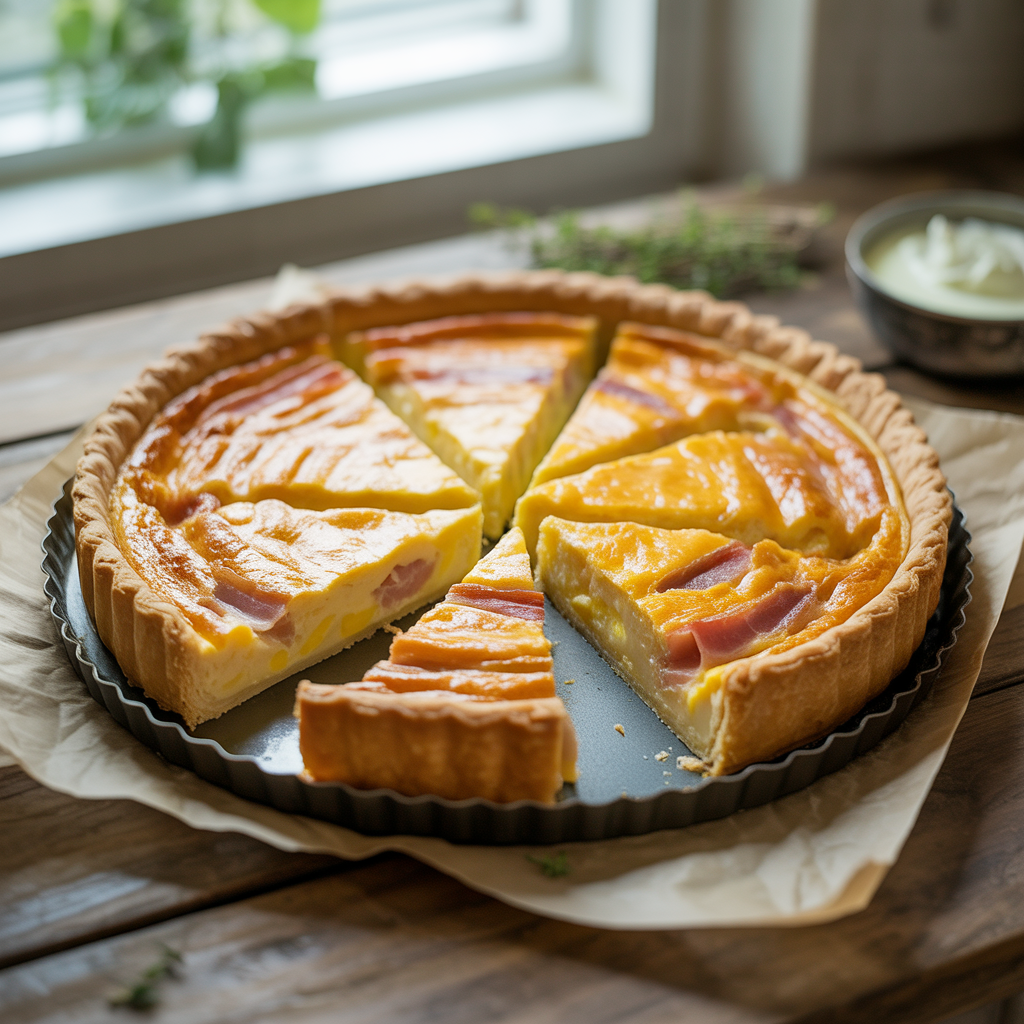
A perfect quiche starts with a buttery, flaky crust and a silky, custard-like filling. Whether you’re making a classic Quiche Lorraine, a vegetable quiche, or experimenting with your own flavors, mastering the crust is the key to elevating your dish from good to unforgettable. In this comprehensive guide, you’ll learn exactly how to make quiche with a flaky crust — from scratch — with step-by-step instructions, expert tips, and troubleshooting advice.
What Makes a Quiche Crust Flaky?
The secret to a flaky pie or quiche crust lies in fat, temperature, and technique. When cold butter is incorporated into flour, it creates tiny pockets of fat that steam during baking, producing those coveted flaky layers. Overworking the dough or using warm ingredients melts the butter prematurely, resulting in a tough, dense crust.
- Cold butter: Keeps fat intact until it hits the oven heat.
- Minimal mixing: Prevents gluten from overdeveloping, which causes toughness.
- Resting the dough: Allows gluten to relax and fat to re-solidify.
- Blind baking: Prevents a soggy bottom from the wet filling.
Ingredients You’ll Need
For the Flaky Quiche Crust (9-inch pie dish)
- 1 ¼ cups (160g) all-purpose flour
- ½ teaspoon salt
- ½ teaspoon sugar (optional, adds subtle flavor)
- ½ cup (113g) unsalted butter, very cold, cut into small cubes
- 3–4 tablespoons ice water
For the Classic Quiche Filling (Quiche Lorraine Style)
- 4 large eggs
- 1 ½ cups (360ml) heavy cream (or half-and-half for a lighter version)
- ½ teaspoon salt
- ¼ teaspoon black pepper
- ¼ teaspoon ground nutmeg
- 1 cup (100g) shredded Gruyère cheese (or Swiss cheese)
- 6 strips bacon, cooked and crumbled
- 1 small onion, thinly sliced and sautéed
Equipment Needed
- 9-inch tart pan with removable bottom or a standard pie dish
- Food processor or a pastry cutter / two forks
- Rolling pin
- Plastic wrap
- Parchment paper
- Pie weights or dried beans
- Mixing bowls
- Whisk
Step-by-Step Instructions
Step 1: Make the Flaky Pie Crust Dough
By Hand (Pastry Cutter Method):
- In a large bowl, whisk together the flour, salt, and sugar.
- Add the cold, cubed butter to the flour mixture.
- Using a pastry cutter or your fingertips, work the butter into the flour until the mixture resembles coarse crumbs with pea-sized chunks of butter still visible. Do not fully incorporate the butter — those chunks are what create flakiness.
- Drizzle in 3 tablespoons of ice water, one tablespoon at a time, tossing the mixture gently with a fork after each addition.
- Pinch a small amount of dough — if it holds together, it’s ready. If it crumbles, add another tablespoon of ice water.
By Food Processor:
- Pulse flour, salt, and sugar together 2–3 times.
- Add cold butter cubes and pulse 8–10 times until the mixture resembles coarse crumbs.
- Add ice water one tablespoon at a time, pulsing briefly after each addition, just until the dough begins to clump. Avoid over-processing.
Step 2: Rest the Dough
Turn the dough out onto a lightly floured surface and gently press it into a flat disc. Wrap it tightly in plastic wrap and refrigerate for at least 1 hour, or up to 2 days. You can also freeze it for up to 3 months. This rest period is non-negotiable — it allows the gluten to relax and the butter to firm back up, making the dough easier to roll and the crust flakier after baking.
Step 3: Roll Out the Dough
- Remove the dough from the refrigerator and let it sit at room temperature for 5–10 minutes — just enough to make it pliable but still cold.
- On a lightly floured surface, roll the dough out into a circle about 12 inches in diameter and ⅛ inch thick. Rotate the dough a quarter turn after each roll to maintain an even circle and prevent sticking.
- Carefully fold the dough in half, then in half again (into a quarter fold), and transfer it to your tart pan or pie dish. Unfold it gently and press it into the bottom and sides.
- Trim the excess dough, leaving about a ½-inch overhang. Fold the overhang under itself and crimp the edges with your fingers or a fork.
- Place the lined pan back in the refrigerator for 20–30 minutes. This prevents shrinkage during baking.
Step 4: Blind Bake the Crust
Blind baking (pre-baking the crust before adding the filling) is essential for quiche. It prevents the dreaded “soggy bottom” that happens when the wet egg custard soaks into an unbaked shell.
- Preheat your oven to 375°F (190°C).
- Line the chilled crust with parchment paper and fill it with pie weights or dried beans. Make sure the weights cover the entire bottom and go up the sides.
- Bake for 15–18 minutes, until the edges just begin to turn golden.
- Remove the parchment and weights carefully. If the bottom still looks wet or doughy, prick it a few times with a fork (this is called “docking”) and bake for another 5–7 minutes until the bottom is lightly golden and dry.
- Remove from the oven and set aside. Reduce the oven temperature to 325°F (165°C).
Step 5: Prepare the Quiche Filling
- In a large mixing bowl, whisk together the eggs, heavy cream, salt, pepper, and nutmeg until smooth and well combined. This mixture is called the custard or royale.
- Tip: For an extra silky custard, you can strain the mixture through a fine-mesh sieve to remove any stringy egg bits.
Step 6: Assemble the Quiche
- Scatter the cooked bacon crumbles and sautéed onion evenly over the bottom of the blind-baked crust.
- Sprinkle the shredded Gruyère cheese over the top.
- Slowly and carefully pour the egg custard mixture over the fillings. Pour slowly to avoid spilling over the edges. Fill to just below the rim of the crust.
Step 7: Bake the Quiche
- Place the quiche on a baking sheet (this makes it easier to transfer and catches any drips).
- Bake at 325°F (165°C) for 35–45 minutes, or until the filling is just set. The center should still have a very slight jiggle — like Jell-O — when you gently shake the pan. It will continue to cook from residual heat after you remove it from the oven.
- Do not overbake. An overbaked quiche will have a rubbery, curdled texture.
- Remove from the oven and allow the quiche to cool on a wire rack for at least 15–20 minutes before slicing. This allows the custard to fully set.
Tips for the Flakiest Quiche Crust Every Time
- Keep everything cold: Chill your bowl and even your flour if your kitchen is warm. Some bakers even put the flour in the freezer for 15 minutes before starting.
- Use European-style butter: Higher fat content equals more flavor and better flakiness.
- Use ice water: Fill a glass with water and ice cubes. Use only the water, not the ice itself.
- Don’t stretch the dough: When transferring dough to the pan, gently ease it in without pulling or stretching — this causes shrinkage during baking.
- Use a tart pan with a removable bottom: This gives you cleaner slices and allows you to remove the quiche from the pan for a beautiful presentation.
- Egg wash the crust: After blind baking, brush the interior of the crust with a light coat of beaten egg. This creates a moisture barrier and helps keep the crust crispy.
- Never skip resting time: Both the resting period in the refrigerator after making the dough and after lining the pan are critical steps.
Common Mistakes and How to Fix Them
Problem: The Crust Shrinks During Baking
Cause: The dough was stretched when lining the pan, or it wasn’t chilled long enough before baking.
Fix: Always ease the dough into the pan gently without stretching. Chill the lined pan for at least 20–30 minutes before blind baking.
Problem: The Bottom Is Soggy
Cause: The crust wasn’t blind baked long enough, or the filling was poured into a hot crust that didn’t finish cooking.
Fix: Blind bake until the bottom is visibly dry and lightly golden. Brushing with egg wash after blind baking also creates a protective barrier.
Problem: The Crust Is Tough and Hard
Cause: The dough was overworked, or too much water was added.
Fix: Mix only until the dough just comes together. Add water gradually and stop as soon as the dough holds when pinched.
Problem: The Filling Is Rubbery or Curdled
Cause: The quiche was baked at too high a temperature or for too long.
Fix: Bake low and slow at 325°F and remove the quiche when the center still has a slight jiggle.
Problem: The Crust Has Cracks
Cause: The dough was too dry or rolled out while too cold.
Fix: Let the dough sit for a few minutes at room temperature before rolling. If cracks appear, press them gently together with your fingers.
Quiche Filling Variations
Once you master the crust and custard base, the filling possibilities are endless:
- Spinach and Feta Quiche: Sautéed spinach, crumbled feta, and a pinch of red pepper flakes.
- Mushroom and Swiss Quiche: Sautéed cremini mushrooms, shallots, and Swiss cheese.
- Roasted Vegetable Quiche: Zucchini, bell peppers, sun-dried tomatoes, and mozzarella.
- Smoked Salmon Quiche: Smoked salmon, cream cheese, capers, and fresh dill.
- Ham and Cheddar Quiche: Diced ham, sharp cheddar, and Dijon mustard stirred into the custard.
- Broccoli and Cheddar Quiche: Steamed broccoli florets and sharp cheddar — a family favorite.
Make-Ahead and Storage Instructions
Make Ahead
- Dough: Can be made up to 3 days ahead and stored in the refrigerator, or frozen for up to 3 months.
- Blind-baked crust: Can be prepared 1 day in advance and stored at room temperature, covered loosely with plastic wrap.
- Assembled unbaked quiche: Can be refrigerated overnight and baked the next morning.
Storing Leftovers
Allow the baked quiche to cool completely, then cover tightly with plastic wrap or store in an airtight container in the refrigerator for up to 3–4 days.
Freezing
Baked quiche freezes well. Slice it, wrap individual portions in plastic wrap and then foil, and freeze for up to 2 months. Reheat in a 325°F oven for 15–20 minutes from frozen, or until heated through. Avoid microwaving if possible, as it can make the crust soggy.
Serving Suggestions
Quiche is incredibly versatile and can be served warm, at room temperature, or even cold. Here are some great ways to serve it:
- Alongside a simple green salad with a light vinaigrette for a classic French bistro-style lunch.
- With roasted tomatoes or asparagus for a spring brunch.
- Cut into small wedges as an elegant appetizer or party food.
- As part of a holiday brunch spread alongside fruit salad and mimosas.
Frequently Asked Questions
Can I use store-bought pie crust for quiche?
Yes, you can use a store-bought refrigerated or frozen pie crust if you’re short on time. However, homemade crust has significantly better flavor and texture. If using store-bought, still be sure to blind bake it before adding the filling.
What’s the difference between a tart pan and a pie dish for quiche?
A tart pan with a removable bottom creates a more elegant, uniform quiche with straight sides and is easier to unmold for serving. A standard pie dish is perfectly fine and creates a more rustic look with crimped edges.
Do I need to use heavy cream, or can I substitute it?
Heavy cream produces the richest, silkiest custard. You can substitute half-and-half for a lighter result, or even whole milk — though the custard will be less rich and creamy. Avoid using low-fat milk, as it produces a watery, less satisfying filling.
Why does my quiche puff up during baking?
Slight puffing is normal as the eggs expand with heat. The quiche will settle and deflate slightly as it cools, which is perfectly fine. Extreme puffing and cracking usually indicates the oven temperature is too high.
How do I know when my quiche is done?
The edges of the quiche should be set and lightly golden, while the center should still have a subtle jiggle — similar to a loosely set Jell-O. An instant-read thermometer inserted in the center should read about 165°F–170°F (74°C–77°C).
Final Thoughts
Making quiche with a perfectly flaky crust is a skill that rewards patience and attention to detail. The key principles — keeping the dough cold, handling it minimally, resting it thoroughly, and blind baking before adding the filling — will ensure a beautiful, crisp, and buttery crust every single time. Once you’ve mastered this foundation, the filling variations are limited only by your imagination. Whether you’re hosting a weekend brunch, preparing a weeknight dinner, or looking for an impressive dish to bring to a gathering, homemade quiche with a flaky crust is always the right choice.