
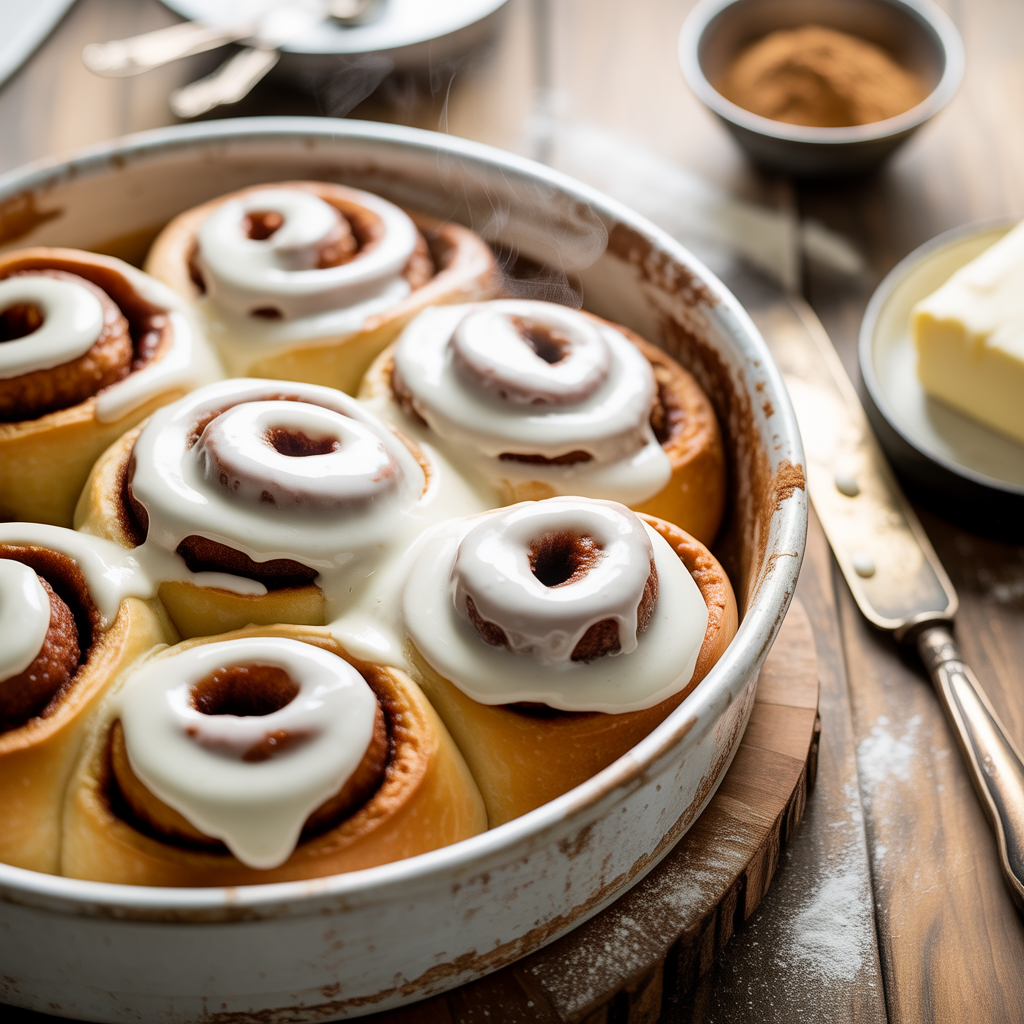
There’s nothing quite like the smell of freshly baked cinnamon rolls wafting through your home on a lazy morning. These soft, gooey, homemade cinnamon rolls are everything you’ve ever dreamed of — fluffy dough, rich cinnamon-sugar filling, and a luscious cream cheese frosting that melts right into every swirl. Whether you’re making them for a weekend breakfast, a holiday brunch, or just because you deserve something special, this recipe delivers bakery-quality results right from your own kitchen.
This guide walks you through every single step — from making the dough to the final frosting — so even beginner bakers can nail it on the first try.
Why You’ll Love This Cinnamon Roll Recipe
- Ultra-soft and fluffy: Thanks to an enriched dough made with butter, eggs, and milk.
- Perfectly gooey center: The filling ratio is dialed in for maximum cinnamon-sugar pull-apart goodness.
- Made from scratch: No canned dough, no shortcuts — just real, wholesome ingredients.
- Freezer-friendly: Make ahead and bake when you need them.
- Cream cheese frosting: The classic tangy-sweet topping that takes these rolls over the top.
Ingredients
For the Dough
- 1 cup (240ml) whole milk, warmed to about 110°F (43°C)
- 2¼ teaspoons (1 packet) active dry yeast or instant yeast
- ¼ cup (50g) granulated sugar
- 2 large eggs, room temperature
- ⅓ cup (75g) unsalted butter, softened
- 1 teaspoon fine salt
- 4 cups (480g) all-purpose flour, plus more for dusting
For the Cinnamon Filling
- ¾ cup (150g) packed brown sugar (light or dark)
- 2½ tablespoons ground cinnamon
- ⅓ cup (75g) unsalted butter, softened to room temperature
- Pinch of salt
For the Cream Cheese Frosting
- 4 oz (115g) cream cheese, softened
- 1 cup (120g) powdered sugar, sifted
- 3–4 tablespoons whole milk or heavy cream
- ½ teaspoon pure vanilla extract
- Pinch of salt
Equipment You’ll Need
- Stand mixer with dough hook (or large mixing bowl for hand kneading)
- Rolling pin
- 9×13 inch (23x33cm) baking dish
- Sharp knife or unflavored dental floss (for cutting rolls)
- Plastic wrap or kitchen towel (for proofing)
- Hand mixer or whisk (for frosting)
Step-by-Step Instructions
Step 1: Activate the Yeast
Pour the warmed milk into the bowl of your stand mixer (or a large bowl). Sprinkle the yeast and 1 teaspoon of the granulated sugar over the milk. Stir gently and let it sit for 5–10 minutes until it becomes foamy and fragrant. This step confirms your yeast is alive and active. If nothing happens after 10 minutes, your yeast may be expired — start fresh before proceeding.
Step 2: Make the Dough
Add the remaining sugar, eggs, softened butter, and salt to the yeast mixture. Mix on low speed until combined. Gradually add the flour, one cup at a time, mixing on low. Once all the flour is incorporated, switch to the dough hook and knead on medium speed for 8–10 minutes until the dough is smooth, soft, and slightly tacky — it should pull away from the sides of the bowl cleanly.
Hand kneading: If you don’t have a stand mixer, turn the dough onto a lightly floured surface and knead by hand for about 10–12 minutes. The dough is ready when it passes the “windowpane test” — stretch a small piece between your fingers; it should stretch thin enough to see light through it without tearing.
Step 3: First Rise
Shape the dough into a ball and place it in a lightly greased bowl. Cover tightly with plastic wrap or a damp kitchen towel. Let the dough rise in a warm spot for 1 to 1.5 hours, or until it has doubled in size.
Tip: If your kitchen is cold, preheat your oven to the lowest setting, turn it off, and place the covered dough inside. The residual warmth creates a perfect proofing environment.
Step 4: Make the Cinnamon Filling
While the dough rises, mix together the brown sugar, cinnamon, and pinch of salt in a small bowl. Set aside. Make sure your butter is truly softened — it should spread easily without tearing the dough.
Step 5: Roll Out the Dough
Once doubled, punch down the dough to release the gas. Turn it out onto a lightly floured surface. Using a rolling pin, roll the dough into a large rectangle approximately 18×12 inches (46x30cm). Try to keep the thickness even at about ¼ inch.
Step 6: Add the Filling
Spread the softened butter evenly over the entire surface of the dough, going all the way to the edges on three sides, but leaving a ½-inch border along one of the long edges (this will be the seam). Sprinkle the cinnamon-sugar mixture evenly over the buttered dough and press it gently into the butter with your palms.
Step 7: Roll and Cut
Starting from the long edge that has filling all the way to it, tightly roll the dough into a log. Pinch the seam to seal. Using a sharp knife or a piece of unflavored dental floss, cut the log into 12 equal rolls (each about 1.5 inches thick).
Pro tip: Using dental floss gives you the cleanest cut. Simply slide a piece of floss under the log, cross the ends over the top, and pull tight. No squishing the rolls!
Step 8: Second Rise
Grease your 9×13 baking dish generously with butter. Arrange the rolls cut-side up in the dish, leaving a little space between each one. Cover loosely with plastic wrap and let them rise for another 45 minutes to 1 hour, until they are puffed up and touching each other.
Overnight option: At this point, you can refrigerate the covered pan overnight (up to 12 hours). The next morning, take them out and let them come to room temperature and finish rising for about 1 hour before baking.
Step 9: Bake the Cinnamon Rolls
Preheat your oven to 350°F (175°C). Bake the rolls for 23–28 minutes, until they are golden brown on top and cooked through. Be careful not to overbake — slightly underbaked rolls will be softer and gooier once frosted. The internal temperature should reach about 190°F (88°C).
Step 10: Make the Cream Cheese Frosting
While the rolls bake, beat the softened cream cheese with a hand mixer or whisk until smooth. Add the powdered sugar, vanilla extract, and a pinch of salt. Mix until combined. Add the milk one tablespoon at a time until you reach a thick but spreadable consistency.
Step 11: Frost and Serve
Allow the rolls to cool for just 5–10 minutes after coming out of the oven — don’t wait too long! Spread or pour the cream cheese frosting generously over the warm rolls so it melts into all the nooks and crannies. Serve immediately and enjoy the magic.
Expert Tips for the Best Cinnamon Rolls
Use Room Temperature Ingredients
Cold butter or eggs can slow down yeast activity and result in a dense dough. Take eggs and butter out of the fridge at least 30–60 minutes before you start.
Don’t Add Too Much Flour
A common mistake is adding too much flour when the dough feels sticky. Resist the urge! A slightly sticky dough produces softer rolls. Only add flour a little at a time if the dough is truly unworkable.
Roll Tightly
Rolling the dough log tightly ensures your cinnamon rolls hold their shape and have that beautiful spiral pattern. A loose roll means they’ll unravel during baking.
Don’t Overbake
Golden on top is perfect. If the tops are getting too dark, tent the pan loosely with aluminum foil halfway through baking.
Frost While Warm
Warm rolls absorb the frosting and create that iconic gooey, melty texture. Don’t frost fully cooled rolls unless you prefer a firmer frosting on top.
Variations and Substitutions
Different Frostings
- Vanilla glaze: Mix 1 cup powdered sugar with 2–3 tablespoons milk and ½ teaspoon vanilla for a lighter, thinner glaze.
- Maple frosting: Replace the vanilla with 2 tablespoons of pure maple syrup for a warm, autumnal twist.
- Brown butter frosting: Brown your butter before making the frosting for a nutty, caramel-like depth of flavor.
Filling Add-Ins
- Raisins: Scatter plump raisins over the filling before rolling.
- Chopped pecans or walnuts: Add a satisfying crunch and nutty flavor.
- Apple pie filling: Spread a thin layer of apple pie filling over the cinnamon-sugar for a seasonal variation.
- Cardamom: Add ½ teaspoon of ground cardamom to the filling for a Scandinavian-inspired twist.
Dietary Modifications
- Dairy-free: Use plant-based milk (oat milk works beautifully), vegan butter, and dairy-free cream cheese.
- Whole wheat: Replace up to half the all-purpose flour with whole wheat flour. The rolls will be slightly denser but still delicious.
How to Store Cinnamon Rolls
At Room Temperature
Store frosted rolls in an airtight container at room temperature for up to 2 days. To reheat, microwave individual rolls for 20–30 seconds.
In the Refrigerator
Refrigerate unfrosted or frosted rolls in an airtight container for up to 5 days. Warm before serving.
In the Freezer
You can freeze cinnamon rolls at two different stages:
- Before baking: After cutting and placing in the pan, cover tightly and freeze for up to 2 months. Thaw overnight in the refrigerator, let rise at room temperature, then bake as directed.
- After baking (unfrosted): Wrap individual rolls tightly in plastic wrap and freeze for up to 3 months. Thaw and warm before adding fresh frosting.
Make-Ahead Instructions
These cinnamon rolls are perfect for making ahead, especially for holiday mornings when you don’t want to be in the kitchen for hours. Here’s the best approach:
- Complete the recipe through Step 8 (arranging rolls in the pan after the second shaping).
- Cover the pan tightly with plastic wrap and refrigerate overnight, up to 16 hours.
- The next morning, remove the pan from the refrigerator and let the rolls sit at room temperature for 1–1.5 hours until they are puffed and look pillowy.
- Bake as directed, frost, and serve.
Frequently Asked Questions
Why are my cinnamon rolls dense and not fluffy?
This is usually caused by one of three things: the yeast was not properly activated (old or dead yeast), the dough didn’t rise long enough, or too much flour was added. Make sure your yeast foams up in warm milk before proceeding, give the dough adequate rise time in a warm environment, and resist adding extra flour if the dough is just a little sticky.
Can I use instant yeast instead of active dry yeast?
Yes! Instant yeast (also called rapid-rise or bread machine yeast) can be used 1:1 in place of active dry yeast. With instant yeast, you don’t need to proof it in warm milk first — you can mix it directly with the dry flour. However, proofing it still works fine and is a good way to ensure the yeast is active.
Why did the filling leak out during baking?
This can happen if the butter in the filling is too melted (it should be soft, not liquid) or if the rolls are not rolled tightly enough. A little leakage is normal and actually creates a delicious caramelized base — just run a knife around the edges of the pan as soon as they come out of the oven before the filling hardens.
Can I make smaller or larger rolls?
Absolutely. For mini rolls, cut the log into 16–18 pieces and use a 9×13 pan plus a small additional pan. For jumbo rolls, cut thicker slices and use a 9×9 pan for 9 large rolls. Adjust baking time accordingly.
My dough is too sticky to work with — what do I do?
Lightly flour your work surface and your hands. If after 10 minutes of kneading it’s still extremely sticky, add flour one tablespoon at a time. Be patient — this dough should be soft and slightly tacky, not a stiff ball.
Serving Suggestions
Cinnamon rolls are a star on their own, but here are some delicious ways to round out your spread:
- Serve alongside a hot cup of freshly brewed coffee or a creamy latte.
- Pair with fresh fruit like strawberries, blueberries, or sliced banana for a balanced brunch plate.
- Add a side of scrambled eggs and crispy bacon for a full breakfast spread.
- Drizzle with a little honey right before serving for extra sweetness.
Nutrition Information (Approximate per roll)
Based on 12 rolls with cream cheese frosting.
- Calories: 420 kcal
- Carbohydrates: 62g
- Protein: 7g
- Fat: 16g
- Saturated Fat: 9g
- Sugar: 28g
- Sodium: 210mg
Nutritional values are estimates and will vary based on specific ingredients used.
Final Thoughts
Once you make homemade cinnamon rolls from scratch, there truly is no going back to store-bought. The process is deeply satisfying, the aroma is intoxicating, and the results are absolutely worth every minute of effort. With this detailed recipe and all the tips and tricks included, you have everything you need to bake the softest, gooiest, most delicious cinnamon rolls you’ve ever tasted.
Bake them for someone you love, or simply bake them for yourself — because you deserve a perfect cinnamon roll. Happy baking!