
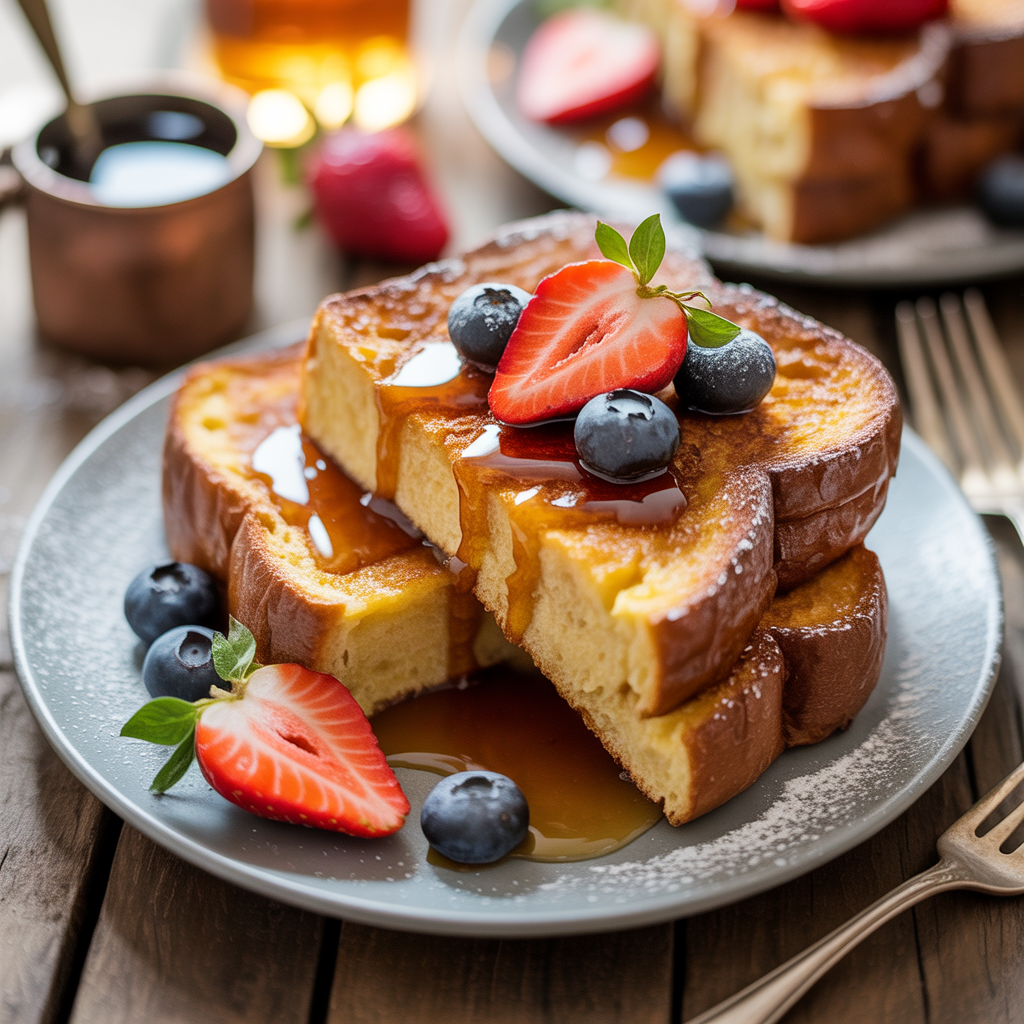
French toast is one of those classic breakfast dishes that everyone loves, but achieving the perfect texture — crispy on the outside and soft on the inside — can be trickier than it looks. Too much egg mixture and it turns soggy. Too little and it dries out. The good news is that with the right techniques, ingredients, and a few pro tips, you can make restaurant-quality French toast at home every single time.
What Makes the Perfect French Toast?
The ideal French toast has a golden-brown, slightly crispy crust that gives way to a custardy, soft, and fluffy interior. This balance comes down to three key factors:
- The right bread — thick slices that can absorb the custard without falling apart
- The perfect custard mixture — the proper ratio of eggs, milk, and fat
- The right cooking technique — the correct pan, temperature, and fat for frying
Choosing the Best Bread for French Toast
The type of bread you use makes a huge difference in the final result. Here are the best options:
Brioche
Brioche is widely considered the gold standard for French toast. Its rich, buttery flavor and airy crumb absorb the egg custard beautifully while holding their shape. It crisps up wonderfully on the outside.
Challah
Challah bread is slightly less rich than brioche but still produces an excellent French toast. Its soft, slightly sweet crumb soaks up custard well and fries to a gorgeous golden color.
Texas Toast or Thick-Cut White Bread
If brioche or challah isn’t available, thick-cut white sandwich bread works great. Look for slices that are at least 3/4 inch to 1 inch thick.
Sourdough
Sourdough adds a subtle tangy flavor and has a sturdier crumb, making it less likely to get soggy. It creates an excellent crispy crust.
Tips for Choosing Bread:
- Always use day-old or slightly stale bread — it absorbs the custard without becoming mushy
- Cut slices at least 3/4 to 1 inch thick for the best soft interior
- Avoid thin, soft sandwich bread — it gets soggy too quickly
The Perfect Custard Mixture
The custard is the soul of French toast. The right ratio of eggs to dairy — and the type of dairy you use — directly affects how crispy and soft your French toast turns out.
Basic Custard Ingredients:
- 2 large eggs
- 1/3 cup whole milk or heavy cream (or a mix of both)
- 1 tablespoon sugar
- 1/2 teaspoon vanilla extract
- 1/4 teaspoon cinnamon (optional but recommended)
- Pinch of salt
Why Each Ingredient Matters:
Eggs
Eggs are the binding agent that creates structure. The yolks add richness and help create that golden crust, while the whites help the custard set. Use large, fresh eggs for best results.
Dairy — Whole Milk vs. Heavy Cream
Using whole milk alone gives a lighter result. Using heavy cream creates a richer, more decadent French toast with a better crust. A 50/50 mix of whole milk and heavy cream is often the sweet spot for achieving crispy outside and soft inside texture.
Sugar
Sugar helps caramelize the outside of the bread during cooking, contributing to the crispy exterior. Don’t skip it!
Vanilla and Cinnamon
These aromatics add depth of flavor. Vanilla extract is essential; cinnamon is highly recommended for a classic French toast flavor.
Salt
A small pinch of salt balances the sweetness and enhances all the other flavors.
How to Make the Custard:
- Crack eggs into a wide, shallow bowl or baking dish.
- Add milk, cream, sugar, vanilla, cinnamon, and salt.
- Whisk vigorously until fully combined and slightly frothy.
- Make sure there are no streaks of egg white remaining.
How to Properly Soak the Bread
This step is where most people go wrong — either soaking too little or too much.
The Right Soaking Time:
- For fresh bread: Soak for 20–30 seconds per side
- For stale or day-old bread: Soak for 30–45 seconds per side, or until the custard has penetrated about halfway through the slice
Tips for Soaking:
- Use a wide, shallow bowl so the entire slice can lie flat
- Gently press the bread down with your fingers to help it absorb the custard
- Let excess custard drip off for a few seconds before placing it in the pan
- Do not over-soak — the bread should be saturated but not falling apart
The Best Pan and Fat for Cooking
The pan and cooking fat you choose play a critical role in achieving that perfect crispy crust.
Best Pan Options:
Cast Iron Skillet
A cast iron skillet is the top choice. It retains heat evenly and consistently, which creates an even, deeply golden crust. It also gets very hot, which helps caramelize the exterior quickly.
Non-Stick Skillet
A good non-stick skillet works well and is more forgiving for beginners. It won’t give quite as deep a sear as cast iron but produces good results.
Griddle
An electric griddle or stovetop griddle is great for cooking multiple slices at once and maintains consistent heat across the surface.
Best Fats for Crispy French Toast:
Butter + Oil Combination (Recommended)
Using a mix of unsalted butter and a neutral oil (like vegetable or canola oil) is the secret many chefs swear by. Butter alone burns at high heat. Oil alone doesn’t give the rich flavor. Together, they give you:
- Rich, buttery flavor from the butter
- A higher smoke point from the oil, preventing burning
- A perfectly golden, crispy crust
Clarified Butter (Ghee)
Clarified butter has had its milk solids removed, giving it a higher smoke point than regular butter. It creates an incredibly flavorful, crispy crust without burning.
Ratio to Use:
For each batch (2–3 slices), use about 1 tablespoon of butter + 1 teaspoon of oil.
The Right Cooking Temperature
Temperature control is absolutely crucial for getting crispy outside and soft inside French toast.
- Too low: The bread absorbs too much fat and becomes greasy and soggy
- Too high: The outside burns before the inside cooks through
- Just right: Medium to medium-high heat (around 325°F–350°F / 160°C–175°C)
How to Test if the Pan is Ready:
Add a small drop of the custard mixture to the pan. If it sizzles immediately and starts to cook, the pan is ready. If it smokes immediately, the pan is too hot — reduce the heat slightly.
Step-by-Step Cooking Instructions
- Preheat your skillet over medium heat for 2–3 minutes.
- Add butter and oil and let the butter melt and begin to foam.
- Dip the bread in the custard mixture, letting it soak for 30 seconds per side. Allow excess custard to drip off.
- Place the soaked bread in the pan carefully.
- Cook for 3–4 minutes on the first side without moving it. Let it develop a golden crust before flipping.
- Flip and cook for another 2–3 minutes on the second side until golden brown.
- Check the edges — if they look wet or underdone, stand the French toast on its edge in the pan for 30 seconds each side.
- Remove and serve immediately for maximum crispiness.
Pro Tips for Extra Crispy French Toast
1. Use Stale Bread
Day-old bread is drier and absorbs custard more evenly without getting soggy. If you only have fresh bread, place the slices on a wire rack and let them dry out at room temperature for 30 minutes, or put them in a 250°F (120°C) oven for 10 minutes.
2. Add Cornstarch to the Custard
Adding 1 teaspoon of cornstarch to your custard mixture is a restaurant secret for extra crispy French toast. Cornstarch forms a thin, crispy coating on the outside of the bread when it hits the hot pan.
3. Don’t Crowd the Pan
Cook only 2–3 slices at a time. Overcrowding the pan lowers the temperature and causes steaming instead of frying, leading to soggy French toast.
4. Don’t Move It Too Early
Resist the urge to move or flip the bread before it’s ready. Let it cook undisturbed for at least 3 minutes on the first side to build a proper crust.
5. Add a Little Heavy Cream
Replacing some of the milk with heavy cream increases the fat content of the custard, which leads to better browning and a crispier exterior.
6. Finish in the Oven
For very thick slices (over 1 inch), finish the French toast in a 325°F (160°C) oven for 5–8 minutes after searing both sides. This ensures the inside is fully cooked and soft without burning the outside.
7. Keep Cooked Slices Warm and Crispy
Place finished slices on a wire rack set over a baking sheet in a 200°F (93°C) oven while you cook the remaining batches. Never stack French toast — the steam will make it soggy.
Common Mistakes to Avoid
Using Too Much Custard
If the custard is pooling in the pan rather than sizzling away, you’re using too much. Let excess custard drip off the bread before placing it in the pan.
Cooking on Too Low Heat
Low heat causes the bread to sit in the fat too long, absorbing it and becoming greasy. Make sure your pan is properly preheated.
Flipping Too Many Times
Flip the French toast only once. Multiple flips interrupt the crust formation and result in an uneven texture.
Using Thin Bread
Thin bread gets saturated too quickly and doesn’t have enough interior to be soft and custardy. Always use thick slices.
Skipping the Sugar
Sugar caramelizes during cooking and is essential for achieving that golden, crispy exterior. Don’t omit it from your custard mixture.
Flavor Variations to Try
Cinnamon Roll French Toast
Add 1 teaspoon of cinnamon, 1/4 teaspoon of nutmeg, and 1 tablespoon of brown sugar to the custard for a cinnamon roll-inspired flavor.
Orange Zest French Toast
Add the zest of one orange and a splash of Grand Marnier (or orange juice) to the custard for a bright, citrusy twist.
Stuffed French Toast
Use two thick slices and sandwich a filling of cream cheese, jam, or Nutella between them. Seal the edges by pressing the bread together before dipping in custard.
Savory French Toast
Omit the sugar and vanilla. Add grated Parmesan, herbs, and black pepper to the custard for a savory version. Serve with fried eggs and bacon.
Best Toppings for French Toast
Once your French toast is perfectly crispy outside and soft inside, top it with:
- Maple syrup — the classic choice
- Powdered sugar — a simple, elegant dusting
- Fresh berries — strawberries, blueberries, or raspberries
- Whipped cream — for indulgent mornings
- Caramelized bananas — cooked with butter and brown sugar
- Berry compote — homemade or store-bought
- Honey and ricotta — a sophisticated combination
Full Recipe Summary
Ingredients (serves 2–3):
- 4 slices brioche, challah, or thick-cut bread (3/4 to 1 inch thick)
- 2 large eggs
- 3 tablespoons whole milk
- 3 tablespoons heavy cream
- 1 tablespoon granulated sugar
- 1/2 teaspoon vanilla extract
- 1/4 teaspoon ground cinnamon
- Pinch of salt
- 1 teaspoon cornstarch (optional, for extra crispiness)
- 1 tablespoon unsalted butter
- 1 teaspoon neutral oil
Instructions:
- Whisk together eggs, milk, cream, sugar, vanilla, cinnamon, salt, and cornstarch in a wide shallow bowl until smooth and frothy.
- Preheat a cast iron skillet or non-stick pan over medium heat for 2–3 minutes.
- Add butter and oil to the pan. When the butter is melted and foamy, you’re ready to cook.
- Dip each bread slice in the custard for 30 seconds per side. Let excess drip off.
- Place bread in the pan. Cook undisturbed for 3–4 minutes until deeply golden brown on the bottom.
- Flip once and cook for another 2–3 minutes on the other side.
- Transfer to a wire rack in a warm oven (200°F) while you cook remaining slices.
- Serve immediately with your favorite toppings.
Frequently Asked Questions
Why is my French toast soggy inside?
Sogginess is usually caused by over-soaking the bread, using thin bread, or cooking on too low heat. Use thick, stale bread, limit soaking time, and ensure your pan is properly preheated before adding the bread.
Can I make French toast ahead of time?
Yes, but it won’t be as crispy. Store cooked French toast in an airtight container in the refrigerator for up to 2 days. Reheat on a wire rack in a 350°F oven for 8–10 minutes to restore some crispiness. Avoid microwaving, which makes it soggy.
Can I freeze French toast?
Absolutely. Cool completely, then freeze in a single layer on a baking sheet. Once frozen, transfer to a freezer bag. Reheat directly from frozen in a toaster or oven at 350°F for 10–12 minutes.
What is the best bread for French toast?
Brioche is the best for richness and texture, followed closely by challah. Thick-cut sourdough is excellent for a crispier crust with a tangy flavor.
Can I use milk instead of cream?
Yes, whole milk alone works fine. However, using some heavy cream produces a richer, more flavorful custard with a better golden crust due to the higher fat content.
How do I know when French toast is done?
The French toast should be deeply golden brown on both sides and feel firm (not jiggly) when gently pressed in the center. The edges should appear set and not wet.
Final Thoughts
Making French toast that is crispy on the outside and soft on the inside is all about using the right ingredients and technique. Start with thick, slightly stale brioche or challah bread, make a rich custard with eggs and cream, soak the bread for the right amount of time, and cook in a hot pan with a butter-oil combination. Don’t skip the sugar, don’t overcrowd the pan, and let the bread develop a proper crust before flipping.
Follow these steps and you’ll be rewarded with French toast that is beautifully golden and crisp on the outside with a pillowy, custardy center — every single time. Whether you’re making it for a lazy weekend breakfast or a special brunch, this is a technique worth mastering.