
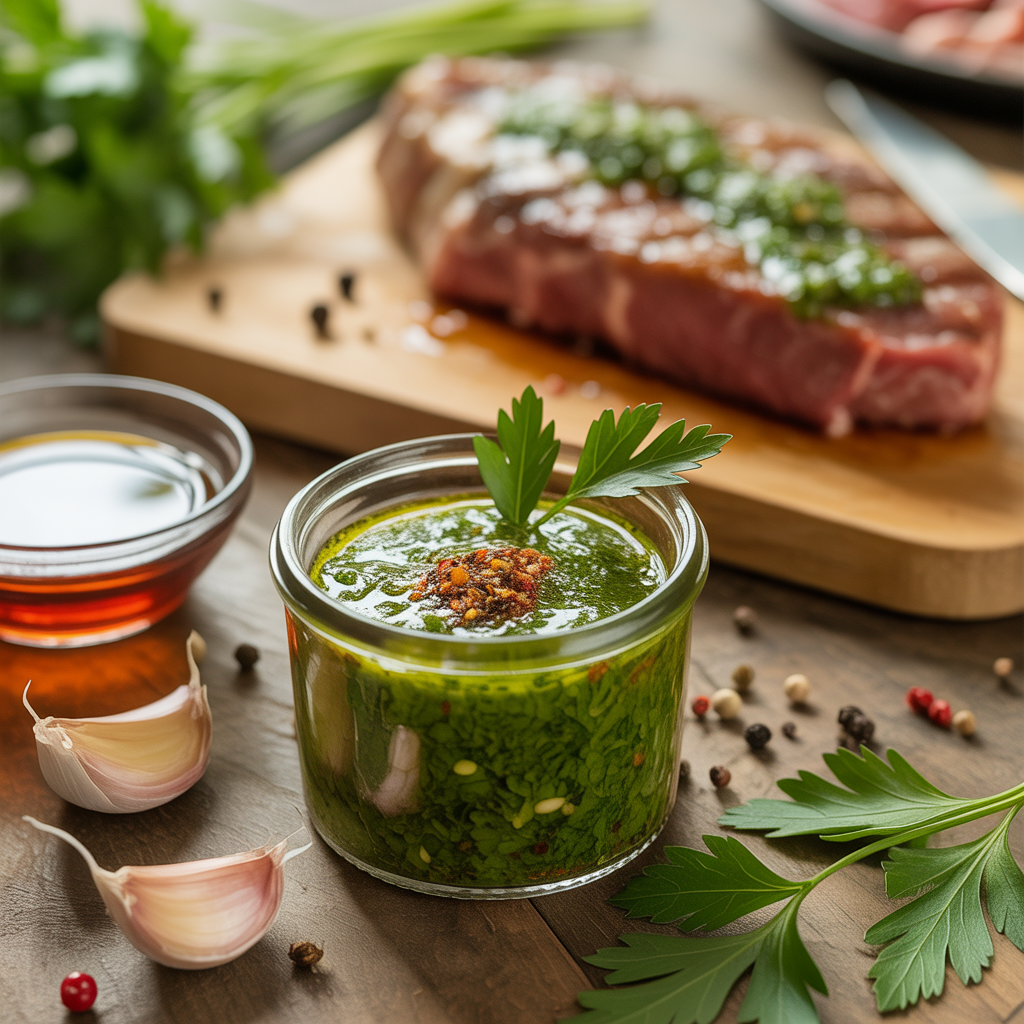
If you’ve ever tasted a perfectly grilled steak drizzled with a vibrant green sauce bursting with herbs, garlic, and a touch of tang — you’ve experienced the magic of chimichurri. This classic Argentine condiment has taken the world by storm, and for good reason. It’s fresh, bold, incredibly easy to make, and pairs beautifully with almost everything. Whether you’re a seasoned home cook or a complete beginner, this chimichurri sauce recipe will become a staple in your kitchen.
What Is Chimichurri Sauce?
Chimichurri is a fresh, uncooked herb sauce that originates from Argentina and Uruguay. It is traditionally made with finely chopped fresh parsley, garlic, olive oil, red wine vinegar, and red pepper flakes. The result is a bright, herby, slightly tangy, and garlicky sauce that is deeply flavorful yet remarkably simple.
Unlike pesto, chimichurri is not blended into a smooth paste — it retains texture from the roughly chopped herbs and garlic. It comes in two main versions:
- Green Chimichurri (Chimichurri Verde): The most common version, made with fresh parsley and sometimes cilantro.
- Red Chimichurri (Chimichurri Rojo): A variation that includes red bell peppers or tomatoes and tends to be slightly smoky.
In this recipe, we’ll focus on the classic green chimichurri, which is the most popular and versatile version.
Why You’ll Love This Recipe
- Ready in 10 minutes: No cooking required. Just chop and stir.
- Made with simple ingredients: Everything you need is probably already in your pantry.
- Incredibly versatile: Use it as a marinade, dipping sauce, or finishing drizzle.
- Naturally vegan and gluten-free: Works for a wide variety of dietary needs.
- Better than store-bought: Fresh herbs make all the difference.
Ingredients for Chimichurri Sauce
Here’s what you’ll need to make an authentic, delicious chimichurri sauce:
- 1 cup fresh flat-leaf parsley (packed), finely chopped
- 4 cloves garlic, minced
- 2 tablespoons fresh oregano (or 1 teaspoon dried oregano)
- 1/2 cup extra virgin olive oil
- 3 tablespoons red wine vinegar
- 1/2 teaspoon red pepper flakes (adjust to taste)
- 1/2 teaspoon kosher salt
- 1/4 teaspoon black pepper
- Optional: 2 tablespoons fresh cilantro, finely chopped
Ingredient Notes and Substitutions
- Parsley: Always use fresh flat-leaf (Italian) parsley for the best flavor. Curly parsley can be used in a pinch but has a milder taste.
- Garlic: Fresh garlic is essential. Do not substitute garlic powder — the flavor will be significantly different.
- Olive oil: Use a good quality extra virgin olive oil, as it is the base of the sauce and greatly impacts the flavor.
- Red wine vinegar: This gives chimichurri its signature tang. You can substitute with sherry vinegar or even fresh lemon juice for a slightly different flavor profile.
- Cilantro: Optional but delicious. Some people are sensitive to cilantro’s flavor, so feel free to leave it out.
- Red pepper flakes: Adjust according to your preferred spice level. For a milder sauce, use just a pinch.
How to Make Chimichurri Sauce
Making chimichurri sauce is one of the easiest things you can do in the kitchen. Follow these simple steps:
Step 1: Prepare the Herbs
Wash the fresh parsley (and cilantro if using) thoroughly and pat dry with paper towels. Remove the thick stems — you only want the leaves and very thin stems. Finely chop the herbs using a sharp knife or a food processor. If using a food processor, pulse gently — you want a rough chop, not a puree.
Step 2: Mince the Garlic
Peel and finely mince the garlic cloves. For an even more pungent flavor, you can use a garlic press. Some chimichurri enthusiasts prefer to use a mortar and pestle to crush the garlic into a fine paste.
Step 3: Combine All Ingredients
In a medium mixing bowl, combine the chopped parsley, minced garlic, and fresh oregano. Add the red pepper flakes, salt, and black pepper. Pour in the olive oil and red wine vinegar. Stir everything together until well combined.
Step 4: Taste and Adjust
Give the chimichurri a taste. Adjust the seasoning as needed — more salt, more vinegar for tanginess, or more red pepper flakes for heat. The flavors should be bold and well-balanced.
Step 5: Let It Rest
For the best flavor, let the chimichurri sauce rest for at least 30 minutes before serving. This allows all the ingredients to meld together and the garlic to mellow slightly. If you have time, making it a few hours ahead or even the night before will give you the best results.
Tips for the Best Chimichurri Sauce
- Chop by hand for best texture: While a food processor speeds things up, hand-chopping gives you better control over the texture. Chimichurri should be chunky, not pureed.
- Use fresh herbs only: Dried parsley simply cannot replicate the vibrant flavor of fresh herbs. Fresh is non-negotiable for an authentic chimichurri.
- Don’t skip the resting time: Allowing the sauce to sit before serving significantly improves the flavor. The olive oil absorbs the herb and garlic flavors beautifully.
- Balance is key: Chimichurri should strike a balance between herbaceous, garlicky, tangy, and slightly spicy. Taste as you go and adjust accordingly.
- Room temperature is best: If storing in the refrigerator, take the sauce out 20–30 minutes before serving to allow the olive oil to liquefy again.
How to Serve Chimichurri Sauce
Chimichurri is incredibly versatile. Here are some of the best ways to use it:
As a Steak Sauce
This is chimichurri’s most classic use. Drizzle generously over grilled ribeye, skirt steak, flank steak, or any cut of beef hot off the grill. The herby, tangy sauce cuts through the richness of the meat perfectly.
As a Marinade
Use chimichurri as a marinade for chicken, beef, pork, or shrimp. Coat the protein and let it marinate for at least 1 hour (or up to 24 hours in the refrigerator) before grilling or roasting.
As a Dipping Sauce
Serve chimichurri alongside crusty bread, grilled vegetables, or empanadas as a dipping sauce. It’s also fantastic with roasted potatoes or french fries.
Drizzled Over Roasted Vegetables
Roasted cauliflower, zucchini, asparagus, and carrots taste incredible with a spoonful of chimichurri on top.
With Eggs
Drizzle chimichurri over fried eggs, scrambled eggs, or shakshuka for a bright and flavorful breakfast upgrade.
On Pizza or Flatbread
Use chimichurri as a base sauce instead of tomato sauce on pizza or flatbreads. Top with grilled chicken, mozzarella, and roasted peppers for a winning combination.
In Sandwiches and Wraps
Spread chimichurri inside sandwiches or wraps as a condiment. It pairs especially well with grilled meats and avocado.
Variations of Chimichurri Sauce
While the classic recipe is hard to beat, there are many delicious variations worth exploring:
Chimichurri with Cilantro
Replace half the parsley with fresh cilantro for a slightly more complex, citrusy flavor. This variation is especially popular in Mexico and parts of Latin America.
Lemon Chimichurri
Substitute the red wine vinegar with freshly squeezed lemon juice and add a teaspoon of lemon zest. This creates a brighter, more citrusy version that works beautifully with seafood.
Smoky Red Chimichurri
Blend in a roasted red bell pepper or a chipotle pepper in adobo sauce for a smoky, slightly sweet red chimichurri variation.
Mint Chimichurri
Add 2 tablespoons of fresh mint leaves to the classic recipe. This works particularly well as a sauce for lamb chops or grilled vegetables.
Spicy Chimichurri
Double the amount of red pepper flakes and add a finely chopped fresh jalapeño or serrano pepper for a sauce with a serious kick.
How to Store Chimichurri Sauce
Chimichurri stores well and can be made ahead of time. Here’s how to keep it fresh:
Refrigerator
Transfer the chimichurri to an airtight jar or container and store in the refrigerator for up to 2 weeks. The olive oil may solidify in the cold — simply let it sit at room temperature for 20–30 minutes before using, then stir well.
Freezer
Chimichurri freezes beautifully. Pour it into ice cube trays and freeze until solid. Transfer the frozen cubes to a zip-lock freezer bag and store for up to 3 months. This way, you can thaw just the amount you need whenever you want it.
Chimichurri Sauce Nutrition Information
Chimichurri sauce is a wholesome condiment made primarily from olive oil and fresh herbs. Here is an approximate nutritional breakdown per 2-tablespoon serving:
- Calories: 95 kcal
- Total Fat: 10g
- Saturated Fat: 1.5g
- Carbohydrates: 1g
- Fiber: 0.3g
- Protein: 0.3g
- Sodium: 95mg
Chimichurri is rich in heart-healthy monounsaturated fats from olive oil and provides antioxidants and vitamins from the fresh herbs. It is naturally low in carbohydrates, making it an excellent choice for those following keto or low-carb diets.
Frequently Asked Questions (FAQs)
Can I use dried parsley instead of fresh?
Fresh parsley is strongly recommended for chimichurri. Dried parsley lacks the vibrant color and bright flavor that makes chimichurri special. If you must use dried herbs in an emergency, the ratio is 1 teaspoon of dried herbs for every 1 tablespoon of fresh — but the result will be noticeably different.
Is chimichurri the same as pesto?
No. While both are herb-based sauces, they are quite different. Pesto originates from Italy and is made with basil, pine nuts, Parmesan cheese, and olive oil — it is typically blended into a smooth paste. Chimichurri comes from Argentina, uses parsley and garlic as its base, has no cheese or nuts, and is a chunky, oil-and-vinegar-based sauce.
Can I make chimichurri in a food processor?
Yes, you can use a food processor to make chimichurri quickly. Add all the ingredients and pulse several times until you reach a rough, textured consistency. Be careful not to over-process it into a smooth puree — chimichurri should retain some texture and not become a paste.
Why does my chimichurri taste too acidic?
If your chimichurri tastes too tangy, try adding a little more olive oil to balance the acidity. You can also add a small pinch of sugar or a little more salt to counteract the sourness. Letting the sauce rest longer also helps the vinegar flavor mellow out.
Can I use apple cider vinegar instead of red wine vinegar?
Yes, apple cider vinegar works as a substitute, though it has a slightly fruitier and milder flavor compared to red wine vinegar. The chimichurri will taste a bit different but still delicious. Sherry vinegar is another excellent substitute that stays closer to the original flavor.
How long does chimichurri last?
Stored in an airtight container in the refrigerator, chimichurri lasts up to 2 weeks. Frozen in ice cube trays, it can last up to 3 months.
The History Behind Chimichurri
Chimichurri has deep roots in Argentine and Uruguayan culinary culture. The exact origin of the name is debated — some believe it derives from the Basque word “tximitxurri,” meaning “a mixture of several things in no particular order,” which perfectly describes the sauce’s free-form nature. Others credit an Irishman named Jimmy McCurry who allegedly created the sauce during Argentina’s independence wars, and over time “Jimmy McCurry” became “chimichurri.”
Regardless of its etymology, chimichurri has been an inseparable part of South American asado (barbecue) culture for centuries. It is as essential to an Argentine grill as ketchup is to an American cookout. Today, it has gained worldwide popularity and has been embraced by chefs and home cooks across the globe.
Final Thoughts
This chimichurri sauce recipe is proof that the best things in life are often the simplest. With just a handful of fresh ingredients and about 10 minutes of your time, you can create a condiment that elevates anything it touches. From grilled steaks to roasted vegetables, from breakfast eggs to dipping sauce, chimichurri’s versatility is matched only by its incredible flavor.
Make a big batch on the weekend, store it in the fridge, and reach for it throughout the week to add a burst of freshness and bold flavor to your everyday meals. Once you make it from scratch, you’ll never want to go back to store-bought.
Enjoy your chimichurri, and happy cooking!