
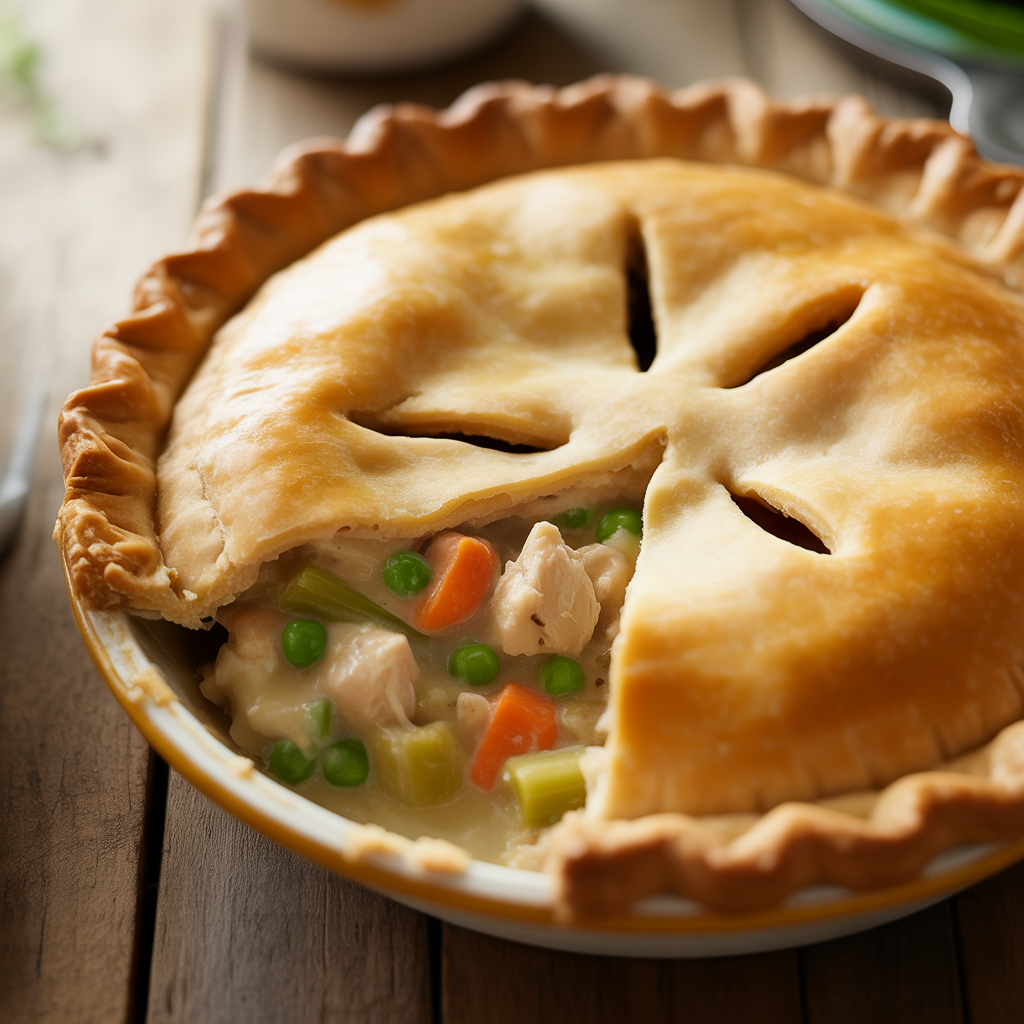
Few dishes are as comforting as a homemade chicken pot pie — golden, flaky crust on the outside, rich and creamy filling on the inside. Whether you’re making it for a weeknight dinner or a special occasion, this guide will walk you through every step to create the perfect chicken pot pie with a truly flaky, buttery crust from scratch.
Why Homemade Chicken Pot Pie Is Worth the Effort
Store-bought versions can’t compete with a homemade chicken pot pie. When you make it yourself, you control the quality of ingredients, the thickness of the filling, and — most importantly — the flakiness of the crust. A well-made homemade pot pie has layers of buttery, crispy pastry that shatter when you slice into it, revealing a velvety, herb-infused chicken and vegetable filling beneath.
Ingredients You Will Need
For the Flaky Pie Crust (Double Crust)
- 2 ½ cups (315g) all-purpose flour
- 1 teaspoon salt
- 1 teaspoon granulated sugar
- 1 cup (225g) unsalted butter, very cold and cut into small cubes
- 6–8 tablespoons ice-cold water
For the Chicken Pot Pie Filling
- 2 cups cooked chicken, shredded or diced (rotisserie chicken works great)
- 1 cup frozen peas
- 1 cup carrots, diced
- ½ cup celery, diced
- ½ cup yellow onion, finely chopped
- 2 cloves garlic, minced
- ⅓ cup unsalted butter
- ⅓ cup all-purpose flour
- 1 ¾ cups chicken broth
- ⅔ cup whole milk or heavy cream
- 1 teaspoon salt, or to taste
- ½ teaspoon black pepper
- ½ teaspoon dried thyme
- ¼ teaspoon garlic powder
For the Egg Wash
- 1 large egg
- 1 tablespoon milk
Step 1: Make the Flaky Pie Crust
The secret to a truly flaky crust is keeping everything cold. Cold butter creates steam pockets during baking, which is what produces those beautiful, flaky layers.
Instructions:
- Combine dry ingredients: In a large bowl, whisk together the flour, salt, and sugar.
- Cut in the butter: Add the cold butter cubes to the flour mixture. Using a pastry cutter, two forks, or your fingertips, work the butter into the flour until the mixture resembles coarse crumbs with some pea-sized pieces of butter remaining. Do not overwork the dough — those butter chunks are what create flakiness.
- Add ice water: Drizzle in ice-cold water, one tablespoon at a time, mixing gently with a fork after each addition. Stop adding water when the dough just begins to come together. It should hold its shape when you pinch a small amount between your fingers.
- Divide and chill: Turn the dough out onto a lightly floured surface, divide it into two equal discs, wrap each in plastic wrap, and refrigerate for at least 1 hour (or up to 2 days). Chilling is a non-negotiable step for a flaky crust.
Pro Tips for a Flaky Crust:
- Use European-style butter with higher fat content for extra flakiness.
- Place your flour, bowl, and even your pastry cutter in the freezer for 15 minutes before starting.
- Avoid overworking the dough — gluten development makes crust tough, not flaky.
- If the dough becomes warm at any point, pop it back in the fridge for 15 minutes.
Step 2: Prepare the Chicken Pot Pie Filling
While your dough chills, make the filling. A great pot pie filling should be thick enough to hold its shape when sliced but still creamy and rich.
- Cook the vegetables: In a large skillet or saucepan over medium heat, melt the butter. Add the onion, carrots, and celery. Sauté for about 5–7 minutes until the vegetables are softened. Add the garlic and cook for another 30 seconds until fragrant.
- Make the roux: Sprinkle the flour over the vegetables and stir constantly for 1–2 minutes. This cooks out the raw flour taste and forms the base of your thick sauce.
- Add liquids: Slowly pour in the chicken broth while stirring constantly to prevent lumps. Then add the milk or heavy cream. Stir until the mixture is smooth.
- Season and simmer: Add salt, black pepper, thyme, and garlic powder. Bring the mixture to a gentle simmer, stirring frequently, until it thickens to a gravy-like consistency — about 5–8 minutes.
- Add chicken and peas: Remove from heat. Stir in the cooked chicken and frozen peas. Taste and adjust seasoning as needed.
- Cool the filling: Allow the filling to cool for at least 15–20 minutes before adding it to the pie crust. A hot filling can melt the butter in the crust and ruin its flakiness.
Step 3: Assemble the Chicken Pot Pie
- Preheat your oven to 425°F (220°C).
- Roll out the bottom crust: Remove one disc of chilled dough from the refrigerator. On a lightly floured surface, roll it out to about 12 inches in diameter (for a 9-inch pie dish). The crust should be about ⅛-inch thick. Carefully transfer it to your pie dish by rolling it around the rolling pin and unrolling it over the dish. Gently press it into the bottom and sides. Trim any excess leaving about a ½-inch overhang.
- Add the filling: Pour the cooled chicken pot pie filling into the crust-lined dish, spreading it evenly.
- Roll out the top crust: Roll out the second disc of dough to the same size. Lay it over the filling. Trim the overhang to match the bottom crust, then fold and crimp the edges together to seal. You can crimp with a fork or pinch with your fingers for a decorative edge.
- Vent the crust: Using a sharp knife, cut 4–5 small slits in the top crust. This allows steam to escape during baking and prevents the crust from puffing up unevenly.
- Apply egg wash: Whisk the egg with the milk and brush it evenly over the top crust. This gives the pie a beautiful golden-brown, glossy finish.
Step 4: Bake the Chicken Pot Pie
- Bake at 425°F (220°C) for 30–35 minutes, or until the crust is deeply golden brown and the filling is bubbling through the vents.
- If the edges of the crust start to brown too quickly, cover them loosely with aluminum foil or a pie crust shield after the first 15 minutes of baking.
- Rest before serving: Allow the pie to rest for at least 10–15 minutes before cutting into it. This gives the filling time to set so it doesn’t run out when sliced.
How to Tell When Your Chicken Pot Pie Is Done
- The top crust should be a rich, deep golden brown color.
- You should see the filling bubbling up through the vents in the crust.
- The bottom crust should not be pale or doughy — lift the pie slightly with a spatula to check if it has color.
Variations and Substitutions
Protein Options
- Turkey: Swap chicken for leftover Thanksgiving turkey for a delicious post-holiday meal.
- Vegetarian: Omit the chicken, use vegetable broth, and add mushrooms, potatoes, and extra vegetables.
Vegetable Options
- Potatoes (diced small and pre-cooked), corn, green beans, pearl onions, or mushrooms all work wonderfully in pot pie.
Crust Options
- Puff pastry: Use store-bought puff pastry for an ultra-flaky, quicker alternative.
- Biscuit topping: Skip the bottom crust entirely and top with homemade or canned biscuits for a rustic chicken pot pie casserole.
- Individual pot pies: Use ramekins and cut circles of dough to fit the tops for single-serving pot pies.
Make-Ahead and Storage Instructions
Make Ahead
- Filling: The filling can be made up to 3 days in advance and stored covered in the refrigerator.
- Dough: The pie dough can be refrigerated for up to 2 days or frozen for up to 3 months.
- Unbaked assembled pie: The fully assembled, unbaked pie can be wrapped tightly and frozen for up to 1 month. Bake from frozen at 400°F, adding 20–30 extra minutes to the baking time.
Storing Leftovers
- Store leftover pie covered in the refrigerator for up to 4 days.
- Reheat individual slices in a 350°F oven for 15–20 minutes to restore the crust’s crispiness. Avoid the microwave as it makes the crust soggy.
Common Mistakes to Avoid
- Warm butter in the dough: Always use cold butter and work quickly. If the dough warms up, refrigerate it before continuing.
- Too-thin filling: Make sure the filling simmers until properly thickened before adding it to the crust, or you’ll end up with a watery pie.
- Hot filling in the crust: Always cool the filling before assembling to prevent a soggy bottom crust.
- Not venting the top crust: Slits are essential for releasing steam and preventing an uneven, puffed top crust.
- Skipping the resting time: Cutting into the pie too soon means all that delicious filling will spill out rather than staying neatly in each slice.
Frequently Asked Questions
Can I use store-bought pie crust?
Yes, absolutely. If you’re short on time, refrigerated store-bought pie crusts work well. However, making your own from scratch guarantees superior flakiness and flavor.
Can I use canned chicken?
While rotisserie chicken or freshly cooked chicken breast yields the best texture and flavor, drained canned chicken can be used in a pinch.
How do I prevent a soggy bottom crust?
Three key steps help: (1) cool the filling before adding it to the crust, (2) make sure the filling is thick enough, and (3) bake at a high temperature (425°F) so the bottom crust cooks quickly and crisps up. You can also blind bake (pre-bake) the bottom crust for 10 minutes before adding the filling for extra insurance.
Can I freeze chicken pot pie?
Yes. You can freeze the assembled unbaked pie for up to 1 month, or freeze individual slices of baked pie. Always thaw overnight in the refrigerator before reheating.
Serving Suggestions
Chicken pot pie is a complete meal on its own, but it pairs beautifully with:
- A simple green salad with a light vinaigrette
- Steamed or roasted broccoli
- Cranberry sauce (especially for a turkey version)
- A glass of dry white wine such as Chardonnay or Sauvignon Blanc
Final Thoughts
Making chicken pot pie with a flaky crust from scratch might seem intimidating, but once you break it down step by step, it’s an incredibly approachable and deeply rewarding dish. The key to a perfect flaky crust lies in keeping your butter cold, handling the dough minimally, and giving it plenty of time to rest in the refrigerator. Pair that with a rich, well-seasoned filling and you have one of the most beloved comfort food classics that will have everyone coming back for seconds. Give this recipe a try — it’s the kind of dish that becomes a family tradition.